Best Books on the Early Christian Church, in Reading Order
This path follows the first five centuries of Christianity as historians reconstruct them, not as any later church remembers them. You start with a single-volume account of how a small Jewish movement spread through the Roman Empire, then work back into the sources — Paul, the competing gospels, the making of the canon — before facing the Constantinian turn and the late-antique world the church went on to shape. Where the scholarship genuinely divides, the path gives you the serious positions rather than a verdict.
The shape of the whole story
BeginnerHold the whole arc in your head — from a Galilean movement in the 30s to an imperial religion by the 380s — and know which parts of that arc historians argue about.
▸ Study plan for this stage
Pace: 4 weeks. The Rise of Christianity (246 pages) is short and argumentative — a week at 35 pages a day. A New History of Early Christianity (377 pages) is the narrative spine and deserves two to three weeks; keep a running list of names, councils and dates as you go, because every later stage assumes t
- Stark's exponential-growth model: a sustained rate of roughly 40 percent per decade takes a few thousand followers in the 40s to millions by the early fourth century without any mass conversion event. Understand the arithmetic before you evaluate the history
- Stark's proposed mechanisms — dense urban social networks, conversion through existing relationships rather than preaching to strangers, differential survival during the Antonine and Cyprianic epidemics, and higher fertility plus the movement's appeal to women
- Why classicists have pushed back on Stark: the population estimates he starts and ends with are themselves reconstructions, the epidemic mortality figures are contested, and a sociologist's model imported into antiquity can smooth over evidence that does not exist. Read it as a productive argument,
- Freeman's chronology and geography — Jerusalem, Antioch, Alexandria, Rome, Carthage and the difference between the Greek East and the Latin West, which structures every controversy in stages 3 and 4
- The persecution question at its actual scale: sporadic and local for most of the period, empire-wide only under Decius and Diocletian, which matters because the martyrdom-driven growth story is largely a later construction
- Freeman's greater scepticism about tidy explanations, which is the point of reading the two together — you meet the field's uncertainty before you meet any specialist's confidence
- Reproduce Stark's growth arithmetic. Which two numbers does the whole model depend on, and how confident can anyone be in either?
- Stark argues Christianity appealed disproportionately to women. What evidence does he offer, and what would a historian of antiquity say about the evidentiary base?
- Where do Stark and Freeman actually disagree — about facts, about method, or about how much explanation the evidence can bear?
- By the end of these two books, what is the shortest honest answer to 'why did Christianity spread'? If your answer has one cause in it, reread Freeman
- Which parts of the standard popular story — mass martyrdom, catacomb secrecy, Constantine converting an empire — did these books already undercut?
- Do Stark's growth calculation yourself on paper at 40 percent per decade from 1,000 believers in AD 40. Then redo it at 30 percent and at 50 percent and see how far apart the year-300 figures land. That spread is the honest uncertainty in the whole model
- Build a one-page timeline from AD 30 to 400 with three tracks: emperors, persecutions, and church events. You will add doctrinal controversies to it in stage 4 and keep it through the path
- Draw a rough map of the eastern Mediterranean marking the five cities Freeman treats as centres, and note for each what it was known for. Every dispute in later stages runs along these lines
- Write 250 words identifying the single claim of Stark's you find least supported, and say exactly what evidence would be needed to establish it
Next up: You have the arc and the arguments about it; the next stage goes back to the earliest surviving documents so you can see where the arc's first section actually comes from.
Stark, a sociologist, asks the blunt quantitative question — how do you get from a few thousand followers to millions? — and answers with growth rates, urban networks, epidemics and the position of women. Read it first because it frames the problem, but read it knowing that historians of antiquity have contested several of his estimates and his use of the evidence; it is a productive argument to start from, not a settled account.
A current single-volume narrative that supplies the chronology, geography and cast of characters Stark's model assumes. Freeman is more sceptical than Stark about tidy explanations, so reading the two together gives you the field's texture before you meet any specialist.
Back to the sources: Paul and the making of Jesus
IntermediateRead the earliest layers of the movement on their own terms, and understand why the question 'when did Jesus become God?' is a historical question with more than one defensible answer.
▸ Study plan for this stage
Pace: 5 weeks. Fredriksen's Paul (336 pages) is compact but argues closely — two to three weeks, and read the letters themselves alongside it (Galatians, Romans, 1 Corinthians, 1 Thessalonians) rather than taking her summaries on trust. How Jesus Became God (416 pages) needs two to three weeks.
- The actual chronology of the sources: Paul's undisputed letters date to the 50s, decades before any gospel, so the earliest surviving Christian writing is a set of occasional letters to particular congregations, not a narrative of Jesus
- Fredriksen's central thesis: Paul is a first-century Jew operating inside a Jewish apocalyptic framework, addressing pagans about the imminent end of the age — not the founder of a new religion breaking from Judaism
- What follows from that reading — Paul's position on Torah applies to gentiles-in-Christ, not to Jews; his letters are pastoral responses to specific crises; and the systematic theology later drawn from them is a later reading
- Ehrman's developmental account of christology: claims about Jesus's divinity escalate over the first centuries, from exaltation at resurrection toward pre-existence and identity with God
- The specific evidence Ehrman leans on and the counter-position — the Philippians 2 hymn and the earliest formulas are read by other scholars as already high christology within a couple of decades, and a group of scholars published a book-length reply making exactly that case. Ehrman himself flags wh
- Why the question 'when did Jesus become God' is a genuine historical question with more than one defensible answer, and how the answer you find persuasive depends on how you date and read a handful of short passages
- Fredriksen says Paul never left Judaism. What in Galatians or Romans is the hardest passage for that reading, and how does she handle it?
- State Ehrman's developmental thesis and then state the early-high-christology position as strongly as you can. Which specific texts is the disagreement actually about?
- Why does reading Paul before the gospels change your picture of the movement in the 50s? Name two things you would have assumed and now would not
- Ehrman marks places where the evidence is thin. Find two of them and decide whether his conclusion survives if that evidence goes the other way
- Fredriksen and Ehrman are both working from the same small corpus. Where does the difference come from — the texts, the dating, or the framework each brings?
- Read 1 Thessalonians and Galatians straight through in one sitting each, before Fredriksen's chapters on them. Write down what you would conclude about Paul's expectations for the near future from the text alone, then compare
- Copy out Philippians 2:6-11 and annotate it twice: once as Ehrman reads it, once as the early-high-christology reply reads it. Getting both annotations onto the same page is the exercise
- Make a source chart with dates: the undisputed Pauline letters, the disputed ones, the four gospels, Acts. Mark which are earliest and which depend on which. Keep it for stage 3
- Write a 300-word summary of Fredriksen's Paul for someone who has only ever met Paul through later theology, naming the three specific claims that would most surprise them
- Pick one passage where Ehrman's reading and Fredriksen's framework pull in different directions and write 200 words on whether they are actually in conflict
Next up: Having watched doctrine develop, you are ready to see the alternatives that were developing alongside it and how the boundary between them was drawn.

Paul's letters are the oldest Christian writings we have, and Fredriksen reads them as the work of a first-century Jew addressing pagans within a Jewish apocalyptic framework — not as the founder of a new religion. Placing Paul before the gospels restores the actual chronology of the sources.
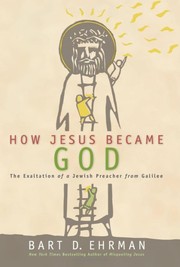
Ehrman traces how claims about Jesus's divinity developed across the first centuries. His conclusions are disputed — a group of scholars published a book-length reply arguing that high christology is early rather than late — so take this as the strongest statement of one major position, and note where he tells you the evidence is thin.
Many Christianities, and the making of a canon
IntermediateGrasp how varied early Christianity actually was, how the boundary between orthodoxy and heresy was drawn, and by what process twenty-seven books became the New Testament.
▸ Study plan for this stage
Pace: 6-7 weeks. Lost Christianities (302 pages) and The Gnostic Gospels (192 pages) are both written for general readers — two weeks and one week. The Canon of the New Testament (336 pages) is a technical reference work; give it three weeks and read it as a corrective to the previous two rather than as a
- The main groups Ehrman surveys and what actually distinguished them: Ebionites (Jewish-Christian, law-observant, low christology), Marcionites (rejecting the Hebrew scriptures and their God entirely), and the various texts grouped as Gnostic
- Marcion's importance for the canon specifically — the first known attempt to fix a list of authoritative Christian writings, which forced the question on everyone else. His list is the reason the canon question becomes urgent in the second century
- Forgery and polemic as ordinary tools on every side, including the winning one: pseudonymous letters, invented apostolic authority, and the accusations of forgery traded between groups. Ehrman is direct about this and it is uncomfortable in every direction
- Pagels's argument that the disputes around the Nag Hammadi texts were about church authority — who can mediate, who can interpret — as much as about theology
- The serious challenge to Pagels's framing: that 'Gnosticism' is a modern scholarly category imposed on texts that differ enormously from one another, and that treating them as one movement distorts all of them. Hold this while reading her, and read her for the primary material and the argument
- Metzger's actual findings on the canon: it was a long process, not a decision; the surviving lists (the Muratorian fragment, Eusebius's categories, Athanasius's 367 festal letter) show the boundaries moving; and the operative criteria were apostolicity, orthodoxy and widespread use
- That Metzger writes from within the tradition while doing meticulous technical work — which is why he is the sober counterweight here rather than a further polemic
- Why did Marcion make a canon necessary? Explain the mechanism, not just the sequence
- Take one text Ehrman discusses that did not make the canon and apply Metzger's three criteria to it. Which one excluded it, and was the application consistent?
- Pagels reads the Gnostic disputes as fights about authority. What is the strongest objection to that reading, and does she anticipate it?
- The category 'Gnosticism' has been challenged as a modern construct. After reading Pagels, do you think the texts she discusses form a coherent group? Point to specifics
- Ehrman documents forgery on all sides. Does that fact change how you weigh any canonical text, or is it a fact about the period rather than about the texts?
- Read the Gospel of Thomas straight through — it is short and freely available — before reading Pagels on it. Write 200 words on what strikes you as most and least like the canonical gospels
- Build a table of the surviving canon lists Metzger discusses (Muratorian, Eusebius, Athanasius, and the councils), with columns for date, books included, books disputed, books rejected. The disagreements between columns are the whole story
- Set Ehrman's account of one excluded group beside Metzger's technical discussion of the same period and write 300 words on where they are describing the same events differently and where one simply covers ground the other does not
- Take your source chart from stage 2 and extend it with the non-canonical texts these books discuss, marking approximate dates. Note how many are second-century or later
- Write a 250-word answer to 'who decided what went in the New Testament' that Metzger would accept as accurate. If your answer names a council and a year, reread him
Next up: With the internal diversity and its resolution in view, you can now watch what happens when the resolving power stops being persuasion and starts being an emperor.
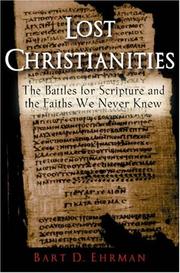
A survey of the Christian groups — Ebionites, Marcionites, various Gnostics — that lost the argument, and of the forgeries and polemics all sides used. It is the natural sequel to the previous stage: having seen doctrine develop, you now see the alternatives that were ruled out.
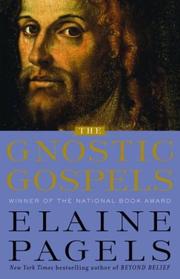
The book that put the Nag Hammadi texts into general circulation, arguing that the fights over these writings were as much about church authority as theology. Pagels's framing has been challenged — notably by scholars who argue 'Gnosticism' is a modern category imposed on very different texts — so read her for the primary material and the argument, and keep the critique in view.
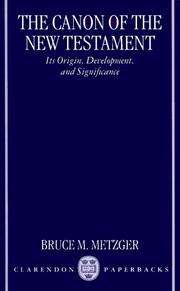
The standard technical account of how the canon was actually formed: which lists survive, what the criteria were, and how long the process took. Metzger writes from within the tradition but the scholarship is meticulous, and it is the sober counterweight to the previous two books.
Constantine and the imperial church
IntermediateUnderstand the fourth century — Nicaea, the Arian controversy, imperial patronage — and why 'Constantine converted the empire' is a slogan rather than an explanation.
▸ Study plan for this stage
Pace: 4 weeks. When Jesus Became God (267 pages) is a fast narrative — a week and a half. The Triumph of Christianity (352 pages) needs two weeks. Read Rubenstein first for the story of Nicaea and Ehrman second, because Ehrman returns to the growth question you opened the path with.
- The Arian controversy as an actual dispute rather than a label: whether the Son was begotten of the Father's own being or was the first and highest of created things, and why homoousios versus homoiousios was not a trivial argument about a letter
- What Nicaea in 325 did and did not settle — it produced a creed and a set of anathemas, and the controversy then continued for most of the fourth century, with imperially backed Arian and Nicene parties alternating in power
- Athanasius as a political figure as much as a theological one — five exiles across four decades — which is Rubenstein's route into showing the politics under the theology
- Rubenstein's limitation, stated so you read accordingly: he is a legal scholar rather than a patristics specialist, which makes the book unusually clear and occasionally schematic about theological positions
- Why 'Constantine converted the empire' is a slogan: Constantine legalised and patronised rather than compelled, the empire was not majority Christian at his death, and the coercive legislation comes later, largely under Theodosius in the 380s and 390s
- Ehrman's top-down return to the growth question — what imperial favour actually accomplished (funding, buildings, careers, legal privilege) and what it did not, which closes the loop opened by Stark
- The compounding effect: exponential growth from below plus imperial advantage from above, and the fact that either alone is an incomplete explanation
- State the Arian position in a sentence its own adherents would accept. If you cannot, you have absorbed the winners' account rather than the dispute
- Nicaea produced a creed in 325, yet the controversy ran for another fifty-odd years. What does that tell you about what a council could actually accomplish?
- Ehrman argues imperial favour mattered less than commonly assumed. Set that against Stark's model from stage 1 — how much of the total growth is each explaining, and do the two accounts add up?
- What did Theodosius do that Constantine did not, and why is the distinction usually collapsed in popular accounts?
- Rubenstein keeps the politics visible under the theology. Is there a point where his framing makes the theological positions look like pretexts, and is that fair to the participants?
- Write out the Nicene formula and mark the specific words that were the point of contention. Then write, in your own words, what an Arian would have objected to in each
- Add a fourth track to your stage-1 timeline for doctrinal controversies and councils, from Nicaea 325 through Constantinople 381. Line it up against the emperors track — the correlation between imperial favour and which party held the sees is the argument of this stage
- Take Ehrman's estimate of the Christian share of the empire's population at Constantine's death and compare it to Stark's projection for the same date. Write 200 words on whether they are compatible
- Write a 400-word account of the fourth century for a reader who believes Constantine made the empire Christian, correcting each element of that belief with a specific date or fact from these two books
Next up: Doctrine and imperial politics are now in place, which is the equipment needed to read late antiquity as a society rather than as a sequence of councils.
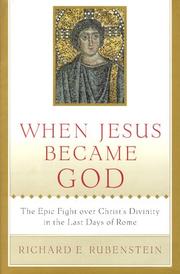
A narrative account of the Arian controversy and the Council of Nicaea that keeps the theology intelligible while showing the politics running underneath it. Rubenstein is a legal scholar rather than a patristics specialist, which makes the book unusually readable and occasionally schematic.

Ehrman returns to the growth question from the top down — conversion, coercion, and what imperial favour did and did not accomplish — so it closes the loop opened by Stark in the first stage, with three hundred years of context now in place.
Peter Brown and the late-antique world
IntermediateMove from church history into the social and cultural history of late antiquity, where the church's real transformation of the Roman world becomes visible.
▸ Study plan for this stage
Pace: 12-14 weeks, and the length is the point. The World of Late Antiquity (216 pages) is short but compressed — two weeks, reread the opening chapters. Augustine of Hippo (463 pages) deserves four weeks. Through the Eye of a Needle is 759 pages of dense social history; six to eight weeks at 15-20 pages
- Brown's founding move in The World of Late Antiquity: replacing decline-and-fall with a period that was culturally generative in its own right, running from about 150 to 750 and encompassing the rise of Islam rather than stopping at 476
- Why that reframing required the whole geography — Persia, Syria, North Africa and the Arab world are inside the story rather than outside it, which is precisely what a Rome-centred narrative could not accommodate
- The holy man as a social role Brown identified: the ascetic as arbitrator, patron and locus of authority in a village world, which is a sociological category rather than a hagiographical one
- Augustine as Brown reconstructs him: a provincial North African rhetorician whose thought develops in response to specific controversies — Manichaeism, Donatism, Pelagianism — rather than arriving as a system
- Why Augustine only makes sense after stages 3 and 4: the Donatist dispute is about the church's boundaries after persecution, and the Pelagian dispute about grace and human capacity, both of which presuppose everything you have read
- The central argument of Through the Eye of a Needle: that the arrival of great wealth into the church in the fourth and fifth centuries forced a reorganisation of Roman ideas about giving, patronage and the poor — and that Christianity reorganised Roman social relations rather than merely inheriting
- Brown's method throughout — reading sermons, letters and inscriptions for social relations rather than for doctrine, which is a different use of the same sources you met in earlier stages
- What did the phrase 'late antiquity' allow historians to see that 'the fall of Rome' did not? Name two specific developments that only become visible under the new frame
- Trace one of Augustine's positions — on grace, or on the church and the impure, or on coercion of the Donatists — and show how Brown makes it a response to a situation rather than a deduction from a premise
- Through the Eye of a Needle argues wealth transformed the church. Could the argument be run the other way, that the church transformed wealth? What evidence does Brown give for the direction he chooses?
- Brown's holy man is a social role. Does describing it that way explain the phenomenon or redescribe it? Point to a passage that settles the question for you
- Run the path backward from Brown: which of the earlier books look different now, and which of their arguments look thinner than they did?
- Read Augustine's Confessions Books 1-9 alongside Brown's biography, and for three episodes write a paragraph on what Brown adds that Augustine does not tell you and what Augustine tells you that Brown reads sceptically
- Take one chapter of Through the Eye of a Needle and reconstruct the argument in a single page of your own notes — Brown's chapters are long and richly illustrated, and reducing one to its skeleton is the only way to check you followed it
- Extend your path-long timeline forward to 750 and add Brown's markers to it. The stretch beyond 476 is where the reframing does its work
- Write 500 words on how a wealthy Roman family's giving would have looked in 350 and in 450, using specific evidence from Brown. The change between the two is his thesis
- Return to the 250 words you wrote in stage 1 about Stark's least-supported claim and write a fresh 300-word verdict on it now that you have finished the path. Note which stage changed your mind
Next up: This is the end of the path: you can now read early Christian history as historians write it, tell a settled finding from a live scholarly dispute, and say which of the disputes you have actually formed a view on.
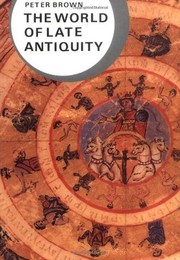
The short book that created a field, replacing 'decline and fall' with a late antiquity that was culturally generative in its own right. Brown assumes you already know the outline, which is why it sits here rather than at the start.
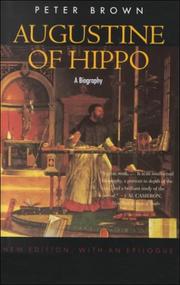
Still the standard biography, and the best single route into how a late-Roman intellectual actually thought. Read it after the doctrinal stages, because Augustine's arguments only make sense against the controversies you have now met.

Brown's late masterwork on wealth, giving and the church in the Western empire — the book that shows how Christianity reorganised Roman social relations rather than merely inheriting them. It is long and demanding, and it is the right place to finish.