Impact Investing: The Best Books, In Order
This curriculum takes a beginner from the core philosophy of doing good with capital all the way through the technical mechanics of blended finance, impact measurement, and portfolio construction for profit and purpose. Each stage builds the vocabulary and mental models needed for the next, moving from "why" to "how" to "at scale."
Foundations: Why Capital Can Do Good
BeginnerUnderstand the philosophical and historical case for aligning money with social and environmental purpose, and build the core vocabulary of impact investing.
▸ Study plan for this stage
Pace: 4–5 weeks, ~25–30 pages/day, with 2–3 reflection days per week
- The definition and core principles of impact investing: intentional alignment of financial returns with measurable social and environmental outcomes
- The historical evolution of impact investing from philanthropy and socially responsible investing to a distinct asset class
- The role of capital as a tool for systemic change and how traditional finance has historically separated money from purpose
- The concept of 'blended value': how financial returns and social/environmental returns can be pursued simultaneously rather than as trade-offs
- Key stakeholders in impact investing: foundations, institutional investors, entrepreneurs, and communities affected by investments
- The importance of measurement and accountability in impact investing, and how it differs from traditional charity or ESG screening
- Real-world examples of impact investing in action across sectors like education, health, clean energy, and financial inclusion
- What is impact investing, and how does it differ from traditional philanthropy, socially responsible investing (SRI), and ESG investing?
- What historical and philosophical arguments does Rodin make for why capital should be aligned with social and environmental purpose?
- What is 'blended value' and why is it central to the impact investing thesis?
- Who are the key actors in the impact investing ecosystem, and what roles do they play?
- Why is measurement and accountability critical to impact investing, and what challenges does it present?
- Can you describe 2–3 concrete examples from the book of impact investments that generated both financial and social/environmental returns?
- Create a one-page 'impact investing glossary' as you read, defining key terms (impact investing, blended value, theory of change, impact measurement, etc.) in your own words
- Map the impact investing ecosystem: draw or list the key stakeholders Rodin identifies and describe how they interact and depend on one another
- Select one case study or example from the book and write a 2–3 page analysis of: (a) the problem it addressed, (b) how capital was deployed, (c) the financial and social/environmental outcomes achieved, and (d) what made it successful or what challenges it faced
- Reflect on your own relationship with money: write 1–2 pages on whether you currently see capital as separate from purpose, and what would need to change in your thinking to embrace impact investing
- Interview someone (friend, family, colleague, or mentor) about their views on whether money can and should do good; summarize their perspective and compare it to Rodin's argument
- Create a simple 'theory of change' diagram for a hypothetical impact investment in a sector that interests you (e.g., education, clean energy, healthcare), showing how capital leads to activities, outputs, outcomes, and impact
Next up: This stage establishes the philosophical foundation and vocabulary needed to evaluate specific impact investing strategies and asset classes; the next stage will dive into how to actually structure, assess, and manage impact investments in practice.

Written by the former president of the Rockefeller Foundation, this is the clearest beginner-friendly primer on what impact investing is, where it came from, and why it matters — the perfect starting point.
Social Finance & the Architecture of Capital
BeginnerLearn how social finance instruments — grants, loans, guarantees, and equity — are structured to attract different investors and serve different social missions.
▸ Study plan for this stage
Pace: 4–5 weeks, ~25–30 pages/day
- The concept of 'base of the pyramid' (BoP) markets and why they represent both social need and investment opportunity
- How sustainable value creation differs from traditional profit-maximization models
- The role of inclusive business models in aligning social impact with financial returns
- Why multinational corporations and private enterprise are essential actors in solving social and environmental challenges
- The distinction between charity/aid and commercially viable social enterprise
- How Hart's framework connects environmental sustainability, social inclusion, and business strategy
- The importance of innovation and technology in scaling social finance solutions
- What is the 'base of the pyramid' and why does Hart argue it represents a critical market opportunity rather than just a charity case?
- How does Hart's concept of 'sustainable value creation' differ from traditional corporate profit models, and what role does social finance play in enabling it?
- What are the key characteristics of inclusive business models, and how do they attract different types of investors (grants, loans, equity)?
- Why does Hart argue that private enterprise and market mechanisms—rather than government aid alone—are necessary to address poverty and environmental challenges at scale?
- How can a social enterprise simultaneously serve a social mission and generate financial returns that appeal to different investor classes?
- What barriers prevent traditional capital markets from funding base-of-the-pyramid ventures, and how might social finance instruments overcome them?
- Map a real-world base-of-the-pyramid business (e.g., Grameen Bank, Aravind Eye Care, or a similar enterprise) against Hart's framework: identify its social mission, business model, and which investor types (grant-makers, lenders, equity investors) it attracts and why
- Design a hypothetical inclusive business model for a social problem in a low-income market (e.g., clean water, healthcare, energy access): specify the product/service, target customer, unit economics, and which social finance instruments (grants, loans, guarantees, equity) would be most appropriate at different growth stages
- Create a 'capital stack' diagram for a social enterprise showing how grants, concessional loans, commercial debt, and equity could be layered to fund operations and growth while maintaining mission alignment
- Analyze a case study from Hart's book (or a similar enterprise) and identify: (a) what makes it commercially viable, (b) what social/environmental outcomes it delivers, and (c) how its financial structure attracts different investor types
- Write a one-page investment thesis for a hypothetical base-of-the-pyramid venture, addressing both financial returns and social impact metrics—practice articulating why it appeals to both commercial and impact investors
- Compare and contrast two different social finance instruments (e.g., a grant vs. a concessional loan, or a guarantee vs. equity) in terms of risk, return expectations, and mission alignment—use examples from Hart's framework
Next up: This stage establishes why social finance instruments exist and how they solve the capital-allocation problem for inclusive businesses; the next stage will deepen into the specific mechanics, terms, and structuring of each instrument type.
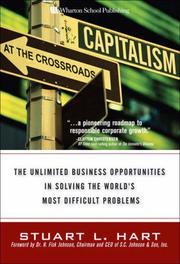
Explains how market forces can be redirected toward the base of the pyramid and environmental sustainability, providing the strategic rationale for social finance at scale.
Measuring What Matters
IntermediateMaster the frameworks and tools used to define, track, and report social and environmental impact — the analytical backbone of any serious impact investment.
▸ Study plan for this stage
Pace: 6–7 weeks, ~25–30 pages/day, with 2–3 days per week dedicated to exercises and framework application
- Logic models and theory of change: how to map inputs, activities, outputs, and outcomes to articulate the causal chain of impact
- Balanced scorecards and performance dashboards: selecting and tracking KPIs that reflect both financial and social/environmental returns
- Stakeholder engagement in impact measurement: involving beneficiaries, communities, and partners in defining what success looks like
- Quantitative vs. qualitative data: when to use metrics, surveys, interviews, and case studies to build a complete impact picture
- Impact reporting standards and frameworks: IRIS+ metrics, SASB, GRI, and how to communicate impact credibly to investors and stakeholders
- Cost-benefit and cost-effectiveness analysis: evaluating whether social/environmental gains justify the investment and resources deployed
- Data collection systems and attribution challenges: designing robust systems to track impact while accounting for what would have happened anyway (counterfactual)
- Continuous improvement loops: using measurement data to refine strategy, pivot programs, and demonstrate accountability
- How do you construct a logic model or theory of change, and why is it essential before selecting any metrics?
- What are the key differences between outputs, outcomes, and impact, and how do you avoid conflating them in your measurement framework?
- How would you design a balanced scorecard for an impact investment that tracks both financial performance and social/environmental returns?
- What role do stakeholders play in defining impact metrics, and how do you ensure your measurement approach reflects what matters to beneficiaries?
- How do you choose between quantitative metrics and qualitative evidence, and when should you use both?
- What are the main impact reporting standards (IRIS+, SASB, GRI) and how do you select which framework(s) fit your investment thesis?
- Build a logic model for a hypothetical impact investment (e.g., a clean energy startup or affordable housing fund): map inputs → activities → outputs → outcomes → impact, and identify where measurement is most critical
- Design a balanced scorecard with 8–12 KPIs for an impact investment portfolio: include financial metrics, social metrics, and environmental metrics, and explain why each matters
- Conduct a stakeholder mapping exercise: identify who defines success in an impact investment (investors, management, beneficiaries, regulators) and draft how their priorities might differ
- Create a data collection plan for one outcome in your logic model: specify data sources (surveys, admin data, interviews), frequency, cost, and how you'll handle attribution
- Map an impact investment to IRIS+ metrics: select 5–8 core indicators and explain how they align with your theory of change
- Analyze a real impact report (from a fund or portfolio company): critique its measurement approach—what's measured well, what's missing, and how would you improve it?
Next up: This stage equips you with the measurement and reporting discipline to evaluate whether impact claims are real and defensible—preparing you to assess deal quality, portfolio risk, and fund performance in the next stage of deeper investment analysis and portfolio construction.

The most rigorous and practical guide to impact measurement available; introduces SROI, logic models, and outcome metrics in a structured way that builds real analytical skill.

Draws on deep case-study research to show how leading practitioners actually select, monitor, and report impact alongside financial returns — bridging theory and practice.
Blended Finance & Advanced Deal Structures
IntermediateUnderstand how public, philanthropic, and private capital are layered together in blended finance vehicles to de-risk deals and mobilize investment at scale.
▸ Study plan for this stage
Pace: 4–5 weeks, ~40–50 pages/day (approximately 280–350 pages total)
- The Sustainable Development Goals (SDGs) as a framework for identifying investment opportunities and de-risking capital deployment
- How public sector capital (grants, concessional loans) catalyzes private investment by absorbing first-loss risk
- The role of philanthropic capital as a bridge between public mandates and private returns
- Blended finance mechanics: layering capital tranches with different risk-return profiles to attract institutional investors
- Systems thinking in development finance: understanding how interconnected global challenges require coordinated multi-stakeholder capital solutions
- The concept of additionality: ensuring blended structures mobilize capital that wouldn't otherwise flow to development outcomes
- How do the Sustainable Development Goals provide a framework for identifying and structuring blended finance deals?
- What role does concessional capital (public and philanthropic) play in de-risking private investment in emerging markets and frontier sectors?
- How are different capital tranches (senior, mezzanine, equity) structured in a blended finance vehicle, and why is sequencing important?
- What is additionality in blended finance, and how do you verify that a deal actually mobilizes new capital rather than crowding out existing investment?
- How does Sachs' systems approach to sustainable development inform the design of multi-stakeholder capital structures?
- What are the key differences between blended finance for infrastructure, agriculture, and climate adaptation, and how does deal structure vary by sector?
- Map one SDG (e.g., SDG 7 on clean energy or SDG 2 on food security) to a real-world blended finance deal; identify the capital layers, risk tranches, and how each investor's return expectations are met
- Analyze a case study from Sachs' work on a multi-country development challenge; sketch out a hypothetical blended finance structure that could mobilize private capital to address it
- Create a simple waterfall model for a blended finance vehicle: assume $100M total capital with grants, concessional debt, and commercial equity; model how returns flow to each tranche and calculate the blended cost of capital
- Interview or conduct a desk review of a development finance institution (e.g., IFC, CDC, Swedfund) to understand how they use concessional capital to crowd in private investors; document one live deal structure
- Write a 2–3 page additionality assessment for a hypothetical deal: explain why private capital alone would not flow to the opportunity and how the blended structure overcomes market failures
- Develop a risk matrix for a blended finance deal in a frontier market; identify which risks are absorbed by which capital tranche and how the structure protects junior investors
Next up: Understanding Sachs' systems-based approach to sustainable development and the capital gaps it reveals prepares you to dive into specific blended finance vehicles and legal/contractual mechanisms that operationalize these multi-stakeholder structures at scale.

Provides the macro-economic and policy context (SDGs, development finance) within which blended finance operates, helping readers see how individual deals connect to global capital flows.
Investing for Profit and Purpose at Scale
ExpertSynthesize everything into a portfolio-level view — how institutional investors, fund managers, and family offices build strategies that pursue competitive financial returns alongside measurable impact.
▸ Study plan for this stage
Pace: 4–5 weeks, ~40–50 pages/day, with 2–3 days per week for synthesis and portfolio-building exercises
- Value creation and value extraction: how to distinguish between activities that genuinely create new value versus those that merely redistribute existing wealth
- The role of public institutions and mission-oriented state investment in de-risking innovation and enabling private sector returns
- Ecosystem thinking: viewing impact investing as part of an interconnected system where public, private, and social sectors co-create value
- Redefining profit and purpose alignment: how competitive financial returns and measurable impact outcomes are interdependent rather than trade-offs
- Portfolio-level strategy for institutional investors: structuring diversified investment vehicles that pursue mission-aligned returns across multiple asset classes and geographies
- Risk, return, and impact metrics: designing frameworks that simultaneously track financial performance, social/environmental outcomes, and systemic change
- Capturing and distributing value fairly: mechanisms for ensuring that value created is shared across stakeholders, not concentrated among capital holders
- What is the distinction between value creation and value extraction in Mazzucato's framework, and how does this distinction change how you evaluate an investment opportunity?
- How do public institutions and mission-oriented state investment reduce risk and enable private sector profitability in impact investing ecosystems?
- How would you design a portfolio-level impact investing strategy that pursues competitive financial returns while maintaining measurable social or environmental outcomes?
- What are the key differences between viewing impact investing as individual transactions versus viewing it as part of a broader ecosystem, and why does this matter for institutional strategy?
- How can an institutional investor or fund manager align profit incentives with purpose without treating them as competing objectives?
- What metrics and governance structures would you implement to track both financial performance and impact outcomes at the portfolio level?
- Map a real institutional investor or fund manager's current portfolio: identify which investments are primarily value-creating versus value-extracting according to Mazzucato's framework. Write a 2–3 page analysis of where the portfolio could shift toward greater value creation.
- Design a hypothetical impact fund strategy document (8–10 pages) that outlines: target sectors, financial return expectations, impact metrics, ecosystem partnerships (public/private/social), and portfolio composition. Ground it in Mazzucato's principles.
- Conduct a case study of a public institution's role in de-risking innovation (e.g., DARPA, NIH, Green Investment Bank). Trace how public investment enabled private sector returns, and write a 3–4 page brief on lessons for impact investing strategy.
- Build a dual-metric dashboard for a hypothetical $500M impact fund: design financial KPIs (IRR, MOIC, cash-on-cash) alongside impact KPIs (lives improved, emissions reduced, systemic change indicators). Explain trade-offs and how you'd govern them.
- Interview or conduct a written Q&A with an institutional investor, fund manager, or family office CIO about how they balance profit and purpose at portfolio scale. Synthesize findings into a 2–3 page memo on their strategic approach.
- Develop a stakeholder value-distribution model for a hypothetical impact investment: show how value created flows to founders, investors, employees, communities, and public sector. Identify where value concentration risks exist and propose governance safeguards.
Next up: This stage equips you to architect institutional-scale impact investing strategies grounded in systems thinking and value creation logic; the next stage will likely deepen your ability to navigate real-world implementation challenges, regulatory constraints, and emerging frontiers in impact measurement and accountability.

Challenges readers to rethink the role of public and private capital in solving systemic problems, providing the advanced strategic lens needed to design impact portfolios at an institutional level.
Discussion
Keep reading
Paths that share books, cover the same subject, or open a related topic.