Live more sustainably, room by room
This curriculum moves from honest, big-picture thinking about what actually matters environmentally, through practical zero-waste and low-impact habits at home, and finally into the systems-level understanding that keeps motivation grounded in reality rather than guilt. Each stage builds the vocabulary and critical lens needed for the next, so readers avoid both greenwashing traps and perfectionism paralysis.
Clear Eyes First: What Actually Matters
BeginnerUnderstand which individual actions have real environmental impact and which are largely symbolic — building an honest mental model before changing any habits.
▸ Study plan for this stage
Pace: 4–5 weeks total: Week 1–2 — "How Bad Are Bananas?" (~20–25 pages/day, including time to pause and look up your own carbon footprint figures); Week 3–5 — "The Uninhabitable Earth" (~15–20 pages/day, reading slowly and journaling reactions, as the material is dense and emotionally heavy).
- Carbon footprint as a spectrum, not a binary: Berners-Lee's 'orders of magnitude' framework teaches that actions differ by 10x, 100x, or 1000x in impact — not just 'good' vs. 'bad'
- Lifecycle thinking: every product or action has upstream and downstream emissions that are invisible at the point of consumption (e.g., the full chain behind a banana, a text message, or a flight)
- High-impact vs. low-impact actions: a small set of choices (flying, diet, home energy, car use) dominates personal carbon footprints, while many celebrated 'green' gestures (reusable straws, turning off lights) are largely symbolic at the individual scale
- Systems vs. individual responsibility: Wallace-Wells shows that climate change is a civilizational-scale problem driven by industrial and political systems, which contextualizes — without dismissing — the role of personal action
- The cascading risk model: 'The Uninhabitable Earth' introduces how climate impacts (heat death, food scarcity, economic collapse, conflict) are not isolated but chain-react and compound each other
- Emotional honesty as a prerequisite for action: Wallace-Wells argues that denial and false optimism are as dangerous as despair — clear-eyed acknowledgment of scale is the starting point for meaningful response
- The gap between perception and reality: both books reveal that public intuition about what 'matters' environmentally is systematically miscalibrated by marketing, media, and cultural habit
- Proportionality as a decision-making tool: understanding relative impact allows you to prioritize ruthlessly rather than trying to do everything at once
- After reading Berners-Lee, can you rank the following by carbon footprint from largest to smallest: a transatlantic flight, a year of eating beef, a year of daily showers, and sending 1,000 emails — and explain *why* each lands where it does?
- What does Berners-Lee mean by a 'lifecycle' emission, and why does ignoring it lead people to make poorly-informed environmental choices?
- Which two or three personal behaviors, according to the evidence in 'How Bad Are Bananas?', account for the largest share of a typical Western individual's carbon footprint?
- How does Wallace-Wells use the concept of 'cascading' or 'compounding' risks, and what does this suggest about treating climate change as a single, isolated problem?
- Both books implicitly or explicitly address the limits of individual action. What is the relationship between personal choices and systemic change that emerges from reading them together?
- What is the psychological argument Wallace-Wells makes for confronting worst-case scenarios rather than focusing only on hopeful narratives — and do you find it convincing?
- Build your personal carbon footprint map: Before finishing 'How Bad Are Bananas?', list your top 10 regular activities or purchases. After reading, go back and annotate each with Berners-Lee's rough magnitude estimates. Identify your top 3 highest-impact items — these become your personal 'big levers'.
- The Symbolic vs. Substantive audit: Make two columns. In one, list 'green' habits you already practice or have considered (e.g., reusable bags, recycling, short showers). In the other, place each habit where Berners-Lee's framework suggests it belongs on the impact spectrum. Be ruthlessly honest about which column each item falls into.
- Fact-check a green claim: Find one environmental claim from an advertisement, news article, or social media post (e.g., 'this product saves X kg of CO₂'). Use the orders-of-magnitude logic from 'How Bad Are Bananas?' to evaluate whether the claim is proportionate, misleading, or meaningless without context.
- Cascading risk diagram: After reading 'The Uninhabitable Earth', choose one climate impact Wallace-Wells describes (e.g., crop failure, extreme heat) and draw a simple chain diagram showing at least four downstream consequences it triggers. This makes his abstract systems-thinking concrete and visual.
- Emotional check-in journal: 'The Uninhabitable Earth' is intentionally confronting. After each reading session, write 3–5 sentences: What did you feel? What did you want to dismiss or deny? What felt most credible? Tracking this builds the 'clear eyes' the stage title demands and prevents both paralysis and false comfort.
- Synthesis letter: After finishing both books, write a one-page letter to a friend who has never thought about climate change. Explain (a) which personal actions actually move the needle and why, and (b) why the problem is bigger than any individual — without either letting people off the hook or making them feel helpless. This forces integration of both books' core tensions.
Next up: Having built an honest, proportionate mental model of what matters and why — grounded in Berners-Lee's carbon arithmetic and Wallace-Wells's civilizational stakes — the reader is now ready to move from diagnosis to design, exploring concrete systems and habits for zero-waste and sustainable living without the distortion of greenwashing or misplaced priorities.

A friendly, data-driven tour of the carbon footprint of everyday things — from a text message to a flight — giving beginners a calibrated sense of scale so they can prioritize what genuinely moves the needle.
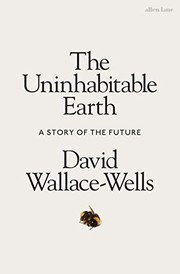
Provides the urgent 'why bother' context without sugarcoating, ensuring the reader understands the stakes before diving into solutions — read second so the motivation is real, not abstract.
Foundations: Zero-Waste Living at Home
BeginnerLearn the core zero-waste philosophy and practical routines for reducing household waste — shopping, kitchen, bathroom, and beyond — without overwhelm.
▸ Study plan for this stage
Pace: 6–8 weeks total. Week 1–4: "Zero Waste Home" by Bea Johnson (~20–25 pages/day, reading one room/chapter cluster per week — Refuse/Reduce/Reuse/Recycle/Rot framework first, then kitchen, bathroom, bedroom, and beyond). Week 5–8: "101 Ways to Go Zero Waste" by Kathryn Kellogg (~15–20 pages/day, treati
- The 5 R's hierarchy (Refuse, Reduce, Reuse, Recycle, Rot) as introduced by Bea Johnson — and why the order matters (Refusing comes before Recycling)
- Waste auditing: Johnson's method of examining what actually fills your trash and recycling bins before making any changes
- Bulk shopping and packaging-free sourcing as a cornerstone habit (Johnson's pantry system and Kellogg's beginner-friendly swaps for those without bulk stores nearby)
- DIY replacements for common single-use products — cleaning supplies, personal care items, and food storage — drawn from both Johnson's recipes and Kellogg's 101 tips
- The 'one in, one out' and decluttering-first mindset: Johnson's argument that reducing what you own is the prerequisite to reducing what you waste
- Bathroom and personal care zero-waste swaps (shampoo bars, safety razors, reusable cotton rounds) as catalogued in Kellogg's accessible tip format
- Progress over perfection: Kellogg's explicitly beginner-friendly framing that small, consistent swaps compound into large impact over time
- Community and systems thinking: both authors' emphasis that individual action is amplified by influencing household members, neighbors, and local policy
- What are Bea Johnson's 5 R's, in order, and why does she argue that 'Refuse' must come before 'Recycle' rather than the other way around?
- After conducting a waste audit inspired by 'Zero Waste Home,' what categories of waste are typically the largest in an average household, and what does Johnson recommend tackling first?
- How does Kathryn Kellogg in '101 Ways to Go Zero Waste' address the common barrier of not having access to a bulk food store — what alternative strategies does she offer?
- Both Johnson and Kellogg discuss the kitchen as the highest-impact room for waste reduction. What are the three to five most impactful kitchen swaps or routines recommended across both books?
- How do the two authors differ in tone and approach (Johnson's all-in lifestyle overhaul vs. Kellogg's incremental tip-based method), and how can a beginner use both frameworks together without feeling overwhelmed?
- What does Johnson mean by 'the trash jar,' and how does Kellogg's concept of gradual swaps relate to achieving a similarly minimal waste output over time?
- Conduct a one-week waste audit before or during reading 'Zero Waste Home': collect everything you would normally throw away or recycle into separate bags, then categorize and weigh them. Use Johnson's 5 R's to label each item — which R could have prevented it?
- Map your home room by room (kitchen, bathroom, bedroom, living areas) and list the top 3 single-use or high-waste items in each. After finishing both books, return to this map and annotate each item with a specific swap recommended by Johnson or Kellogg.
- Choose one area from Kellogg's '101 Ways' — ideally the kitchen or bathroom — and implement at least 5 of her tips within a single week. Keep a brief daily journal (3–5 sentences) noting what was easy, what created friction, and what surprised you.
- Make one DIY product from recipes or methods described in 'Zero Waste Home' (e.g., an all-purpose cleaner, a beeswax wrap alternative, or a simple body scrub). Document the cost comparison and time investment versus the store-bought equivalent.
- Redesign your shopping routine for one full week using principles from both books: bring your own bags and containers, shop the bulk or farmers' market section, and refuse all unnecessary packaging. Photograph your haul and compare it to a typical week's packaging waste.
- Write a one-page 'Zero Waste Home Manifesto' for your own household — drawing directly on Johnson's 5 R's and at least 10 specific tips from Kellogg — that you could realistically commit to. Share it with one other person in your household or a friend to build accountability.
Next up: Mastering household routines and the 5 R's framework gives you the personal foundation and daily habits needed to zoom out in the next stage — exploring the broader systems of sustainable consumption, food, fashion, and community action that extend zero-waste thinking beyond the home.

The canonical zero-waste manual that introduced the 5 R's (Refuse, Reduce, Reuse, Recycle, Rot) — the essential vocabulary and framework every subsequent book in this path assumes you know.

A gentler, more accessible companion to Johnson's book, offering bite-sized swaps and troubleshooting for common sticking points — ideal for translating philosophy into daily habit.
High-Impact Choices: Food, Stuff & Money
IntermediateIdentify the highest-leverage lifestyle domains — diet, consumption, and spending — and make intentional, evidence-based changes in each.
▸ Study plan for this stage
Pace: 10–12 weeks total: ~3–4 weeks per book at 20–25 pages/day. Week 1–4: Drawdown (map the solution landscape); Week 5–8: Eating Animals (interrogate food systems deeply); Week 9–12: The Story of Stuff (trace the full lifecycle of consumer goods and money flows). Reserve the final 3–4 days of each book
- Drawdown's ranked solutions framework: understanding which individual and systemic actions (e.g., reduced food waste, plant-rich diets, rooftop solar) have the greatest measurable CO₂-reduction potential, and why ranking matters for prioritizing effort
- Food systems as a climate lever: Drawdown and Eating Animals together reveal that animal agriculture is among the highest-impact domains — from land use and methane emissions to water consumption — making dietary choices a top-tier intervention
- The moral and emotional architecture of food choices: Foer's narrative journalism in Eating Animals moves beyond data to expose the lived reality of factory farming, forcing the reader to reconcile personal values, cultural identity, and ecological consequence
- The Materials Economy and its hidden stages: Leonard's 'Stuff' lifecycle — Extraction → Production → Distribution → Consumption → Disposal — shows that the environmental cost of any product is mostly invisible to the end consumer
- Externalized costs and subsidized destruction: across all three books, a core theme is that market prices systematically exclude ecological and social damage, making unsustainable choices artificially cheap and sustainable ones artificially expensive
- Conscious consumption vs. voluntary simplicity: distinguishing between buying 'greener' products and fundamentally reducing the volume of stuff purchased — The Story of Stuff argues the latter is structurally more powerful
- Evidence-based personal prioritization: using Drawdown's quantitative lens to evaluate which changes in diet, purchasing, and spending yield the highest return on effort, avoiding 'feel-good' low-impact actions at the expense of high-impact ones
- Narrative vs. data as tools for behavior change: comparing Foer's story-driven persuasion with Hawken's solution-catalog approach and Leonard's systems-animation style to understand how different rhetorical modes motivate different readers
- According to Drawdown, which three solutions in the food, land use, and consumption sectors rank highest by projected CO₂ reduction, and what does that ranking imply about where an individual should focus first?
- How does Jonathan Safran Foer use personal narrative and reported investigation together in Eating Animals to argue that factory farming is not an isolated industrial problem but a cultural and ethical one — and do you find this approach more or less persuasive than Drawdown's data-driven framing, and why?
- Annie Leonard describes a 'linear system on a finite planet' in The Story of Stuff — what are the five stages of the materials economy, where does the most damage occur, and which stage is most hidden from ordinary consumers?
- All three books identify food waste as a critical leverage point. How do Drawdown's statistics, Foer's supply-chain reporting, and Leonard's lifecycle analysis each illuminate a different dimension of the same problem?
- The Story of Stuff argues that shopping is not a neutral or private act. How does Leonard connect individual purchasing decisions to government policy, corporate lobbying, and international resource extraction — and how does this systemic view change the meaning of 'personal responsibility'?
- After reading all three books, which single change to your diet, which single change to your consumption habits, and which single change to how you spend or invest money would have the highest combined impact — and what evidence from these texts supports your choices?
- Drawdown Personal Audit: Download or consult Drawdown's ranked solution list. Score your current lifestyle against the top 20 solutions. Create a two-column table — 'Already doing' vs. 'High-impact gap' — and identify your top three actionable gaps to close during this stage.
- 7-Day Food Journal with Carbon Lens: Log every meal for one week, then use a free food carbon calculator (e.g., BBC Food Calculator or Shrink That Footprint) to estimate the emissions of each day's diet. After finishing Eating Animals, revisit the journal and annotate each entry with what Foer's reporting reveals about its supply chain.
- Stuff Lifecycle Mapping: Choose three objects you own or recently bought (e.g., a smartphone, a piece of clothing, a packaged food item). Draw Leonard's five-stage lifecycle for each — tracing extraction, production, distribution, consumption, and disposal — and mark every stage where an environmental or social cost is externalized.
- Consumption Fast + Reflection: For two consecutive weeks, commit to buying nothing new except food and genuine necessities. Keep a daily log of every purchase you avoided and what impulse or habit drove the urge. At the end, write a 500-word reflection connecting your experience to Leonard's argument about the 'work-watch-spend treadmill.'
- Evidence-Based Change Commitment: Drawing explicitly on all three books, write a one-page 'High-Impact Pledge' that commits to exactly three changes — one dietary, one consumption-related, one financial/investment-related. Each commitment must cite a specific passage, statistic, or argument from the relevant book as justification.
- Money & Values Alignment Check: Review three months of your bank/credit card statements. Categorize spending by Drawdown solution area (food, energy, transport, stuff, etc.). Identify the single largest category of spending that conflicts with your stated values and draft one concrete, time-bound plan to redirect that money.
Next up: By grounding high-impact choices in quantitative evidence (Drawdown), moral depth (Eating Animals), and systems thinking (The Story of Stuff), this stage equips the reader with both the motivation and the analytical vocabulary to move from individual lifestyle changes to understanding community-scale and policy-level sustainability — the natural focus of the next stage.
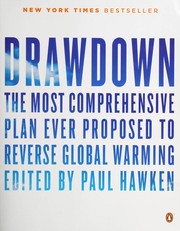
Ranks the 100 most substantive solutions to climate change by impact, giving readers a ranked map so they can see exactly where personal choices (food, energy, transport) sit relative to systemic ones.
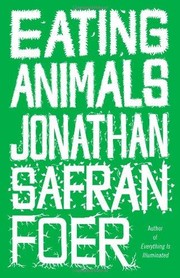
Diet is the single highest-impact personal lever; this book makes the case compellingly and emotionally, building on Drawdown's data with the human stories needed to actually change behavior.
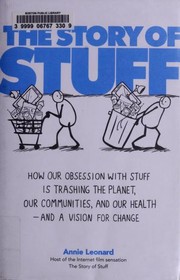
Traces the full lifecycle of consumer goods — extraction through disposal — revealing why buying less is more powerful than recycling more, a critical insight at this stage of the curriculum.
Sustainable Mindset: Avoiding the Guilt Spiral
IntermediateDevelop a psychologically resilient, community-oriented approach to sustainable living that is joyful and durable rather than perfectionist and exhausting.
▸ Study plan for this stage
Pace: 6–8 weeks total. Week 1–3: Read "Sustainability" by Caradonna (~20–25 pages/day, focusing on annotating passages about systemic vs. individual responsibility). Week 4–7: Read "Living the Good Life" by Nearing (~15–20 pages/day, journaling alongside each chapter). Week 8: Integration week — review no
- Sustainability as a historical and political project, not just a personal lifestyle choice (Caradonna) — relieving the individual of sole moral burden
- The spectrum of sustainability movements: recognizing that no single person or approach has ever been 'perfectly' sustainable, normalizing imperfection
- Systemic critique vs. individual guilt: understanding how consumer culture manufactures guilt to deflect from structural change
- The Nearings' 'good life' as a practice of sufficiency and intentionality rather than deprivation or rigid rule-following
- Community and mutual aid as the engine of sustainable living — the Nearings' homestead as a social, not merely personal, project
- Joy, craft, and meaningful labor as intrinsic motivators that outlast shame-based motivation
- Durability of values over perfection of outcomes: how the Nearings sustained decades of practice through flexibility and purpose
- The difference between a sustainable mindset (adaptive, forgiving, curious) and a perfectionist one (brittle, exhausting, isolating)
- According to Caradonna, why is framing sustainability purely as individual consumer choice historically inaccurate and psychologically counterproductive?
- What structural and political forces does Caradonna identify as the primary drivers of unsustainability — and how does recognizing these shift where we place responsibility?
- How did Helen and Scott Nearing handle setbacks, failures, or compromises in their homesteading practice, and what does this reveal about the role of flexibility in long-term sustainable living?
- In what ways did the Nearings treat their project as a community endeavor, and why does this matter for avoiding burnout and isolation?
- What specific sources of joy and meaning did the Nearings draw on to sustain their lifestyle over decades, and how can a modern reader adapt these motivators?
- Having read both books: what is the difference between a guilt-driven and a values-driven approach to sustainability, and which is more likely to last?
- Guilt audit journal: After finishing Caradonna, list 5 sustainability 'failures' you feel guilty about. For each, write one sentence identifying the systemic factor that makes it difficult, then reframe your role realistically. Revisit this list after finishing the Nearings.
- Sufficiency mapping: Inspired by the Nearings' concept of 'enough,' draw a simple diagram of one area of your life (food, clothing, energy). Mark what you already do, what feels joyful, and what feels like a burden. Drop one burden; deepen one joy.
- Community inventory: The Nearings never homesteaded in isolation. List 3 people in your life (or community spaces) with whom you could share a sustainable practice — a seed swap, a repair café, a bulk-buying group. Reach out to at least one.
- Craft a personal 'good life' statement: In 150 words or fewer, describe what a sustainable life looks and feels like for YOU — not a perfect one, but a meaningful and durable one. Use language from both books as inspiration.
- Systemic vs. personal responsibility debate: Pick one everyday item (e.g., plastic packaging, fast fashion). Write two short paragraphs — one placing responsibility on the individual, one on the system — then write a third paragraph synthesizing both. Notice how your emotional tone shifts.
- 30-day 'one joyful act' log: For one month after finishing both books, do one small sustainable act per day chosen purely because it feels good (cooking from scratch, mending a garment, walking instead of driving). Log the feeling, not the carbon math.
Next up: By grounding sustainability in historical context (Caradonna) and lived, community-rooted practice (the Nearings), the reader is now psychologically equipped to engage with more technical or action-oriented zero-waste content without collapsing into perfectionism — making the next stage's practical strategies feel empowering rather than overwhelming.

Contextualizes today's sustainability movement within centuries of thought, helping readers see their choices as part of a long arc — reducing the isolation and guilt that come from feeling personally responsible for systemic problems.
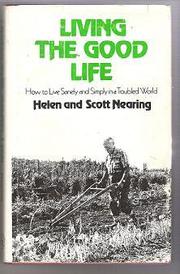
A classic, grounded memoir of intentional simple living that reframes sustainability as abundance and craft rather than deprivation — the ideal antidote to guilt-driven minimalism.
Systems Thinking: Beyond the Individual
ExpertUnderstand how personal choices connect to — and are constrained by — economic and political systems, and how to advocate for change at a larger scale.
▸ Study plan for this stage
Pace: 8–10 weeks total: Weeks 1–5 for "Doughnut Economics" (~30–35 pages/day, including time to sketch diagrams and reflect on each chapter's economic model); Weeks 6–10 for "The Overstory" (~40–45 pages/day, with slower, more contemplative reading for the novel's later sections where ecological and syste
- The Doughnut model: the social foundation (meeting human needs) and the ecological ceiling (planetary boundaries) as the two boundaries of a safe and just space for humanity
- Critique of GDP growth as the dominant economic goal, and Raworth's argument that economies should be 'agnostic about growth' and designed to thrive rather than merely grow
- Embedded economy thinking: how the economy is nested within society, which is nested within the living world — rejecting the idea of the economy as a self-contained, self-regulating machine
- Distributive and regenerative design: the idea that inequality and environmental destruction are design failures, not inevitable outcomes, and that systems can be redesigned intentionally
- The role of narrative and metaphor in economic thinking: how the 'rational economic man' and the 'growth curve' stories have shaped — and distorted — policy for decades
- Interconnectedness and deep time in 'The Overstory': Powers illustrates through multiple human lives how human fates are entangled with non-human systems across centuries, not just election cycles
- Collective action vs. individual heroism: 'The Overstory' dramatizes how systemic change requires networks of people and species, and how individual acts of resistance are both necessary and insufficient alone
- The political economy of inaction: both books, in different registers, examine how vested interests, short-termism, and flawed mental models prevent societies from responding to ecological crisis at the required scale
- According to Raworth, what are the seven ways that mainstream economics has gone wrong, and which of her proposed 'new lenses' do you find most persuasive or challenging?
- How does the Doughnut model reframe the relationship between social justice and environmental sustainability — are they in tension or mutually reinforcing in her framework?
- In 'The Overstory', how do Powers' interwoven character arcs collectively argue that individual moral awakening is necessary but not sufficient for systemic change?
- Both books challenge the idea that the current economic and political system is natural or inevitable. What specific mechanisms — cultural, institutional, or narrative — do each author identify as maintaining the status quo?
- Raworth argues that economies must be redesigned to be distributive and regenerative 'by design.' Using examples from 'The Overstory', what would it look like if human communities actually organized themselves around those principles?
- After reading both books, how has your understanding of personal sustainable choices changed? In what ways are individual actions empowered or constrained by the larger systems each author describes?
- Draw your own Doughnut: Map a community, city, or country you know well onto Raworth's Doughnut model. Identify which social foundations are unmet and which ecological ceilings are being breached locally, and write a one-page analysis of the trade-offs.
- Economic story audit: Raworth identifies damaging economic narratives (e.g., the rational self-interested actor, endless growth). Spend one week collecting examples of these narratives from news headlines, political speeches, or advertisements, then write a short essay reframing each one using Raworth's alternative lenses.
- Character-to-system mapping for 'The Overstory': Choose three characters from the novel and trace how their personal choices are enabled or blocked by economic and political structures Powers depicts. Present your findings as a visual map or a written comparative analysis.
- 'The Overstory' features real acts of environmental advocacy — research one real-world movement or policy campaign (e.g., old-growth forest protection, corporate supply-chain legislation) that parallels the novel's themes, and write a 500-word brief on what systemic levers it targets.
- Design a policy intervention: Using Raworth's regenerative/distributive design principles, draft a one-page policy proposal for a local or national issue (e.g., urban food systems, public transport, housing). Identify which part of the Doughnut it addresses and anticipate likely political obstacles.
- Facilitated discussion or book club session: Host or join a conversation that brings both books into dialogue. Use the prompt: 'Raworth gives us the blueprint; Powers gives us the grief. What do we do with both?' Document the key insights that emerge.
Next up: By internalizing how economic design and ecological interdependence operate at a systems level — analytically through Raworth and emotionally through Powers — the reader is now equipped to move from diagnosis and advocacy theory toward exploring concrete, community-scale and policy-scale solutions in the next stage of the curriculum.

Reframes the entire economic system around planetary boundaries and human needs, giving readers the conceptual tools to understand why individual action alone is insufficient and what structural change looks like.

A Pulitzer Prize-winning novel that synthesizes everything in this curriculum into a deeply felt, systems-level understanding of human relationships with the natural world — the ideal capstone that turns knowledge into lasting values.
Discussion
Keep reading
Paths that share books, cover the same subject, or open a related topic.