Start with The Language Instinct. The obvious alternatives are the two books that made him a public figure — The better angels of our nature and Enlightenment now — and they are the wrong door for a specific reason: they are syntheses of other people's data, argued at book length, and heavily disputed. The Language Instinct is the one place on this path where Pinker is writing from inside his own research field.
That matters more than it sounds. His method everywhere is evidence-stacking: a case built from linguistics, child development, neurology, genetics and sign language at once. Learning to tell when a stack is load-bearing and when it is decorative is the actual skill this reading order teaches, and it is far easier to learn on material where the author is the specialist.
Budget about three weeks. The book runs to roughly 500 pages and the middle chapters on syntax are genuinely technical — the tree diagrams are not decorative, and skipping them costs you the argument.
The nativist case, and its state
The claim is that language is a biological adaptation rather than a cultural invention. The evidence you will remember is creolisation: pidgin-speaking parents, and children who invent a grammar the parents did not have. The idea that does the philosophical work is mentalese, that thought is not conducted in English or Japanese.
Worth knowing rather than assuming settled: a substantial school of usage-based and constructionist linguists rejects the innate-grammar model, and the debate has not closed in either direction. You do not need to adjudicate it. You do need to know it is live before reading three more books that assume it is not.
The mind books
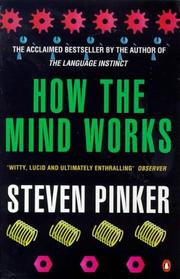
How the Mind Works, then Words and rules, then The Blank Slate. Take the middle one as a palate cleanser — it is short, narrow, and the cleanest demonstration on the whole path of how a hypothesis actually gets tested, using the regular and irregular verb split as evidence for two distinct mental systems.
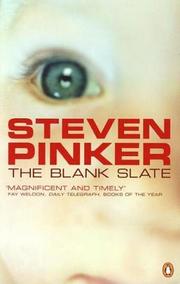
Read How the Mind Works before The Blank Slate. The second is the political defence of the first and makes little sense in reverse. The Blank Slate attacks three doctrines it names — the blank slate, the noble savage, the ghost in the machine — and its empirical heart is the behavioural-genetics shared-environment finding, which is also the part critics have engaged with most seriously. The long-running dispute with Gould and Lewontin about adaptationism and just-so stories runs underneath both books; Pinker addresses it directly, which is not the same as its being resolved.
The progress argument
The better angels of our nature, then Enlightenment now, then Rationality. Treat this as the hard stage even though the prose is easier than the linguistics. The first alone is around 800 pages and dense with graphs.
The pivot of the whole argument is the per-capita denominator: violence measured as a rate rather than a body count. Almost every serious objection is ultimately about that choice, along with the quality of pre-modern data and the statistical objection — made most prominently by Nassim Taleb — that rare enormous wars make trend claims over a few decades unreliable, which Pinker disputes. Historians, statisticians and philosophers have all pushed back at length. The disputes are worth reading rather than skipping, and this path does not take a side on who is right.
Enlightenment now widens the same method to health, wealth, safety and environment, and attaches an explicit values argument the earlier book mostly kept implicit — which is why it is both the more quotable and the more criticised. Rationality goes last on purpose: it is short, it is a toolkit of Bayes, expected utility and the classic biases, and reading it after gives you instruments to use on the two books still fresh in your head.
The deeper cuts
The Stuff of Thought is the densest thing here after The better angels of our nature — semantics and verb argument structure, plus a long chapter on swearing that is both very funny and a serious piece of analysis. The Sense of Style is half the length and the right book to finish on, because it converts everything above into instructions. Its diagnosis of bad writing, the curse of knowledge, connects straight back to the theory of mind in the middle stage.
Where to stop
If you want Pinker the cognitive scientist, stop after The Blank Slate. If you want the public intellectual, continue — but read the criticism alongside rather than after. And if you only want one book that will change how you work tomorrow, The Sense of Style can be read on its own, out of order, today.
Follow the full ordered path here: Steven Pinker Reading Order: Where to Start.