Best Books to Start a Consulting Business (in Order)
This curriculum is built for someone who already understands business basics and wants to launch and grow a profitable independent consulting practice. It moves from mindset and positioning (the essential foundation), through the mechanics of finding clients and closing deals, into pricing and proposals mastery, and finally into the systems and strategy needed to scale a sustainable solo or small firm.
Positioning & The Consulting Mindset
IntermediateUnderstand what makes a consultant credible and hireable — how to define a niche, position expertise, and think like an independent professional rather than an employee.
▸ Study plan for this stage
Pace: 4–5 weeks, ~25–30 pages/day (approximately 150–180 pages total)
- The Red Velvet Rope Policy: defining your ideal client and deliberately excluding those who don't fit your niche
- Personal brand and positioning: how to stand out by being specific about who you serve and what problem you solve
- The consulting mindset: shifting from employee thinking (trading time for money) to independent professional thinking (packaging expertise and value)
- The 7 Core Self-Marketing Competencies: visibility, credibility, connection, trust, referrals, strategic relationships, and sales
- Authentic networking and relationship-building as the foundation of consulting business development
- Packaging your services: articulating your unique value proposition clearly and compellingly
- Overcoming the mindset blocks that prevent consultants from positioning themselves confidently
- What is the Red Velvet Rope Policy and why is it essential for positioning yourself as a consultant?
- How do you define your ideal client profile, and what criteria should you use to determine who to exclude?
- What are the 7 Core Self-Marketing Competencies, and which ones are your current strengths and gaps?
- How does the consulting mindset differ from an employee mindset, and what shifts in thinking are required?
- What is your unique value proposition, and can you articulate it in a way that resonates with your target market?
- How will you build authentic relationships and visibility in your niche without relying on cold outreach?
- Define your Red Velvet Rope Policy: write a detailed description of your ideal client (demographics, industry, pain points, values) and explicitly list who you will NOT work with and why
- Create your positioning statement: draft a 2–3 sentence statement that clearly defines who you serve, what problem you solve, and why you're uniquely qualified to solve it
- Assess your 7 Core Self-Marketing Competencies: rate yourself 1–10 on each competency and identify your top 2 gaps to address in the coming months
- Map your authentic network: list 20–30 people in your existing network (former colleagues, mentors, peers, clients) and identify which relationships you should nurture and how
- Develop your service package: write out 2–3 core service offerings you'll position to your ideal client, including the transformation they'll experience and the investment required
- Practice your elevator pitch: record yourself delivering a 30-second and 60-second version of your positioning to a friend or mentor and gather feedback on clarity and authenticity
Next up: With a clear niche, defined ideal client, and articulated value proposition, you're now ready to move into the operational stage—learning how to actually acquire clients, structure your offerings, and build the systems and processes that turn positioning into revenue.

Builds on positioning by introducing the 'Red Velvet Rope Policy' and a repeatable system for attracting ideal clients — bridges mindset to the practical marketing steps that follow.
Finding Clients & Business Development
IntermediateBuild a reliable pipeline of consulting clients using networking, outreach, referrals, and content — without relying on job boards or agencies.
▸ Study plan for this stage
Pace: 8–10 weeks, ~25–30 pages/day (approximately 2–3 weeks per book, with overlap for integration)
- Radical transparency and vulnerability in client relationships—removing ego and admitting what you don't know to build trust faster
- The trust equation: credibility, reliability, intimacy, and low self-orientation as the foundation for client acquisition and retention
- Relationship-first business development: prioritizing genuine connection over transactional networking
- The power of referrals and word-of-mouth: how satisfied clients become your best salespeople
- Strategic networking as a lifestyle: building a diverse network of weak and strong ties for consistent opportunity flow
- Positioning yourself as a trusted advisor, not a vendor: shifting from selling services to solving problems clients don't yet know they have
- Generosity as a business strategy: giving value first, without immediate expectation of return, to create reciprocity
- Authenticity and personal branding: letting your genuine interests and personality drive business development
- What does 'getting naked' mean in a consulting context, and how does vulnerability actually build client trust faster than traditional sales tactics?
- How do the four components of the trust equation (credibility, reliability, intimacy, self-orientation) apply to your specific consulting niche, and which one is your weakest link?
- What is the difference between transactional networking and relationship-first business development, and why does Ferrazzi argue the latter creates a sustainable pipeline?
- How can you systematically generate referrals from existing clients and contacts, and what specific language or process would you use to ask for them?
- What does it mean to position yourself as a trusted advisor rather than a vendor, and how would this change your first conversation with a prospect?
- How would you design a content or thought leadership strategy that demonstrates your expertise while giving value away without immediate expectation of return?
- Read 'Getting Naked' and identify 3 specific moments in your past consulting or sales interactions where vulnerability or transparency could have deepened trust—write a 1-page reflection on each
- Audit your current network: list 50+ people you know (weak and strong ties), categorize them by industry/role, and identify 10 you should reconnect with in the next month with a genuine, non-transactional reason
- Conduct 5 'trusted advisor' conversations: reach out to 5 contacts and ask them about a challenge they're facing (not to sell, but to listen and offer perspective)—document what you learn
- Create a referral generation system: draft the exact email/script you'd use to ask a satisfied client for 3 referrals, then test it with 2 real clients and refine based on response
- Develop a 90-day content or thought leadership plan: identify 3–5 topics where you have genuine expertise and passion, then commit to publishing or sharing one piece of value per week (blog, LinkedIn, email, etc.)
- Map your ideal client profile and design a 'generosity campaign': identify 10 prospects you'd love to work with, research their challenges, and send each one a personalized, no-ask piece of value (article, introduction, insight) over 4 weeks
Next up: This stage equips you with the relationship-building and trust-creation foundation needed to move into the next stage—whether that's structuring your service offerings, pricing your work, or scaling your business—because sustainable growth depends on a reliable pipeline of clients who trust you and refer others to you.

A business fable that reframes client relationships around radical vulnerability and service — essential reading before doing outreach so you lead with trust, not sales pressure.
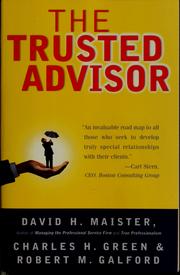
Provides the Trust Equation framework that turns client conversations into long-term relationships; read after Lencioni to put the philosophy into a practical, repeatable model.

The canonical guide to relationship-driven business development — teaches how to build the network that generates referrals and inbound leads consistently over time.
Pricing & Proposals
IntermediatePrice consulting engagements based on value rather than hours, and write proposals that close — moving away from hourly billing toward more profitable deal structures.
▸ Study plan for this stage
Pace: 4–5 weeks, ~40–50 pages/day. Start with "Value-Based Fees" (Week 1–2), then "The Consulting Bible" (Week 3–5), with overlap time for exercises and proposal drafting.
- Value-based fees as the core pricing model: charging based on client outcomes and business impact rather than hours worked
- The psychology of pricing: how to position yourself as a premium consultant and overcome client objections to higher fees
- Proposal structure and language: how to frame deliverables, outcomes, and ROI in ways that justify premium pricing and close deals
- Establishing your value proposition: clarifying what unique results you deliver and to whom
- Anchoring and negotiation: using strategic anchoring in proposals to set expectations and negotiate from a position of strength
- The engagement letter and contract: protecting yourself while maintaining client relationships through clear terms and conditions
- Positioning consulting as a business transformation tool rather than a service commodity
- How do you calculate and justify a value-based fee, and what information about the client's business must you gather first?
- What are the key differences between hourly, project-based, and value-based pricing models, and when is each appropriate?
- How should you structure a proposal to emphasize outcomes and ROI rather than hours and deliverables?
- What psychological principles does Weiss recommend for positioning yourself as a premium consultant and getting clients to accept higher fees?
- How do you handle client objections to value-based pricing, and what language should you use to reframe the conversation?
- What are the essential components of a consulting engagement letter, and how do you protect yourself while remaining client-focused?
- Audit your current pricing model: list 3–5 recent engagements and calculate what you would have charged under value-based fees vs. what you actually charged. Identify the gap and the reasons for it.
- Write a value-based fee proposal for a hypothetical client scenario (provided or from your own experience): include problem statement, outcomes, investment, and ROI justification.
- Conduct a mock negotiation: role-play with a colleague where you defend a premium value-based fee against client pushback, practicing Weiss's reframing language.
- Create your value proposition statement: in 2–3 sentences, articulate what specific business outcomes you deliver and to whom. Test it with 2–3 trusted peers or mentors.
- Redesign your engagement letter: incorporate Weiss's principles around clarity, protection, and client alignment. Have a lawyer review it.
- Analyze 3 competitor or peer proposals: identify how they price, structure outcomes, and position value. Note what you'd do differently.
- Build a fee calculator tool or worksheet: create a simple template that helps you gather client information and calculate value-based fees for your specific service offerings.
Next up: This stage equips you with the pricing and proposal frameworks to close high-value deals; the next stage will focus on delivery excellence and client management, ensuring you consistently deliver the outcomes you've promised and build a referral-based practice.

The definitive text on moving from time-based to value-based pricing; establishes the conceptual framework (ROI, options, fees) that makes the next book's tactics immediately actionable.

Weiss's comprehensive playbook covers proposals, client conversations, and engagement structure — best read after Value-Based Fees so the pricing logic is already internalized.
Building a Profitable, Scalable Practice
ExpertDesign the business model, operations, and personal leverage needed to grow revenue, avoid feast-or-famine cycles, and build a practice that works without burning out.
▸ Study plan for this stage
Pace: 8–10 weeks, ~40–50 pages/day (mix of reading and reflection)
- Value-based pricing: charging for outcomes and intellectual property rather than time, eliminating the hourly/daily rate trap
- Positioning and differentiation: narrowing your niche and building a recognizable, defensible market position that attracts ideal clients
- The sales process without pitching: moving from reactive RFP responses to proactive relationship-building and trust-based selling
- Business model design: structuring retainers, productized services, and leverage mechanisms to decouple revenue from hours worked
- Operations and systems: building repeatable processes, templates, and methodologies that scale without requiring your constant presence
- Personal leverage: using intellectual property, subcontractors, and passive income streams to multiply your earning capacity
- Client selection and qualification: saying no to bad-fit clients and building a portfolio that reinforces your positioning
- Profitability mechanics: understanding margins, overhead, and the difference between revenue and profit in a consulting practice
- Why is hourly or daily billing fundamentally limiting for a consulting practice, and what are the three main pricing models Weiss and Enns propose as alternatives?
- How does positioning and niche-narrowing actually increase your market opportunity rather than shrink it, and what does your ideal client profile look like?
- What is the core problem with the traditional RFP/pitching sales process, and how does a relationship-based, trust-first approach change the consultant's role?
- How can you structure your business model (retainers, productized offerings, leverage) so that your revenue grows while your billable hours stay flat or decrease?
- What systems, templates, and intellectual property do you need to build to make your practice scalable and less dependent on your personal delivery?
- How do you identify and eliminate unprofitable clients, and what criteria should guide your client selection going forward?
- Audit your current pricing model: list all active clients, their fees (hourly, daily, project, retainer), and the actual profit margin on each. Identify which clients are below your target margin and why.
- Define your positioning statement: write a 2–3 sentence description of who you serve, what specific problem you solve, and why you're uniquely qualified. Test it with 3–5 trusted peers or past clients for clarity and resonance.
- Map your ideal client profile: create a detailed one-page profile (industry, revenue, pain points, decision-making style, budget range) and score your current client roster against it. Identify which clients are misaligned.
- Design a value-based proposal for a recent or hypothetical engagement: instead of hourly/daily rates, estimate the financial outcome or value delivered to the client, and price accordingly. Document your assumptions.
- Inventory your intellectual property: list all methodologies, frameworks, templates, tools, and processes you've developed. Identify which ones could be productized, licensed, or leveraged to reduce delivery time.
- Create a 12-month business model roadmap: outline how you'll transition from your current revenue model to a mix of retainers, productized services, and leverage-based income. Include milestones and client targets.
Next up: This stage equips you with a profitable, defensible business model and the operational foundation to scale; the next stage will focus on marketing, visibility, and client acquisition strategies to consistently fill that scalable pipeline.

A short, dense manifesto that reframes the consultant's power position in every sales conversation — read here, after pricing fundamentals, to internalize how to stop competing and start selecting clients.

Synthesizes everything — positioning, fees, proposals, and growth — into a roadmap for building a seven-figure independent practice; the capstone book of the entire curriculum.
Discussion
Keep reading
Paths that share books, cover the same subject, or open a related topic.