Change careers with confidence
This curriculum takes a beginner from self-discovery through strategic planning, low-risk experimentation, skill transfer, and finally the practical mechanics of landing a job in a new field. Each stage builds on the last: you must know yourself before you can test ideas, test ideas before you commit, and commit before you can execute a targeted job search.
Know Yourself First
BeginnerClarify your values, strengths, and what you actually want from work — the essential foundation before any pivot decision can be made.
▸ Study plan for this stage
Pace: 6–8 weeks total: Weeks 1–3 on "Design Your Life" (~25–30 pages/day, including journaling time); Weeks 4–7 on "What Color Is Your Parachute?" (~20–25 pages/day, with dedicated time for the Flower Exercise worksheets); Week 8 as a synthesis and reflection week — no new reading, just integrating insigh
- Workview & Lifeview (Design Your Life): articulating your personal philosophy about why you work and what life is for, and understanding how the two must cohere
- Engagement & Energy Tracking (Design Your Life): using the 'Good Time Journal' to identify activities that absorb you and give you energy vs. drain you — evidence-based self-knowledge rather than guesswork
- Gravity Problems vs. Reframable Problems (Design Your Life): distinguishing between genuine constraints and self-imposed beliefs that are blocking your thinking about career possibilities
- Odyssey Plans (Design Your Life): prototyping three radically different 5-year life/career scenarios to expand your imagination before narrowing down
- The Flower Exercise (What Color Is Your Parachute?): a multi-petal self-inventory covering transferable skills, preferred working conditions, values, salary needs, geography, and ideal colleagues — producing a complete self-portrait
- Transferable Skills identification (What Color Is Your Parachute?): moving beyond job titles to name the functional, self-management, and knowledge skills you actually enjoy using
- Values & Motivators (What Color Is Your Parachute?): distinguishing what you are good at from what you genuinely want to do — a critical distinction for sustainable career satisfaction
- The gap between 'what the world needs' and 'what I want' (both books): recognizing that a fulfilling career sits at the intersection of personal meaning, marketable skill, and real-world opportunity
- After completing the Good Time Journal in Design Your Life, which three to five activities consistently showed both high engagement AND high energy — and what do those patterns reveal about your core strengths?
- How does your Workview (why you work) relate to your Lifeview (what life is for), and where do they currently conflict or align, according to the framework in Design Your Life?
- Which of your three Odyssey Plans felt most alive to you, and what does your gut reaction to each plan tell you about your underlying values?
- Using the Flower Exercise from What Color Is Your Parachute?, what are your top five transferable skills — and crucially, which of those do you most enjoy using, not just perform well?
- What are your non-negotiable working conditions and values (from the Parachute Flower petals), and how do they differ from the conditions of your most recent or current role?
- What 'gravity problems' did you uncover in Design Your Life — beliefs you were treating as fixed facts — and how did reframing them change what career options you could see?
- Good Time Journal (Design Your Life): For 3–4 weeks, log every significant work or personal activity daily, rating each for Engagement (1–5) and Energy (1–5). At the end, highlight patterns and write a one-page reflection on what the data says about you — not what you think should energize you.
- Workview & Lifeview essays (Design Your Life): Write a 250-word Workview (why do you work? what is work for?) and a 250-word Lifeview (why are you here? what is life about?) as instructed in the book. Then write a third paragraph on how they currently fit — or don't.
- Three Odyssey Plans (Design Your Life): Draft all three 5-year plans as the book instructs — including a confidence bar, a resources bar, and a 'wildfire' question for each. Share them with one trusted person and note their reactions alongside your own.
- Full Flower Exercise (What Color Is Your Parachute?): Complete every petal of the Flower worksheet, spending at least 45–60 minutes per petal. Do not rush. Prioritize the Skills petal by using the book's card-sort or ranking method to separate 'good at' from 'love doing.'
- Gravity Problem Audit: List 10 statements you believe about your career constraints (e.g., 'I'm too old,' 'I don't have the right degree'). For each, apply the Design Your Life reframing test: Is this an actual fact or an assumption? Write one alternative framing for each assumption.
- Integrated Self-Portrait (synthesis exercise, Week 8): On a single page, combine your top insights from both books — your energy patterns, Workview/Lifeview, top transferable skills, Flower petals, and reframed constraints — into a personal 'Career North Star' statement of no more than 150 words. This document becomes your compass for the rest of the curriculum.
Next up: Having built a concrete, evidence-based picture of who you are and what you want, you are now ready to turn that self-knowledge outward — researching real careers, industries, and roles that could actually match your profile, which is the focus of the next stage.
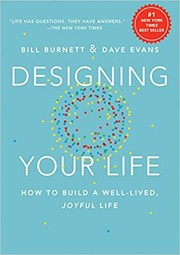
Uses design-thinking exercises to help you prototype possible lives without committing to anything — the perfect first step for someone who doesn't yet know what's next.
The classic career self-assessment workbook; its 'Flower Exercise' maps skills, values, and preferred environments into a concrete target, building on the open-ended exploration started in Designing Your Life.
Validate Before You Leap
BeginnerLearn how to test a new career direction cheaply and quickly — through side projects, informational interviews, and small bets — before making any irreversible move.
▸ Study plan for this stage
Pace: 4–5 weeks total: Week 1–2 — Read "The $100 Startup" (~25–30 pages/day, including chapter reflection notes); Week 3–4 — Read "Pivot" (~20–25 pages/day, journaling alongside the Pivot Method exercises); Week 5 — Integration week: revisit highlights, complete cross-book exercises, and finalize your per
- The 'Microbusiness' Mindset (The $100 Startup): A viable new career direction can be tested with minimal capital by identifying the overlap between your skills/passions and what people will actually pay for — before quitting anything.
- Value vs. Passion Distinction (The $100 Startup): Guillebeau's core filter — passion alone is not enough; the idea must deliver clear, tangible value to a specific group of people willing to exchange money for it.
- The 'Convergence' Map (The $100 Startup): Mapping the intersection of what you love, what you're good at, and what others need as a structured tool for generating testable career/business ideas.
- Launch Small, Learn Fast (The $100 Startup): Guillebeau's case studies consistently show that a 'good enough' offer launched quickly beats a perfect offer launched never — iteration is the real strategy.
- The Pivot Method — Scan, Pilot, Launch, Lead (Pivot): Jenny Blake's four-stage framework for career reinvention that treats a career change as a series of low-risk experiments rather than a single high-stakes leap.
- Planting 'Pilots' (Pivot): Blake's concept of running small, time-boxed experiments (side projects, freelance gigs, volunteer roles, courses) in a new direction while still employed — the career equivalent of A/B testing.
- Informational Interviews as Data Collection (Pivot): Structured conversations with people already doing the work you're curious about, used to stress-test assumptions and build a network before making any commitment.
- Doubling Down on Strengths (Pivot): Blake's argument that the best pivot starts from your existing strengths and transferable skills — not from scratch — reducing both risk and ramp-up time.
- According to Guillebeau, what is the 'convergence' formula, and how would you apply it to identify one testable career idea from your own life?
- The $100 Startup features entrepreneurs who launched for very little money. What are the two or three recurring principles across those case studies that explain why their small bets succeeded?
- What are the four stages of Jenny Blake's Pivot Method, and what is the specific goal of the 'Pilot' stage — how does it differ from simply 'trying something new'?
- Blake recommends informational interviews as a core validation tool. What are the key questions you should ask, and how do you turn the answers into a go/no-go signal for your pivot direction?
- Both books argue against waiting until conditions are perfect. How do Guillebeau and Blake each make this case, and what concrete mechanisms do they offer to manage the risk of moving before you feel ready?
- After reading both books, how would you design a 90-day personal validation plan — combining at least one element from The $100 Startup and one from the Pivot Method — to test a career direction you are genuinely curious about?
- Convergence Map Exercise (from The $100 Startup): Draw three overlapping circles labeled 'What I Love,' 'What I'm Good At,' and 'What People Pay For.' Fill each in with at least 10 items, then identify 2–3 ideas sitting in the overlap. Write one sentence per idea describing who would pay for it and why.
- The $100 Constraint Challenge (from The $100 Startup): Take your top convergence idea and design the simplest possible version of it that could be offered to one real person within 30 days for under $100 in costs. Write out the offer, the target person, and the delivery method.
- Pilot Design Sprint (from Pivot): Using Blake's Pilot framework, design one 60-to-90-day experiment for your career direction of interest. Define: the specific activity (e.g., freelance project, online course, volunteer role), the success metrics, the time commitment per week, and the explicit decision point at the end.
- Conduct 3 Informational Interviews (from Pivot): Identify three people already working in your target career area. Use Blake's suggested question structure — their path, daily reality, what they wish they'd known, and who else you should talk to. Write a one-page debrief after each conversation noting confirmed assumptions, busted myths, and new questions.
- Strengths Audit (from Pivot): List your top 10 transferable skills and past accomplishments. For each, write one sentence explaining how it could apply in your target new career. Identify the top 3 that create the strongest bridge — these become the foundation of your pivot narrative.
- Cross-Book Synthesis Journal Entry: After finishing both books, write a 500-word reflection answering: 'What is the single smallest, cheapest, most reversible action I could take in the next two weeks to test my career direction?' Commit to a specific date to take that action.
Next up: By completing this stage, you have moved from abstract career curiosity to a concrete, evidence-based hypothesis about a new direction — making you ready for the next stage, which will focus on building the deeper skills, credentials, and professional identity needed to fully transition into that validated direction.
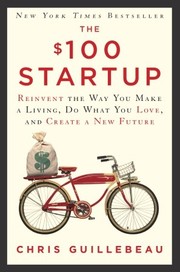
Shows how to launch a micro-venture or freelance offering with minimal investment, teaching the discipline of cheap validation that applies equally to career experiments.
Written specifically for mid-career changers, it introduces a four-stage 'Plant, Scan, Pilot, Launch' framework that turns the abstract idea of a pivot into a concrete, low-risk action plan.
Reframe and Transfer Your Skills
IntermediateUnderstand how to identify transferable skills, reframe your existing experience for a new audience, and close genuine gaps strategically rather than starting over.
▸ Study plan for this stage
Pace: 5–6 weeks total: Weeks 1–3 cover "Switchers" (~25–30 pages/day, including reflection time); Weeks 4–6 cover "Range" (~20–25 pages/day, with slower reading for the denser research chapters). Reserve the final 2–3 days of each book for review and exercise completion.
- Transferable skills identification: In 'Switchers,' Graham's framework for auditing your existing competencies and mapping them to roles in a target industry, rather than treating your background as irrelevant.
- The 'Switcher's Roadmap': Graham's structured process for career pivots — self-assessment, target research, narrative building, and network activation — as a sequential, strategic system rather than a leap of faith.
- Reframing your story for a new audience: How to translate past accomplishments into the language and priorities of a hiring manager or stakeholder in a different field, closing the 'translation gap.'
- Closing genuine gaps strategically: Distinguishing between perceived gaps (biases held by others) and real skill gaps, and using targeted micro-credentials, projects, or bridge roles rather than starting over with a full degree.
- The 'Flint' vs. 'Match' mindset (Range): Epstein's argument that late specializers who sample broadly often develop rare, integrative thinking — reframing a non-linear career history as a competitive advantage, not a liability.
- Breadth as a transferable asset: How Range demonstrates, through research and case studies, that diverse experience accelerates pattern recognition and creative problem-solving in new domains.
- The 'outside view' and analogical thinking: Epstein's concept of using knowledge from distant fields to solve problems in a new one — a direct cognitive tool for career switchers entering unfamiliar territory.
- Narrative coherence across both books: Synthesizing Graham's tactical story-reframing with Epstein's research-backed validation that range is valuable, to build a confident, evidence-supported personal career narrative.
- After reading 'Switchers,' can you articulate your top 5–7 transferable skills in the specific language of your target industry, with one concrete accomplishment story backing each?
- What is the difference between a perceived gap and a real gap, according to Graham, and what is one targeted action you would take to close each type in your own situation?
- How does Epstein's research in 'Range' challenge the conventional 'head start' narrative, and how does that reframe the story you tell about your own non-linear background?
- Using both books together, how would you respond to the interview question: 'You don't have direct experience in this field — why should we hire you?'
- What does Epstein mean by analogical thinking, and can you identify one example from your own career history where knowledge from one domain solved a problem in another?
- How do Graham's networking and narrative strategies in 'Switchers' complement Epstein's broader argument about the value of diverse experience — and where, if anywhere, do the two authors appear to be in tension?
- Skills Audit Matrix (Switchers-based): Create a three-column spreadsheet — Column 1: your past roles/projects; Column 2: the underlying skill demonstrated; Column 3: a direct equivalent job requirement from 3 real postings in your target field. Aim for at least 15 rows.
- Accomplishment Story Bank: Write 5 PAR (Problem–Action–Result) stories from your existing experience, then rewrite each one twice — once in the language of your old industry, once translated into the vocabulary of your target field. Compare the two versions.
- Gap Analysis Audit: List every qualification from your target role's job postings that you do not currently have. Classify each as 'perceived gap' (addressable through reframing) or 'real gap' (requires new learning). For real gaps, research one specific, time-bounded action to close it (a course, a project, a volunteer role).
- Range Reflection Journal: After finishing 'Range,' write a 1-page personal essay titled 'My Winding Path as an Asset.' Use at least two of Epstein's case studies or research findings as evidence to validate your own non-linear history.
- Analogical Thinking Exercise (Range-based): Pick one challenge you anticipate in your target field. Then identify a problem you have already solved in a past role that is structurally similar. Write a one-paragraph 'bridge statement' connecting the two — this becomes a ready-to-use interview talking point.
- Integrated Elevator Pitch: Draft a 90-second spoken pitch that combines Graham's reframing tactics with Epstein's breadth-as-advantage argument. Record yourself delivering it, then revise for clarity and confidence. Share with one trusted contact for feedback.
Next up: By completing this stage, the reader has a validated skills inventory, a reframed personal narrative, and a research-backed mindset that breadth is an asset — all of which provide the raw material needed to move into the next stage, where the focus shifts to actively exploring and testing specific new career paths in the real world.

A career coach's playbook written explicitly for career changers, covering how to reposition your story, target the right companies, and get past gatekeepers who default to 'relevant experience.'

Provides the intellectual confidence that breadth and diverse experience are genuine assets — reframes the 'I'm not a specialist' anxiety that plagues career changers and helps you articulate your cross-domain value.
Build Visibility and a New Network
IntermediateDevelop a personal brand in the target field, grow a relevant network from scratch, and create the social proof that makes hiring managers take a career changer seriously.
▸ Study plan for this stage
Pace: 4–5 weeks total: Weeks 1–3 cover "Never Eat Alone" (~25–30 pages/day, including reflection time); Weeks 4–5 cover "Show Your Work!" (~20–25 pages/day — it's shorter and visual, so allow extra time to act on each chapter before moving on).
- Generosity-first networking (Ferrazzi's core thesis): building relationships by leading with value, not requests — the 'never keep score' mindset
- The importance of a 'connector' identity: positioning yourself as a node who introduces others, shares resources, and builds community rather than just collecting contacts
- Warming up cold outreach: Ferrazzi's techniques for researching, finding common ground, and making first contact feel genuine rather than transactional
- Building and maintaining a 'relationship action plan': treating your network as a living system with intentional follow-up, not a one-time event
- The concept of 'ambient intimacy' through sharing process (Kleon): making your learning and transition visible in small, consistent doses rather than waiting until you're an expert
- Sharing your work-in-progress as a career-changer asset: Kleon's argument that showing the journey — not just the destination — is what attracts an audience and builds credibility
- Curating and crediting: how to build a visible presence by thoughtfully sharing and commenting on others' work in your target field, even before you have original output
- The 'scenius' over 'genius' mindset (Kleon): framing your career change as joining and contributing to a community of practice, which lowers the barrier to entry and accelerates belonging
- According to Ferrazzi, why is 'keeping score' in relationships a self-defeating strategy, and how should a career changer reframe what they have to offer a new network?
- What is Ferrazzi's 'relationship action plan' and how would you adapt it specifically for building a network in a field where you have no existing contacts?
- Kleon argues you don't need to be an expert to share your work — what does he suggest you share instead, and why is this especially powerful for someone mid-career-change?
- How do the two books complement each other: where does Ferrazzi's in-person/direct relationship strategy end and Kleon's public-sharing strategy begin?
- What practical steps does Kleon recommend for building an online presence, and how can a career changer use these to generate 'social proof' before landing their first role in the new field?
- How would you use Ferrazzi's 'conference and event' tactics alongside Kleon's 'share your process' approach to make a single industry event generate lasting visibility?
- **Relationship Action Plan (RAP) Sprint:** Using Ferrazzi's framework, identify 15 people in your target field — 5 peers, 5 mid-level practitioners, 5 aspirational connectors. Research each one, find a genuine point of connection, and send at least 5 warm, value-first outreach messages within the first three weeks of reading.
- **'Give Before You Ask' Challenge:** For 30 days, perform one daily act of network generosity in your target field — share someone's article with a thoughtful comment, make an introduction, answer a question in a community forum, or send a relevant resource to a new contact. Log each action.
- **Public Learning Log:** Following Kleon's 'share your work' principle, commit to posting one piece of public content per week for the duration of this stage (4–5 posts minimum). Each post should document something you learned, a project you attempted, or a person in the field who inspired you — framed explicitly as a career-changer's perspective.
- **'Scenius Mapping' Exercise:** Kleon describes creative work as emerging from a community ('scenius'). Map the scenius of your target field: identify 3 key online communities, 3 newsletters or blogs, 3 events or conferences, and 3 hashtags or forums. Begin actively participating (not just lurking) in at least two of them before finishing the stage.
- **The 'Connector' Experiment:** Ferrazzi emphasizes becoming a connector, not just a contact-collector. Identify two people in your new network who would benefit from knowing each other and make a warm, double opt-in introduction. Reflect on how this shifts your identity from 'outsider asking for help' to 'contributor adding value.'
- **Portfolio of Proof Audit:** After finishing both books, compile a 'social proof inventory' — a list of every public artifact you've created or curated (posts, comments, projects, introductions made, events attended). Identify the three strongest pieces and think about how you'd present them to a hiring manager as evidence of genuine engagement in the field.
Next up: By the end of this stage you will have a growing network and a nascent public presence in your target field — the next stage builds on this foundation by teaching you how to translate that visibility and those relationships into concrete opportunities: crafting your story for interviews, negotiating a career-change offer, and converting warm contacts into advocates who open doors.

The definitive guide to relationship-building; essential at this stage because most career-change jobs are won through networks, not applications, and you need to build one in a field where you're unknown.
A short, practical guide to sharing your learning and projects publicly to attract opportunities — the fastest way to build credibility in a new field before you have a formal title.
Execute the Job Search and Land the Role
ExpertRun a focused, strategic job search in the new field — crafting a compelling narrative, acing interviews as a non-traditional candidate, and negotiating your offer.
▸ Study plan for this stage
Pace: 6–8 weeks total: Weeks 1–3 cover "The 2-Hour Job Search" (~40–50 pages/day, including time to build your LAMP list and run outreach); Weeks 4–7 cover "Knock 'em Dead Job Interview" (~30–40 pages/day, with daily mock-interview practice sessions); Week 8 is a full integration week — no new reading, on
- The LAMP List (Dalton): a prioritized, spreadsheet-based master list of target employers ranked by List size, Alumni presence, Motivation, and Posting activity — the engine of a focused career-change search
- The 5-Point Email Formula (Dalton): a concise, non-generic outreach template designed to earn a response from a warm or cold contact within a new industry without asking directly for a job
- Employer prioritization and the 'Advocate' vs. 'Screener' distinction (Dalton): routing your energy toward insiders who can champion you past gatekeepers rather than applying cold through ATS portals
- The 'Three waves' of follow-up (Dalton): a disciplined, time-boxed cadence for following up with contacts that keeps you top-of-mind without being annoying
- Career-change narrative and the 'Greatest Weakness' reframe (Yate): packaging your non-traditional background as a deliberate, value-adding pivot rather than a gap or liability
- Behavioral and competency-based interview frameworks (Yate): using structured storytelling (problem–action–result) to translate transferable skills from a prior career into language that resonates in the new field
- Layered question strategy (Yate): preparing intelligent, researched questions for every interview stage (screener, hiring manager, panel) that signal industry seriousness and cultural fit
- Salary negotiation as a career-changer (Yate): anchoring compensation conversations to market data and demonstrated value rather than prior salary history, which may be irrelevant or lower in a new field
- Using Dalton's LAMP framework, how would you build and rank a target employer list of at least 40 companies in your new field, and what criteria would push a company higher on that list?
- What makes Dalton's 5-Point Email Formula more effective for a career-changer than a standard LinkedIn cold message, and what are the five components you must include?
- According to Yate, how should a non-traditional candidate reframe their 'Why are you changing careers?' answer so that it becomes a strength rather than a red flag?
- How do you apply Yate's problem–action–result storytelling structure to a behavioral question when your most relevant examples come from a completely different industry?
- What is the difference between a 'screener' and an 'advocate' in Dalton's model, and how does that distinction change your outreach and follow-up strategy?
- Using Yate's guidance on salary negotiation, what specific tactics would you use to avoid anchoring the conversation to your old-career compensation and instead justify a market-rate offer in the new field?
- Build your LAMP List (Dalton, Week 1): Open a spreadsheet and populate at least 40 target employers in your new field. Score each on all four LAMP dimensions, sort by priority, and identify the top 10 to contact first. Update it weekly as you learn more.
- Write and send three 5-Point Emails (Dalton, Week 2): Draft outreach messages to one alumni contact, one warm referral, and one cold-but-researched contact at companies on your LAMP list. Use Dalton's exact formula, send them, and log responses to refine your template.
- Map your transferable skills to new-field job descriptions (Yate, Week 4): Pull three real job postings in your target role. For each required competency, write one PAR (Problem–Action–Result) story from your prior career that demonstrates it. Aim for a bank of at least 12 PAR stories.
- Record a mock interview session (Yate, Week 5–6): Answer the 10 most common behavioral questions Yate identifies — on video or audio. Play it back and evaluate: Does your narrative clearly connect your old experience to the new role's needs? Is each answer under 2 minutes?
- Conduct a 'layered questions' rehearsal (Yate, Week 6): For a specific target company, write a distinct set of 4–5 questions tailored to each interview stage (phone screener, hiring manager, panel). Practice delivering them naturally in a mock conversation with a friend or career buddy.
- Run a full negotiation simulation (Yate, Week 8): Research market salary ranges for your target role using three sources (e.g., Glassdoor, LinkedIn Salary, Bureau of Labor Statistics). Role-play the negotiation with a partner: practice deflecting the 'What did you make before?' question and countering with market data and your unique value proposition.
Next up: Mastering the strategic job search and interview process in this stage gives you the real-world feedback loop — rejections, offers, and conversations — that naturally surfaces the next challenge: building long-term career capital, managing your reputation, and growing sustainably in the new field, which is the focus of the next stage.

Replaces spray-and-pray applications with a systematic, time-efficient process for identifying target roles and securing informational interviews — especially powerful for career changers who can't rely on keyword-matched résumés.

Provides deep interview preparation including how to handle the tough 'why are you changing careers?' question, closing the curriculum with the practical scripts and tactics needed to convert a search into an offer.
Discussion
Keep reading
Paths that share books, cover the same subject, or open a related topic.