Sourdough baking: the best books to build a starter and bake real bread
This curriculum takes a home baker from zero sourdough knowledge to mastering open-crumb, crusty artisan loaves through four carefully sequenced stages. Each stage builds on the last — first establishing the "why" behind fermentation and starters, then developing hands-on shaping and scoring technique, and finally diving into the advanced science and creative expression that separates good bakers from great ones.
Foundations: Understanding Bread & Sourdough
BeginnerUnderstand what sourdough is, how fermentation works, and bake your first successful loaf with a healthy starter — building core vocabulary and intuition before touching advanced technique.

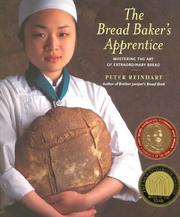
A concise, approachable primer on the biology and chemistry of bread — yeast, gluten, fermentation — giving beginners the conceptual vocabulary they need before picking up any other sourdough book.
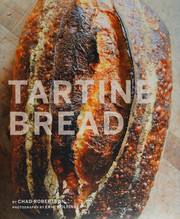
The canonical modern sourdough text. Robertson's narrative-driven approach teaches starter maintenance, bulk fermentation, and basic shaping in a way that is inspiring and accessible, making it the perfect first sourdough 'bible'.
Building Skill: Technique & the Home Kitchen
BeginnerDevelop reliable, repeatable technique for mixing, folding, shaping, scoring, and baking crusty loaves in a home oven using a Dutch oven — turning early intuition into consistent results.
▸ Study plan for this stage
Pace: 8–10 weeks, ~20–25 pages/day, with 2–3 baking sessions per week interspersed throughout
- Hydration and dough consistency: understanding how water content affects handling, fermentation, and final crumb structure
- Autolyse and its role in gluten development without mechanical mixing
- Stretch-and-fold technique as an alternative to intensive machine mixing for building strength
- Bulk fermentation timing and visual cues (dough rise, surface bubbles, jiggle) over rigid clock times
- Pre-shaping and final shaping: hand position, tension, and sealing techniques for oven spring
- Scoring depth, angle, and placement to control where the loaf opens and direct expansion
- Dutch oven steaming: trapping moisture in the first 20–25 minutes to develop a crispy, caramelized crust
- Temperature management: how oven spring, crust color, and crumb development depend on precise heat
- Why does Ken Forkish recommend an autolyse period, and what happens to the dough during this rest?
- Describe the stretch-and-fold technique: when do you perform it, how many sets, and what are you building in the dough?
- How do you know when bulk fermentation is complete without relying solely on time? What visual and tactile cues does Maurizio Leo emphasize?
- What is the purpose of pre-shaping, and how does it differ from final shaping in terms of technique and timing?
- Explain the relationship between Dutch oven steaming and crust development. What happens if you open the lid too early or skip steaming entirely?
- How should you score a loaf, and what does the angle and depth of your score tell the dough about where to expand?
- Bake the basic overnight loaf from 'Flour Water Salt Yeast' (Chapter 1) three times in succession, keeping a detailed log of hydration, timing, and oven spring to identify your kitchen's baseline
- Practice stretch-and-fold on a high-hydration dough (80%+) for 4–5 sets over 2 hours, photographing or sketching the dough's transformation to internalize how gluten builds without a mixer
- Conduct a bulk fermentation experiment: divide one batch into three portions and stop fermentation at 50%, 75%, and 100% rise, then bake side-by-side to observe how fermentation stage affects crumb and flavor
- Shape 6–8 loaves focusing solely on pre-shaping and final shaping technique, paying attention to hand position, tension, and sealing; compare results across attempts
- Score five loaves with different depths and angles (shallow vs. deep, 30° vs. 45°), photograph the oven spring, and correlate score geometry to how the loaf opened
- Bake a loaf with the Dutch oven lid on for the full 45 minutes (no steam release) and compare it side-by-side with a standard loaf (lid off at 25 min) to viscerally understand the crust-building effect of steam
Next up: Mastering these repeatable techniques in a home oven establishes the foundation for the next stage—troubleshooting and refinement—where you'll learn to diagnose and correct common problems (dense crumb, weak oven spring, pale crust) by adjusting hydration, fermentation timing, and baking parameters.
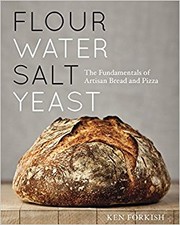
Forkish bridges yeasted and sourdough baking with precise, home-kitchen-friendly recipes and clear explanations of timing and temperature — ideal for cementing the fundamentals after Tartine.

A methodical, data-driven guide written specifically for home bakers, with deep coverage of starter health, hydration levels, and troubleshooting — the best book for turning early attempts into consistent, repeatable loaves.
Going Deeper: Fermentation, Shaping & Open Crumb
IntermediateMaster the variables that produce an open, airy crumb and a blistered crust — understanding fermentation timing, dough tension, pre-shaping, final shaping, and confident freehand scoring.
▸ Study plan for this stage
Pace: 6–8 weeks, ~25–30 pages/day, with 2–3 baking sessions per week
- Fermentation timing and temperature control: how bulk fermentation duration and ambient conditions directly affect gluten development, gas production, and final crumb structure
- Dough tension and pre-shaping: building surface tension to trap gas and create an open crumb while maintaining dough strength
- Final shaping techniques: creating a taut, well-sealed seam to support oven spring and crumb expansion
- Scoring and blade angle: how depth, angle, and placement of scores direct oven spring and create a blistered, caramelized crust
- The relationship between hydration, fermentation stage, and shaping difficulty: understanding how wetter doughs require different handling and timing
- Reading dough by touch and observation: recognizing poke tests, jiggle, and surface appearance to determine fermentation readiness
- Oven spring and crust development: how steam, temperature, and scoring work together to produce lift and browning
- How does bulk fermentation duration affect gluten development and open crumb, and what visual/tactile cues indicate when bulk fermentation is complete?
- What is the purpose of pre-shaping, and how does it differ from final shaping in terms of dough tension and gas retention?
- Explain the relationship between dough hydration, fermentation stage, and shaping difficulty—why does a wetter dough require different handling?
- How does scoring depth, angle, and placement influence oven spring direction and crust blistering?
- What is the poke test, and how do you use it to determine if your dough is ready for shaping or baking?
- Describe the role of steam in oven spring and crust development, and how scoring affects steam distribution
- Conduct a fermentation timing experiment: bake three identical doughs with bulk fermentation times of 3, 4, and 5 hours at 22°C; document crumb openness, crust color, and flavor, then compare results
- Practice the poke test weekly: perform poke tests at 30-minute intervals during bulk fermentation and record observations (spring-back speed, indentation depth) to calibrate your feel for readiness
- Pre-shape and final-shape 5 loaves in succession, varying tension levels (loose, medium, tight); bake and photograph the crumb to see how tension affects gas retention and open crumb
- Score 6 loaves with different blade angles (30°, 45°, 60°) and depths (5mm, 8mm, 12mm); document how each variable affects ear formation, crust blister pattern, and oven spring direction
- Bake a series of loaves at different hydration levels (75%, 80%, 85%) while keeping fermentation time constant; evaluate how hydration impacts shaping ease and final crumb structure
- Perform a cold retard experiment: shape two identical loaves, retard one overnight (12–16 hours at 4°C) and bake the other after 2 hours at room temperature; compare oven spring, crust color, and flavor
Next up: Mastering fermentation timing, shaping tension, and scoring technique establishes the foundation for advanced troubleshooting and refinement—the next stage will teach you how to diagnose and correct specific crumb and crust defects, and how to adapt your process for different flours, environments, and desired outcomes.

Kimbell focuses on the microbiome of the starter and the nutritional depth of long fermentation, giving intermediate bakers a richer understanding of why fermentation choices directly affect crumb structure and flavor.
Mastery: Artisan Craft & Creative Expansion
ExpertInternalize the science of bread at a professional level, develop a personal baking style, explore whole grains and inclusions, and refine decorative scoring — baking with full creative and technical confidence.
▸ Study plan for this stage
Pace: 8–10 weeks, ~40–50 pages/day with 2–3 baking sessions per week. Alternate between reading "Modernist Bread at Home" (weeks 1–5) and "The Rye Baker" (weeks 6–10), with overlapping practice throughout.
- The chemistry of gluten development, fermentation, and hydration at a molecular level, using Myhrvold's scientific framework to understand why techniques work
- Precision measurement and baker's percentages as tools for reproducibility and creative variation in formula design
- Rye-specific chemistry: pentosans, enzymatic activity, and how rye's unique properties demand different hydration, fermentation timing, and shaping techniques
- Whole grain integration: nutritional benefits, flavor development, and technical adjustments needed when replacing white flour with whole wheat, spelt, or other grains
- Decorative scoring as both functional (controlling oven spring and crumb structure) and aesthetic practice, informed by understanding dough strength and hydration
- Developing a personal baking philosophy by combining Myhrvold's scientific precision with Ginsberg's traditional rye mastery and regional variations
- Advanced troubleshooting: diagnosing crumb structure, crust color, and fermentation issues using scientific principles and sensory evaluation
- Inclusions (seeds, nuts, dried fruit) and their impact on hydration, fermentation rate, and final flavor—balancing tradition with experimentation
- How does understanding gluten's molecular structure (from Myhrvold) help you predict how a dough will behave during mixing, fermentation, and baking?
- What are the key differences between white wheat and rye fermentation chemistry, and how do these differences change your approach to timing and hydration?
- How would you design a whole grain sourdough formula using baker's percentages, and what adjustments would you make to hydration, fermentation time, and autolyse?
- Explain the relationship between dough hydration, scoring depth/angle, and oven spring—and how you would adjust scoring for a high-hydration rye versus a firm whole wheat dough
- What is your personal baking philosophy, and how does it reflect both scientific precision (Myhrvold) and traditional craftsmanship (Ginsberg)?
- How do inclusions (seeds, nuts, dried fruit) affect dough fermentation and final crumb, and how would you modify a base formula to accommodate them?
- Bake 3 loaves from 'Modernist Bread at Home' using different hydration levels (70%, 80%, 90%), document dough feel and final crumb structure, and correlate observations to Myhrvold's chemistry explanations
- Design and bake 2 original white wheat sourdough formulas using baker's percentages: one at 65% hydration and one at 75%, adjusting fermentation time based on dough observation rather than clock time
- Bake 4 rye breads from 'The Rye Baker' (e.g., 100% rye, 50/50 rye-wheat, and two regional variations), comparing fermentation speed, dough handling, and final flavor—document how rye's enzymatic activity differs from wheat
- Score 6 loaves with intentional variations (depth, angle, length) and photograph the oven spring and final bloom; correlate scoring decisions to dough hydration and gluten strength
- Create a whole grain sourdough formula replacing 30% of white flour with whole wheat, spelt, or another grain; bake 2 iterations, adjusting hydration and fermentation in the second batch based on first results
- Bake 2 inclusion-heavy loaves (one with seeds/nuts, one with dried fruit), measuring how inclusions affect fermentation rate and final hydration; compare to a plain control loaf
- Conduct a blind tasting of your own loaves from this stage alongside a professional bakery's sourdough; evaluate crumb structure, flavor, crust, and identify 3 specific improvements for your next bake
Next up: This stage equips you with both the scientific rigor to understand *why* techniques work and the traditional mastery to execute them with confidence, positioning you to either specialize further in a particular grain or style, teach others, or scale your baking toward a professional or commercial context.

A distillation of the landmark Modernist Bread research into a home-baker format, this book explains the physics and chemistry of crust, crumb, and fermentation at a depth that permanently elevates how an advanced baker thinks and troubleshoots.

Expands the advanced baker's repertoire into whole-grain and rye sourdoughs, whose unique fermentation chemistry and dense structure demand — and reward — a sophisticated understanding of everything learned in prior stages.
Discussion
Keep reading
Paths that share books, cover the same subject, or open a related topic.