Bake artisan bread at home
This curriculum takes a complete beginner from their very first loaf all the way to mastering sourdough fermentation and hearth-style breads with open crumb and crackling crust. Each stage builds on the last — first developing intuition for dough and basic technique, then deepening understanding of fermentation and flavor, and finally tackling the advanced craft of wild-leavened and high-hydration hearth breads.
Foundations: Your First Loaves
BeginnerUnderstand the basic ingredients, mixing, shaping, and baking process well enough to produce a reliable, satisfying loaf of bread with confidence.
▸ Study plan for this stage
Pace: 8–10 weeks total. Weeks 1–4: Read "Bread Baking for Beginners" by Bonnie Ohara cover to cover (~20–25 pages/day), baking alongside each chapter as recipes are introduced. Weeks 5–10: Read "The Bread Baker's Apprentice" by Peter Reinhart, focusing on Parts I–II (the theory chapters) and 3–4 of the fo
- The four core ingredients — flour, water, salt, and yeast — and the specific role each plays in structure, flavor, and fermentation
- Baker's percentages: how Reinhart's Bread Baker's Apprentice uses this ratio system to understand and scale any formula
- Gluten development: how mixing and kneading align proteins (glutenin and gliadin) into an elastic network, as explained progressively in both books
- Fermentation and proofing: the two-stage rise (bulk fermentation + final proof), how yeast produces CO₂, and the visual/tactile cues Ohara teaches for knowing when dough is ready
- Shaping fundamentals: building surface tension through pre-shaping and final shaping, a hands-on skill Ohara breaks down step by step for boules and batards
- Scoring and oven management: why bread is scored before baking, and how steam in the first minutes of baking (covered in both books) creates an open crumb and crackly crust
- The window-pane test and other tactile diagnostics Ohara introduces for assessing dough readiness without relying solely on time
- Reinhart's 'Struan' and other foundational formulas as a bridge from simple white loaves to understanding how enriched or multi-grain doughs differ from lean doughs
- What does each of the four core ingredients (flour, water, salt, yeast) contribute to a loaf, and what happens if one is omitted or mismeasured?
- Using Ohara's visual and tactile cues, how can you tell when bulk fermentation is complete versus when the dough is over-proofed?
- What is a baker's percentage, and how would you use Reinhart's formula framework to double a simple white-bread recipe?
- Why is shaping more than just forming a round ball — what does surface tension do for the final loaf, and how does Ohara's pre-shape/final-shape sequence achieve it?
- What is the purpose of scoring, and how does steam in the oven's first 10–15 minutes affect crust and crumb development?
- How does Reinhart distinguish between 'lean' and 'enriched' doughs in The Bread Baker's Apprentice, and why does that distinction matter for a beginner choosing their next recipe?
- Bake Ohara's master white sandwich loaf at least twice in the first two weeks — once following the recipe exactly, once adjusting hydration by 5% to observe how dough feel and crumb change
- Practice the window-pane test on every batch: stretch a small piece of dough thin enough to see light through it without tearing, and log in a baking journal at what point in kneading you first achieve it
- Create a baker's percentage cheat-sheet for three recipes from The Bread Baker's Apprentice (e.g., the basic sourdough, the Struan, and one lean white loaf), then verify your math against Reinhart's stated percentages
- Do a side-by-side fermentation experiment: mix one batch of dough and split it in two — let one proof at room temperature and cold-retard the other overnight in the fridge, then bake both and compare flavor, crumb, and crust
- Shaping drill: using Ohara's step-by-step photos as a guide, practice pre-shaping and final shaping on a batch of dough, filming yourself from above; review the video to check whether you are building consistent surface tension
- Steam experiment: bake two identical small loaves — one with a covered Dutch oven (steam trapped) and one uncovered — and photograph the crust color, ear development, and crumb side by side to internalize why steam matters
Next up: ">Mastering these foundational lean-dough techniques and Reinhart's ratio-based thinking sets the reader up to tackle longer fermentation schedules, preferments (poolish, biga, pâte fermentée), and sourdough starters — the hallmarks of intermediate artisan baking — with confidence rather than guesswork.

A genuinely beginner-friendly guide that walks through every step with clear photos and explanations — the perfect first book to demystify dough, yeast, and the oven before anything else.
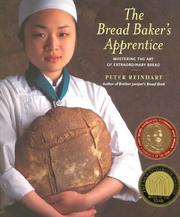
A canonical text that introduces the science and vocabulary of bread — gluten, fermentation, hydration — giving the beginner a solid conceptual framework to carry into every book that follows.
Building Technique: Dough Handling and Flavor
IntermediateDevelop hands-on dough skills — folding, shaping, scoring, and controlling fermentation — and begin producing breads with real flavor and structure.
▸ Study plan for this stage
Pace: 8–10 weeks total: Weeks 1–5 on "Flour Water Salt Yeast" (~25–30 pages/day, including re-reading technique chapters and baking alongside the text); Weeks 6–10 on "The Italian Baker" (~20–25 pages/day, pausing frequently to attempt regional recipes and compare methods to Forkish).
- Autolyse and its role in gluten development — Forkish's method of resting the dough before adding levain or yeast to improve extensibility and flavor
- Stretch-and-fold technique as a substitute for traditional kneading — understanding when, how often, and why to fold during bulk fermentation
- Bulk fermentation control: reading dough temperature, volume increase (the 20–25% rule), and environmental variables (ambient temp, water temp) to time fermentation correctly
- Pre-shaping and bench rest — Forkish's two-stage shaping process and how the bench rest relaxes gluten for a tighter final shape
- Final shaping for batards and boules — building surface tension, seam placement, and loading into a banneton or proofing vessel
- Scoring as both a functional and aesthetic tool — how cuts direct oven spring and what different patterns achieve structurally
- Long, cold retarded proofing (overnight refrigeration) and how it develops complex organic acids for deeper flavor
- Regional Italian dough traditions in Carol Field's book — how hydration, fat additions (olive oil, lard), and local flours (farro, semolina, chestnut) create distinct regional textures and flavors
- After reading Forkish, can you explain why water temperature matters so much, and how would you calculate your target dough temperature for a 78°F (26°C) final dough in your kitchen?
- What visual and tactile cues does Forkish describe to tell you that bulk fermentation is complete, and what happens to the final loaf if you under- or over-ferment?
- How does the stretch-and-fold series in 'Flour Water Salt Yeast' develop gluten strength without traditional kneading, and how does this differ from what Carol Field describes in her Italian dough preparations?
- Carol Field documents breads that use olive oil, semolina, or enriched doughs — how do these additions change fermentation behavior and final crumb structure compared to Forkish's lean doughs?
- What is the purpose of the bench rest between pre-shape and final shape, and what goes wrong if you skip it?
- How does overnight cold retarding (used by Forkish) compare to the same-day room-temperature proofing found in many of Field's Italian regional recipes, and what flavor differences result?
- Bake Forkish's 'Saturday White Bread' and 'Saturday Bread with Poolish' back-to-back in the same week, keeping a written log of dough temperature, fold times, bulk fermentation duration, and oven spring — then taste them side by side to isolate the flavor impact of the poolish.
- Practice the stretch-and-fold technique on a high-hydration dough (75%+ hydration from Forkish) every 30 minutes for 3 hours, photographing the dough after each set to visually track gluten development and bubble structure.
- Shape the same batch of dough into one boule and one batard, cold-proof both overnight, then score each differently (single ear slash vs. cross-hatch) — compare how scoring pattern affects oven spring and crust bloom.
- Select one regional bread from Carol Field's 'The Italian Baker' that uses a non-wheat or enriched flour (e.g., a semolina loaf or a chestnut bread) and bake it alongside a plain Forkish white loaf; write a one-page comparison of crumb, crust, aroma, and flavor.
- Deliberately bake two identical Forkish loaves with the only variable being fermentation time — one slightly under-fermented (cut bulk short by 30 min) and one slightly over-fermented (extend by 45 min) — to train your eye and palate to recognize fermentation errors.
- Recreate a classic Italian regional bread from Field (such as a Pugliese or a Tuscan saltless pane sciocco), paying close attention to her shaping and scoring instructions, and reflect in writing on how the absence of salt or the addition of olive oil changes the dough's handling feel versus Forkish's lean doughs.
Next up: Mastering dough handling and fermentation control through Forkish and Field gives the reader the tactile intuition and flavor awareness needed to confidently tackle sourdough levain management and advanced pre-ferment systems in the next stage.
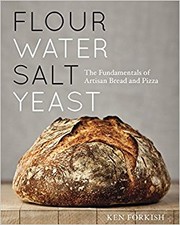
Forkish teaches a methodical, home-baker-friendly approach to high-hydration doughs and overnight fermentation, bridging the gap between beginner loaves and serious artisan bread.
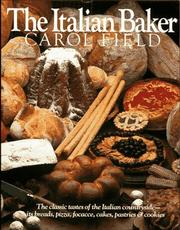
Expands the learner's repertoire into regional hearth breads, ciabatta, and focaccia, building shaping intuition and introducing the idea of bread as a reflection of place and tradition.
The Sourdough Turn: Wild Fermentation
IntermediateCreate and maintain a sourdough starter, understand wild fermentation deeply, and bake consistently great naturally leavened loaves.
▸ Study plan for this stage
Pace: 8–10 weeks total. Weeks 1–5: Tartine Bread (~20–25 pages/day, reading alongside active baking sessions — Robertson's method demands parallel practice). Weeks 6–10: The Sourdough School (~15–20 pages/day, slower pace to absorb Kimbell's science-heavy and nutrition-focused chapters). Dedicate at least
- Wild fermentation vs. commercial yeast: understanding the living ecosystem of a sourdough starter (bacteria + wild yeast symbiosis), as Robertson frames it in Tartine Bread's foundational chapters
- The Tartine leaven: how Robertson distinguishes the young, ripe leaven from a mature starter, and why timing the leaven's peak is the single most critical variable in his method
- Autolyse and dough development: Robertson's use of rest periods to develop gluten without mechanical kneading, and how this shapes crumb structure
- Stretch-and-fold technique: replacing traditional kneading with a series of folds during bulk fermentation, as detailed in Tartine Bread's country loaf method
- Bulk fermentation and proofing: reading dough feel, volume rise, and temperature to judge fermentation rather than relying on fixed timers — a core philosophy in both books
- Flour diversity and microbial terroir: Kimbell's central argument in The Sourdough School that different grains, extraction rates, and local environments produce distinct microbial communities and flavor profiles
- Gut health and long fermentation: Kimbell's evidence-based exploration of how extended sourdough fermentation affects gluten digestibility, phytic acid reduction, and the microbiome
- Starter maintenance rhythms: contrasting Robertson's once-a-day feeding protocol with Kimbell's more flexible, flour-varied approach — understanding why both work and when to use each
- Following Robertson's Tartine Bread method, how do you know your leaven is at peak readiness before mixing your dough, and what sensory and visual cues confirm this?
- What happens chemically and structurally during bulk fermentation, and how do the stretch-and-fold folds in Tartine Bread's country loaf method build gluten strength without degassing the dough?
- According to Kimbell in The Sourdough School, how does the choice of flour — particularly whole grain or heritage varieties — alter the microbial population of a starter and the final flavor of the bread?
- How does Kimbell explain the relationship between long, cold fermentation and improved digestibility, and what does the science say about phytic acid and gluten breakdown during this process?
- If your sourdough loaf comes out dense with a gummy crumb, how would you diagnose the problem using the frameworks provided by Robertson (fermentation timing, shaping) and Kimbell (starter health, flour quality)?
- How do Robertson's and Kimbell's approaches to starter feeding and maintenance differ philosophically, and what does each author prioritize — and what can you learn from holding both perspectives simultaneously?
- Create a sourdough starter from scratch using Robertson's Day 1 protocol in Tartine Bread, and keep a daily log for two weeks tracking smell, bubble activity, rise/fall timing, and any adjustments — this is your fermentation diary
- Bake Robertson's Basic Country Loaf at least three times back-to-back, changing only one variable each time (e.g., bulk fermentation length, leaven percentage, or oven temperature) and document the crumb, crust, and flavor differences to internalize cause and effect
- Conduct the float test and the 'windowpane' gluten check on the same dough at different stages of bulk fermentation, recording what you observe at 2 hours, 3 hours, and 4 hours to build tactile intuition for dough readiness
- Following Kimbell's flour philosophy in The Sourdough School, bake the same Robertson country loaf formula with three different flour blends (e.g., white bread flour, 20% whole wheat, and a heritage grain like einkorn or spelt) and compare the starter activity, dough extensibility, and final flavor side by side
- Maintain your starter for four consecutive weeks using Robertson's feeding schedule, then switch to one of Kimbell's alternative grain feedings (e.g., rye or whole wheat) for two weeks — write a short reflection on how the starter's aroma, texture, and leavening power changed
- Score and bake two loaves simultaneously: one going straight from shaping into a hot oven (Robertson's same-day method) and one cold-retarded overnight in the fridge (Kimbell's preferred long fermentation) — taste them together and articulate the flavor, crust, and crumb differences in writing
Next up: By mastering wild fermentation fundamentals and developing a reliable, living starter through Robertson's rigorous method and Kimbell's scientific lens, the reader has built the biological intuition and dough-handling confidence needed to explore more advanced naturally leavened forms — such as enriched sourdoughs, high-hydration open-crumb loaves, or regional sourdough traditions — in the next st
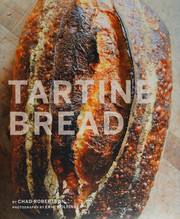
The most influential sourdough book of the modern era — Robertson's country loaf method teaches bulk fermentation, the float test, and baking in a Dutch oven, making it the essential first sourdough text.

Complements Tartine by focusing on starter health, flour selection, and the biology of fermentation, giving the learner the 'why' behind every sourdough decision.
Hearth Mastery: Crust, Crumb, and the Professional Mindset
ExpertAchieve bakery-quality results at home — open crumb, blistered crust, precise scoring — and understand the full craft of hearth baking at a near-professional level.
▸ Study plan for this stage
Pace: 12–16 weeks total: Weeks 1–5 — "Modernist Bread at Home" (~25–30 pages/day, prioritizing the science chapters, crust/crumb technique sections, and scoring galleries); Weeks 6–10 — "The Rye Baker" (~20 pages/day, baking all regional formula chapters methodically); Weeks 11–14 — "Bread Science" (~15–1
- Crust formation mechanics: the role of steam injection, oven spring, and Maillard reaction as analyzed in Modernist Bread at Home — understanding why a blistered, crackly crust forms and how to replicate professional deck-oven conditions at home (baking steel, Dutch oven, steam trapping)
- Open crumb architecture: how hydration levels, gluten network development, fermentation gas retention, and shaping tension interact to produce an irregular, hole-forward crumb structure, as detailed in Modernist Bread at Home
- Precise scoring as both art and science: blade angle, depth, pattern, and timing relative to proofing state — using Modernist Bread at Home's visual scoring guides to understand how cuts direct oven spring and affect final loaf geometry
- Rye's unique biochemistry: the absence of gluten-forming proteins, the dominant role of pentosans in dough structure, and how starch gelatinization replaces gluten as the structural backbone — the foundational lens through which all formulas in The Rye Baker must be read
- Regional rye traditions and formula logic: how The Rye Baker maps Scandinavian, German, Eastern European, and Baltic baking cultures onto distinct hydration levels, souring methods, and crust/crumb profiles — understanding bread as a cultural artifact with technical consequences
- Sourdough acidification and rye sours: the two-stage and three-stage sour builds in The Rye Baker, the role of lactic vs. acetic acid balance, and how pH directly controls enzyme activity (amylase) and final crumb texture in high-rye doughs
- Fermentation chemistry at a molecular level: Bread Science's treatment of yeast metabolism, CO₂ production, ethanol, and organic acid pathways — providing the 'why' behind every timing and temperature decision made in the other two books
- The professional mindset as a practice system: using Modernist Bread at Home's process-oriented framework and Bread Science's analytical approach together to build a habit of observation, note-taking, variable isolation, and iterative refinement — treating the home kitchen as a laboratory
- After reading Modernist Bread at Home, can you explain exactly what happens physically and chemically during the first 10 minutes of a hearth loaf's bake — from oven spring through crust set — and identify three specific home-oven interventions that replicate professional deck-oven conditions?
- How does Stanley Ginsberg's The Rye Baker distinguish between a 'light rye' and a 'whole rye' formula in terms of structure, fermentation strategy, and expected crumb, and why would you use a three-stage sour for a dense Westphalian-style pumpernickel but not for a Scandinavian light rye?
- Using the science explained in Bread Science by Emily Buehler, why does over-fermentation cause a dense, gummy crumb in high-rye doughs specifically, and how does this connect to the amylase activity warnings Ginsberg raises throughout The Rye Baker?
- Modernist Bread at Home presents scoring as a technical control mechanism, not merely decorative. Can you describe how blade angle (shallow vs. steep) and cut placement relative to the loaf's tension seam affect the direction and height of oven spring?
- Bread Science details the relationship between dough temperature and fermentation rate. How would you apply this knowledge to troubleshoot a sourdough that consistently over-proofs in summer but under-proofs in winter, referencing specific variables you can control?
- Having read all three books, how would you design a single-weekend bake that produces both an open-crumb wheat hearth loaf (Modernist Bread at Home approach) and a dense, sliceable rye (The Rye Baker approach) — what are the key scheduling, temperature, and equipment conflicts you must resolve?
- 'Crust variable isolation' bake series (Modernist Bread at Home): Bake the same high-hydration white loaf formula four times, changing only one crust variable each time — Dutch oven lid-on duration, baking steel vs. sheet pan, steam added vs. none, and oven temperature (450°F vs. 500°F). Photograph and score each crust; write a one-paragraph analysis comparing blister formation, color, and crackle
- Scoring practice log (Modernist Bread at Home): Over four consecutive bakes, systematically test two scoring patterns from the book's visual guide (e.g., single ear vs. cross-hatch). For each, vary blade angle between 30° and 90°. Photograph the raw score and the baked result side by side and document how oven spring direction changed.
- Rye sour progression exercise (The Rye Baker): Build a three-stage rye sour from scratch following Ginsberg's instructions, logging temperature, aroma, and volume at each stage. Then bake one loaf using the fully developed sour and one using a shortcut single-stage sour. Taste and compare crumb texture, sourness, and sliceability after a 24-hour rest.
- Regional rye tour (The Rye Baker): Bake one formula from three distinct regional chapters (e.g., a German Roggenmischbrot, a Scandinavian rugbrød, and a Baltic dark rye). Write tasting notes for each using a consistent rubric: crust character, crumb density, acidity, and cultural context as described by Ginsberg.
- Fermentation timeline mapping (Bread Science): Choose one sourdough formula and bake it three times with bulk fermentation cut at 50%, 100% (standard), and 150% of the recommended time. Before baking, perform the 'poke test' and note dough feel. After baking, photograph crumb cross-sections and map your observations against Buehler's fermentation curve diagrams.
- Integrated 'bakery day' simulation: Plan and execute a full Saturday bake session producing two different breads simultaneously — one high-hydration wheat hearth loaf using Modernist Bread at Home techniques and one rye loaf from The Rye Baker. Write a post-session debrief covering what you scheduled, what went wrong, and what Bread Science's chemistry explains about any failures.
Next up: Mastering the science, technique, and cultural depth of hearth baking at this stage equips the reader with the analytical and sensory vocabulary needed to tackle specialized or avant-garde bread traditions — whether that means laminated doughs, ancient grains, or professional production scaling — with the confidence of someone who understands not just what to do, but exactly why it works.

Brings rigorous, science-backed explanations of crust formation, steam, and crumb structure that allow the advanced baker to diagnose problems and push results to their limit.

Opens the door to rye, whole grains, and the Northern European hearth tradition, rounding out the learner's repertoire and deepening their understanding of how different flours transform dough and crust.

A concise, clear deep-dive into the microbiology and chemistry of bread — the ideal capstone read that ties together every intuition built across the curriculum with rigorous scientific understanding.
Discussion
Keep reading
Paths that share books, cover the same subject, or open a related topic.