Master pastry: the science of great baking
This curriculum takes a beginner from intuitive baking into the deep science and craft of pastry, building in four deliberate stages. Each stage adds a new layer — first building kitchen confidence and vocabulary, then understanding the "why" behind recipes, then mastering the most technical pastry disciplines, and finally reaching professional-level baking science and creative mastery.
Foundations: Building Intuition & Vocabulary
BeginnerDevelop hands-on confidence in the kitchen, learn core baking techniques, and build the vocabulary needed to think about recipes critically rather than just follow them.
▸ Study plan for this stage
Pace: 6–8 weeks, ~20–25 pages/day (BraveTart is ~450 pages of dense recipe narrative + headnotes); read each chapter introduction and headnote before attempting any recipe, then re-read after baking
- The 'why' behind classic American baking: how history, culture, and ingredient availability shaped iconic recipes
- Fat function: how butter, shortening, and oil each affect texture, tenderness, flakiness, and flavor in different baked goods
- Sugar science basics: the roles of granulated, brown, powdered, and corn syrup in browning (Maillard reaction vs. caramelization), moisture retention, and structure
- Leavening agents: how baking soda, baking powder, and steam create rise, and why the ratio to acidic ingredients matters
- Flour and gluten development: how protein content, mixing method, and hydration determine crumb structure — from tender cake to chewy cookie
- Emulsification and the role of eggs: how yolks, whites, and whole eggs contribute to structure, richness, lift, and binding
- Temperature as an ingredient: the critical impact of ingredient temperature (cold butter for flakiness, room-temp eggs for emulsification) and oven calibration on final results
- Sensory vocabulary: learning to describe texture, crumb, crust color, and flavor precisely so you can diagnose what went wrong and articulate what went right
- According to Stella Parks's headnotes, what specific historical or ingredient-sourcing reason explains why a classic American recipe (e.g., Devil's Food Cake or Oreo-style cookies) uses the proportions it does — and how does that change how you'd troubleshoot it?
- If a cookie recipe calls for melted butter instead of creamed butter, what textural outcome should you expect, and why does Parks make that choice in specific recipes?
- What is the difference between baking soda and double-acting baking powder in terms of when CO₂ is released, and how does Parks's use of one versus the other reflect the mixing method or acid content of a given recipe?
- How does Parks's approach to sugar type (e.g., using a specific brand of powdered sugar or dark brown sugar) affect the final flavor and texture, and what does this teach you about treating sugar as more than just 'sweetness'?
- After baking one of Parks's recipes, can you describe the result using at least five sensory/technical terms (e.g., 'tight crumb,' 'Maillard browning,' 'short texture,' 'emulsified batter') rather than just 'good' or 'bad'?
- What does Parks's insistence on weight measurements and specific ingredient brands reveal about the relationship between standardization and reproducibility in baking science?
- **Read-then-bake loop:** For every recipe you attempt, read the full headnote *before* baking, take notes on Parks's stated reasoning, bake the recipe, then re-read the headnote and annotate where you observed the science she described (e.g., 'yes, the batter did look curdled before it came together').
- **Fat swap experiment:** Choose one Parks cookie or cake recipe and bake it twice — once as written (likely with a specific butter or fat) and once substituting a different fat (e.g., shortening for butter or vice versa). Document differences in spread, texture, flavor, and color using the sensory vocabulary you're building.
- **Leavening ratio journal:** As you read through BraveTart, create a simple table logging every recipe's leavening agent(s), the amount per cup of flour, and the presence of any acidic ingredient. After 10+ recipes, look for patterns — what do high-acid recipes have in common? What do recipes with no baking soda share?
- **Mise en place temperature drill:** Pick any Parks recipe that specifies ingredient temperatures (e.g., room-temperature butter, cold cream). Bake it once following her temperature specs exactly, and once with ingredients straight from the fridge or pantry at the wrong temperature. Compare results and write a one-paragraph diagnosis.
- **Vocabulary flashcard build:** After each chapter, write one index card per new technical term Parks uses (e.g., 'short dough,' 'bloom,' 'tempering,' 'bench rest'). On the back, write the definition *in your own words* plus the recipe where you first encountered it. Aim for 40+ cards by the end of the book.
- **Reverse-engineer a recipe headnote:** Choose a favorite Parks recipe and write your own headnote *before* reading hers — explain why you think each ingredient is there and what role it plays. Then compare your reasoning to Parks's explanation and note every gap in your understanding as a study target.
Next up: Mastering BraveTart's recipe-level reasoning — understanding *why* each ingredient and technique exists — gives you the critical vocabulary and hands-on intuition needed to engage with more systematic, science-forward baking texts that explain the underlying chemistry and physics in formal terms.
Stella Parks explains the history and reasoning behind every recipe in plain language, teaching beginners to think about *why* ingredients and steps matter — a perfect first book for building baking intuition.
The Science Layer: Understanding Why Recipes Work
BeginnerUnderstand the food science behind baking — gluten, leavening, fats, sugars, eggs, and heat — so that every recipe becomes a logical system rather than a mystery.
▸ Study plan for this stage
Pace: 10–12 weeks total. Weeks 1–5: "On Food and Cooking" by Harold McGee — focus on the chapters covering grains/starches, dairy, eggs, sugar, fats, and leavening (~25–35 pages/day, 4–5 days/week). Weeks 6–12: "How Baking Works" by Paula I. Figoni — read chapter by chapter, treating each as a self-contai
- Gluten development: how glutenin and gliadin proteins in wheat flour hydrate and link to form gluten networks, and how mixing, hydration, and fat interrupt or strengthen that network (McGee Ch. on Cereals; Figoni Ch. 3–4)
- Starch gelatinization and retrogradation: how starch granules absorb water and swell under heat to set structure, and how retrogradation causes staling (McGee on Grains; Figoni Ch. 5)
- Leavening systems: the chemistry of biological (yeast), chemical (baking soda/powder), and physical (steam, creamed air) leavening — CO₂ production, timing, and acid-base balance (Figoni Ch. 7–8)
- The role of fats: shortening vs. butter vs. oil — how fat coats flour proteins to tenderize, how it traps air during creaming, and how fat crystal structure affects flakiness and mouthfeel (McGee on Fats & Oils; Figoni Ch. 9–10)
- Sugar's multifunctional roles: sweetness, hygroscopicity, caramelization, Maillard reaction, tenderizing by competing for water, and raising the gelatinization temperature of starch (McGee on Sugar; Figoni Ch. 6)
- Eggs as structure-builders and emulsifiers: protein coagulation, foam formation (whole egg vs. white vs. yolk), lecithin's emulsifying action, and how eggs set custards and lift cakes (McGee on Eggs; Figoni Ch. 11–12)
- Heat transfer and oven science: conduction, convection, and radiation in baking; crust formation; the role of steam in oven spring; and how internal temperature determines doneness (Figoni Ch. 2)
- The concept of ingredient balance: understanding that every ingredient plays multiple, interacting roles, and that changing one variable (e.g., sugar quantity) cascades through the entire formula (Figoni, throughout)
- After reading McGee's section on wheat and Figoni's gluten chapters, can you explain in plain language why over-mixing a muffin batter makes it tough, while kneading bread dough makes it chewy — and why the same ingredient (flour) produces such different results?
- Baking soda vs. baking powder: using Figoni's leavening chapters, can you explain when to use each, what role an acidic ingredient plays, and what would happen to a recipe if you accidentally doubled the amount of baking soda?
- How does butter's water content make it behave differently from shortening in a pie crust, and why does temperature matter so much when cutting fat into flour? (Draw on both McGee's fat chapter and Figoni Ch. 9–10.)
- Using McGee's treatment of sugar and Figoni's chapter on sweeteners, explain at least three distinct things sugar does in a cake beyond making it sweet — and predict what would happen to texture, color, and shelf life if you reduced the sugar by half.
- Eggs coagulate, foam, and emulsify. Using Figoni Ch. 11–12, describe how the same egg behaves differently in a génoise (foam), a custard (coagulation), and a mayonnaise-style cake batter (emulsification) — and what temperature range is critical for each.
- What is the Maillard reaction, how does it differ from caramelization, and what baking conditions (temperature, pH, moisture, sugar type) favor each? How would you use this knowledge to deliberately control the browning of a cookie or bread crust?
- The Gluten Experiment: Make three batches of the same simple flatbread or pancake — one under-mixed, one properly mixed, one over-mixed. Photograph the crumb structure and record the texture difference. Write two sentences connecting each result to the gluten science in Figoni Ch. 3–4.
- Leavening Comparison Bake: Bake three identical muffins, substituting (a) baking powder only, (b) baking soda + buttermilk, and (c) no leavener. Taste, measure rise, and examine crumb. Map your observations back to Figoni's leavening chapters and McGee's acid-base discussion.
- Fat Swap Experiment: Bake the same cookie recipe three times — once with butter, once with shortening, once with coconut oil. Compare spread, texture, flavor, and crispness. Use McGee's fat chapter and Figoni Ch. 9 to write a one-paragraph scientific explanation of the differences.
- Sugar Reduction Test: Bake a simple vanilla cake at 100%, 75%, and 50% of the recipe's sugar. Document changes in color (Maillard/caramelization), moisture, tenderness, and spread. Annotate your notes with specific page references from Figoni's sweetener chapter.
- Egg Function Dissection: Make three small batches of a simple sponge — one with whole eggs, one with yolks only, one with whites only (whipped to stiff peaks). Compare lift, color, richness, and structure. Write a half-page reflection linking your results to McGee's egg chapter and Figoni Ch. 11–12.
- Concept Mapping After Each Figoni Chapter: After finishing each chapter of 'How Baking Works,' draw a one-page ingredient web showing how that chapter's star ingredient interacts with at least three others (e.g., sugar ↔ starch gelatinization ↔ eggs ↔ fat). Accumulate these maps into a personal 'baking science reference deck' to carry into the next stage.
Next up: Mastering the 'why' behind individual ingredients and reactions in this stage gives the reader the scientific vocabulary and analytical mindset needed to tackle the next stage — where these principles are applied to specific pastry categories (doughs, custards, chocolates, etc.) and more complex, multi-step formulas can be decoded and adjusted with confidence.
The definitive reference on the science of ingredients; reading the chapters on eggs, dairy, sugars, and grains gives bakers the molecular-level vocabulary that makes all subsequent pastry study click into place.

Written specifically as a baking-science textbook, this book systematically covers every ingredient category and process — leavening, browning, emulsification — and is the clearest bridge between kitchen practice and food science.
Intermediate Craft: Doughs, Lamination & Custards
IntermediateMaster the most technically demanding pastry categories — laminated doughs, choux, tarts, and egg-based custards — with a full understanding of the science driving each technique.
▸ Study plan for this stage
Pace: 12–14 weeks total. Week 1–4: Labensky Study Guide (~20–25 pages/day, focusing on dough, lamination, custard, and choux chapters). Weeks 5–9: Pfeiffer's "The Art of French Pastry" (~15–20 pages/day, reading each recipe chapter alongside active kitchen practice). Weeks 10–14: Robertson's "Tartine Brea
- Lamination science: how alternating layers of fat and dough create steam-leavened flakiness in croissants and pâte feuilletée, as covered in the Labensky guide's dough chapters
- Gluten development and control: understanding how hydration, mixing time, and flour protein content affect dough extensibility and strength across all three books
- Choux paste mechanics: the role of gelatinized starch, egg ratio, and steam pressure in producing hollow, crisp shells, as detailed in Pfeiffer's foundational chapters
- Egg-based custard chemistry: coagulation temperatures, the role of sugar and dairy fat in stabilizing crème pâtissière, crème brûlée, and tart fillings, drawn from both Labensky and Pfeiffer
- Tart shell construction: blind baking, shrinkage prevention, and the balance of tenderness vs. structure in pâte sucrée and pâte brisée, per Pfeiffer's tart chapters
- Wild-yeast fermentation and dough hydration: Robertson's Tartine method introduces high-hydration, long-fermentation doughs that deepen understanding of gluten networks and flavor development
- Temperature as a critical variable: how butter temperature in lamination, custard cooking temperature, and dough proofing temperature each determine success or failure across all three books
- Sensory diagnosis: using visual, tactile, and aromatic cues — championed throughout Pfeiffer and Robertson — to judge dough readiness, custard set, and lamination integrity without relying solely on timers
- According to the Labensky study guide, what happens to laminated dough layers if the butter is too cold or too warm during the folding process, and how does this affect the final bake?
- Pfeiffer emphasizes a specific sequence of steps when making choux paste — what is the purpose of cooking the flour in the butter-water mixture before adding eggs, and what does it do to the starch?
- How does Pfeiffer distinguish between crème pâtissière and crème anglaise in terms of starch content, cooking method, and intended use in finished pastries?
- Robertson describes the 'windowpane test' and the feel of a properly fermented dough — how do the tactile benchmarks he describes in Tartine Bread translate to understanding gluten development in enriched pastry doughs?
- What role does resting (détrempe) play in the lamination process as explained in the Labensky guide, and why does skipping it compromise the final layer count?
- Across all three books, temperature control emerges as the single most critical variable — give three specific examples, one from each book, where a precise temperature range is the difference between success and failure.
- Lamination drill (Labensky + Pfeiffer): Make a classic pâte feuilletée or croissant dough twice in one week — once with butter at the correct pliable temperature and once intentionally too cold. Photograph the cross-sections and compare layer definition to internalize the science.
- Choux troubleshooting log (Pfeiffer): Bake three batches of choux paste varying the egg quantity slightly each time. Record shell height, hollowness, and crust crispness. Map results back to Pfeiffer's explanations of egg ratio and steam.
- Custard temperature ladder (Labensky + Pfeiffer): Prepare crème pâtissière and pull samples off the heat at 75°C, 82°C, and 90°C. Chill and compare texture, noting where starch gelatinization and egg coagulation intersect.
- Tart shell blind bake comparison (Pfeiffer): Make pâte sucrée and pâte brisée side by side using Pfeiffer's formulas. Blind bake both, then fill with the same custard. Evaluate structural integrity, crumb texture, and flavor contrast.
- Tartine country loaf attempt x3 (Robertson): Follow Robertson's Tartine Bread method for the basic country loaf at least three times over two weeks. Keep a fermentation journal logging starter activity, dough temperature, and crumb openness to build intuition for live-dough behavior.
- Cross-book reflection essay: After completing all three books, write a one-page personal 'technique map' connecting one concept from each book — e.g., gluten relaxation in Labensky, dough feel in Pfeiffer, and fermentation timing in Robertson — into a unified principle you can apply in the kitchen.
Next up: By mastering the structural logic of laminated doughs, custards, and fermented breads across Labensky, Pfeiffer, and Robertson, the reader has built the technical vocabulary and hands-on intuition needed to tackle advanced composition, flavor pairing, and plated-dessert architecture in the next stage of the curriculum.
A structured, professional-school approach to every major pastry category; having the science foundation from Stage 2 makes this textbook's technical detail immediately actionable.
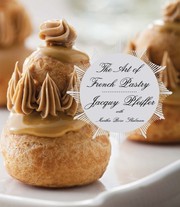
A James Beard Award–winning book by a CIA co-founder that teaches classic French pastry — croissants, pâte feuilletée, crème pâtissière — with exceptional explanations of the science behind lamination and custard structure.
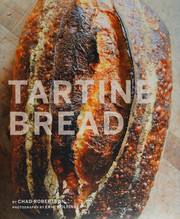
Focuses deeply on bread and enriched doughs with a craftsman's obsession over fermentation, hydration, and gluten development — essential reading before tackling advanced laminated and enriched pastry doughs.
Advanced Mastery: Professional Pastry Science & Creative Control
ExpertReach a professional level of understanding — reading formulas like a scientist, manipulating ratios with intent, and approaching pastry as a creative discipline grounded in deep technical knowledge.
▸ Study plan for this stage
Pace: 16–20 weeks total: ~5 weeks on "The Professional Pastry Chef" (~40–50 pages/day, focusing on formulas and technique chapters); ~7 weeks on "Modernist Bread" (~20–25 pages/day across its dense, science-heavy volumes — treat it as a reference-lab hybrid, reading thematically rather than cover-to-cover
- Formula literacy: reading and deconstructing professional pastry formulas as ratios rather than fixed recipes, understanding baker's percentages and how each ingredient's proportion drives texture, structure, and flavor (Friberg)
- Laminated and enriched dough architecture: the science of fat layering, gluten relaxation, and fermentation control in croissants, puff pastry, and brioche (Friberg)
- Bread science at the molecular level: starch gelatinization, gluten network formation, Maillard reaction, enzymatic activity, and the role of hydration on crumb structure (Modernist Bread)
- Fermentation mastery: wild vs. commercial yeast behavior, pre-ferments (poolish, biga, levain), pH management, and how time and temperature are precision tools (Modernist Bread)
- Ingredient functionality at a scientific level: how emulsifiers, hydrocolloids, sugars, fats, and leaveners interact chemically and physically across different pastry contexts (Friberg + Modernist Bread)
- Compositional design thinking: Migoya's framework of building a dessert from a central idea outward — balancing flavor, texture, temperature, and visual narrative (The Elements of Dessert)
- Creative control through constraint: using deep technical knowledge to intentionally break or bend rules — substituting, scaling, and innovating with predictable outcomes (Migoya + Modernist Bread)
- Professional kitchen standards and plated dessert architecture: portion logic, mise en place at scale, component interplay, and the language of fine pastry presentation (Friberg + Migoya)
- Given a professional formula from Friberg, can you identify the functional role of every ingredient, predict how changing one ratio by 10–15% would alter the final product, and justify that prediction with food-science reasoning?
- According to Modernist Bread, what are the key variables that determine open vs. tight crumb structure in a high-hydration loaf, and how do fermentation time, folding technique, and baking temperature each contribute?
- How does Migoya define the concept of a 'dessert idea,' and what is his process for translating an abstract flavor or emotional concept into a fully composed plated dessert with multiple components?
- Using principles from Modernist Bread, how would you diagnose and correct a sourdough loaf that is consistently dense, gummy, and under-colored — walking through fermentation, shaping, scoring, and baking variables?
- How do Friberg's professional-scale formulas and Migoya's compositional philosophy complement each other when designing a tasting-menu dessert course — what does each book contribute to the process?
- What does 'creative control' mean at an advanced level, and how do the three books collectively define the difference between a technically competent pastry cook and a pastry artist/scientist?
- Formula autopsy (Friberg): Select 5 formulas from different categories (e.g., tart dough, génoise, croissant, mousse, caramel). Convert every formula to baker's percentages, identify the 'load-bearing' ratios, then deliberately alter one variable in each and bake both versions side-by-side to observe and document the difference.
- Bread variable isolation lab (Modernist Bread): Bake the same base bread formula four times, changing only one variable each time — hydration level, fermentation time, pre-ferment type, and baking vessel. Photograph crumb structure, measure crust thickness, and write a one-page scientific analysis comparing results.
- Levain health journal (Modernist Bread): Maintain a sourdough starter for the full duration of the Modernist Bread reading block. Log feeding ratios, ambient temperature, peak rise times, aroma, and pH (if possible). Bake one loaf per week and correlate starter behavior with final loaf outcomes.
- Dessert concept-to-plate exercise (Migoya): Choose one non-food concept (a season, a memory, a color, a piece of music). Following Migoya's compositional framework from The Elements of Dessert, develop a fully plated dessert with at least 4 components that express that concept — write a one-page design brief before cooking, then evaluate whether the finished plate communicates the idea.
- Cross-book integration project: Design an original viennoiserie (e.g., a flavored croissant or laminated brioche) using Friberg's formula structure as a scaffold, Modernist Bread's fermentation science to optimize the dough, and Migoya's plating and flavor-composition principles to finish and present it. Document every decision with a technical rationale.
- Professional critique session: Prepare three finished pastry items from across the three books, then conduct a structured self-critique using a rubric covering: technical execution, flavor balance, textural contrast, visual composition, and scalability to a professional kitchen context. Optionally, share with a peer or mentor for external feedback.
Next up: Completing this stage equips the reader with the scientific vocabulary, ratio-based thinking, and creative design framework needed to engage with original research, cutting-edge culinary literature, or professional development in specialized areas such as chocolate, sugar work, or fermentation — the natural next frontier beyond structured curriculum.

An encyclopedic professional reference covering hundreds of preparations with precise ratios and technical notes; at this stage the learner has the science to fully absorb and adapt its formulas.

The most scientifically rigorous treatment of baking ever published, covering dough physics, fermentation chemistry, and oven dynamics at a depth that rewards readers who have built up through all prior stages.
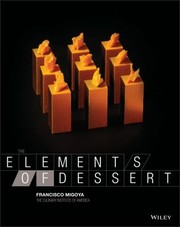
A forward-thinking professional pastry book that treats flavor, texture, and technique as design tools — the ideal capstone for a learner who now has both the science and the craft to bake with true creative understanding.
Discussion
Keep reading
Paths that share books, cover the same subject, or open a related topic.