Understanding Marx: essential books on his ideas and Capital
This curriculum takes a beginner from zero familiarity with Marx all the way to engaging critically with his most demanding texts and their lasting influence. Each stage builds the conceptual vocabulary needed for the next: you'll first grasp the historical and biographical context, then master the core philosophical ideas, then tackle Marx's own major writings, and finally assess how Marxist thought has shaped — and been challenged by — the modern world.
Foundations: Context & First Contact
BeginnerUnderstand who Marx was, why he matters, and get a clear, jargon-free introduction to his key ideas before touching primary sources.
▸ Study plan for this stage
Pace: 4–5 weeks, ~25–30 pages/day. Singer's introduction (100 pages) takes 1 week; Wheen's biography (400+ pages) takes 3–4 weeks with time for review and reflection.
- Marx's life as a lens for understanding his thought—exile, poverty, intellectual ambition, and engagement with radical politics (Wheen)
- Historical materialism: the idea that economic systems and class relations shape history, culture, and ideas (Singer)
- Alienation and estrangement: how workers lose control of their labor and humanity under capitalism (Singer)
- Surplus value and exploitation: how capitalists extract unpaid labor from workers (Singer)
- The class struggle as the engine of historical change and the inevitability of capitalism's collapse (Singer)
- Marx's method: combining philosophy, history, and economics to analyze society (both authors)
- The difference between Marx's early humanistic writings and his later scientific analysis (Wheen)
- Marx as a person: his relationships, contradictions, and the gap between his ideals and lived experience (Wheen)
- Who was Karl Marx as a person, and what major life events shaped his thinking? (Wheen)
- What is historical materialism, and how does it differ from seeing ideas or great individuals as the drivers of history? (Singer)
- What does Marx mean by alienation, and how does it relate to capitalism? (Singer)
- How does Marx explain surplus value, and why does he see it as the root of exploitation? (Singer)
- What role does class struggle play in Marx's theory of history? (Singer)
- Why did Marx believe capitalism would eventually collapse, and what would replace it? (Singer)
- How did Marx's thinking evolve from his early philosophical work to his later economic analysis? (Wheen)
- What are the main criticisms or limitations of Marx's ideas that these authors acknowledge? (both)
- Timeline exercise: Create a visual timeline of Marx's life (birth, education, exile, major publications, death) using Wheen, then annotate it with corresponding shifts in his ideas from Singer.
- Concept map: Draw connections between alienation, surplus value, and class struggle using Singer's explanations; test yourself by explaining each link in one sentence.
- Close reading: Select one key passage from Singer (e.g., on historical materialism or surplus value) and paraphrase it in your own words three times until it feels natural.
- Biographical reflection: After reading Wheen, write a 1–2 page reflection on how Marx's personal struggles (poverty, illness, exile) might have influenced his critique of capitalism.
- Debate prep: Identify 3–4 criticisms of Marx mentioned in either book, then write a one-paragraph response Marx might give to each.
- Modern application: Choose one contemporary issue (labor conditions, wealth inequality, automation) and explain it using one Marxist concept from Singer—write 300–500 words.
Next up: This stage equips you with Marx's biography, core concepts, and the logic of his worldview in accessible language, preparing you to engage directly with his own writings and grapple with primary texts where Marx develops these ideas with full rigor and complexity.
A concise, lucid overview by a rigorous philosopher — the ideal first encounter that maps the whole terrain of Marx's thought without overwhelming a newcomer.
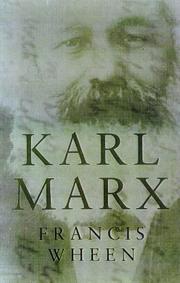
A vivid, readable biography that anchors Marx's ideas in the turbulent historical events and personal struggles that shaped them, making the later theory feel alive.
Core Philosophy: Materialism, History & Alienation
BeginnerGrasp historical materialism, dialectical thinking, and the concept of alienation — the philosophical engine behind everything Marx wrote.
▸ Study plan for this stage
Pace: 4–5 weeks, ~40–50 pages/day. Start with Marx's selections from Capital and Communist Manifesto (1 week), move to Fromm's accessible synthesis (1 week), then tackle The German Ideology (2–3 weeks, slower due to density).
- Historical materialism: the idea that material conditions and economic relations, not ideas, drive history and social change
- Dialectical thinking: understanding contradictions and conflict as the engine of transformation (thesis-antithesis-synthesis)
- Alienation: the worker's estrangement from their labor, its product, their species-being, and other workers under capitalism
- Base and superstructure: how economic systems (base) shape ideology, law, culture, and consciousness (superstructure)
- Commodity fetishism: how capitalism obscures the human labor embedded in objects, making social relations appear as relations between things
- Species-being: Marx's concept of human nature as the capacity for conscious, creative, social labor—corrupted under capitalism
- Praxis: the unity of theory and practice; how understanding the world must lead to changing it
- The role of class struggle and contradiction in capitalist development toward its own transcendence
- What does Marx mean by 'historical materialism,' and how does it differ from idealism as an explanation of social change?
- Explain alienation in your own words: what are the four dimensions of alienation that Marx identifies, and why does capitalism necessarily produce it?
- How do the concepts of 'base' and 'superstructure' help explain why ideology persists even when material conditions change?
- What is 'commodity fetishism,' and how does it relate to the invisibility of labor in capitalist society?
- How does Fromm's humanistic reading of Marx in 'Marx's Concept of Man' illuminate or complicate Marx's own arguments about alienation and species-being?
- What role does contradiction and class struggle play in Marx's theory of historical change, according to The German Ideology?
- Close-read a 2–3 page passage from the Communist Manifesto on class struggle; annotate it to identify the dialectical structure (thesis-antithesis-synthesis) and underline all claims about material conditions driving history.
- Create a visual diagram mapping the four dimensions of alienation (from labor, from product, from species-being, from others) using a concrete modern example (e.g., fast-food worker, Amazon warehouse worker, or content creator).
- Write a 500-word reflection: choose one aspect of your own work or daily life and analyze it through the lens of 'commodity fetishism'—what human labor and relations are hidden behind the products or services you encounter?
- Comparative table: list 5–6 key claims about alienation from Capital/Manifesto in one column and Fromm's interpretation in another; note where Fromm emphasizes humanistic psychology vs. where Marx emphasizes material economics.
- Read a section from The German Ideology (e.g., on ideology or the division of labor) and write a 300-word summary explaining how it uses dialectical materialism to critique Feuerbach or Hegel.
- Debate exercise: argue both sides—'Does capitalism necessarily produce alienation, or can it be reformed to reduce it?' Ground your arguments in specific passages from the three texts.
Next up: Mastering these foundational concepts—especially historical materialism, alienation, and dialectical contradiction—equips you to analyze Marx's critique of capitalism's specific mechanisms (surplus value, accumulation, crisis) and to engage with how later Marxists applied and debated these ideas.

Short, electrifying, and written for a general audience — the best first primary text, introducing class struggle and historical materialism in Marx's own words.

Fromm pairs a brilliant essay on Marx's humanism with key excerpts from the Economic and Philosophic Manuscripts, making alienation accessible before you tackle the full texts.
Marx and Engels's fullest early statement of historical materialism; read after Fromm so you have the conceptual scaffolding to follow the argument.
The Masterwork: Reading Capital
IntermediateWork through Marx's critique of political economy — commodities, surplus value, exploitation, and the dynamics of capitalism — with guided support.
▸ Study plan for this stage
Pace: 12–14 weeks, ~40–50 pages/day (Harvey's Companion: 3–4 weeks, ~25 pages/day; Capital Vol. I: 8–10 weeks, ~50–60 pages/day with re-reading of difficult sections)
- The commodity as the fundamental unit of capitalist analysis: use-value, exchange-value, and value as socially necessary labor time
- The fetishism of commodities: how social relations between people appear as relations between things
- Surplus value and the labor theory of value: how capitalists extract unpaid labor from workers
- Constant capital vs. variable capital: the distinction between means of production and labor-power as sources of profit
- The process of capital accumulation: how surplus value is reinvested to expand production and increase exploitation
- The rate of exploitation and relative/absolute surplus value: mechanisms for increasing capitalist profit
- Primitive accumulation: the historical violence required to create the capitalist system and a propertyless working class
- The organic composition of capital and the tendency of the rate of profit to fall: structural contradictions in capitalism
- What is the difference between use-value and exchange-value, and why does Marx begin Capital with the commodity?
- How does Marx explain commodity fetishism, and what does he mean by saying that commodities obscure the social relations embedded in them?
- What is surplus value, and how does Marx argue that it arises from the exploitation of labor-power?
- How do constant capital and variable capital differ, and why is this distinction crucial to understanding profit?
- What is primitive accumulation, and why does Marx argue it is foundational to capitalism rather than a peaceful historical process?
- How do absolute surplus value and relative surplus value represent different strategies for capitalist profit-making?
- What is the organic composition of capital, and how does Marx connect it to the tendency of the rate of profit to fall?
- How does Capital Vol. I demonstrate that capitalism contains internal contradictions that may lead to its eventual collapse?
- Create a detailed diagram mapping the commodity's journey from production to consumption, labeling use-value, exchange-value, and value at each stage
- Write a 2–3 page analysis of a modern commodity (e.g., a smartphone or fast-fashion item) using Marx's framework: trace its labor inputs, identify the surplus value extracted, and explain what commodity fetishism obscures about its production
- Work through a concrete numerical example of surplus value extraction: assume a worker's labor-power costs $100/day and produces $300 in value; calculate surplus value, the rate of exploitation, and how this changes under absolute vs. relative surplus value strategies
- Read and annotate one complete chapter from Capital Vol. I (e.g., Chapter 1 on commodities or Chapter 6 on the sale and purchase of labor-power) and write a 1–2 page summary identifying the main argument, key definitions, and one critical question
- Compare Harvey's explanation of a concept (e.g., fetishism or primitive accumulation) with Marx's original treatment in Capital; write a 2–page reflection on how Harvey's interpretation clarifies or simplifies Marx's argument
- Create a timeline of primitive accumulation showing the violent historical processes Marx describes (enclosure movements, colonialism, slavery) and connect each to the creation of capitalist relations of production
Next up: This stage equips you with Marx's systematic critique of how capitalism functions at the level of production and value creation, preparing you to examine in subsequent stages how these dynamics play out across the global economy, generate class conflict, and shape historical development.

Harvey's lecture-based guide walks you through Capital chapter by chapter; read each section of this companion immediately before the corresponding section of Capital itself.
The indispensable primary source — now approachable because Harvey has pre-built your intuition for the commodity form, labor theory of value, and capital accumulation.
Deepening: Class, Politics & the State
IntermediateUnderstand Marx's concrete political writings on class conflict, revolution, and the state, and see how his ideas were developed by key successors.
▸ Study plan for this stage
Pace: 12–14 weeks, ~25–30 pages/day. Allocate 4 weeks to Eighteenth Brumaire (~120 pages), 4 weeks to State and Revolution (~100 pages), and 4–6 weeks to Prison Notebooks selections (~150–200 pages, depending on edition). Include 1–2 weeks for review and synthesis.
- Class struggle as the motor of historical change: how Marx analyzes the specific class alignments and conflicts in 19th-century France
- The state as a tool of class domination: Marx's and Lenin's arguments that the state is not neutral but serves ruling-class interests
- Revolutionary rupture vs. gradual transformation: Lenin's insistence on the necessity of smashing the state apparatus, contrasted with reformist alternatives
- Hegemony and cultural consent: Gramsci's theory of how dominant classes maintain power through intellectual and cultural leadership, not just coercion
- The role of the party and leadership: how Lenin and Gramsci theorize the vanguard party's function in organizing working-class consciousness and action
- Bonapartism and Caesarism: the phenomenon of strong-man rule that emerges when class forces are deadlocked, analyzed by Marx and developed by Gramsci
- The dictatorship of the proletariat: what Marx meant by it, how Lenin interprets it as a transitional state form, and Gramsci's refinements
- Intellectuals and ideology: Gramsci's concept of organic intellectuals and the production of consent through civil society institutions
- In Eighteenth Brumaire, how does Marx explain the rise of Louis Bonaparte, and what does this reveal about the relationship between class conflict and state power?
- What is Lenin's central argument about why the working class cannot simply take over the existing state apparatus, and what must happen instead?
- How does Gramsci's concept of hegemony differ from a purely coercive or economistic account of class domination, and why does he emphasize civil society?
- What role do intellectuals play in maintaining or challenging class rule according to Gramsci, and how does this extend Marx's and Lenin's analysis?
- How do the three authors understand the dictatorship of the proletariat, and where do their interpretations converge or diverge?
- What is Bonapartism/Caesarism, and under what historical conditions does it emerge according to Marx and Gramsci?
- Close reading: Select one key passage from each book (e.g., Marx on the peasantry in Eighteenth Brumaire, Lenin on smashing the state, Gramsci on hegemony) and write a 500-word analysis of its argument and historical context.
- Comparative chart: Create a table comparing how Marx, Lenin, and Gramsci each define and theorize the state, the party, and the transition to socialism. Note areas of agreement and disagreement.
- Historical application: Choose a 20th or 21st-century political event (e.g., a revolution, coup, or populist movement) and analyze it using concepts from all three authors. Write a 1000-word essay.
- Concept mapping: Draw a visual diagram showing how Gramsci's theory of hegemony builds on, critiques, or extends Marx's and Lenin's ideas about class power and the state.
- Debate preparation: Prepare arguments for and against Lenin's thesis that the state must be 'smashed,' using textual evidence from all three authors.
- Glossary building: Create annotated definitions of 15–20 key terms (e.g., hegemony, organic intellectual, Bonapartism, dictatorship of the proletariat, civil society) with examples from the texts.
Next up: This stage equips you with Marx's concrete political analysis, Lenin's revolutionary strategy, and Gramsci's theory of cultural power—providing the foundation to examine how these ideas were tested, adapted, and contested in 20th-century communist movements and to evaluate their relevance to contemporary struggles for social change.

Marx's sharpest piece of political analysis, showing historical materialism applied to real events — a bridge from abstract theory to political practice.
The most influential Marxist text on state power after Marx himself; essential for understanding how the theory was translated into 20th-century revolutionary politics.
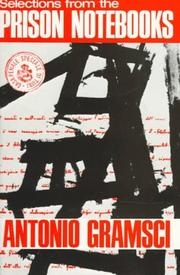
Gramsci's concept of hegemony extends Marx's class analysis into culture and ideology — a crucial development that explains why capitalism persists without constant coercion.
Critical Legacy: Enduring Impact & Reassessment
ExpertEvaluate Marxism's influence on 20th–21st century economics and politics, engage with serious critiques, and form an independent, nuanced judgment of Marx's legacy.
▸ Study plan for this stage
Pace: 6–7 weeks, ~40–50 pages/day (Schumpeter: 3–4 weeks; Eagleton: 2–3 weeks). Allocate extra time for re-reading dense sections and synthesizing across both texts.
- Schumpeter's theory of creative destruction and how capitalism generates innovation through competitive disruption, and its implications for Marx's predictions about capitalism's collapse
- The concept of the 'socialist calculation problem' and Schumpeter's critique of whether a planned economy can efficiently allocate resources without market mechanisms
- Schumpeter's distinction between capitalism as an economic system and capitalism as a civilization, and his pessimism about capitalism's cultural sustainability
- Eagleton's defense of Marx's core analytical insights (historical materialism, alienation, class struggle) against common misreadings and strawman critiques
- The difference between Marx's predictions (which may have failed) and Marx's diagnostic framework (which Eagleton argues remains valid for understanding contemporary capitalism)
- How both authors grapple with the relationship between Marx's theory and 20th-century communist practice—Schumpeter's skepticism vs. Eagleton's distinction between Marx and Marxism-Leninism
- The enduring relevance of Marx's concept of alienation and commodity fetishism to understanding modern consumer capitalism and digital economies
- How to evaluate competing interpretations of Marx's legacy: as a failed prophet, as a diagnostic tool, or as a framework requiring updating for contemporary conditions
- What is Schumpeter's theory of creative destruction, and how does it both challenge and partially vindicate Marx's analysis of capitalism's internal contradictions?
- What is the 'socialist calculation problem,' and why does Schumpeter believe it undermines the viability of centrally planned economies?
- How does Schumpeter distinguish between capitalism as an economic system and capitalism as a civilization, and what does he predict about capitalism's long-term survival?
- What are Eagleton's main defenses of Marx against five common critiques (e.g., Marx was a determinist, Marx ignored culture, Marx's predictions failed)?
- How does Eagleton argue that Marx's analytical framework remains useful even if his specific predictions about revolution or capitalism's collapse have not materialized as he expected?
- What is the relationship between Marx's theory and the actual practice of 20th-century communist regimes, and how do Schumpeter and Eagleton differ in their assessment of this relationship?
- How can Marx's concepts of alienation and commodity fetishism illuminate contemporary issues in modern capitalism (digital labor, consumer culture, financialization)?
- Having read both Schumpeter and Eagleton, what is your own reasoned judgment about Marx's enduring value as an analytical tool versus his failures as a predictor?
- Create a two-column comparison table: 'Schumpeter's Critiques of Marx' vs. 'Eagleton's Defenses.' For each of Schumpeter's major objections, note Eagleton's counterargument and assess which you find more persuasive and why.
- Write a 1,500-word essay: 'Creative Destruction vs. Historical Materialism.' Analyze whether Schumpeter's model of capitalism's dynamism actually refutes Marx's prediction of capitalism's eventual crisis, or whether the two theories address different timescales and mechanisms.
- Apply Marx's concept of alienation (as Eagleton discusses it) to a contemporary case study: digital platform labor (Uber drivers, content creators), fast fashion supply chains, or financial derivatives trading. Write a 1,000-word analysis showing how Marx's framework illuminates what's hidden in these systems.
- Debate preparation: Assign yourself one position ('Marx's legacy is primarily as a diagnostic tool' or 'Marx's predictions have been decisively refuted by history') and prepare a 10-minute argument using evidence from both Schumpeter and Eagleton. Then argue the opposite position.
- Create an annotated timeline: 'Marx's Predictions vs. Historical Reality (1867–2024).' For 8–10 major predictions Marx made (or that are attributed to him), note what actually happened, how Schumpeter explains it, and how Eagleton reframes the prediction's relevance.
- Read a contemporary economics article or policy debate (e.g., on inequality, automation, or corporate power) and write a 500-word reflection: 'What Would Schumpeter Say? What Would Eagleton Say?' Show how both thinkers' frameworks illuminate different aspects of the issue.
Next up: By completing this stage, you will have developed a sophisticated, evidence-based judgment of Marx's analytical power and limitations, positioning you to either deepen specialized study of particular Marxist schools (Marxist historiography, Marxist literary theory, post-Marxism) or to engage critically with contemporary economic and political debates using Marx as one analytical lens among others.
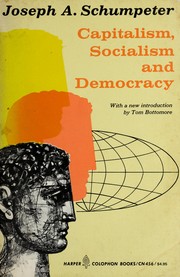
A rigorous, respectful, and ultimately critical engagement with Marx from a leading non-Marxist economist — essential for stress-testing everything you've learned.

Eagleton systematically addresses the most common objections to Marx, helping you consolidate your understanding and engage confidently with contemporary debates.
Discussion
Keep reading
Paths that share books, cover the same subject, or open a related topic.