Social Psychology: The Best Books on How Other People Change Us, in Order
Social psychology is the experimental study of how other people change what we think, feel and do, and it produced the most quoted findings in the whole of psychology — Milgram's obedience experiments, Zimbardo's Stanford prison study, Asch's conformity lines, Festinger's cognitive dissonance. It is also the field that the replication crisis hit hardest. Since roughly 2011 a long list of textbook results has failed to reproduce or has been revealed to rest on much weaker evidence than the popular retelling implies: ego depletion, social priming, power posing, and — through archival work rather than replication — Milgram's own reporting and the conduct of the Stanford prison experiment. This path is therefore built in an unusual order. You read the field's own classics first, because you cannot follow the argument without knowing what is being argued about, and then you read the historians and critics who went back to the original data, and only then the modern work. If you want the methodological and statistical side of that story in depth, it has its own reading path on the replication crisis; here the point is narrower — do not leave this subject believing the textbook version of any famous study.
The Field's Own Introductions
BeginnerLearn the core claim of social psychology — that situations explain more of behaviour than character does — and the vocabulary that goes with it: conformity, compliance, attribution, dissonance, the fundamental attribution error. Read these as the field presenting itself at its most confident, which is exactly what the later stages will complicate. Aronson in particular is a founder of the discipline writing about his own field; treat the confidence as a position, not as a settled summary.
▸ Study plan for this stage
Pace: Six to eight weeks for 1,031 pages, all of it trade-readable and none of it technical. Aronson's The Social Animal is 431 pages and comes first: the classic survey, written by one of the people who built the field, and still the most readable single introduction to what social psychology thinks it h
- The core claim: situations explain more of behaviour than character does, and the corresponding demotion of personality as an explanation
- The fundamental attribution error - over-attributing others' behaviour to disposition and our own to circumstance
- Conformity and compliance as distinct things, and why the distinction matters for what each experiment actually shows
- Cognitive dissonance and the drive to reduce it, which is the one idea from this stage that survives the whole path intact
- Cialdini's six principles of compliance, and the fact that they are grounded in field observation rather than laboratory work
- Reading a founder writing about his own field: Aronson's confidence is a position taken by a participant, not a neutral summary of settled results
- State the situationist claim precisely. What is it a claim about - the causes of a single act, the variance explained across people, or something else?
- Give an example of the fundamental attribution error from your own week and say what the situationist reading of it would be.
- Where do Cialdini's principles come from evidentially, and why does that origin make them more robust than a laboratory demonstration of the same effect?
- Aronson helped build the field he is surveying. Name two places where you can see that in the book - in what is emphasised and in what is not questioned.
- Sommers and Aronson make the same argument for different audiences. What does the popularisation gain, and what does it lose?
- Keep a list, as you read Aronson, of every named study you had already heard of before starting. That list is the exact set of results the third stage will test, and writing it down now - before you know which ones survive - is a genuine measure of what the popular retelling had given you.
- For each of Cialdini's six principles, find one instance in the past week where it was used on you. Then check the mechanism against his account rather than your reconstruction of it; the principles are more specific than their names suggest.
- Take three findings from The Social Animal and write down, from the book alone, what the evidence for each actually was: how many participants, what was manipulated, what was measured. Aronson often gives less of this than you expect, and noticing what is missing is the skill the rest of the path uses.
- Write a one-paragraph statement of the situationist thesis in your own words and put it aside. You will rewrite it at the end of the path, and the difference between the two versions is the whole point of the ordering.
Next up: Having met the field's self-presentation, the next stage goes to the two most cited studies in it, in the words of the people who ran them - and reads them as primary sources rather than as settled findings.
The classic survey of the field, written by one of the people who built it, and still the most readable single introduction to what social psychology thinks it has found. The catalogued record is an early edition of a book that has been revised for over fifty years; later editions handle the contested findings far more carefully, so buy the newest one you can.

A short modern popularisation of the situationist claim, with the everyday examples the older texts lack. Read it second as the plain-language statement of the thesis before the theoretical version.
The applied wing of the field: six principles of compliance drawn largely from field observation of salespeople and fundraisers rather than laboratory experiments, which is part of why it has aged better than much of the lab work. Note that some of the studies Cialdini cites have since been questioned, and he has publicly acknowledged replication problems in the literature he draws on.
The Situationist Case and the Famous Studies
BeginnerRead the two most cited studies in the field in the words of the people who ran them, and the book that turned them into a general theory of human behaviour. By the end you should be able to describe the actual procedures — not the version in the textbooks — of Milgram's obedience experiments and Zimbardo's prison simulation, because the next stage is about the gap between the procedures and the published claims. Read these knowing that both are contested; do not stop here.
▸ Study plan for this stage
Pace: Eight to ten weeks for 1,086 pages. Ross's The Person and the Situation is 286 pages and is the most intellectually serious book on the whole path - the synthesis of the situationist argument at its strongest, written by Ross with Richard Nisbett, though our record credits Ross alone. It is denser t
- The situationist argument in its strongest form, as Ross and Nisbett state it, including the channel-factor idea that small situational details produce large behavioural differences
- The actual procedure of Milgram's obedience experiments: what participants were told, what the experimenter said, what the many conditions varied, and which condition produced the famous figure
- The actual procedure of the Stanford prison simulation: how guards were recruited, instructed and supervised, and what the study did not have that an experiment requires
- The difference between a demonstration and an experiment, which is the distinction the next stage turns on
- Why reading a researcher's own account is reading a primary source: it is evidence of what was claimed, not of what happened
- How a single striking result becomes a general theory of human behaviour, and what has to be assumed to make that move
- The extension of the prison study to Abu Ghraib as an argument by analogy, and what an analogy can and cannot establish
- Describe Milgram's procedure in operational detail. How many conditions were there, what did they vary, and which one produced the figure you had heard before starting?
- What did the Stanford study lack that would be required to call it an experiment? Name at least two features.
- Ross and Nisbett state the situationist case at its strongest. What is the strongest version of the objection from personality that they have to answer, and do they answer it?
- Zimbardo extends the prison study to Abu Ghraib. What would have to be true for that extension to hold, and what evidence does he offer for it?
- Reading Milgram's own book, what does he claim his experiments show? Is that claim the same as the one in the textbooks you read in stage one?
- Both of these studies are contested. On the basis of this stage alone - before the critics - what would you already want to see in the record before accepting either?
- Write out Milgram's conditions as a table from his own book: what varied, how many participants, what compliance rate. Do this before reading Perry. The table is the single most useful thing you can have in front of you in the next stage, and building it from Milgram's own text means the discrepancies you find later are yours rather than borrowed.
- Reconstruct the Stanford study as a methods section - participants, assignment, manipulation, measures, controls - and mark every place where you cannot fill in the blank from Zimbardo's own account. The gaps are the finding.
- Take Ross and Nisbett's strongest example of a channel factor and write down what the equivalent dispositional explanation would be. Then say what evidence would distinguish them. This is the field's central argument, done once by hand.
- Compare the textbook description of either famous study, as you met it in Aronson or in general reading, against the primary account. Note every simplification. Some are harmless and some are not, and telling them apart is the exercise.
- Before moving on, write a sentence predicting what you expect the archival critics found. Committing a prediction is the only way to know afterwards whether the correction genuinely surprised you.
Next up: You now have the classics in the researchers' own words, which is exactly the position from which the archival critics can be read - the next stage goes back to the original records with the historians who opened them.
Ross and Nisbett's synthesis of the situationist argument, and the most intellectually serious book on this path. It states the case at its strongest, which makes it the right thing to have in mind while reading the critics.
Milgram's own account of the experiments. Read it as a primary source rather than a report: the archival work covered in the next stage shows that the experimenter deviated substantially from the script and that the compliance figure most people quote comes from one of many conditions.
Zimbardo's book-length defence of the Stanford prison experiment and its extension to Abu Ghraib. Included because it is the fullest statement of the claim, and flagged plainly: recovered tapes and participant testimony indicate guards were coached toward brutality and at least one famous breakdown was performed, so the study is now widely regarded as a demonstration rather than an experiment.
Read the Critics Before You Believe the Classics
IntermediateGo back to the archives with the people who did. By the end you should be able to say specifically what Gina Perry found in Milgram's and Sherif's records and why it changes the interpretation rather than merely adding nuance — unreported conditions, participants who did not believe the setup, an experimenter improvising pressure, and in the Robbers Cave case a prior study whose result was inconvenient and never published. This is the pivotal stage of the path; skipping it leaves you with a vers
▸ Study plan for this stage
Pace: Eight to ten weeks for 955 pages, and this is the pivotal stage of the path. The ordering is deliberate and worth stating plainly: Perry comes after Milgram and Zimbardo, not before, because a corrective only works on someone who holds the thing being corrected. Read Perry first and you would learn
- What Perry actually found in Milgram's records: unpublished conditions, an experimenter deviating from the script, and participants who did not believe the setup
- The debriefing that many participants did not receive, and what that says about the study as conducted rather than as reported
- The file-drawer problem inside a founding result: Sherif's earlier Robbers Cave run, in which the boys refused to be turned against each other, was not published
- Why these findings change the interpretation rather than merely adding nuance - the effect size, the generality and the mechanism are all affected, not just the tone
- The difference between archival criticism and failed replication as routes to the same conclusion, and why archival work reaches studies that can no longer be run
- Reading a contested critic: Slater's method is literary and her account has been disputed, so her value here is as a prompt rather than as evidence
- How a field's own historians can end up further from the textbook than its critics outside it
- List the specific discrepancies Perry documents between Milgram's records and his published account. Which one most changes what the experiments show?
- Many participants did not believe the shocks were real. Why does that matter for what the obedience figure measures?
- What happened in Sherif's unreported first run at Robbers Cave, and what does its non-publication do to realistic conflict theory as a founding result?
- Distinguish 'the study was less clean than reported' from 'the study does not show what it claims'. For Milgram specifically, which does Perry establish?
- Slater's account has been disputed by psychologists. Pick one of her chapters and say what would be needed to settle the dispute, and whether she supplies it.
- The prison study was criticised through recovered tapes and testimony, and Milgram through an archive. What kinds of claim can this sort of evidence establish that a replication attempt cannot?
- Put Perry's account of Milgram's conditions beside the table you built from Milgram's own book in the previous stage, row by row. Mark every row that differs and every row that exists in one document and not the other. This side-by-side is the single most valuable page produced anywhere on this path, and it only exists if you built the first table before reading her.
- Follow one of Perry's participants through her book: what they were told, what they did, what they were and were not told afterwards. A named individual makes the debriefing question concrete in a way a summary does not.
- For Robbers Cave, write out both runs of the study as parallel accounts, then write the sentence that a textbook would have contained had the first run been published. Comparing that sentence to the one textbooks actually contain is the file-drawer problem in one line.
- Take one chapter of Slater and try to verify a specific factual claim in it against another source. Doing this once shows you why the path tells you to let Perry carry the weight, and it is a better argument than being told.
- Return to the list of already-familiar studies you made in stage one. Mark each as: survives intact, survives with a narrower claim, or does not survive as told. Most readers find the middle category is the largest, which is itself the finding.
Next up: With the correctives in hand, the final stage returns to the modern literature - and the task changes from learning results to sorting them by how well each one is actually evidenced.

The investigation of Milgram's archive, including the conditions he did not publish and the participants he did not debrief. The single most important corrective here, and the reason Obedience to Authority sits in the previous stage rather than as the last word.

Perry's companion book on Muzafer Sherif's Robbers Cave experiments, the foundation of realistic conflict theory. She documents an earlier run of the study in which the boys refused to fight and which went unreported — a textbook instance of the file-drawer problem inside a founding result.
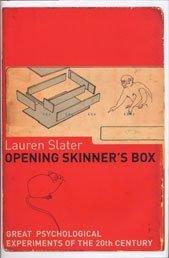
A journalist revisiting ten famous twentieth-century experiments and their participants. Contested in its own right — several psychologists disputed her account of specific studies, and Slater's method is literary rather than archival — so read it as a provocation rather than as evidence, and let Perry carry the weight.
What Survived, and What Is Still Argued About
IntermediateReach the modern literature able to sort claims by evidential strength. Cognitive dissonance has replicated well and remains one of the field's genuine achievements. Implicit bias, measured by the IAT, is real as an association effect but its ability to predict individual discriminatory behaviour is weak and disputed, and the value of bias training is poorly supported. Stereotype threat replicates in some settings and not others, and the meta-analytic picture is contested. By the end you should
▸ Study plan for this stage
Pace: Three to four months for 1,384 pages across five books, and by this point the reading skill matters more than the reading rate. Tavris and Elliot Aronson's Mistakes Were Made (But Not by Me) is 304 pages and opens the stage deliberately: cognitive dissonance has replicated well and is one of the fie
- Cognitive dissonance and self-justification as the best-supported idea in the field, and what a well-replicated result looks like from the inside
- The adaptive unconscious: introspective reports as constructions rather than readouts, and the consequences for self-report as a method
- The Implicit Association Test as an association measure that is real at the aggregate level, with weak and disputed predictive validity for an individual's discriminatory behaviour
- That the evidence for bias training as an intervention is poorly supported, which is a separate question from whether implicit associations exist
- Stereotype threat: replicating in some settings and not others, with a contested meta-analytic picture once publication bias is accounted for
- Sorting claims by evidential strength rather than by prominence - the actual competence this stage is for
- Why randomised evaluation of interventions is the discipline the earlier stages show the field lacked, which is Wilson's closing argument in Redirect
- Attribution as a habit: 'Banaji and Greenwald argue' rather than 'psychology has shown'
- What makes cognitive dissonance a stronger result than the others in this stage? Point to features of the evidence, not to how convincing the examples feel.
- If introspective reports are constructions, what happens to every finding in stages one and two that relied on participants explaining their own behaviour?
- State precisely what the IAT measures and what it does not. What would be needed to establish that it predicts an individual's behaviour, and what does the literature currently show?
- Steele's stereotype-threat findings replicate unevenly. What does 'the effect is real but smaller and more conditional than reported' mean operationally for someone designing a school programme?
- Wilson argues that plausible social programmes routinely fail on evaluation. Name two from Redirect and say what the plausibility rested on in each case.
- Rank the five ideas in this stage by evidential strength and defend the ranking. This is the outcome the whole path has been building toward.
- Build one table with a row per claim in this stage - dissonance, adaptive unconscious, implicit association, bias training, stereotype threat, story-editing - and columns for what the claim is, who makes it, the strongest evidence for it, and the strongest published challenge. Fill the last column from outside these books; every one of these disputes is documented in the open literature. The table
- Take one intervention Wilson reports as having failed on evaluation and write down why it seemed obviously right beforehand. Then look for the same shape of reasoning in Banaji and Greenwald's or Steele's applied recommendations. That transfer is the point of ending with Redirect.
- Reread the situationist statement you wrote in stage one and rewrite it now, with the archival correctives and the replication record behind you. Put the two paragraphs side by side. The distance between them is what the path did.
- Take one of Steele's own studies and find the largest subsequent replication attempt of it. Read the abstract and the effect sizes rather than the commentary. Doing this once, for yourself, is worth more than any summary of the replication crisis.
- For a week, notice every time you see a social-psychology finding cited in general media and write down whether the citation attributes it to a researcher or to 'studies show'. The habit of attribution is the concrete thing this path leaves you with.
Next up: This closes the path. The methodological and statistical machinery behind the failures you have just met has its own reading path on the replication crisis, and the natural next step is the current literature on any single claim in that table rather than another survey of the field.

Tavris and Aronson on cognitive dissonance and self-justification, applied to prosecutors, therapists and marriages. The best-supported idea in the field, presented in the most useful book about it — start the stage here so you know what a robust result reads like.
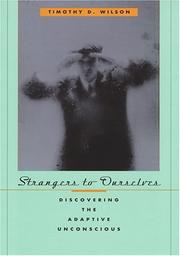
The adaptive-unconscious argument: that much of mental life is inaccessible to introspection, so people are unreliable narrators of their own reasons. Careful about its evidence and a good bridge from dissonance to the implicit-measurement work that follows.

Banaji and Greenwald's own presentation of implicit bias and the Implicit Association Test, which they created. Read it as the strongest statement of a position that is genuinely disputed: the test's test-retest reliability and its predictive validity for individual behaviour have both been challenged in the literature, and the authors themselves have narrowed their claims about individual diagnosis.

Steele's account of stereotype threat, the finding that awareness of a negative stereotype can depress performance. Among the most influential ideas in social psychology and among the most actively contested — later large replications and meta-analyses accounting for publication bias have found much smaller or absent effects in some populations. Read it, then read what came after it.

The right book to end on: Wilson on story-editing interventions and, more importantly, on why so many plausible social programmes fail when properly evaluated. He argues for randomised evaluation of interventions, which is the discipline the rest of this path shows the field lacked.
Discussion
Keep reading
Paths that share books, cover the same subject, or open a related topic.