Diversity and Inclusion at Work: The Best Books, in Order
This path separates three things that are usually sold together: the psychological research on bias, the evidence on whether corporate diversity programmes work, and the practical question of what a manager can change. The order matters, because the research finding that anchors the field — that bias is largely automatic — is also the finding most often used to justify the intervention with the weakest evidence base, unconscious-bias training. So the first stage establishes the science, the second establishes what has and has not been achieved with it, and only then does the path move to practice and to the contested business case.
Start Here: How Bias Actually Works
BeginnerUnderstand implicit association, stereotype threat and the gap between what people intend and what they do, from the researchers who ran the studies.
▸ Study plan for this stage
Pace: 4 weeks. Blindspot is around 250 pages and is written for a general reader by two of the researchers who built the instrument it describes; ten days. Whistling Vivaldi is a similar length and is part memoir, part research narrative; a week. The Person You Mean to Be is about 270 pages and is the fir
- The core finding is that associations between social categories and evaluations operate faster than deliberation and are largely inaccessible to introspection, which is why what people report about their own attitudes and what they do can come apart.
- What the Implicit Association Test measures is reaction-time difference on a sorting task. That is a real and reproducible effect at the group level.
- What the IAT does not reliably do is predict an individual's discriminatory behaviour. Meta-analyses have found the correlation between IAT scores and behaviour to be small, its test-retest reliability modest, and changes in implicit measures not to produce corresponding changes in behaviour. Banaji
- Stereotype threat is Steele's claim that performing under a negative expectation about your group imposes a measurable cost, and that small interventions reduced it in his experiments.
- The replication record on stereotype threat is genuinely mixed rather than settled either way: the original laboratory demonstrations are strong, several large replications have found smaller or null effects, and the literature shows signs of publication bias. Treat the mechanism as plausible and th
- Chugh's 'good-ish person' framing is designed to make being wrong survivable, on the argument that a fixed self-image as unbiased makes evidence of bias unbearable and therefore unusable.
- The distinction that matters for everything downstream: a finding about how minds work does not entail any particular intervention. The commonest error in this field is treating the first as evidence for the second.
- Structural versus attitudinal explanations of unequal outcomes are not the same claim, and the books in this stage are almost entirely about the second. Stages two and three supply the first.
- What does an IAT score actually measure, and what does the evidence say about using one to make a judgement about an individual?
- State the stereotype-threat effect precisely as Steele demonstrated it. What is the manipulation, and what is measured?
- Where does the replication evidence on stereotype threat stand, and what would settle it?
- What does Chugh's 'good-ish' framing buy, practically, and what does it cost in terms of accountability?
- Why does a finding that bias is automatic not tell you what intervention will reduce discrimination?
- Take an IAT yourself, then read Banaji and Greenwald's own account of what your score does and does not license. Doing it in that order is the point: most people take the test with no account of its interpretation attached.
- Find the abstract of one large meta-analysis of IAT-behaviour correlations and read the effect size. Then reread the chapter of Blindspot on prediction. Holding the two together is the honest way to read this book.
- Write out one of Steele's experiments in full — the two conditions, the instruction that differs, the outcome measured. Then design the version of it you would run in your own workplace, and notice what makes that hard.
- Chugh asks readers to identify a situation where they had power and did not use it. Do the written exercise she describes rather than reading past it; the book is designed around it.
Next up: You now have the mechanism the field is built on; the next stage asks what has actually been achieved by acting on it, and the answer is not encouraging.

Banaji and Greenwald's own account of the Implicit Association Test and what it does and does not measure. Start here, and note that the authors are more cautious about the test's predictive power than most of the training industry built on it.
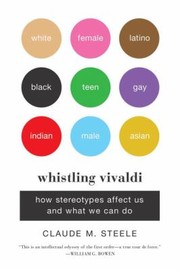
Steele's account of stereotype threat — the measurable performance cost of operating under a negative expectation about your group — and the interventions that reduced it in his experiments. The single most useful mechanism in this literature for explaining why representation affects outcomes.

A psychologist's bridge from the research to individual behaviour, built around the idea of being a good-ish rather than a good person so that being wrong is survivable. Read third: it is the first book here that asks you to do something.
What the Programmes Have and Have Not Achieved
IntermediateLook at the evidence on corporate diversity initiatives, including the substantial evidence that the most common intervention does not work.
▸ Study plan for this stage
Pace: 6 weeks. Diversity, Inc. is around 270 pages of journalism and moves quickly; ten days. What Works is about 400 pages, is written by an academic for practitioners, and is organised as a series of interventions with the evidence for each — three weeks, and read the notes. Bias Interrupted is short, a
- The central negative finding: mandatory diversity training, the most common corporate intervention by far, has repeatedly failed to produce gains in managerial diversity and in some longitudinal analyses is followed by declines. This is not a fringe criticism; it comes from the largest studies of co
- Unconscious-bias training specifically is the weakest link. It reliably changes what people know about bias, sometimes changes implicit measures briefly, and has not been shown to change hiring, promotion or retention outcomes.
- Newkirk's method is to set decades of documented spending against the demographic numbers over the same period. It is an accounting exercise, and its force is that the two curves do not relate.
- Bohnet's argument is the constructive reply: change procedures rather than minds. Structured interviews, work-sample tests, comparative rather than sequential evaluation, and redesigned job advertisements are interventions with actual trial evidence behind them.
- The blind-auditions result Bohnet uses as a signature example has itself been challenged on statistical grounds, and the challenge is worth knowing about — not because the design principle is wrong, but because the field's favourite anecdote is less secure than its repetition suggests.
- Williams's contribution is operational: treat bias as a set of measurable patterns in specific systems — who gets the stretch assignment, whose performance review uses personality language — and fix the system, with metrics, rather than training the individual.
- What the evidence supports better than training: targeted recruitment, formal mentoring and sponsorship programmes, accountability structures such as diversity task forces, and transparency in pay and promotion criteria.
- Newkirk and Bohnet disagree about what to do but not about what has happened, and reading them consecutively separates the diagnosis from the prescription, which most single books in this field conflate.
- What is the actual evidence that mandatory diversity training does not work, and what study designs produced it?
- Why might a training programme that changes attitudes fail to change outcomes? Name two mechanisms.
- What does Bohnet mean by design over debiasing, and which of her recommended interventions has the strongest trial evidence?
- How would you apply Williams's method to a real process — say, how assignments are allocated on a team? What would you measure?
- Newkirk shows that spending rose and representation did not. What are the possible explanations besides 'the programmes do not work', and how would you distinguish them?
- Take your own organisation's diversity training, if it has one, and check its content against Bohnet's list of interventions with evidence behind them. Note how much of the training is on that list. Usually none of it is.
- Run Williams's metric exercise on one process you have access to: pick a promotion cycle or an assignment log, count the outcomes by group, and see whether the pattern is visible in the data at all. Her whole argument is that it usually is and nobody has counted.
- Rewrite one real job advertisement using Bohnet's specific recommendations, then list which changes you would expect to matter and which are cosmetic. She is precise about which is which.
- Find Newkirk's figures for corporate diversity spending and for representation in senior roles over the same years, and plot the two. The book's argument is a chart and drawing it makes the argument yours rather than hers.
- Read the critique of the blind-auditions study alongside Bohnet's use of it, then decide whether her recommendation survives without that example. Deciding what an argument rests on is the most useful habit this stage can build.
Next up: The evidence stage describes populations; the next stage is the same subject at the resolution of an individual career, which the research literature aggregates away.

A journalist's investigation of the diversity industry — decades of spending, consultants, chief diversity officers — against the actual demographic numbers, which barely moved. The most direct challenge in this path to the assumption that effort equals progress.
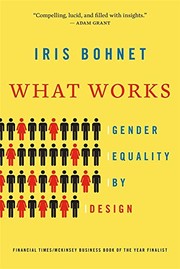
A behavioural economist's case that changing procedures beats changing minds: structured interviews, blind auditions, redesigned job ads. Read directly after Newkirk — it is the constructive answer to her critique. Published in a later edition subtitled Gender Equality by Design; the 2016 text is the one to read first.
Williams's argument for treating bias as a set of measurable patterns in specific business systems — hiring, assignments, performance reviews — and fixing the system rather than training the individual. The most operational book in this stage.
What It Looks Like From the Receiving End
BeginnerRead the accounts of how this plays out for the people it affects, which the research literature describes in aggregate and rarely in detail.
▸ Study plan for this stage
Pace: 5 weeks. The Memo is around 200 pages and is written directly to its intended reader — women of colour in corporate workplaces — so read it knowing you may not be the addressee; a week. Invisible Women is about 400 pages, dense with statistics and citations, and is the longest book on this path; thr
- Harts is writing career mechanics, not analysis: sponsorship as distinct from mentorship, how pay negotiation actually goes, what raising a problem costs and when it is worth the cost. This is the level of specificity the research books strip out.
- The sponsorship-versus-mentorship distinction is the most portable idea in this stage — a mentor advises you, a sponsor spends their own capital on you, and the research on who gets which is one of the better-evidenced disparities in the literature.
- Criado Perez's argument is about missing data rather than about attitudes: where sex-disaggregated data was never collected, a male default gets designed in by omission, and nobody has to intend anything for the outcome to be systematic.
- Her examples span crash-test dummies, drug trials, urban transport planning, office temperature standards and unpaid care work. Some of the individual studies she cites are small or have been contested since publication — the office-temperature finding and some of the vehicle-safety figures in parti
- The data-gap framing is the strongest available argument that exclusion is often structural rather than attitudinal, which is precisely the case the bias literature in stage one cannot make.
- Jana and Baran treat microaggressions operationally — what to do as the subject, as the person who said it, and as a bystander — which sidesteps most of the definitional argument by focusing on response.
- The microaggression construct has been criticised in the psychological literature on measurement grounds: the taxonomy is largely investigator-defined and the link to health outcomes rests on cross-sectional self-report. The practical advice in this book does not depend on resolving that.
- First-person accounts are evidence of a different kind from a regression coefficient, and both stages know it; the reason to read them together is that neither is substitutable for the other.
- What is the difference between a mentor and a sponsor, and what does Harts say you have to do differently to acquire each?
- State Criado Perez's data-gap argument without reference to intent. What is the causal mechanism she proposes?
- Which of her examples is best evidenced, and which rests on a single study? Pick one of each.
- What do Jana and Baran recommend for a bystander, and why is the bystander the position they treat as most consequential?
- Where do the accounts in this stage contradict something you accepted in stage one or two?
- Take one of Criado Perez's claims — the medication dosing or the vehicle safety chapter is the easiest — and find the underlying study. Read what it measured. The book is a work of synthesis and checking one node of it is the only way to calibrate the rest.
- Map Harts's career mechanics onto your own organisation: who actually sponsors people here, how are stretch assignments allocated, and who has that information. Write the answers down; the exercise usually reveals that the process is undocumented.
- Use the Jana and Baran response scripts on a real past incident you witnessed or were part of, and write what you would now say. Their book is a set of sentences and it is only useful once you have written your own version.
- Find one dataset your organisation collects that is not disaggregated by sex or race, and work out what could not be seen because of it. That is Criado Perez's method applied at the smallest possible scale.
Next up: You have the mechanism, the evidence on programmes and the individual account; the next stage narrows to the decisions a single manager actually controls.

Written for women of colour navigating corporate workplaces, and unusually specific about sponsorship, pay negotiation and the professional costs of speaking up. Read it for the mechanics of the career, which the research books abstract away.

The data-gap argument: everything from crash-test dummies to office temperature to drug trials is designed around a male default, because the sex-disaggregated data was never collected. Broader than the workplace, and the clearest demonstration that exclusion is often structural rather than attitudinal.

Jana and Baran on microaggressions, treated as a practical problem — what they are, how to respond as the subject, the initiator or a bystander. Concrete and short; read it as the everyday-level companion to the two above.
What a Manager Can Actually Change
BeginnerConvert the preceding stages into the decisions a manager or team lead controls: who gets hired, who gets assigned what, who gets heard in the room.
▸ Study plan for this stage
Pace: 4 weeks. Inclusify is around 270 pages and is organised around six manager archetypes; ten days. Inclusion on Purpose is about 290 pages and is sharper and less comfortable; ten days. How to Be an Inclusive Leader is short, under 200 pages, and is essentially a self-assessment framework; two evening
- Johnson's organising tension is between belonging and uniqueness — the claim that people need both, and that most managerial failures over-serve one at the expense of the other.
- The six archetypes in Inclusify are diagnostic devices rather than empirically derived types; their use is that they name failure modes precisely enough for a manager to recognise their own.
- Tulshyan's central move is to make inclusion a set of named actions with owners and dates rather than a stated value, on the argument that an unassigned value produces no behaviour.
- Inclusion on Purpose is specifically about women of colour and does not generalise its claims to everyone; that specificity is the source of its sharpness and should not be quietly broadened when applying it.
- Brown's four-stage model — unaware, aware, active, advocate — is a locating device. Its value is entirely in the honesty of the self-placement, and it makes no empirical claim about what moves someone between stages.
- The decisions a manager actually controls are a short list: who is hired, who gets which assignment, who is in the room, who speaks in a meeting, how performance language is written, and who is put forward. Everything in this stage is ultimately about those six.
- The gap between this stage and stage two is the gap between what is recommended and what is tested. Where the two conflict, stage two is the better authority, and none of these three authors would claim otherwise about their own frameworks.
- Which of Johnson's archetypes describes you, and what specific behaviour would have to change?
- What does Tulshyan mean by inclusion as a practice rather than a value, and what is the smallest concrete version of it?
- Where do the recommendations in this stage overlap with Bohnet's evidence-backed interventions, and where do they go beyond them?
- Brown's stage model has no evidence behind it. Is it still useful, and for what?
- Of the six decisions a manager controls, which is the highest-leverage in your own setting, and what would changing it require?
- Take the six decisions named above and, for each, write down how it is currently made on your team and who would have to agree to change it. That single page is more useful than any framework in this stage.
- Do Brown's self-assessment honestly, then ask one colleague to place you on the same scale without seeing your answer. The discrepancy is the finding.
- Take one of Tulshyan's named actions and put it in a calendar with an owner and a date. Her entire argument is that this step is the one that never happens.
- Cross-reference every intervention recommended across these three books against Bohnet's evidence table from stage two, and mark which are supported, which are untested, and which are contradicted. Doing this once will change how you read practitioner books permanently.
Next up: The last stage tests the claim that is usually offered as the reason for all of this — that diverse teams perform better — and is precise about the conditions under which the models actually predict it.

Built around the tension between belonging and uniqueness, with a set of manager archetypes and the specific failure each produces. The most usable general management book here.

Argues that inclusion has to be a deliberate practice with named actions rather than a stated value, with particular attention to women of colour. Read after Inclusify for the sharper, less comfortable version of the same brief.

A short stage model — unaware, aware, active, advocate — for locating where you actually are and what the next move is. Slight compared with the rest of the path, but useful as a self-assessment to close this stage on.
The Business Case, Examined
IntermediateTest the claim that diverse teams perform better, and learn which kind of diversity the underlying models actually predict a benefit from.
▸ Study plan for this stage
Pace: 6 weeks. The Difference is around 440 pages, is written by an economist and social scientist, and contains formal models with mathematics in them — not heavy, but present, and the argument does not survive skipping them; three to four weeks. The Diversity Bonus is much shorter at around 200 pages an
- Page's argument is formal, not empirical: under stated conditions, a group of diverse problem-solvers can outperform a group of the best individual problem-solvers. It is a result about heuristics and perspectives, derived from models.
- The conditions matter and are usually dropped in the popular retelling: the problem must be genuinely difficult, the solvers must be individually competent, their perspectives must differ in ways relevant to the problem, and the group must actually aggregate rather than defer.
- The 'diversity trumps ability' theorem has been formally criticised in the mathematical literature for the strength of its assumptions and for how much of the result follows from the way the model is set up. Page has responded; the exchange is worth knowing exists, and it is a live disagreement rath
- The distinction Page is careful about and popular accounts are not: the models predict a bonus from cognitive diversity — different tools, perspectives and heuristics — and identity diversity matters to the extent that it correlates with that, which varies by task.
- For tasks that are routine, well-specified or purely additive, the models predict no bonus at all. Page says this plainly, and it is the sentence most often left out when his work is cited in a corporate deck.
- The separate empirical literature claiming that demographically diverse firms are more profitable is much weaker than its citation rate implies. The best-known consultancy studies are correlational, and an independent attempt to replicate them found no statistically significant relationship. Do not
- The Diversity Bonus deals directly with the identity-versus-cognitive-diversity objection and is the most honest available summary of what the business case can and cannot carry.
- The practical conclusion of the stage is that the business case is real, narrow and conditional — which is a weaker claim than the one usually made, and a much more defensible one to make inside an organisation.
- State Page's conditions for the diversity bonus. Which of them is most often violated in real teams?
- What is the difference between cognitive and identity diversity in his framework, and when does the second serve as a proxy for the first?
- What is the formal criticism of the diversity-trumps-ability result, and what does it claim the model is smuggling in?
- For which categories of task do the models predict no benefit from diversity at all?
- How would you make the business case honestly to a sceptical executive, given everything in this path? Write the two paragraphs.
- Does the case for this work depend on the business case being true? What follows if it is not?
- Work through one of Page's models by hand with a small example — a handful of solvers, a defined problem, explicit heuristics — and confirm for yourself that the diverse group beats the strongest individuals. Then change one assumption and watch the result disappear. That is the whole stage in an afternoon.
- Take a real problem your team solves and test it against Page's four conditions. Most routine work fails at least one, and identifying which is the practical use of the theory.
- Find a corporate diversity statement citing the profitability research, trace the citation to its source, and read what the source actually claims. This is a five-minute exercise with a reliably uncomfortable result.
- Write the honest two-paragraph business case, then write the version you have actually heard delivered. The difference between them is a fair summary of what this path was for.
Next up: You have the psychology, the evidence on programmes, the first-person account, the managerial decisions and the limits of the business case; from here the useful next reading is not more of this literature but the adjacent ones it depends on — the economics of discrimination, organisational sociology on hiring, and the evaluation methods needed to tell whether anything you implement worked.
The formal argument, using models rather than case studies, that cognitive diversity improves problem-solving under specific conditions. Important because it is precise about the conditions — the popular version of this claim usually is not.

Page's follow-up, applying the same framework to organisations and universities and dealing directly with the identity-versus-cognitive-diversity objection. Read last: it is the most honest summary of what the business case can and cannot carry, which is where anyone arguing for this work in an organisation ends up.
Discussion
Keep reading
Paths that share books, cover the same subject, or open a related topic.