Best Books on Executive Presence, in Reading Order
This curriculum builds executive presence from the inside out — starting with the foundational signals of gravitas and communication, then advancing into how others read and judge you in high-stakes rooms, and finally mastering influence without formal authority and engineering senior-level visibility. Because the learner starts at an intermediate level, the path skips basic confidence primers and goes straight into the mechanics of presence, perception, and power.
Gravitas & Communication Foundations
IntermediateUnderstand the core pillars of executive presence — especially gravitas, communication clarity, and the signals leaders project — and build a shared vocabulary for the stages ahead.
▸ Study plan for this stage
Pace: 4–5 weeks, ~25–30 pages/day (approximately 150–170 pages per week across both books)
- Gravitas as the foundation of executive presence: commanding respect through composure, decisiveness, and authenticity rather than volume or aggression
- The four pillars of executive presence: appearance, communication, bearing, and emotional intelligence
- Vocal clarity and pacing: how breathing, tone modulation, and deliberate speech patterns project authority and credibility
- The power of strategic silence and pausing: using silence to emphasize points, control the room, and demonstrate confidence
- Body language and nonverbal signals: posture, eye contact, and gesture as tools that either reinforce or undermine your message
- Authenticity as a prerequisite for gravitas: aligning your external presentation with your genuine values and strengths
- The gender dynamics of executive presence: how women and men are perceived differently and strategies to navigate stereotypes
- Building a personal communication brand: consistency between your words, tone, and actions across different contexts
- What are the core components of executive presence, and how does gravitas differ from charisma or dominance?
- How do vocal techniques—such as pacing, breathing, and tone—contribute to projecting executive presence, and what specific habits undermine it?
- What role does authenticity play in building gravitas, and how can you project presence without compromising your genuine self?
- How do nonverbal signals (posture, eye contact, gesture) either reinforce or contradict your spoken message, and what should you prioritize?
- What are the gender-specific challenges in building executive presence, and what evidence-based strategies can help navigate them?
- How can you use silence and strategic pausing to enhance your communication impact and demonstrate confidence?
- Record yourself speaking for 2–3 minutes on a familiar topic, then review: note your filler words, pace, breathing patterns, and tone shifts. Identify one vocal habit to improve and re-record weekly.
- Practice the 'power pause': deliver a key point, then pause for 3–5 seconds before continuing. Record and compare the impact to your baseline delivery.
- Conduct a mirror self-assessment: observe your posture, facial expressions, and hand gestures while discussing a challenging topic. Note what feels authentic versus forced.
- Video yourself in a mock meeting or presentation (even 5 minutes). Watch without sound first—what does your body language communicate? Then watch with sound and assess alignment.
- Interview a leader you admire about their communication approach: what techniques do they use to project presence? Document their specific habits (pausing, pacing, word choice).
- Rewrite a prepared statement (email, presentation opening, or meeting comment) three times: once for maximum clarity, once for maximum warmth, once for maximum authority. Deliver all three aloud and notice which feels most authentic.
Next up: This stage establishes the foundational language and self-awareness needed to diagnose your current presence gaps; the next stage will focus on context-specific application—how to adapt these principles across meetings, presentations, negotiations, and crisis scenarios.

The definitive research-backed framework for executive presence, breaking it into gravitas, communication, and appearance. Read first to establish the mental model every subsequent book will deepen.

Translates the communication pillar of EP into concrete, actionable techniques for clarity, brevity, and authority — the natural next step after Hewlett's framework.
How You Are Read in a Room
IntermediateDecode the nonverbal, vocal, and behavioral signals others use to judge your status and credibility, and learn to consciously shape those impressions in real time.
▸ Study plan for this stage
Pace: 8–10 weeks, ~25–30 pages/day. Read "Presence" (4 weeks), "The Silent Language of Leaders" (2–3 weeks), and "Snap" (2–3 weeks) sequentially, with weekly reflection and practice sessions between books.
- Power posing and embodied cognition: how physical posture and body positioning directly influence your own neurochemistry, confidence, and presence before you even speak
- Nonverbal communication hierarchy: understanding which signals (posture, gesture, eye contact, spatial positioning) carry the most weight in shaping how others perceive your status and authority
- The silent language of leadership: decoding the specific body language, facial expressions, and spatial behaviors that signal competence, trustworthiness, and executive credibility
- Microexpressions and emotional authenticity: recognizing fleeting facial expressions in others and managing your own to align your internal state with your intended external message
- Real-time impression management: the ability to consciously adjust your nonverbal behavior, vocal tone, and physical presence in the moment to shift how you are perceived
- Vocal presence and paralinguistics: how pace, pitch, volume, and vocal quality communicate confidence and command attention independent of words
- Snap judgments and thin-slicing: understanding the science of how others form rapid, often unconscious assessments of your credibility within seconds, and what signals drive those judgments
- How does your physical posture and body positioning affect your own psychological state and confidence, and what does Cuddy's research reveal about the mechanism behind this effect?
- What are the key nonverbal signals that Goman identifies as most critical to executive presence, and how do they differ across contexts (boardroom vs. one-on-one vs. public speaking)?
- How do microexpressions reveal authentic emotion, and why is the ability to recognize and manage them essential to maintaining credibility?
- What is 'thin-slicing' and what specific visual cues does Wood argue people unconsciously use to form snap judgments about your competence and trustworthiness?
- How can you consciously adjust your presence in real time—through posture, gesture, vocal tone, and spatial positioning—to shift the impression you make on others?
- What is the relationship between your internal emotional state, your nonverbal behavior, and how others perceive your executive presence?
- Power pose practice: Before high-stakes meetings or presentations, spend 2 minutes in an expansive power pose (legs apart, arms raised or on hips). Record your subjective confidence level before and after, and track how this affects your actual performance over 2 weeks.
- Nonverbal audit: Video record yourself in a mock meeting or presentation. Watch it without sound and identify your dominant postures, gestures, and spatial habits. Compare against Goman's checklist of high-presence behaviors and identify 2–3 specific shifts to make.
- Microexpression recognition: Use online microexpression training tools or watch clips from films/interviews and practice identifying fleeting emotions. Aim for 80% accuracy on 20 expressions before moving forward.
- Vocal presence drill: Record yourself speaking for 2 minutes on a familiar topic. Analyze your pace, pitch variation, and volume. Re-record the same content with deliberate adjustments (slower pace, lower pitch, more pauses). Compare the two recordings and note the difference in perceived authority.
- Real-time presence adjustment: In your next 3 low-stakes conversations (coffee chats, casual meetings), consciously adjust one nonverbal element (e.g., eye contact, posture, hand positioning) and observe how the other person responds. Document the shifts you notice.
- Snap judgment simulation: Show a 3-second silent video clip of yourself (or a peer) to 5 people and ask them to rate your competence, trustworthiness, and confidence on a scale of 1–10. Compare their snap judgments to your intended impression and identify the gap.
Next up: This stage equips you to read and manage the nonverbal signals you broadcast, preparing you to move into the next stage where you'll learn how to leverage these insights to build influence, navigate power dynamics, and command attention in high-stakes leadership situations.

Explores the science of how body language and inner state project power or diminish it — essential for understanding the physical dimension of how you are perceived before you speak.

Goes deeper into nonverbal cues specifically in leadership contexts — meetings, negotiations, and cross-cultural rooms — building directly on Cuddy's body-language foundation.

Focuses on the first-impression snap judgments others make within seconds, giving you a granular understanding of the signals — DISC body language clusters — that determine how you are read on entry.
Commanding the Room & High-Stakes Communication
IntermediateMaster the art of owning a room, delivering ideas with authority, and communicating with senior leaders in the language they respond to.
▸ Study plan for this stage
Pace: 6–7 weeks, ~25–30 pages/day (approximately 3–4 days per book with integration time)
- The TED framework: story, substance, and delivery as the foundation for commanding attention and persuading audiences
- Vocal variety, pacing, and body language as tools to project authority and maintain audience engagement in high-stakes settings
- Charisma as a learnable skill built on presence, power, and warmth—not an innate trait
- The neuroscience of presence: how deliberate body positioning and breathing techniques activate confidence and reduce anxiety
- Storytelling as a leadership language: crafting narratives that resonate with senior leaders and drive decision-making
- Authenticity and vulnerability as sources of credibility and connection, even in formal executive contexts
- The role of nonverbal communication and environmental awareness in establishing dominance and trust in the room
- What are the three core elements of the TED framework, and how does each contribute to commanding a room?
- How do vocal variety, pacing, and strategic pauses enhance your authority and persuasiveness in high-stakes presentations?
- What is the relationship between physical presence (posture, gesture, spatial awareness) and how others perceive your competence and confidence?
- How can you use storytelling to communicate with senior leaders in a way that drives action and builds executive credibility?
- What are the three components of charisma according to Olivia Fox Cabane, and how can you develop each one?
- How does the neuroscience of presence (power posing, breathing) help you overcome anxiety and project authority in high-pressure situations?
- Record yourself delivering a 5-minute pitch or presentation, then analyze your vocal variety, pacing, and use of pauses against the TED framework—identify at least three areas to improve
- Prepare and deliver a 3-minute story (personal or professional) to a peer or mentor that illustrates a key insight; ask for feedback on authenticity, emotional resonance, and clarity of the lesson
- Practice a 2-minute power pose before a real meeting or presentation; document your subjective confidence level before and after, and note any observable differences in your delivery
- Rewrite an existing executive summary, proposal, or status update using the narrative structure from 'Talk Like TED'—begin with a hook, build tension, and resolve with a clear takeaway
- Conduct a full-length mock presentation (8–10 minutes) to a small group, incorporating deliberate body language, vocal variety, and strategic pauses; record it and review for presence and charisma markers
- Identify a senior leader's communication style (direct, data-driven, relationship-focused, etc.) and prepare a 10-minute pitch tailored to that style, using storytelling and presence techniques from both books
Next up: This stage equips you with the tactical and psychological tools to command attention and influence senior stakeholders; the next stage will deepen your ability to navigate complex political dynamics, build coalitions, and sustain executive presence across diverse organizational contexts and high-pressure scenarios.

Deconstructs the communication habits of the world's most compelling speakers, giving you a repeatable system for structuring and delivering ideas that command attention at any level.

Demystifies charisma as a learnable skill set — presence, power, and warmth — and provides specific behavioral techniques to project it consistently in high-stakes interactions.
Influence Without Authority
ExpertDevelop the political savvy and relational influence to move people, shape decisions, and lead outcomes without relying on positional power.
▸ Study plan for this stage
Pace: 8–10 weeks, ~40–50 pages/day (approximately 4–5 hours/week of reading and reflection)
- The six universal principles of influence (reciprocity, commitment/consistency, social proof, authority, liking, scarcity) and how to ethically apply them to shape decisions
- The distinction between positional power and personal influence; how to build credibility and trust as the foundation for moving people
- Stakeholder mapping and network analysis—identifying key decision-makers, influencers, and resistors in organizational systems
- The power of coalitions and alliances; how to build and leverage relationships across organizational boundaries to amplify your influence
- Framing and narrative control—how to shape how decisions are perceived and communicated to gain buy-in without formal authority
- Recognizing and navigating organizational politics; understanding informal power structures and using them strategically without compromising integrity
- The role of emotional intelligence and empathy in influence; reading others' motivations and adapting your approach accordingly
- Creating momentum and managing resistance—how to move initiatives forward incrementally and overcome organizational inertia
- How do the six principles of influence (reciprocity, commitment/consistency, social proof, authority, liking, scarcity) operate in your organization, and how can you apply them ethically to gain buy-in for your ideas?
- What is the difference between positional power and personal influence, and what specific actions can you take to build credibility and trust with key stakeholders?
- Who are the formal and informal power brokers in your organization, and how would you map the network of relationships needed to move a major initiative forward?
- How do you currently frame proposals or ideas to others, and what narrative changes could make them more persuasive and aligned with stakeholder values?
- Describe a situation where you faced resistance to your ideas. How could you have used coalition-building or stakeholder alignment to overcome it?
- What is your personal approach to organizational politics—how do you navigate it while maintaining authenticity and ethical standards?
- Influence audit: Identify one current initiative or goal you want to advance. For each of Cialdini's six principles, write down one specific tactic you could ethically use to increase buy-in (e.g., reciprocity through offering help first; social proof through highlighting peer adoption).
- Stakeholder network map: Create a visual map of the key people needed to move a real decision in your organization. Categorize them as allies, neutral parties, or resistors. For each person, note their primary motivation and one relationship-building action you'll take.
- Credibility inventory: List 5–7 sources of credibility you currently have (expertise, relationships, track record, etc.). For each, identify one way to strengthen or demonstrate it more visibly in the next 30 days.
- Framing exercise: Take a proposal or idea you want to advance. Write two versions: one framed around organizational efficiency, one around team empowerment. Test both framings with trusted colleagues and note which resonates more and why.
- Coalition-building simulation: Choose a past initiative that faced resistance. Identify who you should have engaged earlier, in what sequence, and with what message. Write a brief plan for how you'd approach it differently now.
- Political navigation journal: Over 2 weeks, document one instance of organizational politics you observed or navigated. Reflect on: What informal power was at play? How did it affect the outcome? How could understanding it have changed your approach?
Next up: This stage equips you with the psychological and relational tools to move people and shape decisions from any position; the next stage will likely focus on scaling these capabilities—translating personal influence into systemic change, building and leading teams, and creating lasting organizational impact through vision and culture.
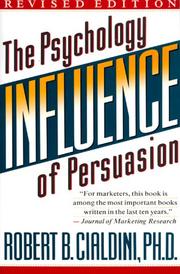
The canonical text on the psychology of persuasion — understanding these six principles is the prerequisite for any sophisticated influence strategy in organizational settings.

Shifts from psychological principles to organizational dynamics, showing how to build and deploy influence networks when you lack formal authority — directly applicable to senior-level navigation.
Senior Visibility & Strategic Reputation
ExpertArchitect your visibility at the senior level — managing your reputation, building strategic relationships upward, and ensuring your work and presence are seen by the people who matter most.
▸ Study plan for this stage
Pace: 6–7 weeks, ~25–30 pages/day (approximately 3–4 days per book with time for reflection and exercises)
- Understanding your boss's priorities, communication style, and decision-making process as the foundation for effective upward management
- Translating your work into language that resonates with senior leadership (business impact, strategic alignment, risk mitigation)
- Building credibility and visibility through strategic relationship cultivation, not just task completion
- Navigating organizational politics without compromising integrity—recognizing power dynamics and informal influence networks
- Positioning yourself for promotion by making your aspirations known, documenting achievements, and aligning with organizational needs
- Managing perception and reputation proactively—controlling your narrative before others define it for you
- Leveraging sponsorship and advocacy from senior leaders who can champion your advancement
- What are your boss's top three priorities, communication preferences, and decision-making criteria, and how can you align your work to demonstrate impact in those areas?
- How do you translate your technical or functional accomplishments into strategic business language that senior leaders care about (revenue, risk, competitive advantage)?
- What informal power networks and key relationships exist in your organization, and which ones are critical for your visibility and advancement?
- How do you navigate organizational politics ethically—recognizing unwritten rules without compromising your values?
- What specific steps can you take to make your promotion aspirations visible to decision-makers, and what evidence of readiness do you need to build?
- How is your current reputation perceived by senior stakeholders, and what gaps exist between your self-perception and how others see you?
- Map your boss's world: Document their top 3 priorities, preferred communication style, biggest challenges, and success metrics. Then identify 2–3 ways you can proactively support these priorities in the next month.
- Reframe your last three major accomplishments in strategic business language—focus on business impact, risk reduction, or revenue/efficiency gains rather than task completion.
- Conduct a stakeholder visibility audit: List the 10–15 senior leaders who influence decisions about your advancement. Rate your current visibility with each (high/medium/low) and identify 2–3 concrete actions to increase visibility with those you rated low.
- Create a 'reputation narrative' document: Write how you want to be known (3–4 key attributes), then interview 2–3 trusted colleagues about how they actually perceive you. Identify gaps and develop a 90-day plan to close them.
- Identify your organizational politics landscape: Map the informal influence networks, key coalitions, and decision-makers who aren't in the formal hierarchy. Determine which relationships you need to cultivate and plan 2–3 low-pressure touchpoints with each.
- Draft a promotion readiness plan: Clarify the role you want, document the gap between your current capabilities and what's needed, and create a 6–12 month development plan with visible milestones you can share with a sponsor.
- Schedule 'visibility conversations' with 3–4 senior leaders outside your direct chain: Prepare specific questions about their priorities, seek advice on your development, and follow up with value (insights, introductions, or support relevant to their goals).
Next up: This stage equips you to manage your visibility and reputation at the senior level; the next stage will build on this foundation by teaching you how to translate that visibility into executive presence, influence, and the gravitas required to lead at the highest levels.

Provides a practical playbook for building credibility and visibility with senior stakeholders, making it the ideal bridge between influence skills and deliberate reputation management.

Tackles the often-unspoken dynamics of how senior visibility actually works — sponsorship, political capital, and strategic self-promotion — bringing the entire curriculum to a pragmatic, career-level conclusion.
Discussion
Keep reading
Paths that share books, cover the same subject, or open a related topic.