Email marketing: the best books to write emails that convert
This curriculum takes a beginner from zero to advanced email marketing mastery across four tightly sequenced stages. It starts with the mindset and mechanics of writing persuasively, moves into list-building and deliverability fundamentals, then dives into automation and segmentation strategy, and finally covers high-level campaign architecture and revenue optimization — each stage building directly on the vocabulary and skills of the last.
Foundations: Copywriting & the Marketing Mindset
BeginnerUnderstand how persuasive writing works and why people buy — the mental model that makes every email you write more effective before you ever touch a platform.
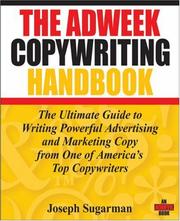
Sugarman's principles of writing copy that compels action are the bedrock of effective email writing. Reading this first gives you the persuasion vocabulary every later book assumes you have.
Email marketing lives and dies on psychological triggers — reciprocity, social proof, scarcity. Cialdini's framework explains why subscribers open, click, and buy, making it essential context before studying tactics.
Core Email Marketing: Lists, Deliverability & the Basics
BeginnerKnow how to build a permission-based list from scratch, write your first campaigns, understand deliverability, and avoid the rookie mistakes that kill open rates.
▸ Study plan for this stage
Pace: 4–5 weeks, ~25–30 pages/day (approximately 200 pages total across both books)
- Permission-based list building: why explicit consent is the foundation of sustainable email marketing, not a limitation
- Deliverability mechanics: how ISPs filter email, what factors affect inbox placement, and why sender reputation matters more than volume
- The email marketing funnel: segmentation, list hygiene, and lifecycle campaigns from welcome series through re-engagement
- Writing for opens and clicks: subject lines, preview text, and call-to-action placement that respect subscriber attention
- Compliance and trust: CAN-SPAM, GDPR basics, and why transparency builds long-term list value
- The permission contract: understanding subscriber expectations and delivering on the implicit promise made at signup
- Why is a permission-based list smaller but more valuable than a purchased or scraped list, and what does this mean for your first 1,000 subscribers?
- What are the three main factors ISPs use to determine if your email reaches the inbox, and how do you influence each one?
- How should your welcome series differ from your regular promotional campaigns, and why does this sequence set the tone for the entire relationship?
- What specific mistakes in subject lines, sender names, or content trigger spam filters or cause unsubscribes, and how do you avoid them?
- How do you segment a small list (under 5,000 subscribers) to improve relevance without over-complicating your workflow?
- What metrics should you track in your first campaigns to know if you're building a healthy list, and what do they tell you about subscriber engagement?
- Build a signup form and landing page for a real or fictional product/service; document the permission language, incentive (if any), and what data you collect—then audit it against permission marketing principles
- Write three subject line variations for a welcome email and a promotional email; A/B test them with a small audience or peer group and analyze open rate differences
- Map out a 5-email welcome series (emails 1–5 after signup) that introduces your brand, sets expectations, and delivers value before the first ask—include subject lines and one full email copy
- Conduct a list audit: if you have an existing email list, segment it by engagement level (opens, clicks, no activity) and draft a re-engagement campaign for inactive subscribers
- Research and document your email service provider's (ESP) deliverability best practices; compare them to the rules in White's book and identify 3–5 gaps in your current setup
- Create a compliance checklist for your email program: verify your unsubscribe process, footer information, and privacy policy align with CAN-SPAM and GDPR; document any gaps and fix them
Next up: This stage equips you with the foundational knowledge and permission-based list to move into advanced tactics—segmentation strategies, behavioral automation, and data-driven optimization—that multiply the value of your list and turn casual subscribers into loyal customers.

The most comprehensive and practical reference on how email marketing actually works — from list hygiene to CAN-SPAM compliance. Read this first in the stage to establish correct mental models before learning strategy.
Godin's foundational argument for why opt-in, subscriber-first email beats interruption advertising shapes the ethical and strategic philosophy behind every tactic you'll learn next.
Intermediate: Sequences, Automation & Segmentation
IntermediateDesign automated welcome sequences and nurture funnels, segment your list for relevance, and write emails that move subscribers through a deliberate customer journey.
▸ Study plan for this stage
Pace: 8–10 weeks, ~40–50 pages/day (accounting for note-taking and reflection on automation concepts)
- Automated welcome sequences as the foundation of email marketing—how to structure them to establish trust and deliver immediate value
- Segmentation strategies based on subscriber behavior, interests, and position in the customer journey to increase relevance and engagement
- Nurture funnels that guide subscribers through deliberate stages (awareness → consideration → decision) using targeted email sequences
- The role of customer research and surveys (Ask framework) in understanding subscriber needs and personalizing messaging
- Email copywriting principles that persuade—using psychology, storytelling, and clear calls-to-action to move subscribers toward desired actions
- Automation workflows that trigger emails based on subscriber actions, reducing manual work while improving timeliness and relevance
- List segmentation tactics: demographic, behavioral, engagement-based, and preference-driven segments to maximize open and click rates
- Testing and optimization within sequences to identify what resonates with different segments and refine the customer journey
- What are the core components of an effective welcome sequence, and why does it matter more than any other email in your funnel?
- How do you use the Ask framework to uncover subscriber pain points and desires, and how does this inform your email segmentation strategy?
- What are the key differences between a broadcast email and a nurture sequence, and when should you use each?
- How do you segment your email list in ways that increase relevance, and what metrics should you track to measure segmentation effectiveness?
- What persuasion principles and copywriting techniques should you apply to move a subscriber from awareness to consideration to purchase?
- How do you design an automation workflow that responds to subscriber behavior in real-time, and what triggers should you set up first?
- Map out a 5–7 email welcome sequence for a hypothetical business: write subject lines and brief outlines for each email, ensuring each one delivers value and builds toward a call-to-action
- Create a customer research plan using Ask framework principles: draft 5–10 survey questions designed to uncover your target audience's biggest challenges, desires, and objections
- Design a 3-tier segmentation strategy for an email list: identify one demographic segment, one behavioral segment, and one engagement-based segment, then outline how messaging would differ for each
- Write 3 different email versions (awareness, consideration, decision stage) for the same product or service, applying persuasion principles from Email Persuasion to each
- Build a simple automation workflow diagram: map out 2–3 trigger-based sequences (e.g., welcome series, abandoned cart, post-purchase nurture) with decision points and branch logic
- Audit an existing email sequence (yours or a competitor's): identify gaps in the customer journey, missing segmentation opportunities, and areas where persuasion principles could be strengthened
Next up: This stage equips you with the systems and psychology to build scalable, personalized email funnels; the next stage will teach you how to measure, analyze, and optimize these systems for maximum ROI and long-term subscriber lifetime value.

Deiss maps out the five core email sequences (indoctrination, engagement, ascension, segmentation, re-engagement) that form the backbone of any automated email system — the perfect bridge from basics to automation.

Levesque's survey-based segmentation method shows you how to ask subscribers what they want and then deliver hyper-relevant email sequences — directly elevating click and conversion rates.

A practical, step-by-step guide to writing emails that build relationships and generate sales, with specific frameworks for nurture sequences — ideal at this stage once automation concepts are in place.
Advanced: Campaigns, Revenue Optimization & Mastery
ExpertArchitect full-funnel email campaigns tied to business revenue, optimize for opens and clicks with data-driven testing, and run product launches and promotions that consistently convert.
▸ Study plan for this stage
Pace: 8–10 weeks, ~40–50 pages/day (alternating between both books in parallel; ~2 weeks per major section)
- The Product Launch Formula: pre-launch, launch, and post-launch phases to build anticipation and maximize initial revenue
- Email sequences as the core vehicle for launch momentum: segmentation, storytelling, and strategic scarcity messaging
- The Sales Funnel Architecture: awareness → interest → decision → action, with email as the primary conversion tool at each stage
- Value Ladder and Tripwire Strategy: how to move customers from low-ticket to high-ticket offers through strategic email nurturing
- Data-driven testing and optimization: A/B testing subject lines, send times, copy angles, and call-to-action placement to improve open and click rates
- Storytelling frameworks (Brunson's Epiphany Bridge, Walker's narrative arcs) to create emotional connection and urgency in email copy
- Revenue attribution and funnel analytics: tracking which email sequences drive the highest lifetime customer value
- Promotion and flash-sale mechanics: using email to create urgency, scarcity, and FOMO to drive spikes in conversion and AOV
- What are the three phases of Jeff Walker's Product Launch Formula, and what is the primary goal of email marketing in each phase?
- How does Russell Brunson's Sales Funnel model (awareness → interest → decision → action) differ from a traditional marketing funnel, and where does email fit into each stage?
- What is a Tripwire offer, and how do you use email sequences to move a customer from a Tripwire to a core product or high-ticket offer?
- Describe the Epiphany Bridge storytelling framework and explain how you would structure an email sequence around it to drive conversions.
- What metrics should you track to measure the success of a product launch email campaign, and how do you determine which sequences are driving revenue?
- How do you design an A/B test for email subject lines or send times, and what sample size and statistical confidence do you need to act on results?
- Map out a complete product launch email sequence (pre-launch, launch, post-launch) for a real or hypothetical product, including 8–12 emails with subject lines, core story angles, and CTAs.
- Audit an existing email campaign (your own or a competitor's) against the Sales Funnel framework: identify which stage each email targets and where gaps exist.
- Design a Tripwire offer and the email sequence (3–5 emails) that moves a cold prospect to purchase it, then outlines the path to upsell to a core product.
- Write three variations of a launch announcement email with different subject lines and story angles; plan an A/B test to measure which drives the highest open and click rate.
- Build a revenue attribution model for a 30-day email campaign: assign revenue to each email based on click-through, conversion, and customer lifetime value data.
- Create a flash-sale email campaign (3–5 emails over 48–72 hours) that uses scarcity, urgency, and storytelling to drive a spike in conversions and average order value.
Next up: This stage equips you to architect and execute revenue-driving email campaigns at scale; the next stage will likely deepen expertise in advanced segmentation, personalization, and automation to sustain long-term customer relationships and maximize lifetime value beyond the initial launch.

Walker's Product Launch Formula is built almost entirely on email sequences; this book teaches you how to orchestrate multi-email campaigns that build anticipation and drive concentrated sales — a masterclass in campaign architecture.
Brunson connects email funnels to the broader sales funnel ecosystem, showing how email fits into value ladders and follow-up sequences that maximize customer lifetime value — the final strategic layer for advanced practitioners.
Discussion
Keep reading
Paths that share books, cover the same subject, or open a related topic.