Social psychology is the experimental study of how other people change what we think, feel and do, and it produced the most quoted results in the whole discipline: Milgram's obedience experiments, Zimbardo's Stanford prison study, Asch's conformity lines, Festinger's dissonance work. It is also the field the replication crisis hit hardest. Since around 2011 a long list of textbook results has failed to reproduce or turned out to rest on far weaker evidence than the popular retelling suggests — ego depletion, social priming, power posing, and, through archival work rather than replication, Milgram's own reporting and the conduct of the prison study.
That is why this order looks strange at first. You read the field's own classics before you read the historians who went back to the original data. The reason is not deference: a corrective only lands on someone who is actually holding the thing being corrected. Read Gina Perry first and you get a demolition of a building you never entered. Read Milgram first and Perry rearranges what you thought you knew. Nothing here should leave you believing the textbook version of any famous study.
The field presenting itself
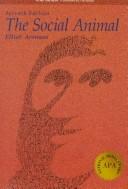
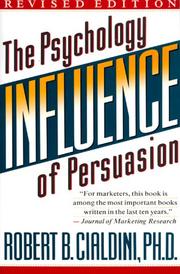
The social animal is the classic survey, written by one of the people who built the discipline, and still the most readable single introduction to what social psychology thinks it has found. Our catalogued record is an early edition of a book revised over fifty years; later editions handle the contested findings far more carefully, so buy the newest one you can. Situations matter is a short modern popularisation of the situationist claim with the everyday examples the older texts lack. Influence is the applied wing — six principles of compliance drawn largely from field observation of salespeople and fundraisers rather than laboratory work, which is partly why it has aged better; some studies Robert Cialdini cites have since been questioned, and he has publicly acknowledged replication problems in the literature he drew on.
Read all three as the field at its most confident. That confidence is a position, not a settled summary.
The famous studies, in their authors' own words
The person and the situation is the most intellectually serious book on this list: Lee Ross and Richard Nisbett stating the situationist case at its strongest, which is exactly what you want in mind while reading the critics.
Obedience to Authority is Stanley Milgram's own account. Read it as a primary source rather than a report — the archival work in the next stage shows the experimenter deviated substantially from the script, and that the compliance figure everyone quotes comes from one condition among many.
The Lucifer Effect is Philip Zimbardo's book-length defence of the Stanford prison experiment and its extension to Abu Ghraib. It is here because it is the fullest statement of the claim, and it carries a flag: recovered tapes and participant testimony indicate guards were coached toward brutality and that at least one famous breakdown was performed. The study is now widely regarded as a demonstration rather than an experiment.
The archives
This is the pivotal stage. Behind The Shock Machine is Gina Perry's investigation of Milgram's archive — the conditions he did not publish, the participants he did not debrief, the improvised pressure. The Lost Boys is her companion on Muzafer Sherif's Robbers Cave experiments, documenting an earlier run in which the boys refused to fight and which went unreported, a textbook file-drawer problem sitting inside a founding result. Opening Skinner's Box revisits ten famous experiments and their participants, and is contested in its own right: several psychologists disputed Lauren Slater's account of specific studies and her method is literary rather than archival, so read it as provocation and let Perry carry the weight.
Sorting the modern claims by evidence
Mistakes Were Made (But Not by Me) is the right place to start, because cognitive dissonance has replicated well and remains one of the field's genuine achievements — it shows you what a robust result reads like. Strangers to Ourselves makes the adaptive-unconscious argument carefully.
Then two contested ones, and they should be read as positions rather than findings. Blindspot is Mahzarin Banaji and Anthony Greenwald presenting implicit bias and the Implicit Association Test, which they created; the test's test-retest reliability and its predictive validity for individual behaviour have both been challenged in the literature, and the authors have themselves narrowed their claims about individual diagnosis. Whistling Vivaldi is Claude Steele on stereotype threat, among the most influential ideas in the field and among the most actively disputed — later large replications and meta-analyses accounting for publication bias have found much smaller or absent effects in some populations. Both are worth reading; neither is settled.
Redirect closes well, with Timothy Wilson on why so many plausible social interventions fail under proper evaluation, and the case for randomised evaluation — the discipline the rest of this path shows the field lacked. If you want that argument in full, it belongs to social science research methods rather than here.
The ordered social psychology path has the stage goals and a study plan for each group.