How cults work
This curriculum moves from accessible psychological foundations through gripping survivor memoirs, then into rigorous academic and investigative analysis, and finally to advanced frameworks for understanding systemic coercion. Each stage builds the vocabulary and conceptual tools needed to get the most out of the next, so that by the end the reader can think critically and deeply about why high-control groups form, how they operate, and how people escape them.
Foundations: The Psychology of Influence
BeginnerUnderstand the core psychological mechanisms — persuasion, compliance, and social pressure — that make ordinary people vulnerable to manipulation. This stage gives you the mental toolkit for everything that follows.
▸ Study plan for this stage
Pace: 6–7 weeks total: Weeks 1–4 for "Influence" (~30 pages/day, including time to pause and reflect on each principle); Weeks 5–7 for "Mistakes Were Made (But Not by Me)" (~25 pages/day, with slower pacing to absorb the heavier cognitive-science material). Budget an extra review day at the end of each bo
- Cialdini's six principles of influence: Reciprocity, Commitment & Consistency, Social Proof, Authority, Liking, and Scarcity — and how each bypasses conscious deliberation
- The concept of 'click, whirr' automatic responses: how influence triggers exploit mental shortcuts (heuristics) rather than rational analysis
- Commitment escalation: how small initial acts of compliance (foot-in-the-door) lock people into larger future commitments, a cornerstone of cult recruitment
- Social proof as a vulnerability: why people in ambiguous or high-stress situations outsource their judgment to the group, making them especially susceptible in cult environments
- Cognitive dissonance (Tavris): the psychological discomfort of holding contradictory beliefs or actions, and the powerful drive to resolve it by changing beliefs rather than behavior
- Self-justification vs. genuine accountability: how the brain's dissonance-reduction machinery causes people to unconsciously rewrite memory and perception to protect their self-image
- The pyramid of choice (Tavris): how two people starting from nearly identical positions can end up at opposite extremes through a series of small, self-justified steps — directly modeling cult indoctrination trajectories
- Blind spots and the 'totalitarian ego': why intelligence and education do not protect against these mechanisms, and may even amplify them
- After reading Cialdini, can you name and define all six principles of influence and give a real-world cult-recruitment example for each one?
- What does Cialdini mean by 'weapons of influence,' and why does he argue that the solution is awareness plus selective non-compliance rather than blanket suspicion?
- How does the Commitment & Consistency principle explain why cult members defend the group even after experiencing clear harm — and how does this connect to Tavris's concept of self-justification?
- According to Tavris and Aronson, what is cognitive dissonance, and why does resolving it through self-justification feel indistinguishable from genuine reasoning to the person doing it?
- What is the 'pyramid of choice' model in 'Mistakes Were Made,' and how does it illustrate the gradual, almost invisible process by which ordinary people end up in extreme positions?
- Having read both books together, what is the single most important insight you would share with someone who believes they are 'too smart' to be manipulated by a cult?
- Influence Audit Journal: For one full week, keep a daily log of every moment you notice one of Cialdini's six principles being used on you — in advertising, social media, workplace dynamics, or personal relationships. Note which principle it was, how it felt in the moment, and whether you complied.
- Recruitment Script Deconstruction: Find a publicly available transcript or video of a cult or MLM recruitment pitch (e.g., from a documentary). Annotate it line-by-line, labeling every Cialdini principle you can identify. Note how multiple principles are often layered simultaneously.
- Personal Dissonance Mapping (Tavris exercise): Think of a belief or behavior you hold that you've never seriously questioned. Write a one-page 'devil's advocate' essay arguing the opposite position, then reflect in writing: What discomfort did you feel? What self-justifications arose automatically?
- Pyramid Trace: Choose a real historical case of radicalization or cult membership (e.g., from a memoir or documentary you've encountered). Using Tavris's pyramid-of-choice model, map out the likely sequence of small decisions and self-justifications that moved the person from entry point to deep involvement.
- Socratic Discussion or Written Dialogue: Write a fictional dialogue between a cult recruiter and a new recruit, deliberately scripting the recruiter to deploy at least four of Cialdini's principles in sequence. Then write the recruit's internal monologue showing the dissonance-reduction process from Tavris playing out in real time.
- Concept Synthesis Card: Create a single one-page reference sheet (hand-written for better retention) that maps each of Cialdini's six principles to the corresponding cognitive-dissonance or self-justification mechanism from Tavris that would lock in compliance after the initial influence attempt.
Next up: By establishing that ordinary psychological machinery — not weakness or stupidity — makes people vulnerable to influence and self-justification, this stage equips the reader to move from abstract mechanisms to the concrete, structured environments that deliberately weaponize them: the specific recruitment tactics, group dynamics, and thought-control systems examined in the next stage on cult metho
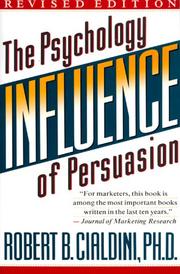
The essential starting point: Cialdini's six principles of influence (reciprocity, commitment, social proof, etc.) are the building blocks of cult recruitment tactics. Reading this first means you'll recognize these levers in every later book.

Explains cognitive dissonance and self-justification — the psychological engine that keeps people inside high-control groups long after red flags appear. This bridges general psychology to cult-specific behavior.
First-Person: Inside the Experience
BeginnerGround the abstract psychology in visceral, human reality through survivor memoirs. See how recruitment, indoctrination, and exit actually feel from the inside.
▸ Study plan for this stage
Pace: 8–10 weeks total: ~2.5–3 weeks per book at roughly 20–25 pages/day. Suggested breakdown — Weeks 1–3: "Educated" (334 pp); Weeks 4–6: "Troublemaker" (272 pp); Weeks 7–10: "The Road to Jonestown" (416 pp). Read with a dedicated notebook nearby to log patterns across all three accounts.
- Gradual indoctrination vs. sudden conversion: how Westover's upbringing shows that high-control belief systems are often absorbed incrementally over a lifetime rather than through a single recruitment event
- Information control and reality distortion: how all three subjects had their access to outside knowledge systematically restricted — Westover through isolation and home-schooling, Remini through Scientology's 'disconnection' policy, and Peoples Temple members through geographic relocation to Jonesto
- The role of family and social bonds as both the hook and the trap: how love for parents, siblings, and community makes exit feel like self-destruction in all three books
- Sunk-cost entrapment and identity fusion: how years of sacrifice (Remini's decades in Scientology, the Jonestown settlers' literal relocation to Guyana) make leaving feel like admitting one's entire life was a lie
- The exit process as a second trauma: Westover's estrangement from her family, Remini's public shunning, and the fatal impossibility of exit at Jonestown illustrate how leaving is rarely clean or safe
- Charismatic authority and its escalation: Jeff Guinn's biography of Jim Jones shows how a leader's unchecked power grows over time, providing a historical backbone to the personal experiences in the other two memoirs
- Cognitive dissonance as a survival tool: how all three narratives show people simultaneously knowing something is wrong and finding ways to rationalize staying
- The difference between a survivor's memoir and an analytical account: recognizing what first-person narratives reveal (emotional texture, lived contradiction) versus what they cannot fully explain (systemic structure)
- Using specific scenes from 'Educated,' explain how Tara Westover's sense of reality was shaped and distorted by her family — and identify the first moment she begins to doubt it. What made that crack possible?
- Leah Remini describes Scientology's 'disconnection' policy in detail. How does enforced separation from non-members function as a control mechanism, and what personal cost did it exact on her before she finally left?
- Jeff Guinn traces Jim Jones's trajectory from idealistic preacher to authoritarian cult leader. What were the two or three pivotal turning points in that transformation, and what conditions allowed each escalation to go unchallenged?
- All three books depict a moment where the subject seriously considers leaving but does not — yet. Compare those moments across the three books: what held each person back, and what does that tell you about the psychology of exit?
- How does geographic or social isolation function differently in each of the three accounts — Westover's rural Idaho, Remini's Scientology community, and the Peoples Temple's move to Jonestown — and what does the comparison reveal about isolation as a universal high-control tactic?
- After reading all three books, how would you describe the emotional experience of leaving a high-control group to someone who has never encountered the topic? What do these first-person accounts make possible that a textbook definition cannot?
- Recruitment timeline mapping: For each book, draw a simple timeline marking the key moments of deeper entrenchment (e.g., Westover accepting her father's medical beliefs, Remini's auditing escalations, early Peoples Temple members following Jones from Indiana to California). Annotate each step with the specific tactic used. Compare the three timelines side by side — what structural similarities em
- Doubt journal: As you read, keep a running log of every moment a subject expresses doubt, confusion, or a flicker of outside perspective. Note what triggered the doubt and what suppressed it. By the end of stage, review the log and write a one-page reflection on what conditions seem necessary for doubt to finally become action.
- Disconnection cost inventory: After finishing 'Troublemaker,' list every relationship, opportunity, or piece of information Remini describes being cut off from. Then do the same exercise retrospectively for Westover. This makes the abstract concept of 'information control' concrete and personally legible.
- Perspective-shift writing exercise: Choose one scene from 'The Road to Jonestown' in which an ordinary Peoples Temple member makes a choice that seems incomprehensible from the outside. Write one paragraph from that person's internal point of view, using only the information and worldview they would have had access to at that moment. This builds empathy and counters the 'I would never fall for tha
- Cross-book concept tracker: Create a simple three-column table (one column per book) with rows for each key concept listed in this plan (e.g., isolation, sunk cost, charismatic authority). Fill in a specific quote or scene from each book for each concept. Gaps in the table are as informative as filled cells.
- Exit interview simulation: After finishing all three books, write a short (1–2 page) mock 'exit interview' for one of the three subjects — as if you are a counselor meeting them the week after they left. What questions would you ask? What emotional and psychological needs would you anticipate? Ground every assumption in something you read.
Next up: These three first-person accounts give you an emotional and experiential foundation — the felt reality of high-control group life — that will make the psychological and sociological frameworks in the next stage immediately recognizable rather than purely abstract.

A masterful memoir of growing up in an isolated, high-control family environment. It eases readers into the subject with literary storytelling while illustrating enmeshment, thought control, and the agonizing cost of leaving.

A vivid, accessible account of decades inside Scientology by a celebrity insider. Its specificity about organizational control, shunning, and the slow erosion of critical thinking makes abstract concepts concrete.

A deeply researched narrative biography of Jim Jones and the Peoples Temple. Reading a journalist's reconstruction after two memoirs teaches you to spot the leader's manipulation tactics from the outside looking in.
Core Theory: How Cults Actually Work
IntermediateAcquire the definitive analytical frameworks — thought reform, loaded language, BITE model — used by researchers and exit counselors to understand and dismantle cult influence.
▸ Study plan for this stage
Pace: 8–10 weeks total: Weeks 1–5 for Lifton (~25–30 pages/day, including slower re-reading of the eight criteria chapters); Weeks 6–10 for Hassan (~20–25 pages/day, with active note-taking on the BITE model and case studies). Budget extra time on weekends for reflection journaling and exercises.
- Lifton's Eight Criteria of Thought Reform: Milieu Control, Mystical Manipulation, Demand for Purity, Confession, Sacred Science, Loading the Language, Doctrine over Person, and Dispensing of Existence — the foundational taxonomy for identifying totalist environments
- Thought Reform vs. Brainwashing: Lifton's careful distinction that influence is a structured, environmental process rather than a single dramatic event, and why that distinction matters for understanding gradual indoctrination
- Totalism as a spectrum: Lifton's argument that totalist tendencies exist on a continuum and can appear in political movements, religious groups, and therapeutic cults — not only in fringe groups
- Loaded Language (thought-terminating clichés): how specialized jargon compresses complex reality into slogans that shut down critical thinking, and how to recognize it in real texts and speech
- Hassan's BITE Model: the four interlocking control systems — Behavior, Information, Thought, and Emotional control — as a practical diagnostic checklist that operationalizes and extends Lifton's framework
- The Influence Continuum: Hassan's model distinguishing legitimate social influence from undue influence, helping readers calibrate severity rather than applying a binary cult/not-cult label
- Phobia Indoctrination and Exit Costs: Hassan's analysis of how groups manufacture irrational fears about leaving (shunning, spiritual damnation, loss of identity) to trap members
- The Strategic Interactive Approach (SIA): Hassan's counseling methodology — working with the authentic self beneath the cult identity — as the practical application of theory to real-world exit and recovery
- Can you name and define all eight of Lifton's criteria for thought reform, and give a concrete real-world example for each criterion drawn from the groups Lifton studied (e.g., Chinese Communist re-education programs, religious totalist groups)?
- How does Lifton distinguish 'ideological totalism' from ordinary strong belief or religious devotion, and why is that distinction analytically important?
- Using Hassan's BITE Model, how would you systematically evaluate whether a specific organization qualifies as a high-control group? Walk through all four domains with examples.
- What is a 'thought-terminating cliché' as defined by Lifton, and how does Hassan's concept of Information Control build upon and extend this idea?
- According to Hassan, what psychological mechanisms make it so difficult for members to leave high-control groups, and how does the Strategic Interactive Approach attempt to address each one?
- How do Lifton's academic/clinical framework and Hassan's practitioner framework complement each other, and where — if anywhere — do they tension or contradict each other?
- BITE Model Audit: Select a real organization (a well-documented group such as Scientology, the Unification Church, or a multilevel marketing company with public accounts). Work through all four BITE domains systematically, citing specific documented practices for each checkbox. Write a 1–2 page structured assessment.
- Eight Criteria Mapping: After finishing Lifton, create a two-column reference card — criterion name on the left, your own plain-language definition plus one historical and one contemporary example on the right. Test yourself by covering one column.
- Loaded Language Log: For one week, collect real examples of thought-terminating clichés from news, social media, advertising, or political speech. Annotate each: What complex question does it shut down? Which of Lifton's criteria does it serve?
- Influence Continuum Self-Assessment: Using Hassan's Influence Continuum, map three organizations you have personally encountered (a workplace, a religious community, a school club, etc.) onto the spectrum. Write a short reflection on what surprised you and what criteria drove your placement.
- Comparative Framework Essay: Write a 500-word essay arguing which of the two frameworks — Lifton's eight criteria or Hassan's BITE Model — is more useful for a specific purpose (e.g., academic research vs. helping a family member). Use evidence from both books to support your position.
- Exit-Barrier Analysis: Choose one case study from Hassan's book. List every exit barrier he identifies for that case, then map each barrier onto the relevant Lifton criterion or BITE domain. Present your findings as an annotated diagram or table.
Next up: Mastering Lifton's and Hassan's frameworks gives you the diagnostic vocabulary and analytical scaffolding needed to read first-person survivor memoirs and investigative case studies critically — evaluating specific groups against these criteria rather than simply reacting emotionally to disturbing narratives.
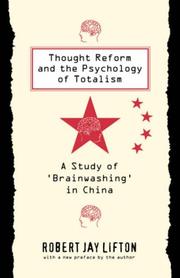
The foundational academic text on thought reform, introducing the eight criteria of totalism (milieu control, sacred science, loading the language, etc.). Every serious discussion of cults references Lifton; reading him now gives you the field's shared vocabulary.
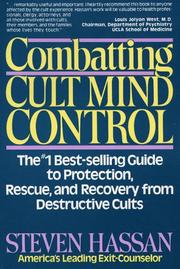
Written by a former Moonie turned cult counselor, this book translates Lifton's theory into a practical framework (the BITE model: Behavior, Information, Thought, Emotional control) and is widely used by therapists and families.
Deep Dives: Case Studies & Investigative Journalism
IntermediateApply your frameworks to richly documented real-world cases — from NXIVM to Heaven's Gate — and understand how high-control groups embed themselves in broader society.
▸ Study plan for this stage
Pace: 2–3 weeks, ~25–35 pages/day — Hassan's book is dense with psychological and political analysis, so allow time to pause and cross-reference his BITE Model framework against the Trump movement examples he cites. Read with a highlighter and a dedicated notebook.
- The BITE Model (Behavior, Information, Thought, Emotional control) as a diagnostic framework for high-control groups — Hassan applies each quadrant explicitly to the Trump movement, so map every chapter to its BITE category
- Loaded language and thought-terminating clichés: how slogans like 'Fake News' and 'Deep State' function to shut down critical inquiry, mirroring techniques documented in classic cult literature
- Bounded choice and black-and-white thinking: how followers are conditioned to see the world as 'us vs. them,' making exit psychologically costly
- The role of a charismatic authoritarian leader — Hassan's profile of Trump as a cult-of-personality figure, drawing on his own experience inside the Moonies to identify structural parallels
- Phobia indoctrination: the deliberate installation of irrational fears about leaving or questioning the group, applied here to political identity
- Social contagion and recruitment pipelines: how media ecosystems (Fox News, social media algorithms) function as the 'front groups' that funnel people into deeper ideological commitment
- Exit counseling and identity recovery: Hassan's Strategic Interactive Approach (SIA) and how it differs from coercive deprogramming — relevant for understanding how people leave high-control political movements
- The ethics of applying cult frameworks to political movements: Hassan's argument that this is a descriptive, not partisan, analysis — and the scholarly debate that surrounds it
- Can you walk through all four dimensions of the BITE Model and give at least two concrete examples from 'The Cult of Trump' for each dimension?
- How does Hassan distinguish between ordinary political loyalty or religious devotion and the kind of high-control influence he documents — where exactly does he draw the line, and do you find it convincing?
- What specific media and social structures does Hassan identify as functioning like cult 'front groups,' and how do they lower the threshold for deeper indoctrination?
- How does phobia indoctrination operate in the Trump movement as Hassan describes it, and how does it compare to the phobia installation techniques he experienced in the Unification Church?
- What is the Strategic Interactive Approach (SIA), and why does Hassan argue it is more ethical and effective than classic deprogramming for helping people exit high-control political identities?
- What are the strongest counterarguments to Hassan's thesis — that applying cult terminology to a political movement is analytically valid — and how well does the book address them?
- BITE Model Audit: Choose a real speech, rally, or social media thread from the Trump movement (or any comparable political movement you're comfortable analyzing). Go through all four BITE categories and annotate specific moments where each type of control is visible. Write a one-page summary of your findings.
- Loaded Language Glossary: Compile a list of at least 10 slogans or recurring phrases Hassan identifies in the book. For each, write (a) its surface meaning, (b) its in-group psychological function, and (c) a 'translation' into neutral language — this trains you to spot thought-terminating clichés in the wild.
- Parallel Case Mapping: Pick one other high-control group you've studied in an earlier stage of this curriculum. Create a two-column comparison chart showing how the BITE Model features Hassan identifies in the Trump movement do or do not appear in your chosen group. Note where the political context creates unique dynamics.
- Exit Narrative Interview (or Research): Find a first-person account (memoir excerpt, podcast interview, or documentary clip) from someone who left a high-control political or religious movement. Apply Hassan's SIA framework to their story — what helped them leave? What made it hard? Write a 300-word reflection.
- Counterargument Steel-Manning: Write a 200–300 word argument *against* Hassan's thesis — that calling the Trump movement a cult is analytically misleading or politically motivated. Then write a 200–300 word rebuttal using evidence from the book. This sharpens critical engagement with contested frameworks.
- Media Ecosystem Diagram: Draw or digitally map the information pipeline Hassan describes — from mainstream social media and cable news down to more extreme content. Label where each node fits into the BITE Model (e.g., which nodes control Information, which reinforce Emotional control). Annotate with page references from the book.
Next up: By stress-testing the BITE Model against a living, politically embedded high-control movement, you've sharpened your ability to apply analytical frameworks to ambiguous, real-world cases — exactly the skill needed to engage with the richly reported investigative journalism and multi-case studies that characterize the next stage of the curriculum.

Applies the BITE model and cult-analysis frameworks to a mainstream political movement, showing how high-control dynamics scale beyond traditional religious cults and into everyday life.
Advanced: Systemic Coercion & Recovery
ExpertSynthesize everything into a sophisticated understanding of coercive control as a systemic phenomenon, and explore what recovery, resilience, and prevention actually look like.
▸ Study plan for this stage
Pace: 8–10 weeks total: Weeks 1–4 on "Terror, Love, and Brainwashing" (~25–30 pages/day, including re-reading dense theoretical sections); Weeks 5–9 on "Coercive Control" (~20–25 pages/day, given its legal and sociological density); Week 10 reserved for synthesis, cross-book comparison, and completing fin
- Attachment theory as the mechanism of coercive control: Stein's argument that cult leaders exploit the evolved attachment system, creating a 'fright without solution' dynamic (disorganized attachment) that traps followers in a paradox of seeking safety from the very source of terror
- The totalizing environment: Stein's model of how high-control groups systematically isolate members from outside relationships, information, and identity, making the group the sole attachment figure
- Coercive control as a pattern, not a series of incidents: Stark's reframing of abuse away from discrete violent acts toward an ongoing strategy of domination that includes isolation, micro-regulation of daily life, and deprivation of liberty
- The liberty-based framework: Stark's argument that coercive control is best understood as a crime against personhood and autonomy — not merely physical safety — requiring legal and social responses that reflect this
- Gendered dimensions of coercive control: Stark's analysis of how coercive control exploits and reinforces existing social inequalities, particularly gender, to make entrapment more effective and escape harder
- The 'cult of personality' and institutional scaffolding: synthesizing both authors on how coercive systems require not just a charismatic leader but organizational structures, rituals, and information control to sustain domination
- Recovery as a non-linear process: drawing on Stein's attachment lens to understand why leaving a high-control group does not end the psychological bind, and what genuine re-attachment to safe relationships looks like in recovery
- Prevention and systemic resilience: using both books to identify upstream interventions — at the individual, community, and policy level — that reduce vulnerability to coercive systems before entry occurs
- According to Stein, why is disorganized attachment — rather than simple fear or manipulation — the central psychological mechanism that makes cult membership so difficult to leave, and how does the leader's role as both threat and safe haven sustain this trap?
- How does Stark's concept of coercive control challenge the dominant 'incident-based' model used in law enforcement and social services, and what practical consequences does this distinction have for survivors seeking help?
- In what ways do Stein's totalizing environment and Stark's isolation tactics describe the same phenomenon from different disciplinary angles (psychology vs. sociology/law), and where do their frameworks diverge?
- Stark argues that coercive control is fundamentally a liberty crime. How does this framing change what 'recovery' means — is restoring safety sufficient, or must autonomy and identity also be rebuilt?
- Using both books, construct an account of why a survivor might return to a high-control group or abusive relationship after leaving. What structural and psychological factors does each author identify?
- What would a prevention program informed by both Stein and Stark look like? What would it target (attachment security, social connectedness, legal literacy, community resilience) and at what stage of vulnerability?
- Attachment mapping: After finishing Stein, draw a relationship map for a well-documented cult case (e.g., Jonestown, NXIVM) showing how the group systematically replaced members' outside attachment figures. Annotate each severed tie with the specific isolation tactic Stein describes.
- Incident vs. pattern audit: Take a published survivor memoir or testimony and re-read it through Stark's coercive control lens. List every controlling behavior that would be invisible under an incident-based model but visible under Stark's pattern framework. Reflect on what a court or social worker would have missed.
- Cross-author concept matrix: Build a two-column table mapping Stein's key terms (disorganized attachment, totalizing environment, fright without solution) directly onto Stark's equivalents (isolation, micro-regulation, liberty crime). For each row, write one sentence explaining where the concepts align and one where they tension.
- Recovery pathway design: Using both authors' frameworks, draft a hypothetical 12-month recovery support plan for a cult leaver. Include phases addressing immediate safety, rebuilding attachment relationships, reconstructing identity, and legal/practical autonomy. Cite specific insights from each book for each phase.
- Policy brief: Write a 500-word policy memo to a fictional legislative committee arguing for a coercive control law (as Stark advocates) that also incorporates Stein's psychological findings. What definitions, protections, and support services would the law require?
- Personal resilience audit: Reflect on your own social network, information habits, and critical-thinking practices. Using criteria drawn from both books, identify which factors in your life would increase or decrease vulnerability to a high-control group, and write a concrete plan to strengthen two resilience factors.
Next up: By synthesizing the psychological mechanics of Stein with the structural and legal analysis of Stark, the reader is now equipped to move from understanding coercive control to engaging with applied fields — such as exit counseling practice, trauma-informed policy, and survivor advocacy — where both lenses must be translated into real-world intervention.

A rigorous attachment-theory analysis of cult bonding — explains WHY smart, healthy people get drawn in by examining how leaders exploit early attachment patterns. This is the most psychologically sophisticated account of the 'why' question.

Originally written about intimate partner abuse, Stark's framework of coercive control is now widely applied to cults and high-control groups. Reading it last lets you see the deep structural parallels and gives you a powerful, transferable analytical lens.
Discussion
Keep reading
Paths that share books, cover the same subject, or open a related topic.