Best Books on Smallpox and Its Eradication, in Reading Order
Smallpox is the only human disease ever deliberately wiped out, and the story runs from ancient endemic killer through inoculation and Jenner's vaccine to a global campaign that finished the job in 1977. This path follows that sequence: the disease and its toll first, then the long fight over inoculation and compulsory vaccination, then smallpox as a force in American history, then the eradication campaign itself told by the people who ran it — and finally the awkward question of the virus stocks that still exist.
The disease itself
BeginnerKnow what variola actually did to a body and a population, and grasp the scale of the killing before any intervention existed.
▸ Study plan for this stage
Pace: Three to four weeks. Glynn's The Life and Death of Smallpox is 278 pages and written for a general reader — a week and a half at 30 pages a sitting. Hopkins's The Greatest Killer is 398 pages, organised continent by continent rather than as a single narrative, and is better taken a region at a time
- The clinical course of variola major — incubation, the prodrome, the centrifugal rash, the pustular stage — and why the distribution of the pocks on the body was the diagnostic sign field workers were trained to look for
- Variola major versus variola minor, and why the roughly 30 percent versus 1 percent case fatality difference mattered enormously to the eradication campaign later
- That smallpox has no animal reservoir and no chronic carrier state, the two facts that made eradication biologically possible for this disease and not for most others
- Transmission by close, prolonged contact rather than by casual proximity — the property that made ring containment work in the fourth stage
- Hopkins's continental scope: smallpox in China, India, Africa and the Americas, and the goddess and deity traditions that grew around it, which show it was a universal experience rather than a European story
- The demographic scale — Hopkins's estimate that smallpox killed more people than any other infectious disease in history, and how such an estimate is constructed from fragmentary records
- The survivor's marks: blindness and scarring, and why the disease's social meaning was shaped as much by disfigured survivors as by the dead
- Describe the clinical course of variola major from exposure to scab separation. At which point in that course is a patient infectious, and what does that imply for containment?
- Why can smallpox be eradicated when measles, polio and influenza have proved harder? Name the biological properties, not just the political ones.
- How does Hopkins construct a mortality estimate for a pre-statistical society, and how much confidence do his sources support?
- What did smallpox mean in the cultures Hopkins surveys — the Indian goddess Shitala, the African and Chinese traditions — and what does the range of responses tell you about how the disease was experienced?
- Glynn writes as a physiologist and Hopkins as a field epidemiologist turned historian. Where does each one's training show in what he chooses to explain?
- Draw the clinical timeline of a variola major case as a single annotated line, marking incubation, prodrome, rash onset, pustulation, scabbing and the infectious window. Every operational decision in the eradication stage hangs off this diagram.
- Write 200 words distinguishing variola major from variola minor, then keep it — when you reach Foege and Henderson, check how often the distinction changes what the campaign did.
- Pick two of Hopkins's continents and write a paragraph on how each society explained the disease before germ theory. The comparison is the fastest route to seeing smallpox as a global rather than a Western subject.
- List the properties of variola that make eradication possible. Then take one other disease you know something about and check it against your list.
Next up: Knowing what the disease did to a body and a population, you can now read the two interventions that broke it — and see why both were fought bitterly by people who were not being unreasonable.
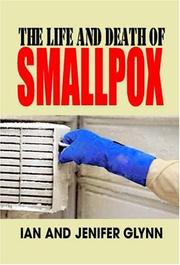
A physiologist and a historian write the accessible overview: the virus, the clinical course, the historical toll and the outline of how it was defeated. It gives you the whole shape in one readable volume before you go deeper anywhere.
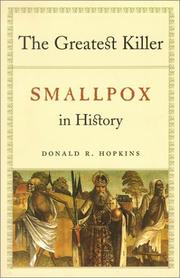
Hopkins ran smallpox eradication programmes himself and then wrote the standard history of the disease across every continent and several millennia. Read it second, for the depth and the primary sources that the shorter overview can only gesture at.
Inoculation, vaccination, and resistance
BeginnerTrace the two great interventions — variolation from the Ottoman world and Jenner's cowpox vaccine — and understand why compulsory vaccination provoked one of the first mass health protest movements.
▸ Study plan for this stage
Pace: Six to seven weeks for three books totalling around 1,175 pages. Carrell's The Speckled Monster is 474 pages of narrative history and reads fastest. Williams's Angel of Death is 425 pages and archival — slower, and worth slowing down for. Durbach's Bodily Matters is 276 pages of academic social hist
- Variolation as a genuinely dangerous procedure — deliberate infection with live smallpox, carrying roughly a 1 to 2 percent mortality — which is why opposition to it was a reasonable risk judgement rather than superstition
- The two transmission routes into the English-speaking world: Lady Mary Wortley Montagu bringing the Ottoman practice to London, and Onesimus, an enslaved West African man, describing it to Cotton Mather in Boston — with Zabdiel Boylston taking the clinical risk
- Jenner's cowpox observation and the crucial difference between inoculating with smallpox and vaccinating with a related but milder virus
- How much of the standard Jenner story does not survive Williams's archive work — the priority disputes, the earlier practitioners, and the parts of the legend that were constructed afterwards
- The Victorian compulsory vaccination acts and the arm-to-arm technique that made them frightening: before glycerinated calf lymph, vaccination genuinely could transmit syphilis and erysipelas
- Durbach's argument that the anti-vaccination movement was a working-class political movement about bodily autonomy, state power and class-differentiated enforcement — not a failure of public understanding
- The conscientious objection clause of 1898 as the movement's concrete legislative achievement, and the precedent it set
- Why would a rational person in 1721 Boston refuse variolation for their child? Give the numbers, not the sentiment.
- What did Jenner actually establish, what did he claim, and what does Williams show he got wrong or borrowed? Weigh the archive against the legend rather than choosing between them.
- Durbach argues that Victorian anti-vaccinationists had coherent political reasons. What were they, and which of those reasons were about the vaccine at all?
- Compulsory vaccination in Britain fell hardest on the poor. How did enforcement differ by class, and how much of the resistance is explained by that difference?
- Carrell reconstructs scenes and dialogue that the sources do not fully support. Where in The Speckled Monster can you see her doing this, and does it change what you trust the book for?
- Build a comparative table of variolation and vaccination: what is introduced, by what route, with what mortality, with what infectiousness to bystanders. The bystander row is the one most readers omit and it explains a great deal of the opposition.
- Take one chapter of Williams's Angel of Death and list every claim about Jenner that contradicts the version you were taught at school. The length of that list is the exercise.
- Write 300 words stating the Victorian anti-vaccinationist case in its own terms, using Durbach's evidence and no anachronism. Then write 100 words on what has and has not carried forward into modern arguments — and mark clearly which part of that second paragraph is your inference rather than Durbach's finding.
- Find a passage in Carrell where a scene is dramatised and check her endnotes for what the source actually supports. Doing this once teaches you how to read popular history for the rest of this path.
Next up: With both interventions and the fight over compelling them in hand, the next stage narrows to one country and shows smallpox acting on history rather than just being acted upon.
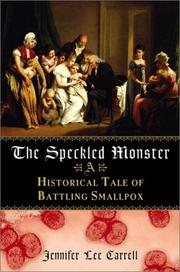
The story of how variolation reached Britain and Boston in the 1720s, through Lady Mary Wortley Montagu and Zabdiel Boylston. It is narrative history and reconstructs some scenes, but the underlying account of a dangerous procedure being adopted against fierce opposition is sound and sets up everything after.

A medical historian's account of Jenner, the cowpox experiments and the messy real history of vaccination's adoption — including how much of the standard Jenner legend does not survive contact with the archive.
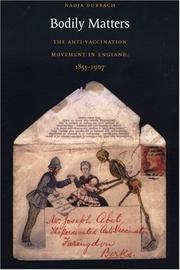
The Victorian anti-vaccination movement taken seriously as a political phenomenon, rooted in class, bodily autonomy and distrust of the state rather than in simple ignorance. Essential if you want to understand vaccine resistance as something with a long, comprehensible history.
Smallpox and American history
IntermediateSee the disease as a historical actor — shaping the Revolutionary War, indigenous populations and the legal limits of public health power in the United States.
▸ Study plan for this stage
Pace: Five weeks. Fenn's Pox Americana is 384 pages, tightly argued, and the appendix on evidence and estimates is not optional — read it. Willrich's Pox is 427 pages of legal and social history and reads more briskly. Take Fenn first, then Willrich; they are separated by more than a century but Willrich'
- Fenn's central finding: the 1775 to 1782 epidemic was continental, not colonial, spreading from Mexico to the Pacific Northwest and Hudson Bay, and most of its dead were Native people far from any battlefield
- Smallpox as a military factor — the failed Quebec campaign, Washington's decision to variolate the Continental Army, and the asymmetry between immune British regulars and susceptible American recruits
- The methodological problem Fenn confronts head on: reconstructing an epidemic across societies that left no written records, using fur trade ledgers, mission registers, oral tradition and archaeology
- The Fort Pitt episode of 1763 and the question of deliberate transmission — read what Fenn establishes from the documents and note carefully where she says the evidence stops
- Willrich's turn-of-the-century epidemics: the mild variola minor strain in the American South, the resulting complacency, and the coercive vaccination campaigns that followed anyway
- Vaccination enforced along racial and class lines — the raids on Black neighbourhoods and immigrant tenements — and how that history shaped durable distrust of public health authorities
- Jacobson v. Massachusetts (1905), the Supreme Court decision upholding compulsory vaccination, and why it remains the foundation of American public health law
- The tension both books expose between public health power and individual liberty, which neither author resolves and which the reader is not meant to resolve either
- How does Fenn establish the geographic extent of the 1775 to 1782 epidemic, and how strong is the evidence at the western and northern edges of her map?
- How much did smallpox shape the outcome of the Revolutionary War? Distinguish what Fenn demonstrates from what she suggests.
- On deliberate infection at Fort Pitt: what do the documents establish, what remains contested, and where does Fenn decline to go further? Report her limits rather than substituting a verdict.
- Willrich shows vaccination enforced very differently across race and class. What were the mechanisms, and how did the resulting distrust persist after the epidemics ended?
- What did Jacobson actually hold, and what did it not hold? Read the decision's limits as carefully as its grant of power.
- Fenn and Willrich together cover 130 years of the same country. What changed about the state's capacity to compel, and what did not change about the resistance?
- Redraw Fenn's epidemic map from her text and evidence, marking which regions rest on strong documentation and which on inference. The exercise makes the book's methodological achievement visible in a way reading alone does not.
- Write 200 words on Washington's variolation decision as a military problem — risk, timing, secrecy, the danger of a variolated army being temporarily unfit.
- Read Willrich's account of the Jacobson case, then write the majority's reasoning and the strongest dissenting position in a paragraph each. Do not resolve it; the point is to hold both.
- Compare one enforcement episode in Willrich with one in Durbach from the previous stage. Write a page on what the two states had in common and where the American racial dimension makes the comparison break down.
Next up: Two centuries of national campaigns that never quite finished the job set up the obvious question — how was it finally done — and the next stage is answered by the two men who did it.
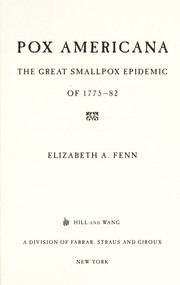
Fenn reconstructs the continental epidemic of 1775 to 1782 and shows it altering the Revolutionary War and devastating Native nations far beyond the colonies. A landmark of environmental and epidemiological history, and the best single demonstration of what smallpox did to a society.
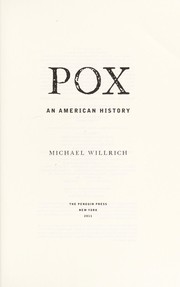
The turn-of-the-century American epidemics and the compulsory vaccination fights they produced, up to the Supreme Court case that still governs public health law. It carries Durbach's themes into a different legal and racial context.
The eradication campaign
IntermediateUnderstand how eradication was actually achieved — surveillance and containment rather than universal vaccination — and what it cost politically and personally to do it.
▸ Study plan for this stage
Pace: Four weeks. Henderson's Smallpox: The Death of a Disease is 344 pages and Foege's House on Fire is 240 — both are written by participants for general readers and read quickly. Read Henderson first for the programme-level view from WHO headquarters, then Foege for the field. The order matters: Foege'
- Surveillance and containment as the strategy that actually worked — find every case, vaccinate everyone around it — as against the original plan of vaccinating 80 percent of every population
- The origin of ring containment in Foege's account: a vaccine shortage in eastern Nigeria in 1966 forcing a decision to target rather than blanket, and the discovery that it worked better
- The bifurcated needle and the freeze-dried heat-stable vaccine — two unglamorous technical developments without which the field campaign was not possible
- Why smallpox's transmission properties made containment viable: slow spread, visible rash, no asymptomatic carriers, so every chain could in principle be seen and cut
- The political and bureaucratic obstacles Henderson details — WHO's own scepticism, funding fights, national sovereignty, and working across the Cold War divide with Soviet cooperation
- The endgame in India, Bangladesh and finally the Horn of Africa: house-to-house search, reward payments for reported cases, and Ali Maow Maalin in Somalia in 1977 as the last naturally occurring case
- The Janet Parker laboratory infection in Birmingham in 1978 — the last smallpox death, from a laboratory rather than from nature, which is what makes the next stage's question live
- The limits of a participant account: Henderson is defending decisions he made, and should be read as testimony rather than as neutral history
- Why did mass vaccination fail to eliminate smallpox even where coverage was high, and what exactly did surveillance and containment do differently?
- Reconstruct Foege's Nigerian decision in 1966. What were his options, what did he choose, and how quickly did the evidence come in?
- What made international cooperation possible on this campaign during the Cold War, and how much of it was luck rather than design?
- Henderson and Foege were on opposite ends of the same programme and do not always describe it identically. Where do their accounts diverge, and what does each man's position explain about his emphasis?
- Both authors are describing their own work. Which claims in each book would you want independent corroboration for before repeating them?
- Draw a ring containment operation as a flowchart, from case detection to the outer boundary of vaccination. Then write beside it which property of variola from stage one each step depends on.
- Write 200 words on why the bifurcated needle mattered. It is a piece of bent wire, and explaining its significance is a good test of whether you understood the logistics.
- Trace the final chain of transmission to Ali Maow Maalin in 1977 using Henderson's account. Following one chain to its end is the clearest possible demonstration of what containment means.
- List three claims Henderson makes about a decision he personally made, and note for each what evidence he offers beyond his own recollection. This is how to read a participant history without either dismissing it or swallowing it.
- Compare Foege's and Henderson's accounts of the same phase of the Indian campaign side by side, and write a paragraph on what the headquarters view sees that the field view does not, and the reverse.
Next up: The disease is gone from nature but the virus is not gone from the world, and the last stage takes up the stocks that remain and the argument about what to do with them.

Written by the man who directed the World Health Organization's eradication programme. It is a participant's account rather than a detached history, but no one else can explain the operational decisions, the bureaucratic fights and the final cases from that vantage point.
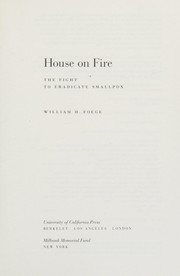
Foege developed the ring containment strategy — find each case, vaccinate the circle around it — that made eradication feasible when mass vaccination was failing. Read it after Henderson for the field-level view of the same campaign and the origin of the idea that won.
What is left in the freezer
IntermediateReckon with the surviving virus stocks, the Soviet weaponisation programme, and the argument over whether the last samples should be destroyed.
▸ Study plan for this stage
Pace: Three weeks. Tucker's Scourge is 304 pages of careful biosecurity history; Preston's The Demon in the Freezer is 266 pages and reads like a thriller in two or three sittings. The order in this path is deliberate: read Tucker first for the documented record and Preston second, precisely so that you m
- The two official repositories — the CDC in Atlanta and VECTOR in Koltsovo, Russia — and the repeatedly postponed WHO deadlines for destroying them
- Biopreparat and the Soviet weaponisation programme: industrial-scale variola production in violation of the Biological Weapons Convention, documented largely through defector testimony, and the evidentiary limits that come with that
- The destruction debate on its merits: retentionists argue the stocks are needed for antiviral and vaccine research and that destruction is unverifiable anyway; abolitionists argue that any stock is a risk and that destruction sets a norm. Both cases have serious people behind them
- Why destruction cannot be verified — the sequence is published and undeclared stocks cannot be ruled out — which cuts in favour of both camps depending on which risk you weight
- The post-2001 anthrax letters as the context for Preston's book, and how a distinct pathogen scare drove the smallpox threat assessment
- The waning of population immunity: routine vaccination ended around 1980, so most people alive now have no protection, which is the fact that makes the debate more than academic
- Preston's narrative method — compression, focus on a few vivid figures, and a framing that critics say overstates the likelihood of an attack. Read him for the texture and Tucker for the probabilities
- Synthetic biology as the development that arguably makes the destruction question moot, and which postdates both books
- Set out the strongest case for retaining the official stocks and the strongest case for destroying them, each in a paragraph, using Tucker's evidence. Do not conclude — establish which factual disagreement the two camps actually turn on.
- What is the documentary basis for what is known about Biopreparat, and how much rests on the testimony of a small number of defectors?
- Where does Preston's account of the threat go beyond what Tucker's evidence supports, and where does Preston have material Tucker does not?
- Given that destruction is unverifiable, what would destroying the declared stocks actually accomplish? Answer both as a security measure and as a norm.
- The end of routine vaccination means population immunity has largely lapsed. How does that change the risk calculation from the one made in 1980?
- Build a two-column argument sheet on destruction versus retention, filling both columns from Tucker before you form a view. Then mark which entries are empirical claims and which are value judgements — the argument is mostly the second kind wearing the first kind's clothes.
- Pick one dramatic passage from Preston and check its factual spine against Tucker's treatment of the same events. Write a paragraph on what the thriller framing adds and what it distorts.
- Write 300 words on what you would advise the WHO to do with the remaining stocks, citing specific evidence from both books, and end by naming the single fact that would most change your recommendation.
- Return to the clinical timeline you drew in stage one and write a paragraph on what a smallpox case in a modern city would look like — who would recognise it, and how long detection would take in a population of clinicians who have never seen one.
- Write a final page on the whole path: a disease described, an intervention fought over, a campaign that succeeded, and a residue that will not go away. Naming what remains unresolved is the honest ending.
Next up: This is the end of the path — the only human disease ever eradicated, followed from its clinical course to the freezers where the last of it still sits — and the natural next step is the polio eradication effort, which has spent thirty years trying to repeat this and learning how unusual smallpox was.
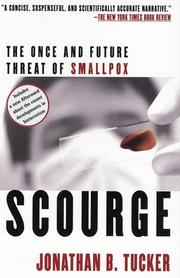
A biosecurity specialist's history of smallpox as a weapon, covering the Soviet programme and the destruction debate with more rigour than the popular treatments. It is the sober version of the story the next book tells dramatically.
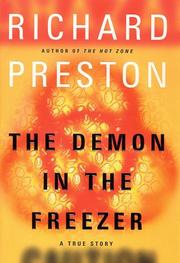
Preston's narrative of the remaining stocks and the post-2001 bioterror scare is the most widely read book on the subject and the most gripping. Save it for last and read it against Tucker, because Preston's thriller framing has been criticised for overstating the threat.
Discussion
Keep reading
Paths that share books, cover the same subject, or open a related topic.