Best Books on Vaccines and Immunization, in Reading Order
Understanding vaccines properly requires three separate things: how the immune system works, how a vaccine is actually built and tested, and why a technology with an unusually strong evidence base has provoked resistance for two hundred years. This path takes them in that order, ending with the field's standard reference. It is written to explain the science and the history of a public argument — it is not medical advice, and decisions about any individual's immunisation belong with a clinician who knows their circumstances.
How Immunity Works
BeginnerUnderstand innate and adaptive immunity, antibodies, T and B cells, and immunological memory well enough to follow what a vaccine is trying to provoke.
▸ Study plan for this stage
Pace: Four to five weeks for about 815 pages. Read Immune (368 pages) first and do not rush it — Dettmer builds cell type on cell type and the illustrations are load-bearing, so read it somewhere you can look at the diagrams properly, roughly a chapter a sitting over two to three weeks. An Elegant Defense
- Innate versus adaptive immunity: the fast, general system you are born with — macrophages, neutrophils, complement — and the slow, specific one that learns
- Antigen presentation as the hinge between the two systems, with dendritic cells carrying material from the site of infection to the lymph nodes where the adaptive response is assembled
- B cells and antibodies: what an antibody physically does to a pathogen — neutralising, tagging for destruction, activating complement — rather than the vague notion of fighting it
- T cells in their two main roles, helper cells that license and coordinate and killer cells that destroy infected cells, and why a vaccine that raises antibodies alone is doing only part of the job
- Immunological memory as the entire basis of vaccination: memory B and T cells persist after the infection clears, so the second encounter is met in days rather than weeks
- MHC and self-recognition, and the resulting fact that the immune system's central problem is distinguishing you from not-you
- What Richtel's four patients demonstrate about failure modes — immunodeficiency, autoimmunity and cancer are three different ways the same machinery goes wrong, and each one illuminates what normal function is doing
- Why the system is calibrated rather than maximised: too little response is infection, too much is autoimmunity and inflammation, and almost every clinical problem lives at one end or the other
- Trace what happens from a splinter breaking the skin to an antibody appearing in the blood. Name the cells in order.
- What is the difference between a B cell and a T cell, and what does each contribute that the other cannot?
- What physically is immunological memory, and where does it live?
- In Richtel's cases, what does HIV do to the system that autoimmunity does not, and vice versa?
- Why does the immune system need to be restrained as well as activated, and what happens when the restraint fails?
- Draw the adaptive immune response from antigen to memory cell on one sheet of paper without looking. Redo it after finishing the book and compare.
- Write plain-language definitions of antigen, antibody, adjuvant, attenuation and titre. You will meet all five constantly from the next stage onward.
- For each of Richtel's four patients, write two lines: which component failed and what the failure produced. The four together are a map of the system.
- Take one piece of vaccine coverage from a newspaper and mark every immunological term used. Then check whether the article uses each one correctly.
Next up: Knowing what a vaccine is trying to provoke is what makes the next stage's manufacturing detail meaningful rather than technical — including the case where the provocation went wrong.
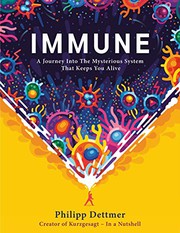
The clearest general-audience explanation of the immune system available, heavily illustrated and built around mechanisms rather than metaphors. Read it first: nothing else in the path makes proper sense without the cell types it introduces.

Follows four patients whose immune systems failed in different directions — cancer, HIV, autoimmunity — which shows the same machinery from the clinical side. Read second, as the applied companion to Dettmer's schematic.
How Vaccines Are Actually Made
BeginnerFollow real vaccines from laboratory to licensure, including a catastrophic manufacturing failure and a modern platform developed under emergency conditions.
▸ Study plan for this stage
Pace: Ten to twelve weeks for roughly 1,500 pages, the longest stage in the path. Polio (368 pages) first over three weeks. Vaccinated (254 pages) is the shortest and reads in a week. The Vaccine Race (522 pages) is the densest and most detailed; give it four weeks. Vaxxers (352 pages) is written in near-
- Inactivated versus live attenuated vaccines as the central technical choice, embodied in Salk and Sabin, with different risk profiles, different manufacturing demands and different failure modes
- The 1954 Francis field trial as the largest medical experiment of its era, and what a randomised, placebo-controlled trial at that scale actually requires
- The 1955 Cutter incident: a manufacturer's improperly inactivated batches paralysed children and killed some of them, which is the documented case that proves safety failures are real events with traceable causes
- Hilleman's technical repertoire in Vaccinated: attenuation by serial passage, adjuvants, combination vaccines, and the mumps strain he isolated from his own daughter
- Human diploid cell strains and WI-38 in Wadman's account, derived from an aborted foetus in 1962, and the vaccines built on it — the ethical question here is a real historical one, not an internet rumour, and it is better understood than avoided
- Consent and ownership in tissue sourcing, and the dispute between Leonard Hayflick and the institutions over who owned the cells, which the triumphal histories pass over
- Plotkin's RA27/3 rubella vaccine and the 1964 rubella epidemic that motivated it, which is the clearest case in the path of what a vaccine prevents
- The Oxford ChAdOx1 platform in Vaxxers: a viral vector designed in advance for a pathogen not yet known, and what a modern platform actually compresses — manufacturing at risk and overlapping trial phases — versus what it cannot compress, which is the number of participant-events a trial needs to re
- What is the difference between Salk's and Sabin's vaccines, and what are the advantages and risks of each?
- What exactly went wrong at Cutter in 1955, and what changed in regulation afterwards?
- How did Hilleman attenuate a virus, and what does serial passage do to it?
- What is WI-38, where did it come from, and which vaccines were made using it?
- Which steps of vaccine development did the Oxford team run in parallel in 2020, and which steps could not be shortened at all?
- Draw the development pipeline once — preclinical, phase I, II, III, licensure, phase IV surveillance — and mark what each phase is powered to detect. Then mark on the same diagram what the Oxford team overlapped.
- Write 300 words on the Cutter incident as a case study: what failed, who was responsible, and what the response was. Being able to state a real safety failure accurately is more useful than being able to deny that any exist.
- Read Wadman's account of the WI-38 origin and write a paragraph stating the ethical question fairly, without resolving it. This is an exercise in describing a hard question before arguing about it.
- Compare the Francis trial of 1954 with the Oxford trial of 2020 on four axes: size, randomisation, duration, and how the endpoint was measured. The comparison is the best available answer to whether the 2020 vaccines were rushed.
Next up: You now know how these things are built and tested, which is the necessary background for the next stage's question: why a technology with this evidence base has been resisted for two hundred years.
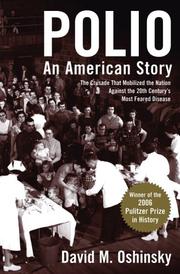
The Salk and Sabin vaccines, the field trials, the rivalry and the 1955 Cutter manufacturing disaster that killed children with an improperly inactivated batch. Start here: it is the best-told case, and it makes clear that safety failures are real events with documented causes rather than rumours.
Maurice Hilleman, who developed more of the routine childhood vaccines than anyone else, told by a vaccine developer. It is the most direct account of the technical work — attenuation, adjuvants, combination — and Offit is open about being a partisan for the field.

The WI-38 cell line, derived from an aborted foetus, and the vaccines built on it. Read third because it introduces the ethical questions about tissue sourcing and consent that the triumphal accounts above pass over quickly.
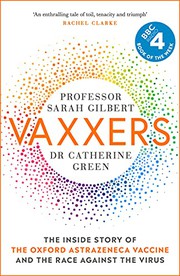
The Oxford COVID-19 vaccine described week by week by the scientists who built it. It brings the sequence up to date and shows what a modern platform compresses and what it cannot, which is the point most contested in the following stage.
Two Centuries of Resistance
IntermediateUnderstand vaccine refusal as a recurring historical phenomenon with identifiable causes, and trace the specific modern claims to their sources.
▸ Study plan for this stage
Pace: Six to seven weeks. Pox (427 pages) first over three weeks — it is academic history and worth the pace. Deadly Choices is short and reads in a week; note its author is an interested party and read accordingly. The Panic Virus (429 pages) is the most carefully reported of the three and deserves two t
- Compulsion as the flashpoint — the American smallpox campaigns involved vaccination squads, quarantine and coercion, and much of the resistance was to the coercion rather than to the vaccine
- Jacobson v. Massachusetts in 1905, the case that established the constitutional basis for compulsory vaccination in the United States, and the civil-liberties argument that lost
- Who was compelled: Willrich shows the campaigns fell hardest on the poor, on immigrants and on Black communities, which matters for understanding present-day distrust
- The 1970s and 1980s pertussis scare that Offit traces — a British case series, a widely broadcast American television documentary, and the organised movement that followed
- The National Childhood Vaccine Injury Act of 1986 and the compensation programme it created, which exists precisely because rare vaccine injuries are real and adjudicable
- The 1998 autism claim in Mnookin's reconstruction: the paper, the press conference, the failure of replication, the investigative journalism, and the retraction twelve years later
- Thimerosal as a separate claim from the autism claim, removed from childhood vaccines in the United States as a precaution, after which autism diagnoses continued to rise — the cleanest natural experiment in the whole controversy
- Mnookin's real subject, which is not the science but the media dynamics and the parents in between, and why the argument persisted long after the evidence stopped being contested
- What did the smallpox vaccination squads actually do, and what were the specific objections raised at the time?
- What did Jacobson v. Massachusetts decide, and what limits did it leave in place?
- How did the 1970s pertussis scare develop, and what happened to vaccination rates and to pertussis cases in the countries affected?
- Why does a vaccine injury compensation programme exist, and what does its existence establish?
- Mnookin argues the autism claim survived its own refutation. What does he say kept it alive?
- Build a timeline of vaccine resistance from 1800 to the present, marking each episode's trigger, its central claim, and what happened to disease rates. The repetition of structure across two centuries is the finding.
- Take the pertussis scare and the autism claim and write out what the two have in common in terms of how they started and spread. Offit and Mnookin cover them separately and the parallel is worth constructing yourself.
- Read the thimerosal story and write 200 words on why removing it turned out to be a decisive test. This is an exercise in recognising a natural experiment.
- For each of the three books, write one sentence on the author's position and interest. Doing this deliberately is a better habit than trying to find an author with no position.
Next up: Two stages of evidence and one of refutation still leave the question these books do not answer: why debunking underperforms, which is exactly where the next two authors start.
Compulsory smallpox vaccination in the early-1900s United States, and the resistance movement, court cases and civil-liberties arguments it produced. Start here to see that organised refusal long predates any modern controversy.
Traces the modern anti-vaccine movement from the 1970s pertussis scare onward. Offit is an interested party — he co-developed a rotavirus vaccine and says so — so read him for the documentary trail rather than for neutrality.

A journalist's reconstruction of the autism claim: the paper, its retraction, the media dynamics, and the parents caught in between. Read it last in this stage because it is the most careful about why the argument persisted after the evidence was settled.
Risk, Trust and the Honest Case
IntermediateMove beyond debunking to the harder question of how public trust is actually built, and what the strongest good-faith version of hesitancy looks like.
▸ Study plan for this stage
Pace: Three weeks for 420 pages, and this is the stage to read slowly despite the short page count. On Immunity (220 pages) is an essay and rewards rereading; take two weeks and go back over the passages you resist. Stuck (200 pages) is an argument and reads in a week. Read Biss first: she supplies the sy
- Biss's method of taking hesitant parents seriously as reasoners — as people acting on real intuitions about bodies, purity and contamination rather than as people missing a fact
- Vaccination as a commons: immunity is partly held collectively, so the individual decision is never purely individual, which is the moral core of Biss's book
- Class and privilege in the pattern of refusal, and Biss's uncomfortable observation that opting out is often available to exactly the people best protected by everyone else's participation
- Metaphor as the actual battleground — the language of purity, toxins, natural and unnatural does more argumentative work in this debate than any datum, and Biss takes the metaphors apart rather than dismissing them
- Larson's central claim: hesitancy is a symptom of degraded trust in institutions, so information deficits are the wrong diagnosis and information campaigns are therefore the wrong treatment
- The Vaccine Confidence Project's approach of monitoring rumour and sentiment as an epidemiological quantity in its own right
- Case studies where trust collapsed for identifiable local reasons — Larson's examples show that confidence falls for specific, often reasonable historical causes rather than through general irrationality
- Why the debunking approach of the previous stage keeps underperforming, and what building trust would actually require of health institutions
- What does Biss mean by treating immunity as a commons, and what obligations does she think follow?
- Which metaphors does Biss identify as doing the heaviest work in vaccine anxiety, and where do they come from?
- What is Biss's observation about class and refusal, and why is it uncomfortable from both directions?
- What is Larson's distinction between hesitancy and refusal, and why does it matter operationally?
- If Larson is right that the problem is trust, what should a health authority do differently tomorrow?
- Write out the strongest good-faith version of a hesitant parent's reasoning in 300 words, with no strawmanning and no rebuttal. If you cannot do it, you have not read Biss properly.
- Take one metaphor Biss examines — toxin, purity, natural — and trace where you have encountered it in the past month. It will be more places than you expect.
- Pick one of Larson's confidence-collapse cases and write a short account of the local history behind it. The exercise disproves the idea that distrust arrives from nowhere.
- Write 500 words answering the question the whole path has been building to: what would actually persuade someone, given everything in the previous three stages? Then mark which of your proposals are about information and which are about trust.
Next up: Every argument in this path eventually turns on a specific claim about a specific vaccine, which is what the final stage exists to let you check.
An essayist and new mother thinks through vaccination as a question about bodies, class, purity and collective obligation. It takes hesitant parents seriously as reasoners rather than as targets, which no other book in the path does as well.

An anthropologist who runs the Vaccine Confidence Project argues that hesitancy is a symptom of broken trust in institutions rather than of missing information. It is the natural last argumentative book, because it explains why the debunking approach in the previous stage keeps underperforming.
The Reference
BeginnerSee how the field documents each vaccine's development, efficacy data, schedule and adverse-event profile.
▸ Study plan for this stage
Pace: Not a book to read through — at 996 pages in the edition our catalogue holds it is a professional reference organised as one chapter per vaccine, and later editions run considerably longer. Spend a week learning its structure and looking up four or five vaccines you have opinions about, then keep it
- The standard anatomy of a chapter in Plotkin: the pathogen and its epidemiology, the immunology of protection, the development history, efficacy trial data, the recommended schedule, and known adverse events with their rates
- Rates rather than adjectives: the reference states adverse events with frequencies and denominators, which is the specific thing missing from almost all public argument about vaccine safety
- Correlates of protection — the measurable immune marker that predicts protection for a given vaccine — and why some vaccines have a clean one and others do not
- Schedules as engineered objects, with intervals chosen for immunological reasons that trace directly back to memory-cell biology from the first stage
- Post-licensure surveillance systems, and how a rare adverse event is detected after a trial too small to find it
- Editions matter: vaccinology moves, so check which edition you are consulting and against what date its data closes
- How to use it against the rest of the path — take a claim from Offit, Mnookin, Biss or a news article, find the relevant chapter, and see what the field's own reference says
- For one vaccine of your choosing, what is the reported efficacy, from which trial, and with what endpoint?
- What adverse events are documented for that vaccine, and at what rates?
- What is a correlate of protection, and does the vaccine you chose have an established one?
- Why is the schedule for that vaccine spaced the way it is, in immunological terms?
- Which claim from an earlier stage of this path did the reference confirm, qualify, or contradict?
- Pick three vaccines and read only their adverse-event sections. Write down the rates. Having real numbers in your head is the single most useful outcome of this stage.
- Take one specific claim you encountered in Deadly Choices or The Panic Virus, look it up here, and write a paragraph on what the reference actually says.
- Read one full chapter end to end for a vaccine developed in the period covered by Vaccinated or The Vaccine Race, and compare the technical account with the narrative one. The two are describing the same work in two registers.
- Write a final one-page summary of what you would now say to someone who asked how vaccines work and why some people refuse them — grounded in mechanism from stage one, development from stage two, history from stage three, trust from stage four, and numbers from here. Note where you would tell them to ask a clinician instead.
Next up: This is the end of the path — immunology, manufacture, two centuries of resistance, the trust problem and the professional reference — and the natural next step is following one vaccine's primary literature from its first trial publication to its current schedule.
The standard professional reference, with a chapter per vaccine covering immunology, trial data, schedules and known adverse events. Use it to check specific claims made anywhere earlier in the path; it is written for clinicians and researchers, not as guidance for individual decisions.
Discussion
Keep reading
Paths that share books, cover the same subject, or open a related topic.