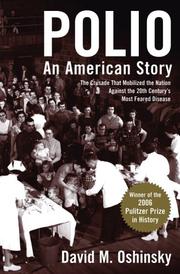
Start with Polio by David M. Oshinsky. It won the Pulitzer, it is catalogued under that bare title, and it holds the whole American arc in one narrative: the summer epidemics, the March of Dimes, the field trial, and the feud between Jonas Salk and Albert Sabin. Everything else on this path is a specialist deepening of something Oshinsky covers in a chapter.
This is a history and public health reading list rather than medical advice, and the facts it rests on are not in dispute. Salk's killed-virus vaccine was licensed in 1955 after a field trial involving roughly 1.8 million children; Sabin's live oral vaccine followed at the start of the 1960s and became the workhorse of global campaigns because it was cheap, needed no syringe and produced intestinal immunity. Paralytic polio fell from tens of thousands of American cases a year to none of local origin. The eradication campaign begun in 1988 has since reduced wild poliovirus to a handful of cases in a shrinking number of places, and two of the three wild serotypes have been certified eradicated worldwide.
What the epidemics were like
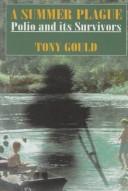
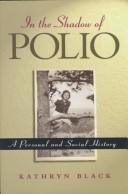
A summer plague comes second because it does what Oshinsky's institutional narrative cannot: Tony Gould hands long stretches of the story to survivors in their own words, and he covers Britain and Australia rather than the United States alone. In the Shadow of Polio is shorter and closer in — Kathryn Black's account of her mother, paralysed in the 1954 epidemic, and the fastest route to what an iron lung meant for a household rather than for a ward.
Making the vaccine
Splendid Solution is Jeffrey Kluger's close account of Salk and the killed-virus programme. It is sympathetic to Salk and best read knowing that; Oshinsky handles the same rivalry more even-handedly. Patenting the sun is the book on the 1954 trial itself — how you enrol nearly two million children, what a placebo control meant to the parents involved, and how the March of Dimes turned a charity into a research funder.
The Cutter incident is the one most people have never heard of and should. In April 1955, weeks after licensure, vaccine batches from Cutter Laboratories in California went out containing live virus that had not been fully inactivated. Around 200,000 children received them; roughly 40,000 developed abortive polio, about 200 were left with some degree of paralysis and ten died. The episode is the origin of modern federal vaccine regulation and of a good deal of American vaccine liability law. Paul Offit is a paediatrician and vaccine developer, and he argues that the legal consequences ultimately went too far in one direction — a clearly stated position, worth holding in view as you read a book that is otherwise a careful reconstruction.
Aftermath, rehabilitation and dissent
Living with Polio is Daniel Wilson, a historian who had polio himself, assembling hundreds of survivor accounts into a history of the experience — diagnosis, the ward, rehabilitation, and post-polio syndrome decades later. Polio Wars is Naomi Rogers on Sister Elizabeth Kenny, the Australian nurse whose hot packs and early movement therapy challenged orthodox immobilisation; Rogers is sympathetic to Kenny and critical of the establishment that fought her, and the book works as a case study in how professional authority handles an outsider. Nemesis closes the stage and is a novel — Philip Roth on a 1944 Newark epidemic through a playground director who cannot work out whether he is a carrier. It proves nothing, and it catches the moral atmosphere of an epidemic without a vaccine better than any history here.
The unfinished eradication
Polio by Thomas Abraham shares a display title with Oshinsky's book and is a completely different one: the best general account of the Global Polio Eradication Initiative, its repeatedly missed deadlines, and the complication that now dominates the endgame. Because the oral vaccine contains live attenuated virus, it can in rare cases revert to a neurovirulent form and spread in under-immunised communities, and for several years running these circulating vaccine-derived polioviruses have caused more paralysis worldwide than wild virus has. That is a genuine cost of the tool that made eradication feasible, and the campaign's response — including a more genetically stable oral vaccine for type 2 — is part of the story Abraham tells.
Chasing polio in Pakistan is the sharpest answer to why the last cases are hardest: Svea Closser's ethnography finds exhausted health workers, target-driven metrics and communities asked to accept polio drops while lacking clean water. Vaccine widens to the history of vaccination from Jenner onward, and Arthur Allen writes in favour of it while taking the historical injuries seriously. Deadly Choices is Offit again and is openly advocacy against the modern anti-vaccine movement — read it last and read it as one side of a live public argument. More on public health history sits on Discover.
Follow the full ordered path here: Polio and Its Eradication: The Best Books to Read First.