Self-compassion: the best books to quiet your inner critic and be kinder to yourself
This curriculum builds from the ground up — starting with the pioneering researcher who coined the term "self-compassion," then layering in practical tools for quieting the inner critic, and finally deepening into resilience, mindfulness, and the neuroscience that shows why these practices work. Each stage assumes the vocabulary and emotional groundwork laid by the one before it, so reading in order matters.
Foundations: What Self-Compassion Actually Is
BeginnerUnderstand the research-backed definition of self-compassion (self-kindness, common humanity, mindfulness), dispel common myths (e.g., that it breeds laziness or self-pity), and feel safe enough to explore the topic personally.
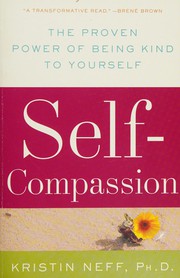
Neff is the leading academic researcher on self-compassion and this is the definitive starting point — it introduces the three-component model, the science behind it, and guided exercises. Reading it first gives you the core vocabulary every other book in this list assumes.

Germer, Neff's closest collaborator, translates the same research into a warmer, more therapeutic tone with step-by-step mindfulness practices. Reading it second reinforces the foundations while adding a clinical, compassionate-guide perspective that eases beginners into the exercises.
Quieting the Inner Critic
BeginnerIdentify the specific voice of self-criticism, understand where it comes from, and learn concrete techniques to reduce shame and negative self-talk in daily life.
▸ Study plan for this stage
Pace: 4–5 weeks, ~25–30 pages/day. Start with "Radical Acceptance" (approximately 2.5 weeks), then move to "I Thought It Was Just Me" (approximately 2–2.5 weeks). Allow time for reflection and exercises between books.
- The RAIN technique (Recognize, Allow, Investigate, Nurture) as a foundational practice for observing self-criticism without judgment
- Understanding shame as distinct from guilt and how it drives the inner critic's voice
- The concept of 'trance' in Brach's work: how habitual patterns of self-blame keep you stuck in loops of negative self-talk
- Identifying your specific inner critic narrative—the particular stories and beliefs it uses to attack you
- The role of vulnerability and imperfection in silencing shame; how perfectionism fuels the critic
- Compassionate witnessing: learning to observe your inner critic with curiosity rather than resistance
- The difference between self-compassion and self-indulgence; why the inner critic often masquerades as 'motivation'
- Shame resilience as a skill: recognizing shame triggers and having a concrete response plan
- What is the RAIN technique, and how does it help you relate differently to self-critical thoughts?
- How does Brach distinguish between being 'in trance' and being awake to your patterns? What does this mean for your inner critic?
- What is the difference between shame and guilt, and why does this distinction matter for quieting your inner critic?
- What are the specific narratives or beliefs your inner critic uses? Where do you think they came from (family, culture, past experiences)?
- According to Brown, how does perfectionism relate to shame, and what role does vulnerability play in shame resilience?
- What does it mean to 'compassionately witness' your inner critic, and how is this different from trying to eliminate or fight it?
- RAIN practice: Spend 5–10 minutes daily for one week observing a self-critical thought using Brach's RAIN technique. Write down what you Recognize, Allow, Investigate, and how you Nurture yourself.
- Inner critic voice journal: For 3–4 days, write down the exact words your inner critic uses when you make a mistake or feel inadequate. Identify recurring phrases, tone, and themes.
- Shame vs. guilt inventory: List 3–5 recent moments when you felt self-critical. For each, determine whether it was shame (I am bad) or guilt (I did something bad). Reflect on how the distinction changes your response.
- Trance-breaking practice: Identify one habitual self-critical loop you fall into (e.g., 'I made a mistake → I'm incompetent → I don't deserve success'). Practice interrupting it with a grounding technique (5 senses, breath, movement) for one week.
- Vulnerability storytelling: Share one 'imperfect' story about yourself with a trusted person, following Brown's model of shame resilience. Notice what happens to your inner critic when you speak it aloud.
- Compassionate witness meditation: Practice a 10–15 minute guided meditation where you observe your inner critic as a separate entity with curiosity. Record any shifts in how you relate to it.
Next up: By identifying your inner critic's specific voice and learning to witness it with compassion rather than resistance, you've created the foundation for the next stage: developing active self-compassion practices that directly counter shame and transform your relationship with difficulty.

This full-length book deepens the RAIN practice and addresses the 'trance of unworthiness' — the chronic background feeling that something is wrong with you. It bridges self-compassion with mindfulness and is ideal before moving into shame-focused work.
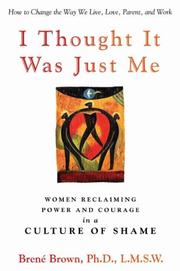
Brown's research on shame and 'common humanity' directly complements Neff's framework. Reading it here shows how shame fuels self-criticism and how connection — with others and with yourself — is the antidote, preparing you for resilience work ahead.
Building Resilience Through Self-Compassion
IntermediateMove from reducing self-criticism to actively building emotional resilience — learning to use self-compassion as a resource during difficulty, failure, and setbacks rather than only as a remedy after the fact.
▸ Study plan for this stage
Pace: 8–10 weeks, ~25–30 pages/day. Allocate 5–6 weeks for "Fierce Self-Compassion" (~400 pages) and 3–4 weeks for "The Gifts of Imperfection" (~250 pages), with 1 week for integration and reflection.
- The distinction between tender and fierce self-compassion: knowing when to soothe yourself and when to take assertive action in the face of difficulty
- Self-compassion as a proactive resource, not just a reactive tool—building it into your daily practice before crises occur
- How vulnerability and imperfection are sources of strength and resilience, not weakness or failure
- The role of shame-resilience in bouncing back from setbacks: recognizing shame triggers and using self-compassion to interrupt shame spirals
- Wholehearted living: accepting your imperfections while maintaining boundaries and taking meaningful action toward your values
- The practice of self-compassion in real-time during difficulty: using the three elements (mindfulness, common humanity, self-kindness) as an active coping strategy
- Letting go of perfectionism and the 'never enough' narrative as a foundation for genuine resilience
- What is the difference between tender and fierce self-compassion, and when should you activate each one?
- How can you use self-compassion proactively—before a crisis—to build emotional resilience?
- What role does vulnerability play in resilience, and how does accepting imperfection strengthen you?
- How do shame and self-criticism undermine resilience, and what is the self-compassion antidote?
- What does it mean to live wholeheartedly, and how does this relate to handling failure and setbacks?
- How can you apply the three elements of self-compassion (mindfulness, common humanity, self-kindness) in real-time when facing difficulty?
- Map your personal shame triggers using Brené Brown's framework from 'The Gifts of Imperfection,' then design a self-compassion response for each trigger that combines both tender and fierce elements.
- Practice the 'Fierce Self-Compassion' meditation from Neff's book daily for 2 weeks, noting how it shifts your response to a recurring difficulty or setback in your life.
- Identify one area where you pursue perfectionism or 'never enough' thinking. Write a letter to yourself from the perspective of someone who loves you unconditionally, using the language of self-compassion and acceptance from both books.
- Create a 'resilience toolkit' with 3–5 self-compassion practices (from both books) that you can deploy in real-time when facing failure or criticism—test each one during a small setback this week.
- Journal about a recent failure or setback using the 'common humanity' lens: how have others faced similar struggles? How does knowing this change your relationship to your own difficulty?
- Practice setting a boundary or taking assertive action on something you've been avoiding, then use fierce self-compassion to support yourself through the discomfort—reflect on how this differs from self-soothing alone.
Next up: This stage equips you with both the inner resources (self-compassion practices) and the conceptual framework (tender vs. fierce, vulnerability as strength) needed to move into the next stage, where you'll apply these tools to sustained life change, relational resilience, and building a compassionate identity that persists through ongoing challenges.

Neff's second book introduces the idea that self-compassion isn't only gentle — it also has a fierce, protective side that motivates change and sets boundaries. Reading it after her first book shows how the practice matures and becomes a full resilience strategy.

Brown translates her shame and vulnerability research into ten 'guideposts' for wholehearted living. It consolidates the resilience theme by showing how self-acceptance, rest, and play are not luxuries but necessities — a fitting capstone to the intermediate stage.
The Science Underneath: Mind, Brain & Compassion
IntermediateUnderstand the neuroscience and evolutionary psychology that explain why self-criticism feels automatic and why compassion-based practices measurably rewire the brain — giving you a durable, evidence-based rationale to sustain the practice long-term.
▸ Study plan for this stage
Pace: 6–7 weeks, ~25–30 pages/day. Start with "The Compassionate Mind" (weeks 1–4, ~350 pages), then move to "Why Won't You Apologize?" (weeks 5–7, ~200 pages). Allow 1–2 days between books for integration.
- The three-systems model of emotion (threat, drive, and soothing) and how self-criticism activates the threat system
- Evolutionary origins of self-criticism: why our brains evolved to be self-monitoring and threat-focused for survival
- The neuroscience of compassion: how compassionate practices activate the parasympathetic nervous system and soothing circuits
- Shame and the block to apology: how defensive reactions prevent genuine self-compassion and repair
- The role of the prefrontal cortex and vagal tone in shifting from threat to safety and connection
- Compassion as a trainable skill, not an innate trait: neuroplasticity and repeated practice rewire threat responses
- The difference between self-pity, guilt, and genuine self-compassion in the context of wrongdoing
- How apology (to self and others) integrates accountability with compassion, breaking cycles of shame and self-attack
- What are the three emotion-regulation systems Gilbert describes, and which one does self-criticism primarily activate?
- Why did self-critical tendencies evolve, and what survival advantage did they once provide?
- How does compassion-based practice physically change the brain, and what neural systems does it engage?
- What is the relationship between shame, defensive apology-blocking, and the inability to access self-compassion?
- How does the vagus nerve and parasympathetic activation relate to moving out of threat mode into a soothing state?
- What evidence does Lerner present that apology is a learnable process, and how does it connect to self-compassion?
- Map your own threat-drive-soothing system: for one week, notice moments when self-criticism arises and log which system is activated. What triggered the threat response?
- Practice the soothing rhythm breathing exercise from 'The Compassionate Mind' (slow, deep breathing synchronized with gentle hand placement on heart) for 5 minutes daily, noting changes in body sensations and mental state.
- Identify a recent moment of self-criticism and rewrite your internal dialogue using the three-systems framework: acknowledge the threat (what was feared), recognize the drive (what you were trying to achieve), and offer soothing (what a wise, compassionate friend would say).
- Conduct a personal apology audit: identify one situation (recent or past) where you owe yourself an apology for self-attack or harsh judgment. Write out Lerner's apology components (acknowledgment, explanation, genuine regret, repair, and commitment to change) directed at yourself.
- Create a 'compassionate mind' anchor: design a brief sensory ritual (e.g., a specific hand gesture, phrase, or image) that signals safety to your nervous system, and practice it daily to build neural associations with the soothing system.
- Debate yourself: write two perspectives on a personal failure—one from your threat-based self-critic and one from your compassionate mind. Notice the different language, assumptions, and outcomes each produces.
Next up: This stage equips you with the neuroscientific *why* behind self-compassion and the evidence that it rewires your brain; the next stage will translate this understanding into concrete, personalized practices you can integrate into daily life to sustain long-term change.

Gilbert, founder of Compassion-Focused Therapy (CFT), explains the evolutionary roots of the threat-based self-critical mind and the neuroscience of the soothing system. This is the most scientifically rigorous book in the list and rewards the reader who has already built an experiential foundation in earlier stages.

Lerner's work on accountability and self-forgiveness rounds out the curriculum by addressing a practical gap: how to hold yourself responsible for mistakes without collapsing into shame. It bridges the neuroscience of Gilbert with the lived relational reality of being human, and complements professional mental-health support beautifully.
Discussion
Keep reading
Paths that share books, cover the same subject, or open a related topic.