Confidence and self-esteem: the best books to feel more secure, in order
This curriculum begins with accessible, compassion-first foundations that gently challenge negative self-talk, then moves into the psychology of self-worth and vulnerability, and finally arrives at deeper cognitive and philosophical tools for lasting, internalized confidence. Each stage builds the emotional vocabulary and conceptual scaffolding needed for the next, so no book feels overwhelming or out of reach.
Foundations: Meeting Yourself with Kindness
BeginnerUnderstand what self-esteem and self-compassion actually mean, recognize your inner critic, and establish a safe, non-judgmental relationship with yourself as the starting point for all growth.
▸ Study plan for this stage
Pace: 4–5 weeks, ~25–30 pages/day. Week 1–2: "Self-Compassion" by Kristin Neff (~300 pages). Week 3–5: "The Six Pillars of Self-Esteem" by Nathaniel Branden (~400 pages). Allow 2–3 days at the end for review and integration.
- Self-compassion as a three-part practice: mindfulness, common humanity, and self-kindness—distinct from self-esteem and self-pity
- The inner critic and how it develops: recognizing your critical voice as learned, not truth
- Self-esteem as earned through six pillars: conscious living, self-acceptance, personal responsibility, self-assertiveness, purposeful living, and personal integrity
- The difference between self-esteem (earned confidence in your competence and worth) and self-compassion (unconditional kindness toward yourself)
- How self-judgment and perfectionism undermine both self-esteem and self-compassion
- The practice of mindful awareness: observing your inner critic without fusion or resistance
- Self-acceptance as the foundation: meeting yourself where you are, not where you think you should be
- What are the three components of self-compassion according to Kristin Neff, and how do they work together?
- How does Neff distinguish self-compassion from self-esteem, and why does this distinction matter?
- What is the inner critic, where does it come from, and what role does it play in undermining your confidence?
- What are Nathaniel Branden's six pillars of self-esteem, and how does each one contribute to genuine confidence?
- How does conscious living (the first pillar) relate to self-compassion and meeting yourself with kindness?
- What is the relationship between self-acceptance and the ability to grow and improve yourself?
- Inner Critic Dialogue: Spend 10 minutes writing down the critical thoughts you hear most often about yourself. Then rewrite each one as if your wisest, kindest friend were speaking to you instead. Practice this 3–4 times during the stage.
- Self-Compassion Break (daily): When you notice self-judgment or struggle, pause and practice Neff's three-step self-compassion break: acknowledge the difficulty (mindfulness), remind yourself others struggle too (common humanity), and place your hand on your heart while offering yourself kind words (self-kindness). Do this at least 5 times per week.
- Pillar Audit: For each of Branden's six pillars, write a brief assessment of where you stand (1–10 scale) and identify one concrete action to strengthen that pillar. Revisit this at the end of the stage.
- Mindful Self-Observation: Set a timer for 5 minutes daily and simply notice your thoughts and self-talk without trying to change them. Write down patterns you observe. Do this 4–5 times per week for 2 weeks.
- Values Clarification Exercise: Identify 3–5 core values that matter to you (from Branden's concept of purposeful living). For each, write one way you currently live in alignment with it and one way you could strengthen that alignment.
- Compassionate Letter: Write a letter to yourself from the perspective of someone who loves you unconditionally, acknowledging your struggles and imperfections with kindness. Read it aloud when you're struggling with self-judgment.
Next up: By establishing a non-judgmental relationship with yourself and understanding the difference between self-compassion and self-esteem, you're now ready to actively build confidence through concrete behavioral practices and skill-building in the next stage.

The ideal first book — Neff's research-backed framework replaces harsh self-judgment with kindness, common humanity, and mindfulness, giving you the emotional foundation everything else builds on.

A classic, clear definition of what self-esteem truly is (not arrogance or affirmations), establishing the psychological vocabulary you'll need for every subsequent stage.
Understanding the Inner Critic
BeginnerIdentify where your inner critic comes from, understand the stories you tell yourself about your worth, and learn practical tools to begin quieting self-sabotaging thought patterns.
▸ Study plan for this stage
Pace: 6–8 weeks, ~25–30 pages/day (alternating between books; start with "Mindset" Weeks 1–3, then "Feeling Good" Weeks 4–8)
- Fixed vs. growth mindset: How your beliefs about intelligence and ability shape your inner critic's voice and your response to failure
- The origin of your inner critic: How praise, criticism, and parental messages in childhood become internalized self-talk
- Cognitive distortions: The specific thinking patterns (catastrophizing, all-or-nothing thinking, overgeneralization) that fuel self-sabotage
- The thought-feeling-behavior loop: How negative thoughts directly trigger emotions and behaviors that reinforce low self-esteem
- Self-talk as malleable: The evidence that your inner monologue is not fixed truth but learned patterns you can identify and reshape
- Labeling and personalization: How you assign permanent negative meanings to events and take responsibility for things outside your control
- The role of effort and process: How reframing failure as feedback (not identity) quiets the inner critic's harshest judgments
- What is the difference between a fixed mindset and a growth mindset, and how does each one activate or silence your inner critic?
- Where did your inner critic's voice originate? What specific messages from your past do you hear it repeating?
- Can you identify at least three cognitive distortions you use regularly (e.g., catastrophizing, all-or-nothing thinking), and what situations trigger them?
- How does a negative thought lead to an emotion and then a behavior? Walk through one real example from your own life using the thought-feeling-behavior model.
- What is cognitive therapy, and how does identifying and challenging distorted thoughts help reduce self-sabotaging patterns?
- How can reframing a setback as 'data' or 'feedback' rather than 'proof of my inadequacy' change your inner critic's narrative?
- Mindset audit: For one week, notice moments when you feel stuck or defensive. Write down whether you're operating from a fixed mindset ('I'm just not good at this') or a growth mindset ('I haven't learned this yet'). Track which one appears most often.
- Inner critic origin story: Write a 1–2 page narrative about where your inner critic came from. What specific phrases does it use? Whose voice does it sound like? (Parent, teacher, peer?) What did that person value or criticize?
- Cognitive distortion journal: Over 2 weeks, capture 10–15 moments when you notice negative self-talk. Label the distortion (catastrophizing, overgeneralization, personalization, etc.) and rewrite the thought more accurately.
- Thought-feeling-behavior chain: Pick one recurring self-sabotaging pattern (e.g., 'I avoid speaking up in meetings'). Map the thought → feeling → behavior chain. What thought triggers it? What emotion follows? What action do you take?
- Disputation practice: Take three distorted thoughts from your journal. For each, gather evidence for and against it. Write a more realistic, balanced response using Burns' techniques (examining the evidence, considering alternatives, testing predictions).
- Growth mindset reframe: Identify one area where you have a fixed mindset (e.g., 'I'm not creative'). Write three specific, actionable steps you could take to develop that skill. Practice saying the growth-oriented version aloud daily for one week.
Next up: By identifying your inner critic's origins and learning to spot and challenge distorted thinking patterns, you'll be ready to move into the next stage—actively building self-compassion and resilience—where you'll learn to replace the inner critic's voice with a supportive inner mentor.
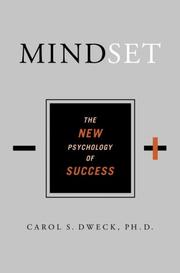
Dweck's fixed vs. growth mindset research directly explains why low confidence feels permanent — and proves it isn't, making it a powerful reframe before tackling deeper inner-critic work.

The gold-standard CBT workbook for recognizing cognitive distortions (all-or-nothing thinking, catastrophizing) that fuel the inner critic, with concrete exercises to challenge them.
Vulnerability, Shame & Belonging
IntermediateUnderstand shame as the core enemy of self-worth, learn how vulnerability and authenticity are the path through it, and begin building confidence that is rooted in genuine self-acceptance rather than performance.
▸ Study plan for this stage
Pace: 8–10 weeks, ~25–30 pages/day. Start with "I Thought It Was Just Me" (weeks 1–5, ~240 pages), then move to "The Gifts of Imperfection" (weeks 6–10, ~140 pages). Build in 1–2 reflection days per week.
- Shame as a distinct emotion from guilt: shame attacks the self, guilt addresses behavior; shame thrives in secrecy and silence, while vulnerability and connection dissolve it
- Shame resilience as a learnable skill: recognizing shame triggers, understanding your shame narratives, reaching out to trusted others, and speaking shame aloud to neutralize its power
- The shame-perfectionism cycle: how perfectionism and striving for flawlessness are often shame-driven attempts to avoid unworthiness, not genuine self-improvement
- Vulnerability as strength, not weakness: the courage to show up authentically, admit struggle, and be seen—even when there's no guarantee of acceptance—is the antidote to shame
- Authenticity and belonging: true belonging comes from being yourself, not from fitting in or earning approval; shame isolates, while vulnerability and authenticity create genuine connection
- The role of shame in self-esteem: low self-worth is rooted in shame, not lack of achievement; building real confidence requires addressing shame narratives and practicing self-compassion
- Imperfection as a gift: letting go of the exhausting pursuit of flawlessness and embracing your whole self—struggles, failures, and all—as worthy of love and belonging
- Wholehearted living: integrating courage, compassion, and connection to live authentically and build sustainable confidence grounded in self-acceptance, not external validation
- What is the difference between shame and guilt, and why does this distinction matter for building self-esteem?
- What are shame resilience skills, and how can you apply them when you encounter a shame trigger in your own life?
- How does perfectionism function as a shame-driven behavior, and what is the cost of pursuing flawlessness?
- Why is vulnerability a strength rather than a weakness, and how does it disrupt the shame cycle?
- What does authentic belonging look like, and how is it different from fitting in or seeking approval?
- How can you begin to practice wholehearted living in one specific area of your life, and what barriers might you encounter?
- Shame inventory: Identify 3–5 recurring shame triggers or shame narratives in your life (e.g., 'I'm not good enough as a parent,' 'I'm a failure at work'). Write them down without judgment, then practice the shame resilience steps from Brown: recognize the trigger, understand the narrative, reach out to a trusted person, and speak it aloud.
- Vulnerability practice: Choose one small, low-stakes area where you typically hide or perform (e.g., admitting a mistake at work, sharing a struggle with a friend). Practice showing up authentically once this week. Reflect on what happened and how it felt.
- Perfectionism audit: Track one day of your behavior and note moments when you're striving for flawlessness or avoiding failure. Ask yourself: What shame am I trying to prevent? What would happen if I let this be 'good enough'?
- Shame-resilience conversation: Reach out to a trusted person and share one shame story or struggle you've been carrying in silence. Notice how speaking it aloud changes its power. Reflect on what happened.
- Authenticity mapping: Identify one relationship or context where you feel you're performing or hiding. What would it look like to show up more authentically there? What's one small step you could take?
- Wholehearted living experiment: Choose one area of your life (work, relationships, parenting, creativity) and commit to one week of practicing courage, compassion, and connection instead of perfectionism. Journal about the shifts you notice.
Next up: This stage establishes shame and vulnerability as the psychological foundation of self-esteem, preparing you to move into the next stage where you'll learn to actively build and sustain confidence through specific practices, boundaries, and a resilient mindset grounded in this authentic self-acceptance.
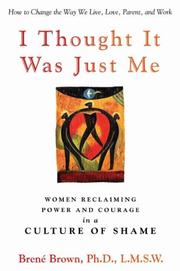
Brown's first deep dive into shame research is more focused and clinical than her later popular books — read it here to understand shame's mechanics before moving to her broader work.
Builds directly on the shame framework to show how wholehearted living — letting go of who you think you should be — is the practical path to authentic confidence.
Embodied & Behavioral Confidence
IntermediateMove from internal understanding to outward action — learn how behavior, body, and identity shape confidence, and develop real-world practices for showing up more fully.
▸ Study plan for this stage
Pace: 6–8 weeks, ~25–30 pages/day (alternating between books to reinforce behavioral concepts)
- The confidence gap: action precedes confidence — you don't wait to feel confident before acting; you act and confidence follows
- Cognitive defusion: learning to observe anxious thoughts without being controlled by them, freeing you to act despite self-doubt
- Presence as a physiological state: how your body posture, breathing, and physical stance directly influence your brain chemistry and felt confidence
- Power posing and embodied cognition: specific physical positions (2-minute power poses) can measurably shift hormones and psychological state before high-stakes moments
- Identity alignment: behaving as the confident person you want to become, rather than waiting to feel confident first
- Psychological flexibility: the ability to feel fear or doubt while still moving toward your values and goals
- Nonverbal communication: how presence in your body translates into how others perceive and respond to you
- What is the confidence gap, and why does waiting to feel confident before acting keep you stuck?
- How does cognitive defusion work in Harris's framework, and how can you apply it when self-doubt arises?
- What does Amy Cuddy mean by 'presence,' and how is it connected to your body rather than just your mind?
- Describe the research behind power posing: what happens physiologically during a 2-minute power pose, and how does it affect your confidence?
- How can you use behavioral identity shifts (acting as if you're already confident) to reshape your actual confidence over time?
- What is the relationship between your nonverbal presence and how others perceive your competence and trustworthiness?
- Daily 2-minute power pose practice: before meetings, presentations, or challenging conversations, spend 2 minutes in an expansive posture (arms up, legs wide) and notice the shift in your mental state
- Cognitive defusion journaling: write down one anxious thought about your confidence, then practice observing it as a thought rather than a fact (e.g., 'I'm having the thought that I'm not good enough' instead of 'I'm not good enough')
- Action despite doubt: identify one small action aligned with your values that you've been avoiding due to low confidence, then do it without waiting to feel ready; journal the outcome
- Presence body scan: before social or professional interactions, do a 1-minute body check-in—notice your posture, breathing, and tension—then consciously adjust to an open, grounded stance
- Behavioral identity experiment: choose one behavior of a confident person you admire (eye contact, speaking up in meetings, taking up space), practice it for one week, and track how it shifts your internal sense of confidence
- Video self-review: record yourself in a low-stakes situation (practice presentation, casual conversation), watch it to identify nonverbal habits (slouching, avoiding eye contact, rushed speech), then re-record with intentional presence adjustments
Next up: This stage anchors confidence in observable, repeatable behaviors and embodied practices, preparing you to integrate these skills into deeper work on identity, social confidence, and navigating complex relationships in the next stage.

Using Acceptance and Commitment Therapy (ACT), Harris reframes confidence not as a feeling to wait for but as a willingness to act despite fear — a crucial behavioral shift at this stage.

Grounds confidence in the body and in authentic self-expression, offering research-backed techniques for how posture, narrative, and presence reinforce self-belief from the outside in.
Deep Integration: Identity & Lasting Self-Worth
ExpertSynthesize everything into a durable, values-based sense of self-worth that doesn't depend on external validation — and understand the philosophical and psychological roots of unconditional self-acceptance.
▸ Study plan for this stage
Pace: 8–10 weeks, ~40–50 pages/day (with reflection days built in). Courage to Be Disliked duology (~600 pages total): weeks 1–5; Radical Acceptance (~400 pages): weeks 6–8; weeks 9–10 for integration and deep reflection.
- Adlerian psychology: separation of tasks, horizontal relationships, and the courage to live authentically despite others' judgments
- The illusion of trauma determinism: how past events don't determine your future, and responsibility as liberation
- Teleology vs. etiology: moving toward chosen values rather than being pulled by past causes
- Unconditional self-acceptance as a choice, not a feeling: embracing your whole self without conditions
- RAIN practice (Recognize, Allow, Investigate, Nurture): a somatic pathway to radical acceptance of difficult emotions and self-judgment
- The two arrows of suffering: distinguishing pain (unavoidable) from the suffering we add through resistance and self-rejection
- Values-based identity: anchoring self-worth in what you genuinely care about, not external metrics or others' approval
- Relational healing: how genuine connection and being seen by others supports lasting self-worth
- How does Adlerian psychology's concept of 'separation of tasks' help you reclaim agency and self-worth from others' judgments?
- What is the difference between etiology (cause-focused thinking) and teleology (purpose-focused thinking), and how does this distinction change your relationship with your past?
- Explain the concept of the 'two arrows' and how it applies to a specific moment when you've rejected or judged yourself harshly.
- What does 'unconditional self-acceptance' mean in practical terms, and why is it described as a choice rather than a feeling?
- How can you use the RAIN practice to work with a persistent self-critical thought or emotion, and what shifts when you apply it?
- How do the Courage to Be Disliked and Radical Acceptance frameworks complement each other in building a durable sense of self-worth?
- Task Separation Journal: For one week, identify three situations where you felt your self-worth threatened by others' judgments. For each, write out whose task it is (theirs or yours) and practice mentally returning their judgment to them. Notice what shifts in your body and mind.
- Teleology Reframe: Choose a past event you've blamed for limiting you. Rewrite your narrative using teleological language—what values or direction are you moving *toward* now, regardless of that event? Practice this reframe daily for two weeks.
- RAIN Meditation Practice: Use Tara Brach's RAIN framework on a recurring self-critical thought. Spend 15–20 minutes weekly: Recognize the thought, Allow it without fighting, Investigate its roots with curiosity, Nurture yourself with compassion. Track what you notice.
- Two Arrows Mapping: Create a visual map of a current struggle. Draw the first arrow (the pain/difficulty itself) and the second arrow (your resistance, judgment, or rejection of it). Identify one way to release the second arrow this week.
- Values Clarification & Identity Anchor: List 5–7 core values that matter to you (from both books' teachings). For each, write one concrete action you can take this week that aligns with it, independent of others' approval. Do these actions and journal on how your self-worth feels when anchored in values rather than outcomes.
- Relational Reflection: Identify one person in your life who sees and accepts you as you are. Write about how their acceptance has influenced your self-worth. Then practice extending that same unconditional acceptance to yourself in a specific area where you're self-critical.
Next up: This stage anchors self-worth in internal values and unconditional self-acceptance, creating a resilient foundation; the next stage will likely focus on sustaining and expressing this integrated self in real-world relationships, challenges, and ongoing growth.

This Socratic dialogue on Adlerian psychology challenges the deepest roots of approval-seeking and people-pleasing, offering a radical but compassionate framework for self-worth independent of others' opinions.

The perfect capstone — Brach weaves together Buddhist psychology and Western therapy to address the 'trance of unworthiness' at its deepest level, integrating all prior work into a lasting, compassionate self-relationship.
Discussion
Keep reading
Paths that share books, cover the same subject, or open a related topic.