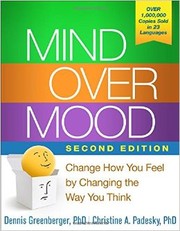
Imposter syndrome: books to quiet self-doubt and own success
This curriculum takes you from understanding the emotional roots of imposter syndrome to building lasting, evidence-based confidence and a genuine sense of belonging. Each stage builds on the last: you first name and normalize the experience, then rewire the underlying thought patterns, and finally develop the identity-level resilience to silence self-doubt for good.
Naming the Beast
BeginnerRecognize imposter syndrome for what it is, understand that it is universal, and feel immediate relief knowing you are not alone in your self-doubt.
▸ Study plan for this stage
Pace: 4–5 weeks, ~25–30 pages/day (approximately 2 weeks per book, with overlap and reflection time)
- Imposter syndrome is a widespread psychological pattern, not a personal flaw or sign of actual inadequacy
- The five types of impostors identified by Valerie Young: The Perfectionist, The Superhero, The Natural Genius, The Soloist, and The Expert
- Self-doubt and fear of being 'found out' are normal experiences shared by high-achievers across professions and demographics
- Your body language, posture, and physical presence directly influence your confidence and how others perceive your competence (Cuddy's power posing research)
- The mind-body connection: changing your physiology can shift your psychology and reduce imposter feelings in real time
- Imposter syndrome often stems from internalized messages about what success 'should' look like, not from actual performance gaps
- Recognition and naming the pattern is the first step toward breaking its hold on your self-perception and decision-making
- What are the five types of impostors Valerie Young describes, and which one(s) resonate most with your own experience?
- How does understanding that imposter syndrome is universal change your perception of your own self-doubt?
- What is the connection between body language and confidence according to Amy Cuddy, and how might this apply to moments when you feel like a fraud?
- Can you identify a specific internalized belief about success or competence that fuels your imposter feelings?
- How might you use power posing or presence techniques to shift your mindset before a high-stakes situation?
- What evidence from your actual performance contradicts the imposter narrative you tell yourself?
- Complete Valerie Young's imposter type self-assessment: identify which of the five types best describes you, then journal about how this type shows up in your daily work or life
- Practice a 2-minute power pose (as described in Cuddy's research) before a challenging task or meeting for one week; track how your confidence and performance shift
- Create a 'proof file': collect 5–10 concrete pieces of evidence (emails, feedback, accomplishments, positive outcomes) that contradict your imposter narrative; review it whenever self-doubt strikes
- Interview 2–3 successful people you admire and ask them directly: 'Have you ever felt like a fraud or doubted your competence despite your success?' Document their answers and patterns
- Rewrite one internalized 'should' belief about success (e.g., 'I should know everything without asking') into a realistic, compassionate alternative; practice using the new belief in one real situation
- Record yourself giving a 3-minute explanation of your work or expertise to someone; listen back and note moments where you minimize, apologize, or undermine yourself—then re-record with intentional presence and authority
Next up: This stage establishes that imposter syndrome is real, universal, and identifiable—setting the foundation for the next stage, which will focus on concrete strategies to challenge the specific thoughts and beliefs driving those feelings.

The definitive book on imposter syndrome — Young coined the core competence archetypes and gives you a precise vocabulary to identify exactly how your self-doubt shows up. Start here to name the problem clearly.

Bridges the gap between feeling like a fraud and showing up authentically; Cuddy's own imposter story and body-of-evidence research make the emotional experience feel validated and immediately actionable.
Rewiring Self-Talk
BeginnerLearn the cognitive tools to challenge and reframe the inner critic, replacing automatic negative thoughts with accurate, balanced self-assessment.
▸ Study plan for this stage
Pace: 6–8 weeks, ~25–30 pages/day. Start with "Feeling Good" (4–5 weeks), then move to "Self-Compassion" (2–3 weeks). Allocate 2–3 days per week for exercises and reflection.
- Cognitive distortions (catastrophizing, black-and-white thinking, overgeneralization, mind-reading) as the root of imposter feelings—from Burns' cognitive therapy model
- The thought record technique: identifying triggering situations, automatic thoughts, and evidence-based rebuttals to challenge distorted thinking
- The three components of self-compassion (self-kindness vs. self-criticism, common humanity vs. isolation, mindfulness vs. over-identification) from Neff's framework
- The difference between self-esteem (conditional, performance-based) and self-compassion (unconditional, process-based acceptance)
- How the inner critic operates as learned behavior and can be rewired through consistent practice with evidence and self-kindness
- Mindful awareness of negative self-talk without judgment as a prerequisite to changing it
- The role of self-compassion in reducing shame and perfectionism that fuel imposter syndrome
- What are the main cognitive distortions Burns identifies, and how do they appear in your imposter syndrome thoughts?
- How do you complete a thought record, and what is the purpose of finding evidence against your automatic negative thoughts?
- What are the three pillars of self-compassion according to Neff, and how does each one counteract imposter syndrome?
- Why is self-compassion more effective than self-esteem for managing the inner critic long-term?
- How can you recognize when you're in a cognitive distortion, and what is your first step to interrupt it?
- What does it mean to treat yourself with the same kindness you would offer a good friend facing self-doubt?
- Complete a thought record for 3–5 imposter moments over the next week: write the triggering situation, automatic thought, cognitive distortion(s) present, evidence for and against the thought, and a balanced rebuttal
- Practice the 'downward arrow' technique from Burns: take one negative thought and ask 'If that were true, what would it mean?' repeatedly to uncover core beliefs driving imposter feelings
- Create a personal 'cognitive distortion checklist' and carry it with you; when self-doubt arises, identify which distortion(s) you're experiencing
- Write a letter to yourself from the perspective of a compassionate mentor or friend addressing your imposter thoughts; read it aloud when self-criticism intensifies
- Practice the self-compassion break (from Neff): when struggling, pause and say 'This is a moment of suffering. Suffering is part of life. May I be kind to myself.' Notice the shift in your inner experience
- Record yourself speaking your typical imposter thoughts aloud, then rewrite them as balanced, evidence-based statements and listen to both versions to hear the difference
- Identify one area where you hold perfectionist standards; practice Neff's 'common humanity' by researching how others in your field struggle similarly, then journal on this discovery
Next up: By mastering cognitive reframing and self-compassion, you'll have the internal tools to challenge distorted thoughts in real-time; the next stage will build on this foundation by teaching you how to take aligned action despite imposter feelings and build evidence of competence through deliberate practice.

The gold-standard introduction to cognitive behavioral therapy (CBT); teaches you to identify distorted thinking patterns — the engine behind imposter syndrome — and gives concrete techniques to dispute them.

After learning to challenge harsh self-talk, Neff shows you how to replace it with self-compassion rather than empty self-esteem — a crucial distinction for anyone who fears being 'found out.'
Building Real Confidence
IntermediateMove from managing self-doubt reactively to proactively building a grounded, evidence-based sense of competence and confidence.
▸ Study plan for this stage
Pace: 4–5 weeks, ~25–30 pages/day. Week 1–2: "Mindset" (304 pages); Week 3–5: "The Confidence Code" (304 pages), with 2–3 days for integration and reflection.
- Fixed mindset vs. growth mindset: how beliefs about ability shape effort, resilience, and response to failure
- The neuroplasticity foundation: how deliberate practice and challenge rewire the brain to build genuine competence
- Confidence as a skill, not a trait: the role of action, risk-taking, and accumulated evidence in building self-assurance
- The confidence equation: competence + courage + conviction, and how each component develops through practice
- Reframing failure and setback as data for improvement rather than proof of inadequacy
- The relationship between self-doubt and action: how taking small risks despite uncertainty builds evidence of capability
- Imposter syndrome as a mindset problem: how growth-oriented thinking and evidence-based confidence counter impostor feelings
- Gender, socialization, and confidence gaps: understanding external factors that suppress confidence and how to counteract them
- What is the difference between a fixed mindset and a growth mindset, and how does each affect your response to failure and challenge?
- How does neuroplasticity support the idea that competence can be built through deliberate practice, and what does this mean for overcoming imposter syndrome?
- According to 'The Confidence Code,' what are the three components of the confidence equation, and how do they interact?
- Why is action and risk-taking essential to building confidence, even when self-doubt is present?
- How can you use evidence-based thinking to counter impostor feelings when you achieve success?
- What role does courage play in confidence-building, and how is it different from fearlessness?
- Mindset audit: Identify 3 areas of your life where you operate from a fixed mindset. For each, write a growth-mindset reframe and commit to one deliberate practice action this week.
- Failure log: Track 2–3 small failures or setbacks over the next week. For each, write down what you learned and how it increased your competence, rather than what it says about your ability.
- Confidence evidence journal: Daily, record one piece of evidence that contradicts an impostor feeling—a task completed, feedback received, a skill used. Review weekly to build your evidence base.
- Risk-taking ladder: List 5 actions you've been avoiding due to self-doubt (e.g., speaking up in meetings, trying a new skill). Rank by difficulty and commit to one small risk per week.
- Growth conversation: Interview someone you admire about a time they felt like an imposter and how they moved through it. Identify the growth mindset or confidence-building strategies they used.
- Deliberate practice plan: Choose one skill related to your imposter syndrome (e.g., public speaking, technical expertise). Design a 4-week deliberate practice schedule with specific, challenging targets and feedback mechanisms.
Next up: This stage equips you with the psychological foundations and actionable tools to build genuine, evidence-based confidence; the next stage will likely focus on sustaining and deepening this confidence in high-stakes or social contexts, and addressing the specific relational and environmental factors that trigger impostor syndrome.
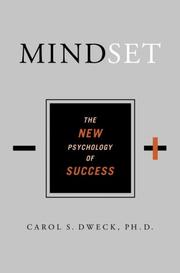
Dweck's research on fixed vs. growth mindset explains why impostors fear failure so catastrophically — and gives you a framework to redefine effort, mistakes, and learning as proof of ability, not lack of it.

Synthesizes neuroscience, psychology, and real-world interviews to show how confidence is built through action and risk-taking, not perfection — a perfect follow-up to Dweck's mindset shift.
Belonging and Identity
IntermediateUnderstand how social identity, environment, and systemic factors fuel imposter syndrome, and learn to build authentic belonging without shrinking yourself.
▸ Study plan for this stage
Pace: 4–5 weeks, ~40–50 pages/day. Start with "Whistling Vivaldi" (2 weeks), then "Daring Greatly" (2–3 weeks), with 2–3 days between books for reflection and integration.
- Stereotype threat: how awareness of negative stereotypes about your group impairs performance and belonging, even when you're competent
- Identity contingency: the extra cognitive and emotional load of managing your identity in environments where you're underrepresented or stereotyped
- Vulnerability and shame resilience: the role of shame in imposter feelings and how embracing vulnerability breaks the cycle
- Authenticity vs. armoring: the cost of shrinking yourself or performing a false self to fit in, and why it deepens imposter syndrome
- Systemic and environmental factors: recognizing that imposter syndrome isn't just internal—it's fueled by real social dynamics, bias, and belonging uncertainty
- Courage and wholehearted living: showing up as your full self despite fear, as the antidote to imposter syndrome
- The connection between shame, perfectionism, and imposter feelings: how perfectionism masks shame and prevents authentic belonging
- What is stereotype threat, and how does it differ from actual lack of competence? Provide an example from Steele's research.
- How does identity contingency contribute to imposter syndrome, and what are the cognitive/emotional costs Steele describes?
- According to Brené Brown, what is the relationship between shame, vulnerability, and imposter syndrome?
- What does Brown mean by 'armoring' and 'shrinking,' and how do these behaviors perpetuate imposter feelings?
- How can you distinguish between systemic belonging uncertainty (environmental) and internal imposter syndrome, and why does this distinction matter?
- What are the key practices Brown recommends for building shame resilience and showing up authentically in spaces where you feel like an imposter?
- Stereotype threat audit: Identify 2–3 environments where you experience stereotype threat or identity contingency. Write down the specific stereotypes you're aware of and how they affect your performance or sense of belonging. Reflect on whether the threat is about your actual competence or the social context.
- Identity journal: For one week, journal daily about moments when you felt you had to shrink yourself, perform, or armor up. What triggered it? What did you hide? What would it feel like to show up differently?
- Vulnerability experiment: Choose one low-stakes situation (a meeting, conversation, or project) where you typically armor up. Practice sharing one authentic struggle or uncertainty. Notice what happens—does the feared rejection occur, or do you experience connection?
- Shame-to-courage mapping: Take a recent imposter moment. Trace it backward: What shame story was underneath? What would wholehearted living look like in that situation? Write a 'courage script'—what you'd say or do if you showed up as your full self.
- Belonging audit: Map your current environments (work, social, creative). For each, assess: Is there identity contingency? Do you feel you belong as you are, or do you need to perform? What small shifts could reduce the cognitive load of managing your identity?
- Peer conversation: Share your imposter syndrome experience with a trusted peer or mentor. Ask them: Do you see me as an imposter, or do you see me as competent? Often, others don't share our internal narrative. Document what you learn.
Next up: This stage grounds imposter syndrome in social and systemic reality, preparing you to move into the next stage—where you'll learn concrete strategies for reframing your internal narrative, building resilience, and taking action despite imposter feelings.

Steele's landmark research on stereotype threat reveals how social identity and environment can trigger imposter feelings in anyone — essential context for understanding why the syndrome is not just 'in your head.'
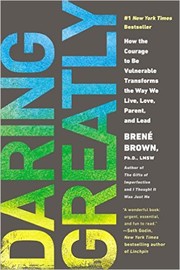
Brown's research on vulnerability and shame connects directly to the fear of being 'found out'; reading this after Steele helps you move from systemic awareness to personal courage and authentic connection.
Sustaining the Shift
ExpertConsolidate everything into a durable identity — one where your achievements are internalized, your voice is owned, and imposter syndrome loses its grip permanently.
▸ Study plan for this stage
Pace: 8–10 weeks, ~25–30 pages/day (alternating between the two books to reinforce complementary ideas)
- Ego as the primary obstacle to authentic achievement and self-acceptance — learning to recognize and dismantle ego-driven narratives
- The distinction between confidence rooted in ego versus confidence rooted in genuine competence and self-worth
- Vulnerability as strength: how admitting imperfection and limitations paradoxically builds credibility and connection
- Wholehearted living: embracing shame resilience, self-compassion, and authenticity as the antidote to imposter syndrome
- The practice of letting go of who you think you should be in order to become who you actually are
- Translating internal shifts into consistent external behaviors and identity markers that reinforce your new self-perception
- Building a sustainable sense of belonging and worthiness that doesn't depend on external validation or perfect performance
- How does Ryan Holiday define ego, and what are the specific ways ego perpetuates imposter syndrome thinking?
- What does Brené Brown mean by 'wholehearted living,' and how does it directly counter the shame and self-doubt at the core of imposter syndrome?
- How can you distinguish between healthy self-improvement and ego-driven perfectionism, according to these authors?
- What role does vulnerability play in building authentic confidence and a durable sense of self-worth?
- How do you practice shame resilience in moments when imposter syndrome thoughts arise, using Brown's framework?
- What specific daily or weekly practices can you implement to reinforce your new identity and prevent regression into old imposter patterns?
- Ego audit: Spend one week documenting moments when your ego (fear of judgment, need to appear perfect, defensiveness) triggered imposter syndrome thoughts. Analyze the pattern using Holiday's framework.
- Vulnerability practice: Share one genuine struggle, mistake, or limitation with a trusted person each week for 4 weeks. Record how this affected your sense of shame and belonging.
- Shame resilience mapping: Using Brown's SFTG (Shame Trigger, Feelings, Thoughts, Gathering) model, work through 3–5 recent shame moments that fueled imposter syndrome. Write out the full cycle for each.
- Identity reinforcement ritual: Create a weekly 15-minute practice (journaling, reflection, or conversation) where you explicitly name and celebrate one way you showed up authentically that week, regardless of outcome.
- Perfectionism vs. excellence audit: Identify one area where you're pursuing perfectionism. Reframe it as excellence (effort-based, not outcome-based) and track the shift in your internal experience over 2 weeks.
- Wholehearted living checklist: Develop a personal checklist of 5–7 behaviors that represent 'wholehearted you' (e.g., speaking up in meetings, admitting when you don't know something, setting boundaries). Practice one daily and track consistency.
Next up: By internalizing that ego is the enemy of authentic achievement and that vulnerability is the foundation of true belonging, you're now equipped to move into the final stage—applying these insights to specific life domains (career, relationships, creative work) and building systems that sustain this identity long-term.

Reframes the relationship between self-worth and external validation; after building confidence, this book ensures it is grounded in purpose and craft rather than approval — the antidote to imposter syndrome's deepest root.

The ideal capstone: Brown's practical guide to letting go of who you think you should be and embracing who you are — turning the hard-won insights of the whole curriculum into a daily, lived practice.
Discussion
Keep reading
Paths that share books, cover the same subject, or open a related topic.