Overcoming social anxiety: the best books to feel at ease with people
This four-stage curriculum moves from gentle psychoeducation and self-understanding, through structured CBT and exposure tools, into deeper self-compassion and long-term social confidence. Each stage builds the vocabulary, insight, and courage needed for the next, so the reader never feels thrown in at the deep end.
Understanding What's Happening
BeginnerRecognize social anxiety for what it is, understand its roots, and feel less alone — replacing shame with curiosity and hope.
▸ Study plan for this stage
Pace: 4–5 weeks, ~25–30 pages/day. Week 1–2: "Quiet" (approx. 280 pages); Week 3–4: "The Shyness & Social Anxiety Workbook" (approx. 240 pages); Week 5: Review and integration exercises.
- Introversion vs. social anxiety: understanding that introversion is a personality trait (preference for quiet, internal stimulation) while social anxiety is a treatable condition rooted in fear and avoidance
- The neurobiology of social anxiety: how the amygdala, threat detection, and the nervous system's fight-flight-freeze response create physical symptoms (racing heart, blushing, trembling)
- The role of shame and self-judgment: recognizing how internalized criticism and fear of negative evaluation fuel anxiety, and how curiosity can replace shame
- Situational triggers and avoidance patterns: identifying specific social situations that trigger anxiety and how avoidance reinforces the fear cycle
- The power of reframing: shifting from 'something is wrong with me' to 'my nervous system is doing its job, and I can learn to work with it'
- Validation through shared experience: understanding that social anxiety is common, affecting millions, and that you are not alone or broken
- Early roots and conditioning: exploring how past experiences, family patterns, and learned behaviors contribute to current social anxiety
- Hope through evidence-based treatment: learning that cognitive-behavioral approaches and exposure work, setting the foundation for later stages
- What is the difference between introversion and social anxiety, and why is this distinction important for your own self-understanding?
- How does your nervous system respond during a socially anxious moment, and what physical symptoms do you typically experience?
- What are your top 3–5 social situations that trigger anxiety, and what specifically do you fear will happen in each?
- How has shame or self-judgment played a role in your social anxiety, and how might curiosity offer a different perspective?
- What patterns of avoidance have you noticed in your own life, and how might they be maintaining your anxiety?
- What evidence from the books suggests that social anxiety is treatable and that change is possible?
- Create a personal 'anxiety profile' by listing your top social triggers, physical symptoms, and avoidance behaviors—use Cain's framework to distinguish which situations reflect introversion vs. anxiety
- Track your nervous system responses for 1 week: note when you feel anxious, what the trigger was, what you felt in your body, and what you did in response (avoidance, escape, etc.)
- Write a 'shame inventory': list 3–5 beliefs you hold about yourself related to social anxiety (e.g., 'I'm awkward,' 'People will judge me'), then reframe each using curiosity ('What if my nervousness is just my body protecting me?')
- Complete the self-assessment questionnaires in 'The Shyness & Social Anxiety Workbook' (e.g., Social Interaction Anxiety Scale) to quantify your baseline and recognize patterns
- Interview someone you trust about their own social anxiety or shyness—listen for common themes and shared experiences to combat isolation and shame
- Create a 'hope journal': collect 3–5 examples from the books or your own life where someone overcame social anxiety or reframed introversion positively
Next up: This stage establishes self-awareness and emotional safety—understanding what's happening and why—which is essential before moving into the next stage of learning and practicing specific coping strategies and behavioral tools to manage anxiety in real situations.

A warm, validating starting point that reframes introversion and social sensitivity as strengths rather than defects, reducing shame before any skill-building begins.

A leading evidence-based guide that clearly explains what social anxiety is, how it works, and what recovery looks like — perfect for orienting a beginner before diving into techniques.
Core CBT Tools
BeginnerLearn and practice the foundational cognitive-behavioral techniques — thought challenging, behavioral experiments, and relaxation — that form the backbone of social anxiety treatment.
▸ Study plan for this stage
Pace: 4–5 weeks, ~40–50 pages/day. Start with "Feeling Good" (2–3 weeks, ~40 pages/day) to establish cognitive foundations, then move to "Overcoming Social Anxiety and Shyness" (2 weeks, ~50 pages/day) to apply those tools directly to social contexts.
- The cognitive triad: how thoughts, feelings, and behaviors interconnect and influence social anxiety
- Automatic thoughts and cognitive distortions (catastrophizing, mind-reading, all-or-nothing thinking) that fuel social anxiety
- Thought records and the process of identifying, challenging, and replacing distorted thoughts with realistic alternatives
- Behavioral experiments: testing anxious predictions through real-world exposure to gather evidence against feared outcomes
- Relaxation techniques (progressive muscle relaxation, breathing exercises) as tools to manage physical anxiety symptoms
- The relationship between avoidance and anxiety maintenance, and how behavioral activation breaks the cycle
- Exposure hierarchies: systematically confronting feared social situations in graded steps
- What are the three components of the cognitive triad, and how do they interact to create and maintain social anxiety?
- Identify five common cognitive distortions described in Burns' work and explain how each one shows up in social anxiety situations.
- How do you construct and use a thought record to challenge automatic thoughts? Walk through a real example from your own social anxiety.
- What is the difference between thought challenging and behavioral experiments, and why are both necessary for overcoming social anxiety?
- Describe how avoidance maintains anxiety, and explain the role of behavioral activation and exposure in breaking this cycle.
- How would you design a behavioral experiment to test a specific anxious prediction you have about a social situation?
- What relaxation techniques does Butler recommend, and when should you use them—before, during, or after social situations?
- Complete a thought record for three real social anxiety situations you've experienced this week, identifying automatic thoughts, cognitive distortions, and realistic alternative thoughts.
- Practice one relaxation technique (progressive muscle relaxation or controlled breathing) daily for two weeks and track how it affects your anxiety levels before and after social situations.
- Design and conduct a behavioral experiment: identify one anxious prediction about a social interaction (e.g., 'People will think I'm boring'), plan how to test it, carry it out, and record what actually happened versus what you predicted.
- Create a personal exposure hierarchy with 8–10 social situations ranked by anxiety level (0–100), starting with low-anxiety situations and building toward more challenging ones.
- Role-play or mentally rehearse a feared social scenario (e.g., making small talk at a party), then use a thought record to challenge the catastrophic thoughts that arise during the rehearsal.
- Keep a daily log for one week noting situations where you notice automatic thoughts, the cognitive distortion involved, and one alternative thought you could use instead.
- Conduct a 'behavioral activation' experiment: commit to one social activity you've been avoiding (e.g., attending a group event, initiating a conversation), observe what happens, and compare your prediction to the actual outcome.
Next up: This stage equips you with the core cognitive and behavioral tools to identify and interrupt the thought-feeling-behavior cycle; the next stage will build on these foundations by teaching you how to apply them to specific social situations, manage shame and self-criticism, and develop longer-term strategies for maintaining gains and preventing relapse.

The classic CBT primer; teaches cognitive restructuring (identifying and reframing distorted thoughts) in plain language, building the mental toolkit needed before tackling social-specific CBT.
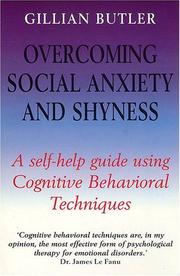
Applies CBT directly to social anxiety with practical exercises on safety behaviors, attention training, and thought records — a natural next step after learning general CBT from Burns.
Exposure and Acceptance
IntermediateBuild a systematic exposure practice, learn to tolerate discomfort without avoidance, and integrate acceptance-based strategies that go beyond thought-challenging alone.
▸ Study plan for this stage
Pace: 4–5 weeks, ~25–30 pages/day, with 2–3 days per week dedicated to exposure practice and workbook exercises
- Exposure hierarchy: systematically confronting feared social situations from least to most anxiety-provoking
- Discomfort tolerance: learning that anxiety decreases naturally over time (habituation) when you stay in the situation without escaping
- Acceptance vs. avoidance: choosing to feel anxiety rather than organizing your life around preventing it
- Mindfulness in exposure: observing anxiety sensations and thoughts without judgment or struggle
- Values-based action: using personal values to motivate exposure practice even when uncomfortable
- Cognitive defusion: recognizing anxious thoughts as mental events rather than facts that must be believed or acted upon
- Behavioral experiments: testing predictions about social situations to gather evidence against anxiety-driven assumptions
- How does an exposure hierarchy work, and why is it important to start with lower-anxiety situations before tackling more difficult ones?
- What is habituation, and why does staying in an anxiety-provoking situation (without escaping) lead to decreased anxiety over time?
- How does acceptance-based thinking differ from thought-challenging, and when might acceptance be more effective than trying to change your thoughts?
- What role does mindfulness play in exposure practice, and how can you observe anxiety without fighting it or letting it control your behavior?
- How can you identify your core values and use them to motivate exposure practice when discomfort is high?
- What is cognitive defusion, and how does it help you take anxious thoughts less seriously during social interactions?
- Create a detailed exposure hierarchy: list 15–20 social situations you avoid or fear, then rank them from 0–100 on anxiety intensity. Use this to plan your first real-world exposures.
- Conduct a behavioral experiment: identify one prediction your anxiety makes (e.g., 'If I speak up in the meeting, everyone will judge me'), expose yourself to that situation, and record what actually happened vs. what you predicted.
- Practice mindfulness during a low-stakes social interaction: observe your anxiety sensations (heart rate, tension, thoughts) as if you're a curious scientist, without trying to change them or escape.
- Values clarification exercise: identify 3–5 core values (e.g., authenticity, connection, growth), then plan one exposure that aligns with each value to make the practice feel meaningful.
- Complete the workbook exercises from 'The Mindfulness & Acceptance Workbook for Anxiety': work through at least 4–5 key exercises on acceptance, defusion, and values to deepen your understanding.
- Conduct a 'shame-attacking' exercise (from Dying of Embarrassment): deliberately do something mildly embarrassing in public (e.g., ask for a discount, sing quietly in a store) to learn that embarrassment is survivable and not catastrophic.
Next up: This stage equips you with practical exposure skills and acceptance tools that form the foundation for advanced relapse prevention and long-term maintenance strategies, allowing you to sustain gains and handle setbacks independently in the final stage.

Provides a step-by-step graduated exposure framework specifically for social anxiety, making the concept of facing fears feel manageable and structured.
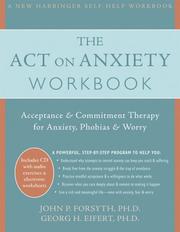
Introduces ACT (Acceptance and Commitment Therapy) principles — defusion, values, and willingness — which complement CBT by teaching readers to move toward life rather than away from fear.
Self-Compassion and Lasting Confidence
IntermediateCultivate deep self-compassion, dismantle the inner critic, and build an authentic social identity that sustains progress long after the workbooks are finished.
▸ Study plan for this stage
Pace: 8–10 weeks, ~25–30 pages/day with 2–3 reflection days per week
- The three components of self-compassion (mindfulness, common humanity, self-kindness) and how they counteract the inner critic
- The difference between self-esteem and self-compassion, and why self-compassion is more sustainable for social confidence
- How mindfulness of difficult emotions (without judgment) is foundational to reducing social anxiety triggers
- The concept of 'social anxiety as a habit' and how authentic self-identity (not performance) breaks the cycle
- Practical techniques for recognizing and softening the inner critic's voice in social situations
- The role of self-directed compassion practices in rewiring neural pathways associated with shame and self-judgment
- Building an 'authentic self' separate from social anxiety, and how this identity persists beyond anxiety symptoms
- What are the three pillars of self-compassion according to Germer, and how does each one directly counter social anxiety?
- How does Hendriksen distinguish between trying to 'fix' your anxiety versus building an authentic identity, and why is the latter more effective long-term?
- What is the inner critic, and what are 2–3 specific techniques from the books for responding to it with compassion rather than resistance?
- Describe a recent social anxiety moment you experienced. How would you apply Germer's mindfulness approach and Hendriksen's authenticity principle to that same situation?
- Why is common humanity (the recognition that struggle is part of the human experience) essential for sustainable social confidence?
- What is the relationship between self-compassion and genuine social presence, according to these authors?
- Daily self-compassion break (5 min): When you notice social anxiety or self-criticism, pause and practice Germer's three-step self-compassion break—mindfulness, common humanity, self-kindness—in real time
- Inner critic dialogue journal: Write out your inner critic's voice in social situations (e.g., 'You're awkward, everyone notices'), then rewrite each statement as if a compassionate friend were responding
- Authentic self inventory: List 5–7 core values and traits that define you independent of social performance (from Hendriksen's framework). Revisit weekly and notice how anxiety shifts when you lead from these values
- Mindful social observation: Attend one social gathering and practice Germer's mindfulness—notice your anxiety without judgment, observe others' humanity, and identify one moment where you acted from your authentic self
- Loving-kindness meditation for social situations (3x/week): Use Germer's guided practices to cultivate compassion for yourself and others before or after social interactions
- Behavioral experiment: Choose one 'social anxiety rule' you typically follow (e.g., 'I must not show nervousness'). Test Hendriksen's principle by breaking it intentionally in a low-stakes setting and record what actually happens versus what you feared
Next up: This stage anchors your social confidence in an unshakeable internal foundation—self-compassion and authentic identity—preparing you to move into the next stage where you'll apply these skills to specific social contexts and gradually expand your comfort zone through exposure and real-world practice.

Teaches mindful self-compassion as an antidote to the harsh self-judgment that fuels social anxiety, providing the emotional foundation for lasting change.

Written by a clinical psychologist specializing in social anxiety, this book synthesizes CBT, exposure, and self-acceptance into a practical, science-backed guide to authentic social confidence — the ideal capstone for the whole curriculum.
Discussion
Keep reading
Paths that share books, cover the same subject, or open a related topic.