Scottish Literature: Best Books to Read in Order
This curriculum traces the arc of Scottish literature from its Romantic and Enlightenment roots through the Victorian adventure tradition and into the sharp, modernist brilliance of the twentieth century. Starting from an intermediate footing, each stage deepens your feel for the Scots language, moral imagination, and national identity that run like a thread through Burns, Stevenson, and Spark — the three pillars the learner has named — before opening outward to the wider canon they helped shape.
The Scots Voice: Burns and the Vernacular Tradition
IntermediateDevelop an ear for Scots language and poetic tradition, understand Burns's moral and satirical vision, and grasp the cultural context that defines Scottish literary identity.
▸ Study plan for this stage
Pace: 6–8 weeks, ~25–30 pages/day (Burns first 3–4 weeks, Macpherson 2–3 weeks, with overlap for comparative analysis)
- Scots language as a literary vehicle: phonetics, grammar, and cultural authenticity in Burns's vernacular poetry
- Burns's satirical method: how he uses humor, irony, and folk forms to critique social hypocrisy and religious orthodoxy
- The moral vision in Burns: themes of equality, natural human feeling, and resistance to artificial social constraint
- The Ossianic tradition and the Romantic invention of Scottish antiquity: Macpherson's role in constructing a national literary past
- Oral tradition and poetic form: how ballad, song, and folk meters shape both Burns and the Ossianic corpus
- The tension between Lowland Scots vernacular (Burns) and Highlander/Celtic identity (Ossian) in Scottish literary nationalism
- Intertextuality and allusion: how both poets engage with earlier Scottish, English, and classical sources
- How does Burns use Scots language phonetically and grammatically to achieve effects that standard English cannot? Give specific examples from at least two poems.
- What are the main targets of Burns's satire in poems like 'Holy Willie's Prayer' and 'The Holy Fair'? How do these poems advance a moral argument?
- How does Macpherson's Ossian differ from historical Gaelic tradition, and what does this reveal about Romantic-era attitudes toward Scottish identity?
- Compare the treatment of love, nature, and human feeling in Burns versus Macpherson. What does each poet's approach suggest about his vision of Scottish culture?
- What role does oral tradition and folk form play in both Burns's and Macpherson's work? How do they adapt traditional forms for literary effect?
- How do Burns and Macpherson each respond to the question of what it means to be Scottish? Where do their answers converge or conflict?
- Read aloud 3–4 Burns poems in Scots (e.g., 'To a Mouse,' 'The Cotter's Saturday Night,' 'Holy Willie's Prayer') and annotate the phonetic and grammatical features that distinguish Scots from English; note how pronunciation affects rhythm and meaning.
- Perform a close reading of one satirical Burns poem, identifying the specific social or religious target, the rhetorical strategies used, and the moral position the poem stakes out.
- Create a glossary of 30–40 Scots words and phrases from Burns, organized by semantic field (e.g., domestic life, nature, moral/religious terms); use context to infer meaning where translations are unclear.
- Compare two versions of a single poem or theme: one from Burns (e.g., 'A Red, Red Rose') and one from Macpherson (e.g., a love passage from Ossian). Write a 500-word analysis of how each poet's language, form, and cultural assumptions shape the treatment.
- Research and write a 300-word note on one historical or biographical context for a Burns poem (e.g., the Kirk's role in 18th-century Scotland for 'Holy Willie's Prayer'; the Highland Clearances for Ossianic nostalgia). Explain how this context illuminates the poem's meaning.
- Memorize and recite one complete Burns poem and one substantial passage from Macpherson's Ossian; reflect on how memorization changes your understanding of rhythm, diction, and emotional register.
Next up: This stage establishes the vernacular and Romantic foundations of Scottish literary identity, preparing you to trace how later 19th- and 20th-century Scottish writers either embrace, resist, or complicate the Burns-Ossian legacy in their own work.
The essential starting point: reading Burns in a good selected edition (e.g. Penguin Classics) introduces the Scots vernacular, the lyric and satirical registers, and the democratic humanity that underpin all later Scottish writing. Begin with 'To a Mouse,' 'Holy Willie's Prayer,' and 'Tam o' Shanter' to anchor the tradition.

Macpherson's hugely influential — and controversial — Ossianic poems shaped how Scotland imagined its own Celtic past and fed the European Romantic movement. Reading it after Burns shows the two competing faces of 18th-century Scottish literary ambition: vernacular realism versus mythic grandeur.
The Gothic and the Double: Robert Louis Stevenson
IntermediateMaster Stevenson's prose style and his preoccupation with duality, morality, and Scottish identity, and understand how he bridges Victorian adventure fiction with psychological depth.
▸ Study plan for this stage
Pace: 8–10 weeks, ~40–50 pages/day, with 1–2 days per week for reflection and written exercises
- Stevenson's prose style: economy of language, vivid sensory detail, and narrative tension in service of psychological and moral exploration
- The double as literary and psychological device: how Kidnapped explores divided loyalty and identity, Jekyll and Hyde literalizes internal conflict, and Weir of Hermiston examines the father-son duality
- Scottish identity and cultural ambivalence: Stevenson's treatment of Lowland/Highland division, Scots language and dialect, and Scotland's place in the British imperial project
- Morality and the limits of Victorian certainty: how each novel questions easy moral judgment and reveals the instability of character and conscience
- Adventure narrative and psychological depth: Stevenson's fusion of page-turning plot with introspective character study and unreliable narration
- The role of setting and landscape: how Scottish geography (Highlands, law courts, domestic spaces) shapes moral and psychological conflict
- How does Stevenson use Scots dialect and language in Kidnapped to establish character and cultural identity, and what does David Balfour's linguistic journey reveal about assimilation and loyalty?
- Analyze the narrative structure of Jekyll and Hyde: how does the use of multiple narrators and the delayed revelation of Jekyll's confession affect the reader's understanding of the double and moral responsibility?
- What is the significance of the Lowland-Highland division in Kidnapped, and how does Stevenson complicate simple stereotypes about Scottish regional identity?
- Compare the treatment of duality across the three novels: how does the father-son conflict in Weir of Hermiston differ from the internal split in Jekyll and Hyde, and what does each reveal about Stevenson's view of identity?
- How does Stevenson's prose style—his use of pacing, dialogue, and sensory detail—serve his exploration of moral ambiguity and psychological complexity?
- What role does the Scottish legal system and the figure of the judge play in Weir of Hermiston, and how does it connect to broader themes of justice and judgment across the three novels?
- Read Kidnapped (weeks 1–3) and create a character map tracking David Balfour's relationships and shifting allegiances; annotate 3–4 passages where Scots dialect appears and analyze how it signals character or cultural perspective
- Write a 500-word comparative analysis of how Alan Breck Stewart and David Balfour embody different aspects of Scottish identity and loyalty in Kidnapped
- Read Jekyll and Hyde (weeks 4–5) and write out the novel's narrative structure (who narrates each section); then write a 750-word essay on how this fragmented structure mirrors the fragmentation of Jekyll's self
- Create a detailed character study of Dr. Jekyll that incorporates close analysis of at least two key passages; consider what his scientific language and Victorian respectability mask
- Read Weir of Hermiston (weeks 6–10) and track the father-son dynamic between Adam Weir and Archie; write a 600-word analysis comparing this relationship to the internal doubling in Jekyll and Hyde
- Conduct a stylistic comparison: select one passage from each novel (~1 page each) and analyze Stevenson's sentence structure, vocabulary, pacing, and use of dialogue; write 400 words on how style reinforces theme
- Write a creative piece (500–750 words) from the perspective of a minor character in one of the novels (e.g., Catriona from Kidnapped, Utterson from Jekyll and Hyde, or Christina Elliott from Weir of Hermiston) that reveals their interpretation of the protagonist's moral struggle
Next up: This stage establishes Stevenson as a master of psychological realism and Scottish literary identity, preparing you to explore how later Scottish writers (such as Muriel Spark or Iain Banks) inherit, challenge, or transform his treatment of duality, morality, and the relationship between individual consciousness and cultural belonging.
The ideal Stevenson entry point: a gripping adventure set in the post-Jacobite Highlands that is also a subtle study in Scottish cultural division. Its clear, propulsive prose builds confidence before tackling his denser work.
Stevenson's masterpiece of the divided self — a novella that encodes Edinburgh's Old and New Town moral geography into a universal myth. Reading it after Kidnapped reveals how the same preoccupation with duality operates across genres.
Stevenson's unfinished final novel, considered by many his greatest prose achievement: a dark, Shakespearean study of fathers, sons, and Scottish law. It rewards the reader who already knows his style and shows how far he had evolved.
Modernism and the Scottish Renaissance
IntermediateEncounter the 20th-century Scottish Renaissance in poetry and fiction, understanding how writers reclaimed and reinvented Scottish identity after the Victorian era.
▸ Study plan for this stage
Pace: 6–8 weeks, ~25–30 pages/day (with 2–3 days per week for reflection and note-taking). Allocate 3–4 weeks to MacDiarmid's poem, 3–4 weeks to Mitchell's novel, allowing time for rereading difficult passages and consulting critical materials.
- MacDiarmid's use of Scots language (Lallans) as a tool for cultural and literary revival, rejecting English literary dominance
- The fragmented, modernist structure of 'A Drunk Man Looks at the Thistle' as a reflection of psychological and national consciousness
- The thistle as a multivalent symbol: Scottish identity, spiritual struggle, sexual desire, and political awakening
- Mitchell's portrayal of rural Scottish life in 'Sunset Song' as a counter to industrial modernity, grounded in the land and community
- The tension between tradition and change in both works, particularly how World War I disrupts Scottish rural and cultural life
- Narrative technique in both texts: MacDiarmid's interior monologue and Mitchell's use of communal voice and dialect
- The reclamation of Scottish identity through literature as a political and cultural act during the interwar period
- How both writers engage with Scottish history, myth, and landscape to construct a modern Scottish consciousness
- How does MacDiarmid's use of Scots language in 'A Drunk Man Looks at the Thistle' function as both a literary and political statement about Scottish identity?
- What is the significance of the thistle as a symbol throughout MacDiarmid's poem, and how does it evolve across the text?
- How does the fragmented, modernist structure of 'A Drunk Man Looks at the Thistle' mirror the speaker's psychological and spiritual state?
- What role does the rural landscape and community play in 'Sunset Song', and how does it contrast with the modernizing forces of the early 20th century?
- How does World War I function as a turning point in both 'A Drunk Man Looks at the Thistle' and 'Sunset Song', and what does each work suggest about its impact on Scottish life?
- How do MacDiarmid and Mitchell use narrative technique (interior monologue, communal voice, dialect) to convey Scottish consciousness and identity?
- Create a glossary of Scots words and phrases from 'A Drunk Man Looks at the Thistle' with their English equivalents and cultural significance; note how MacDiarmid's language choices reinforce themes of national identity.
- Map the major symbolic meanings of the thistle throughout MacDiarmid's poem (political, sexual, spiritual, national); annotate specific passages where each meaning emerges and shifts.
- Write a close reading of 3–4 key passages from 'A Drunk Man Looks at the Thistle' (e.g., the opening, the section on the thistle's roots, moments of sexual or political awakening) analyzing how form and language create meaning.
- Trace the narrative arc of Chris Guthrie in 'Sunset Song': create a timeline of her major life events and emotional turning points, noting how the landscape and community shape her consciousness.
- Compare the treatment of World War I in both texts through a side-by-side analysis: how does each work represent the war's impact on Scottish identity, community, and individual consciousness?
- Write a reflective essay (1,500–2,000 words) on how MacDiarmid and Mitchell use language, landscape, and narrative technique to reclaim and reinvent Scottish identity in the interwar period.
Next up: This stage establishes the linguistic, thematic, and formal foundations of the Scottish Renaissance—the reclamation of Scottish language and identity through modernist innovation—preparing you to explore how subsequent Scottish writers built upon, challenged, or departed from these pioneering approaches in later 20th-century literature.
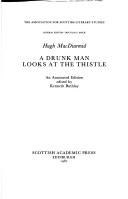
The central poem of the Scottish Literary Renaissance and one of the great long poems in any language: MacDiarmid uses Scots Lallans to interrogate Scottish identity, politics, and metaphysics. It is challenging but transformative, and best read after Burns to feel the deliberate echo and rupture.
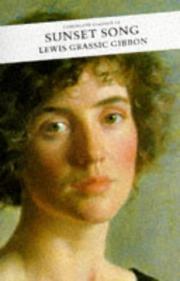
Widely regarded as the greatest Scottish novel of the 20th century, it follows a young woman through the death of rural Scotland during World War I. Its lyrical, stream-of-consciousness Scots prose is the direct fictional heir to MacDiarmid's poetic project.
Muriel Spark and the Satirical Intelligence
ExpertFully engage with Spark's compressed, ironic, and theologically charged fiction, understanding her place as Scotland's greatest prose satirist and a major figure in world literature.
▸ Study plan for this stage
Pace: 5–6 weeks, ~40–50 pages/day (with 2–3 days per week for reflection and exercises)
- Spark's compressed narrative style: how she achieves maximum thematic density in minimal page count, using ellipsis, fragmentation, and temporal leaps
- Irony as moral instrument: understanding how Spark's satirical voice exposes human vanity, self-deception, and the gap between intention and consequence
- Theological undercurrents: Spark's Catholic sensibility and how grace, predestination, and divine judgment permeate her secular narratives
- The unreliable narrator and narrative control: how Spark positions the reader as an accomplice in judgment, forcing active interpretation
- Character as type and archetype: how Spark's figures function as embodiments of social, psychological, or spiritual conditions rather than psychological realism
- The grotesque and the comic: how Spark fuses dark humor with existential dread to create a distinctive tonal register
- Fate and agency: the tension between determinism and free will across all three novels, and what Spark suggests about human control
- Scotland and cosmopolitanism: Spark's relationship to Scottish identity and her positioning within international modernism
- How does Spark's use of narrative compression and temporal fragmentation in *The Prime of Miss Jean Brodie* differ from conventional realism, and what effects does this achieve?
- What is the relationship between the narrator's omniscience and the reader's moral complicity in *The Prime of Miss Jean Brodie*? How does Spark make us judge Jean Brodie?
- In *The Driver's Seat*, how does Lise's apparent agency mask a deeper determinism, and what does the novel suggest about human freedom and self-knowledge?
- How does Spark use irony and dark comedy in *Memento Mori* to explore mortality, and what is the effect of the anonymous telephone calls on the novel's meaning?
- What role does theological thinking—particularly Catholic concepts of grace, judgment, and predestination—play in shaping the moral worlds of these three novels?
- How do the three novels collectively demonstrate Spark's satirical method, and what social, psychological, or spiritual follies is she exposing in each?
- Close-read a key passage from each novel (e.g., the revelation scene in *Jean Brodie*, Lise's final act in *The Driver's Seat*, a telephone call sequence in *Memento Mori*) and annotate how Spark's syntax, tone, and imagery create meaning beyond plot
- Map the narrative structure of *The Prime of Miss Jean Brodie*: identify all temporal shifts and fragmentation, then write a brief analysis of why Spark refuses linear chronology
- Create a character chart for *Memento Mori* tracking each character's relationship to mortality and the telephone calls; identify patterns in who is most and least disturbed
- Write a comparative essay on irony in *The Driver's Seat* vs. *Jean Brodie*: how does Spark's ironic method differ between a novel about self-deception and one about fate?
- Rewrite a scene from one of the novels in a conventional realist style (adding interiority, explanation, sentiment), then compare it to Spark's version and analyze what is lost and gained
- Trace theological language and imagery across all three novels; create an annotated list of moments where grace, judgment, or predestination appear, and discuss their thematic function
Next up: This stage establishes Spark as a major modernist voice whose compressed, ironic, theologically informed method fundamentally reshaped British fiction, preparing you to explore how her innovations influenced subsequent Scottish and international literature, or to examine her essays and criticism on craft and morality.
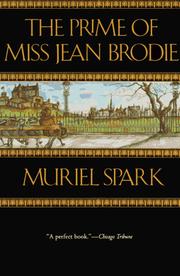
The essential Spark: set in 1930s Edinburgh, it is a perfectly constructed novel about charisma, fascism, and betrayal. Its non-linear structure and cool ironic voice are best appreciated after the emotional directness of Gibbon — the contrast is illuminating.
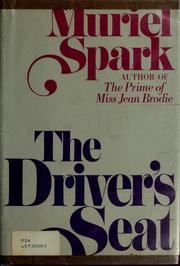
A short, deeply unsettling masterpiece that pushes Spark's technique to its extreme — the reader knows from the first page that the protagonist will be murdered. Reading it after Jean Brodie shows how Spark systematically strips away novelistic comfort.
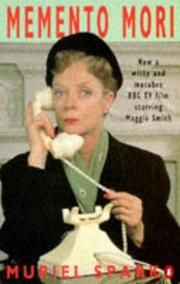
A darkly comic novel about old age and mortality in which an anonymous caller tells elderly characters 'Remember you must die.' It showcases Spark's full range — wit, theology, menace — and is a fitting capstone to the curriculum's meditation on mortality and identity.
Discussion
Keep reading
Paths that share books, cover the same subject, or open a related topic.