Medieval Literature: Best Books to Read in Order
This curriculum builds a deep, structured encounter with the greatest works of medieval literature, starting from an intermediate foundation and progressing toward close, scholarly reading. Because the learner already has some literary background, the path moves quickly from contextual grounding into the primary texts themselves — Beowulf, Sir Gawain, and Chaucer — before finishing with advanced critical and comparative reading that illuminates the whole tradition.
Foundations: The Medieval World & Its Stories
IntermediateUnderstand the historical, cultural, and literary context of medieval Europe so that the primary texts feel alive rather than alien.
▸ Study plan for this stage
Pace: 4–5 weeks, ~40–50 pages/day. Begin with Heer's *The Medieval World* (weeks 1–2, ~25 pages/day to absorb the historical sweep), then move to the relevant introductory essays and early selections in the Norton Anthology (weeks 3–5, ~50 pages/day to engage with primary texts and editorial context).
- The medieval worldview: how Christianity, feudalism, and the Great Chain of Being shaped thought, social order, and artistic expression
- The role of oral tradition and manuscript culture in preserving and transmitting medieval literature before print
- Key historical periods and their literary markers: Early Middle Ages, High Middle Ages, Late Medieval period, and how each produced distinct literary forms
- The function of literature in medieval society: religious instruction, courtly education, entertainment, and the blending of pagan and Christian traditions
- Major literary genres and their origins: epic (Anglo-Saxon and Norman), romance, lyric, mystery plays, and allegory
- The transition from Latin to vernacular languages as the medium for literary expression and what this shift meant for audience and authority
- How medieval texts encode social hierarchies, gender roles, and power structures that differ fundamentally from modern assumptions
- How did the feudal system and Christian theology together shape the values and conflicts depicted in medieval literature?
- What is the difference between oral tradition and manuscript culture, and why does this distinction matter for understanding how medieval texts were created and preserved?
- Name three major literary genres that emerged in the medieval period and explain the historical or social conditions that gave rise to each.
- How and why did the shift from Latin to vernacular languages change who could write, read, and be represented in medieval literature?
- What role did the Church play in both preserving and controlling medieval literature, and how is this visible in the texts themselves?
- How do medieval texts reflect assumptions about gender, nobility, and the natural order that differ from modern perspectives, and why is recognizing these differences essential to reading them fairly?
- Create a timeline of the medieval periods (Early, High, Late) using Heer's framework; mark key political, religious, and literary events on it, then match selections from the Norton Anthology to their historical moment.
- Read Heer's chapters on medieval cosmology and the Great Chain of Being, then annotate a passage from the Norton Anthology (e.g., from Beowulf or a courtly romance) identifying how this worldview appears in character motivation, conflict, or imagery.
- Trace the journey of one literary form (e.g., the epic, the romance, the lyric) from its origins through the Norton Anthology selections; note how it evolves and what social or historical changes drove that evolution.
- Compare a passage from an Anglo-Saxon or early medieval text in the Norton Anthology with a Late Medieval selection; write a short reflection on how language, tone, and subject matter shifted and what Heer's historical narrative suggests about why.
- Create a visual map of medieval social hierarchy (feudal pyramid, clergy, commons) using Heer's descriptions, then identify how characters in Norton Anthology texts occupy and navigate these positions.
- Select one primary text from the Norton Anthology (e.g., an excerpt from *The Canterbury Tales* or a courtly lyric) and write a 300-word 'historical context memo' that explains to a modern reader why this text mattered to its original audience, drawing on Heer's analysis of medieval values and concerns.
Next up: By internalizing the medieval worldview, social structures, and literary conventions through Heer and the Norton Anthology's foundational texts, you will be equipped to read longer, more complex primary works—such as complete romances, cycles of plays, or full narrative poems—with the cultural literacy needed to recognize allusions, appreciate formal innovations, and understand why medieval author
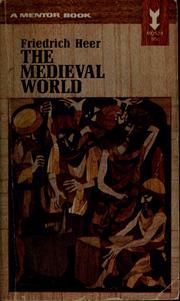
A sweeping, readable portrait of medieval civilization — its religion, politics, and imagination — that gives the learner the cultural backdrop every major text assumes. Reading this first prevents the primary works from feeling opaque.
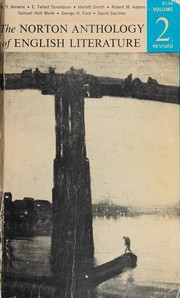
Provides authoritative introductions, timelines, and carefully selected excerpts across the full range of medieval English writing. Use it as a map and reference companion throughout the entire curriculum.
The Old English Heroic World: Beowulf
IntermediateRead and deeply understand Beowulf — its language, heroic code, elegiac tone, and place as the founding monument of English literature.
▸ Study plan for this stage
Pace: 4–5 weeks, ~40–50 pages/day. Week 1: Mitchell's guide (intensive, ~80 pages); Weeks 2–5: Heaney's Beowulf translation (~100 pages/week), with time for re-reading key passages and reflection.
- Old English phonology, morphology, and syntax as foundational to understanding the language of Beowulf and medieval English literature
- The heroic code: loyalty (comitatus), honor, fate (wyrd), and the warrior's duty to lord and community
- Elegiac tone and the tension between heroic triumph and inevitable decline, mortality, and loss
- Beowulf's three-part structure (Grendel, Grendel's mother, the dragon) and how each section deepens the poem's meditation on heroism
- Seamus Heaney's translation choices: how his rendering balances fidelity to Old English alliterative verse with accessibility to modern readers
- Beowulf as a founding monument: its role in establishing English literary tradition and its influence on later literature
- The role of fate, providence, and human agency in the poem's worldview
- Oral tradition and formulaic language: how the poem reflects its origins in Germanic oral poetry
- What are the key features of Old English grammar and phonology, and how do they shape the sound and meaning of Beowulf?
- How does the heroic code—particularly the concepts of comitatus, honor, and wyrd—drive the actions of Beowulf, Hrothgar, and other characters?
- What is the elegiac tone of Beowulf, and how does it complicate the poem's celebration of heroic achievement?
- How do the three major sections of Beowulf (Grendel, Grendel's mother, the dragon) build upon one another thematically, and what does each reveal about the nature of heroism?
- What are Seamus Heaney's major translation decisions, and how do they affect your understanding of the poem compared to reading about Old English in Mitchell's guide?
- Why is Beowulf considered a founding monument of English literature, and what makes it foundational to the tradition you are studying?
- Work through Mitchell's guide systematically: complete the phonology and morphology sections, then apply what you learn by reading 5–10 lines of Old English Beowulf (in the original or a facing-page edition) to hear how the language actually sounds.
- Create a character map tracking Beowulf, Hrothgar, Grendel, Grendel's mother, and the dragon, noting their relationships, motivations, and how each embodies or challenges the heroic code.
- Annotate 3–4 key passages from Heaney's translation (e.g., Beowulf's boast before fighting Grendel, the elegiac passage after Hrothgar's men are killed, Beowulf's final speech) to identify elegiac language, heroic language, and shifts in tone.
- Compare Heaney's translation of a passage (50–100 lines) with a different translation (e.g., Seamus Heaney's own notes on translation, or a scholarly article on his choices) to understand how translation shapes interpretation.
- Write a short essay (500–750 words) analyzing one of the three monster encounters and what it reveals about the limits or evolution of heroism across the poem.
- Create a glossary of key Old English and heroic concepts from Mitchell's guide (e.g., wyrd, comitatus, thegn, scop) and trace how these concepts appear and function in Beowulf's narrative.
Next up: Having mastered Beowulf's language, heroic world, and elegiac vision, you are now equipped to trace how later medieval and early modern English literature inherits, transforms, and challenges the heroic code and literary forms established by this foundational text.

A concise, learner-friendly introduction to Old English grammar and vocabulary. Reading selected chapters first demystifies the linguistic world of Beowulf and makes any modern translation far more meaningful.
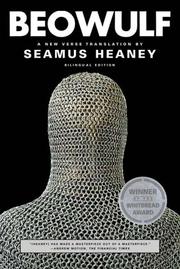
Heaney's celebrated verse translation captures the poem's power and music for modern readers while remaining faithful to the original. This is the ideal first full reading of the epic.
The Arthurian Romance: Sir Gawain and the Green Knight
IntermediateEngage fully with the greatest Arthurian romance in English — its chivalric ideals, Christian allegory, and sophisticated narrative irony.
▸ Study plan for this stage
Pace: 4–5 weeks, ~25–30 pages/day. Week 1: Armitage's translation (complete); Weeks 2–3: close re-reading of key passages and critical analysis; Weeks 4–5: Malory's "The Death of King Arthur" with comparative focus.
- The tension between chivalric ideals (honor, loyalty, courtesy) and human fallibility in Gawain's quest
- Christian allegory and symbolism: the Green Knight as supernatural test, the pentangle as spiritual armor, temptation and confession
- Narrative irony: the gap between courtly appearance and moral reality, especially in the seduction scenes and the final revelation
- The role of women (Morgan le Fay, the lady of the castle) as agents of fate and moral testing
- Courtly love conventions and their subversion in the poem's treatment of desire and fidelity
- The decline of Arthurian chivalry: how Malory's *Death of King Arthur* presents the inevitable fall of the Round Table through internal corruption and betrayal
- Comparative narrative technique: Armitage's alliterative verse versus Malory's prose, and how form shapes meaning
- How does the pentangle function as both a symbol of Gawain's virtues and a measure of his failure?
- What is the significance of the Green Knight's revelation at the end of *Sir Gawain*, and how does it reframe the entire narrative?
- How do the three temptation scenes in Gawain's host's castle work thematically and structurally?
- Compare the portrayal of King Arthur in Armitage's *Sir Gawain* with his role in Malory's *Death of King Arthur*—what does each text suggest about his authority and judgment?
- How does Malory use the theme of betrayal (Lancelot and Guinevere, Mordred's rebellion) to explain the collapse of Arthurian chivalry?
- What is the relationship between Christian morality and courtly honor in both texts, and where do they conflict?
- Read Armitage's translation aloud (or listen to an audiobook version) to experience the alliterative verse; note how sound and rhythm reinforce meaning
- Create a detailed character map of *Sir Gawain* showing the relationships between Gawain, the Green Knight, Bertilak, the lady, and Morgan le Fay—trace how each tests or influences Gawain
- Annotate the three temptation scenes (Fitt II–III) side-by-side, marking parallels in language, structure, and moral stakes; identify where Gawain's resolve wavers
- Write a comparative essay (1000–1500 words) analyzing how Armitage and Malory each explore the failure of chivalric ideals—use specific textual evidence from both works
- Create a visual or written analysis of the pentangle symbol: what does each of its five points represent, and how does Gawain's acceptance of the green girdle complicate this symbolism?
- Trace the theme of confession and penance across both texts: how do characters seek absolution, and what does this reveal about the spiritual stakes of the Arthurian world?
Next up: This stage establishes the literary and thematic foundations of Arthurian romance—its blend of courtly idealism, moral complexity, and inevitable decline—preparing you to explore how later adaptations and retellings (in subsequent stages) either recover or reimagine these themes in new contexts.

Armitage's alliterative modern translation preserves the original's rhyme scheme and wit, making the poem's structure and humor fully accessible. Reading this edition first lets the story and themes land before tackling scholarly commentary.
Malory's Le Morte d'Arthur places Sir Gawain within the broader Arthurian legend and shows how the chivalric code plays out across a whole tradition. Reading it after Sir Gawain deepens understanding of Gawain's character and the Round Table's ideals.
The Summit: Chaucer
IntermediateRead The Canterbury Tales with genuine comprehension and pleasure, understanding Chaucer's irony, social satire, and mastery of multiple literary genres.
The central masterpiece of medieval English literature. Read the Riverside Chaucer or the Penguin prose translation alongside the Middle English — the prior stages have built enough context to make Chaucer's voices, genres, and jokes fully resonant.
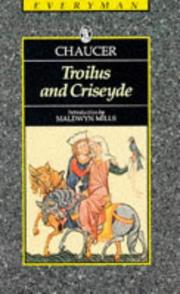
Chaucer's other great long poem reveals his psychological depth and his engagement with classical and Italian sources. Reading it after the Tales shows the full range of his genius and rounds out a deep understanding of his work.
Deeper Reading: Criticism & the Wider Tradition
ExpertSituate all three major works within the broader medieval literary tradition and engage with the critical conversations that define serious scholarship on the period.
▸ Study plan for this stage
Pace: 8–10 weeks, ~40–50 pages/day (mix of primary text and critical essays)
- Piers Plowman as a visionary allegory: structure, dream-visions, and the quest for spiritual truth
- Langland's engagement with social critique, poverty, and ecclesiastical corruption in 14th-century England
- The textual tradition of Piers Plowman: the A, B, and C versions and their historical contexts
- Medieval literary genealogy: how Piers Plowman relates to earlier traditions (dream-vision poetry, estates satire, biblical exegesis)
- The Cambridge Companion's framework for understanding medieval English literature as a coherent period and tradition
- Critical schools and interpretive approaches: historicist, formalist, and theological readings of medieval texts
- The role of manuscript culture and oral transmission in shaping medieval literary meaning
- Piers Plowman's influence on later medieval and early modern literature
- How do the A, B, and C versions of Piers Plowman differ in their treatment of Langland's central themes, and what do these revisions reveal about the poem's historical contexts?
- What specific social and ecclesiastical abuses does Langland critique through his allegorical characters, and how do these critiques reflect 14th-century English society?
- How does Piers Plowman draw on and transform earlier medieval literary traditions (dream-vision, estates satire, biblical commentary)?
- What are the major critical interpretations of Piers Plowman's ending and the poem's overall spiritual message, and what textual evidence supports each reading?
- According to the Cambridge Companion, what are the defining characteristics of medieval English literature as a tradition, and where does Piers Plowman fit within that framework?
- How does understanding Piers Plowman's manuscript culture and oral contexts change your interpretation of its meaning and reception?
- Create a detailed genealogy chart mapping Piers Plowman's literary debts to earlier medieval genres (dream-vision, estates satire, biblical exegesis), with specific textual examples from Langland
- Annotate a passage from each of the A, B, and C versions of Piers Plowman, noting revisions and explaining what Langland's changes suggest about his evolving concerns
- Write a 1,500-word essay analyzing one major character (Piers, Lady Meed, Conscience, Reason) as an allegorical vehicle for Langland's social critique, grounding your argument in specific textual moments
- Create a comparative table of critical interpretations of Piers Plowman (historicist, formalist, theological) from the Cambridge Companion and other scholarly essays, noting which textual evidence each school privileges
- Trace a single theme (poverty, salvation, labor, corruption) through Piers Plowman and identify how Langland's treatment of it relates to the broader medieval literary tradition as outlined in the Cambridge Companion
- Conduct a close reading of a 50-line passage from Piers Plowman, analyzing its use of allegory, alliteration, and biblical reference, then write a brief reflection on how manuscript and oral contexts might have shaped its original reception
Next up: This stage establishes you as a sophisticated reader of medieval literature by grounding close textual analysis in historical context and critical conversation, preparing you to engage with advanced seminars, write original scholarship, or pursue specialized study of particular medieval genres or periods.
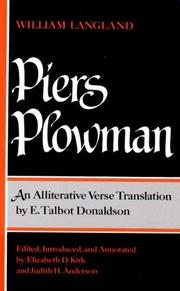
The great allegorical counterpart to Chaucer, written at almost the same moment — reading it reveals the full spectrum of medieval English literary ambition and the religious imagination that underlies all the texts studied so far.

A collection of authoritative essays by leading scholars on genre, language, manuscript culture, and individual works. This is the ideal capstone: it reframes everything the learner has read through the lens of current critical thought.
Discussion
Keep reading
Paths that share books, cover the same subject, or open a related topic.