Robert Musil Reading Order: Where to Start
Almost everyone who bounces off Robert Musil does the same thing: they open the 1,100 pages of The Man Without Qualities cold and stall in the essayistic middle. The fix is to arrive already fluent in his manner, which the early novel and the novellas teach in a few hundred pages. Read the short fiction first, then the unfinished monument, then the essays and diaries that explain what he thought he was building.
The Short Fiction First
IntermediateGet used to Musil's analytic sentence and his subject — the exact moment a mind changes state — at a length you can finish in a week.
▸ Study plan for this stage
Pace: Two to three weeks. The Confusions of Young Törless runs around 200 pages and has an actual plot, so it goes down in four or five evenings. Five Women is 222 pages and is deceptively slow — the five novellas are much denser per page than Törless, and one novella per sitting, with a day between, is t
- Musil's real subject is the moment a mind changes state — the sentence before a person becomes someone who could do this. He is an analyst of transitions, not of events
- Törless is set in an Austrian military boarding school and turns on the systematic humiliation of one boy by two others while a fourth watches and cannot decide what he thinks. The watching is the novel
- The imaginary-numbers episode is the key to Musil generally: Törless is disturbed that mathematics can pass through something that does not exist and still arrive at a true answer, which becomes his model for morality
- Musil was trained as an engineer and took a doctorate in philosophy, and the prose keeps the habit of definition — expect sentences that stop to specify their own terms
- Five Women collects two separate books: the three later novellas and the two earlier, harder ones. The earlier pair are the most difficult prose he wrote, and being slowed by them is not a failure of attention
- Musil's erotics are cognitive: the interest is in what a character believes is happening to them, and the physical event is often withheld or reported flatly
- The narrator's ironic distance is constant and is not the same as disapproval. Learning to hear amusement and precision in the same clause is the skill this stage exists to build
- What does Törless actually understand by the end, and how carefully does Musil avoid letting him say it?
- Why are imaginary numbers in this novel, and what moral question is Törless using them to hold at arm's length?
- Where does the narration take Törless's side, and where does it quietly withdraw from him?
- In the novellas, pick one and locate the sentence at which the central character's state has already changed. How far before the plot registers it does the prose register it?
- Musil could write a gripping realist novel — Törless proves it. Why does the later work refuse to?
- What is the difference in difficulty between the three later novellas and the two earlier ones, and can you describe it in terms of sentence construction rather than subject matter?
- Take one long Musil sentence from Törless and diagram it — main clause, qualifications, the thing being defined. Doing this five times is worth more than fifty pages of skimming, and it is the actual preparation for the big novel.
- Read the two earlier novellas in Five Women aloud. They resist silent reading and yield noticeably to the voice.
- Write a paragraph describing a decision you once made, using no verbs of action — only verbs of perceiving, believing and noticing. That constraint is Musil's method and doing it once makes his pacing legible.
- Keep a running note of every abstract noun Musil stops to redefine. By the end of this stage you will have his private vocabulary, which The Man Without Qualities assumes.
Next up: You now read Musil's sentence at his speed rather than yours, which is the only prerequisite the long novel actually has.
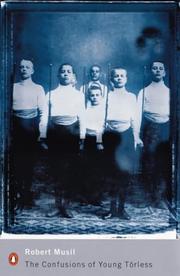
His first book and by far the best entry point: cruelty in an Austrian military boarding school, watched by a boy who cannot decide what he thinks about it. Short, gripping, and already doing the moral-precision work the big novel does at scale.
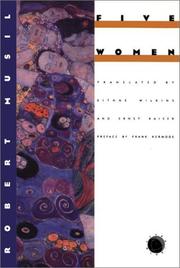
The novellas, where the prose is at its densest and most erotic. Read them second — they are harder than Törless per page, and they train you for the interior stretches of The Man Without Qualities.
The Small Prose
IntermediateMeet Musil the miniaturist — flypaper, sheep, monkeys — and see the essayistic mode in isolation before it is embedded in a novel.
▸ Study plan for this stage
Pace: One week, and treat it as a break rather than an assignment. The Posthumous Papers of a Living Author is 160 pages of pieces that run from a single page to a dozen; two or three a night, in no particular order, is exactly right. This is the one stage in the path where jumping around is not a comprom
- The essayistic mode in isolation: a small observed object, examined at absurd length and with total seriousness, until it turns into a thesis about being alive
- The flypaper piece is the famous one and the best demonstration of the method — an entomological description of insects dying, written so precisely that the human analogy is never stated and is unavoidable
- Musil is funny, and this is where most readers first find that out. The comedy comes from the mismatch between the gravity of the analysis and the triviality of the object
- These were written for newspapers, which means Musil's essayism was a paying trade before it was a novelistic technique — the digressions in the big novel are a professional habit, not an indulgence
- The pieces are almost entirely without plot or character, which makes them the purest available sample of the voice you will spend a thousand pages with
- The title is a joke about his own obscurity in the 1930s, and the collection was assembled while The Man Without Qualities was stalled — this is what he did instead of finishing it
- In the flypaper piece, where does the description stop being entomology? Point to the sentence.
- What does Musil do to make a page-long observation feel structurally complete, given that nothing happens in it?
- How does the humour work — is it in the object, the vocabulary, or the pacing? Find an example of each.
- Several pieces describe animals. What is Musil consistently using animals to say about people, and how does he avoid ever saying it directly?
- Having read these, what do you now expect the essayistic chapters of the big novel to feel like — and what is that expectation based on?
- Pick a mundane object on your desk and write 300 words about it in this register: no metaphor, no conclusion, only relentless description. Musil's method is easier to understand from the inside than from commentary.
- Read three pieces aloud to someone who has never heard of Musil and see which one gets a laugh. That will tell you where the comedy actually lands.
- Copy out one full piece by hand. At this length it takes twenty minutes and it does more for your reading speed on the novel than any secondary source.
- Mark the two or three pieces you find dull. Knowing which register bores you is useful intelligence, because the long novel contains a lot of it and you will want to recognise the feeling rather than blame the book.
Next up: You have now met the essayistic voice on its own terms and know you can enjoy it, which is the specific defence against the middle of The Man Without Qualities, where most readers stop.

Short pieces he assembled himself, some only a page long. This is the friendliest possible sample of the essayistic voice that fills the middle of the big novel, and it is genuinely funny.
The Man Without Qualities
BeginnerRead the central work with a strategy — knowing where it stops being a satire and becomes something else, and what the posthumous material is.
▸ Study plan for this stage
Pace: Three to six months, and the single most important scheduling fact is this: the novel is unfinished. Musil published a first book in 1930 and a second in 1932, withdrew a set of proofed chapters in 1938 to keep revising, and died in Geneva in 1942 with the book still open — so there is no ending, an
- The Parallel Campaign is the whole comic engine: a committee of Viennese notables in 1913 sets out to plan a grand patriotic celebration for 1918, and the reader knows what 1918 actually held. Every earnest meeting is a joke the characters cannot hear
- Ulrich, the man without qualities, has taken a year's leave from his own life to decide what to do with it. He is not passive — he is conducting an experiment, and the novel is the experiment's log
- Kakania, Musil's name for Austria-Hungary, is the most influential joke in the book: an empire so procedurally absurd that describing it accurately is already satire
- The essayistic chapters are the novel, not interruptions in it. If you skip them you are skipping the argument and keeping only the furniture — this is the single most common way readers ruin the book for themselves
- Moosbrugger, the murderer awaiting trial whom none of the characters can stop thinking about, is the novel's dark constant: he is what happens when the culture's inability to say what a person is meets a real act
- Diotima and Arnheim are the satirical centre — the salon and the industrialist, high culture and money, discovering they need each other. Arnheim's real-world model is well known and worth looking up once you have met him
- The other condition — the mystical, non-utilitarian state Ulrich and Agathe pursue in the second half — is what the book turns into, and it is why the ending could never be written. The problem is unresolvable by design
- The tone never settles, and it is meant not to. Musil holds satire and metaphysics in the same paragraph, and readers who decide the book is one or the other lose the other half of it
- What are Ulrich's three attempts at a life before the novel opens, and why does each fail on its own terms rather than through bad luck?
- The Parallel Campaign never decides on an idea. What is Musil saying about the culture through that specific kind of failure?
- Why is Moosbrugger in this book? What would be missing if the murder plot were cut?
- Pick one essayistic chapter and state its argument in three sentences. Then say what the surrounding narrative would mean without it.
- What changes when Agathe arrives — in subject, in pace, and in how much the satire is still operating?
- Given how it breaks off, what would you say the novel is about? Answer as though the absence of an ending were information rather than a defect.
- Before starting, read your edition's editorial note on what it contains and where the published text stops. Ten minutes here prevents the disorienting experience of the book simply ceasing.
- Keep a two-column log: chapter number, and whether it was narrative or essay. Around the middle you will see the ratio shift, and that shift is the book's real structure.
- Maintain a one-line list of the Parallel Campaign's committee members and what each of them wants from it. There are a lot of them and losing track of the salon is what makes the middle feel formless.
- When you stall — and you will — reread a piece from The Posthumous Papers of a Living Author rather than a plot summary. The problem is almost always rhythm, not comprehension.
- Read Agathe, or the Forgotten Sister only after the main novel, and read the translator Joel Agee's framing of how the volume was assembled. It presents the brother-and-sister material as its own book and is the closest thing available to the ending Musil was reaching for.
Next up: Having lived inside the experiment and seen where it broke off, you can read the essays and diaries as what they are — the working papers of a man arguing with himself about a book he could not finish.

The unfinished monument: Vienna in 1913 organising a patriotic jubilee for an empire about to vanish. Read the published books straight through and do not fight the essayistic chapters — they are the novel, not an interruption.

The Agathe chapters — the brother-and-sister material Musil rewrote obsessively until his death — presented as their own book. Read it only after the main novel, as the closest thing we have to how he wanted it to end.
The Essays, the Plays, the Diaries
BeginnerUnderstand the intellectual project behind the fiction, and see the drafts and self-arguments that produced it.
▸ Study plan for this stage
Pace: Six to ten weeks, and this stage is genuinely optional past the first book. Precision and Soul is 315 pages of essays and lectures; read it selectively, an essay at a time, over a month. The Enthusiasts is 106 pages and takes an evening. Diaries, 1899-1941 is 557 pages spanning fifty years and shoul
- Precision and Soul is the title of the whole project: Musil's claim that the exactness of science and the inner life of feeling have been split apart, and that a novel is the only instrument that can hold both
- The essay on stupidity is the most quotable thing he wrote and the most directly useful — his distinction between honest and intelligent stupidity explains half the characters in the novel
- Musil states outright in the essays what the fiction only dramatises, which makes this stage feel like being handed the answer key. Read it late for exactly that reason
- The Enthusiasts is his major play and stages the same erotic and ethical impasse as the Agathe material, compressed into a few rooms and a few hours. It failed on stage and is best read rather than imagined performed
- The diaries show the novel being planned, doubted, restructured and re-planned across decades — the best available evidence that The Man Without Qualities was not left unfinished by accident but was constitutionally unfinishable
- Musil's professional bitterness is on the page: he was outsold and outshone by contemporaries he considered his inferiors, lived on committee stipends, and knew he was writing something nobody was reading
- Reading the notebooks changes the novel retrospectively — passages you took for authorial confidence turn out to have been arrived at after fifteen years of argument
- How does Musil distinguish the two kinds of stupidity, and which characters in the novel are examples of each?
- What does he mean by precision and by soul, and why does he think the two cannot currently coexist?
- The Enthusiasts stages the same problem as the Agathe chapters. What does the stage form make visible that the novel's interiority hides — and what does it lose?
- Find the diary entries closest to the withdrawal of the 1938 proofs. What is he actually worried about?
- After the diaries, do you think an ending was possible? Argue it from the notebooks rather than from taste.
- Which of Musil's stated positions does the novel undermine? He is not always his own best reader.
- Read the stupidity essay first, out of order, then reread the Parallel Campaign chapters you remember best. The essay retro-fits the satire and it is the most satisfying single move available in Musil.
- Use the diaries as an index: pick three moments in the novel that puzzled you, find the years he was drafting them, and read those entries.
- Read one act of The Enthusiasts aloud with two other people. It is a play, it was written to be spoken, and silent reading flattens the ethical arguments into abstraction.
- Write 500 words on what Musil thought a novel was for, citing the essays. Then say honestly whether The Man Without Qualities does it.
- Go back to Törless with all of this behind you. The first book turns out to contain the whole programme, which is the strongest argument for having started the path where it started.
Next up: That is the complete working archive — novel, drafts, arguments and self-doubt — and you can now say precisely what Musil was attempting, which very few readers of the famous unfinished novel ever can.
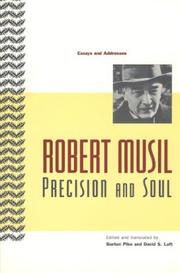
The essays and addresses, including the ones on stupidity and on the writer in an age of science. This is where he states outright the problem the novel dramatises.
His major play, and a compressed version of the erotic and ethical impasses that occupy the Agathe material. Worth it for completists who want the same problems staged rather than narrated.
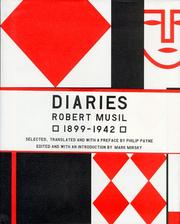
Fifty years of notebooks in which the novel is planned, doubted and re-planned. The last thing to read, and the best evidence for why The Man Without Qualities could never be finished.
Discussion
Keep reading
Paths that share books, cover the same subject, or open a related topic.