Start with The wild places. This is deliberately not his first book, and the reason is simple: it is the friendliest version of the voice. Short chapters, each built around one journey to one place, no plot to lose, and the whole thing reads at a chapter an evening with a map of Britain and Ireland to hand.
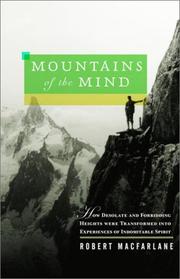
The obvious alternative is Mountains of the mind, which came first and which a chronological instinct will push you toward. It is the most academic of the three landscape books and reads slowest, braiding cultural history with his own climbing, and it is much better appreciated once you already like the writer. Starting there is the commonest way to bounce off Macfarlane entirely.
One thing to test early: the prose is deliberately worked and heightened. If the style irritates you, that will be obvious within thirty pages and it does not change later.
Start here
The wild places sets out to find genuine wildness in an overdeveloped Britain and quietly revises its own definition as it goes. That revision is the book's real plot — wildness relocates from remote mountaintops to holloways, hedgerows and edges, which is the finding that made the book influential. Each chapter is anchored to a named landform, so the structure is a taxonomy as much as an itinerary.
The landscape trilogy, out of order on purpose
Having started in the middle, go back for Mountains of the mind and then forward to The Old Ways.
Mountains of the mind argues that mountains became desirable rather than fearful through a change in the European imagination rather than a change in the mountains. His own climbing runs underneath the history, and the risk is not treated as heroic. The Old Ways follows ancient paths, sea roads and drove tracks, extending the method from a single place to a network, and makes the trilogy's most contestable claim: that a route holds the memory of everyone who walked it.
Across the three books the subject widens from mountains, to wild places, to the whole walked surface of a country.
The word books
Landmarks, then The Lost Words, then The Lost Spells.
Landmarks is the hinge of the whole career: it argues that a landscape loses its vocabulary when nobody works it any more, and that losing the vocabulary is a perceptual loss rather than a sentimental one. It alternates essays with glossaries of regional terrain words, and the reading advice matters — read the essays continuously and the glossaries in small doses, because reading a list at prose speed is joyless.
The Lost Words and The Lost Spells are collaborations with the painter Jackie Morris, made in response to nature words being dropped from a children's dictionary. They are large designed objects meant to be read aloud, the paintings carry half the work, and both lose a great deal on a small screen. Get physical copies if you possibly can. Reading the spell-poems aloud is not optional; they are built on sound and go flat when read silently.
The deep books
Underland, then Is a River Alive?.
Underland inverts a career of ascents into a descent: catacombs, dark-matter laboratories, glacial moulins and nuclear waste stores. It is his most ambitious and most demanding book, and a warning is fair — the Paris catacombs and Slovenian cave chapters are genuinely claustrophobic, and reading them at night is a choice you should make deliberately. Deep time is the organising scale, and the moral problem of leaving warnings for people a hundred thousand years away is the book's hardest question.
Is a River Alive? is shorter and more argumentative, structured around three rivers, and takes the rights-of-nature question seriously as law rather than as metaphor. Both books turn the deep-time framing toward obligation, which is where the career has been heading.
The collaborations
Holloway and Ness, about 110 pages between them, and an afternoon each. Holloway is a slender book about sunken Dorset lanes that reads as a footnote to The Old Ways, and also as an elegy. Ness is an incantatory prose-poem about a former weapons testing site and is nothing like the walking books; read it aloud and do not read it for sense on a first pass.
Attempting either of these first would give a badly misleading picture of what Macfarlane does, which is exactly why they close the path.
Where to stop
The wild places, The Old Ways and Underland are the three that matter most, and the shape of the career is legible from them alone. For a very different kind of long-form non-fiction obsessive, Robert Caro sits next door.
Follow the full ordered path here: Robert Macfarlane Reading Order: Where to Start.