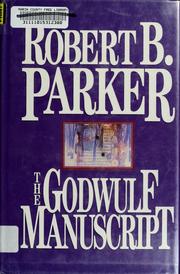
Start with The Godwulf manuscript, the first one published, and ignore the common advice to skip it because it is the weakest. It is the weakest. It is also 190 pages of mostly dialogue and you will finish it in an evening, and a large part of the pleasure of the next forty novels is watching a writer find his voice in public.
The usual alternative is to open with Early autumn, the book long-time fans hand to newcomers. It is the better novel and it is the wrong entry point: it is the thesis statement of a series you have not read yet, almost plotless by design, and it lands as a quiet character study rather than the culmination it actually is. Read three short books first and it hits properly.
Set your expectations at the same time. Parker wrote roughly forty Spenser novels before his death in 2010 and the series has continued since under other writers. This path takes fourteen. The last section explains where the returns stop.
The first three
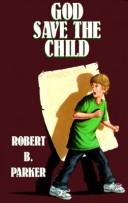
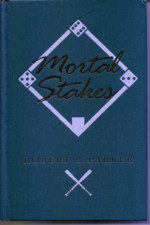
The Godwulf manuscript, God save the child, Mortal stakes.
The Chandler inheritance is worn openly — a wisecracking Boston private eye, a corrupt institution, a client who lies — and Parker's doctoral work on Hammett and Chandler sits visibly underneath it. What arrives faster than the character is the code: the insistence on autonomy, on doing the work himself, on not being anyone's employee. Susan Silverman enters in book two and permanently changes what the series is about, from cases to a continuing relationship the cases interrupt. Mortal stakes is the first real Spenser novel, where a moral problem has no clean solution and he takes the option that costs him something.
One thing to name rather than be surprised by: the first two books carry attitudes to women and to gay characters that were routine in 1973 and read badly now. Parker's handling of both changes markedly within a few years, and the change is visible on the page.
The peak
Promised land, The Judas goat, Looking for Rachel Wallace, Early autumn, published between 1976 and 1981. If you only ever read four Spenser novels, these are the four, and this is the stretch to read consecutively with nothing else in between.
Hawk arrives in Promised land and immediately becomes the series' most interesting problem: a killer for hire operating by a code as strict as Spenser's and entirely amoral by comparison. Parker uses him to test whether Spenser's ethics are principles or preferences, and never fully settles it. Looking for Rachel Wallace is the outlier critics cite — Spenser is hired by a client who finds him ridiculous, is fired by her for being a chauvinist, and is substantially in the wrong for most of the book. Parker lets his hero lose an argument, which the genre rarely does. The Judas goat is the pure entertainment of the four.
The strong middle run
Ceremony, A Savage Place, Valediction, A Catskill eagle.
Ceremony is the counter-case to Early autumn: another young person who needs saving, who declines to be saved on Spenser's terms. That is the real subject of this stage — the code works on people who want what Spenser wants and is useless on everyone else. A Savage Place is the deliberate experiment: Los Angeles, no Hawk, no Susan, and an ending Parker never repeated because it breaks the series' implicit promise that Spenser's presence is protection.
Read Valediction and A Catskill eagle back to back. They are one story split across two volumes and the first on its own is simply bleak. A Catskill eagle pushes Spenser furthest outside the law and divides readers permanently on whether the code survives it.
Late Parker, and where to stop
Pale kings and princes, Crimson joy, Small vices. Then stop.
That is this path's honest recommendation and it is not a slight on what follows. From the late nineties the books shorten, the plots thin, and the continuing relationships stop developing — the tell is that nothing in a book changes anything in the next one. Small vices is the genuine late peak: a wrongful conviction, a shooting that nearly kills Spenser, and a long recovery that gives the character consequences for the first time in a decade. It is the right last note.
The remaining novels remain pleasant company and can be read in any order or none, which is precisely why no reading order for them exists. If you want a series that is still building rather than idling, browse what else is on the site.
Follow the full ordered path here: Spenser by Robert B. Parker Reading Order: Where to Start.