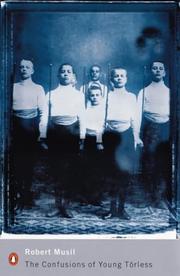
Start with The Confusions of Young Torless — published in English as The Confusions of Young Törless. It is about 150 pages, it was his first book, and crucially it is finished. A boarding school, three boys, one victim, and a fourth boy watching himself fail to intervene while thinking with terrifying precision about why. Everything Musil does later is in it at a tenth of the scale.
The obvious alternative is to begin with The Man Without Qualities, and you should know one thing before you do: it is unfinished. Musil worked on it for more than twenty years and died in Geneva in 1942 with the novel nowhere near an ending. English editions run past 1,700 pages and then dissolve into a mass of drafts, variants and abandoned chapters. Starting there is how most people's Musil reading also ends.
The short fiction first
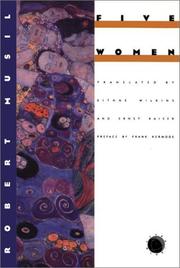
After Törless, two slim books. Five women collects his short fiction about women, and it is Musil at his most compressed and most difficult — erotic, cold, formally strange, and a fair test of whether his sentences are for you. The Posthumous Papers of a Living Author is the opposite: very short prose pieces about flypaper, a rabbit, a horse, a monument nobody looks at. It is the friendliest thing he wrote and the best evidence that the analytic manner can be funny.
The Man Without Qualities
Vienna, 1913. A committee of the great and good forms to plan a national celebration for 1918, an anniversary of an empire that will not exist by then. Ulrich, a mathematician on leave from his own life, is made its secretary. Book one is one of the great satires: a whole society organising a party for its own corpse. Then the novel turns inward, Ulrich's sister Agathe arrives, and it becomes something stranger and slower about two people trying to live outside ordinary morality.
How to read it: take volume one straight through as an ordinary novel. When you reach the material Musil never finalised, treat it as an archive rather than a chapter list. Reading the variants in sequence, as though they were the continuing story, is the single most common way to burn out on this book.
The Agathe shortcut
Agathe, or the Forgotten Sister is a standalone volume assembling the Ulrich and Agathe material out of the larger novel. It is useful in two situations: you want the emotional centre of the book without the full apparatus, or you have already read the published portion and want that thread continuous. It is not a substitute for volume one, and most readers find it makes little sense cold.
The essays, the play, the diaries
Precision and Soul is the key to the whole project. The title names Musil's actual problem — he trained as an engineer and wrote a doctorate on Ernst Mach, and he spent his life arguing that exactness and inner life are not opposites. Read it if the novel's mode of thought interests you more than its plot.
The Enthusiasts is his play, rarely staged and worth knowing exists rather than worth prioritising. Diaries, 1899-1941 is for readers already committed: notebooks that show the novel slowly eating its author.
Where to stop
Most readers stop at the end of the published portion of The Man Without Qualities and lose nothing they could have had. There is no ending withheld further on — Musil did not write one. Finishing the drafts is a scholarly interest, not a reader's duty, and treating it as one is why so many people abandon Musil while still calling him unfinished business.
A reasonable complete Musil, then: Törless, The Posthumous Papers of a Living Author, and volume one of The Man Without Qualities. If you want the other great unfinished-feeling novel of the same decade, James Joyce is the natural next stop.
Follow the full ordered path here: Robert Musil Reading Order: Where to Start.