Start with The moon is a harsh mistress. It is Heinlein at the height of his craft: a lunar penal colony organising a revolution, narrated in a clipped Russian-inflected English that took real nerve to sustain for 400 pages, with a computer named Mike who is the best character he ever wrote. It won the Hugo in 1967 and it is the book that survives rereading best.
The obvious alternative is Stranger in a Strange Land, because it is the famous one — the counterculture novel, the one with its own vocabulary. Read it later, if at all. It is his most dated book, the middle third is a long lecture, and the sexual politics that made it notorious in 1961 now read as the least interesting thing in it. Starting there produces more people who bounce off Heinlein than any other single choice.
If 400 pages feels like a commitment, Double Star is the better short entry: a Hugo winner, under 200 pages, warm, and structurally near-perfect.
Phase one: the juveniles
Heinlein wrote a run of novels for younger readers in the late 1940s and 1950s, and they are much better than that description suggests — tightly plotted, technically serious, and the reason two generations of engineers exist. Rocket Ship Galileo is the first and the creakiest. Have Space Suit _ Will Travel, published as Have Space Suit — Will Travel and catalogued here in its graphic-novel form, is the best of them and holds up as an adult read.
You can skip this phase entirely without losing anything the later books depend on.
Phase two: the majors
This is the reason to read Heinlein at all.
- Double Star (1956)
- Starship Troopers (1959)
- Stranger in a Strange Land (1961)
- The moon is a harsh mistress (1966)
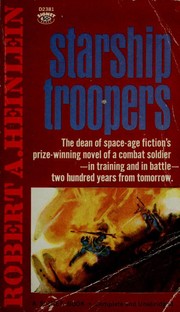
Starship Troopers is the contested one. Whether it is a defence of militarism, a satire of it, or simply a thought experiment about civic obligation has been argued for sixty years, and the argument is not settled; readers should know that going in rather than take anyone's word for the verdict. As a novel it is short, propulsive, and mostly consists of infantry training.
The missing books worth seeking out elsewhere are The Door into Summer, Citizen of the Galaxy and The Puppet Masters, none of which are in our catalogue.
Phase three: the late sprawl
Time Enough For Love (1973) is the hinge. Lazarus Long, an ancient man telling stories, roughly half of which are excellent and half of which are the author talking. From here the novels get longer, looser and much more interested in their own continuity.
The Number of the Beast is widely regarded as the low point — a book that abandons plot for cross-universe cameos of Heinlein's own characters. To sail beyond the sunset, his last novel, is a retrospective that only works if the earlier books mean something to you.
Honest warnings
The late Heinlein is where most readers get off, and there is no shame in it. The lecturing that is a spice in the middle novels becomes the meal. Family structures get strange in ways that will lose a lot of readers permanently.
His attitudes toward women date badly even in the books people love; competent, capable female characters are repeatedly routed back toward wanting babies. It is worth naming before you meet it.
Where to stop
Honestly: after The moon is a harsh mistress. Four majors and one juvenile is a complete education in Heinlein. Read Time Enough For Love if you are curious what happened next, and treat everything after it as optional. Then take a different path.
Follow the full ordered path here: Robert A. Heinlein Reading Order: Where to Start.