Best Books on the Gulf War, in Reading Order
This curriculum builds from a clear narrative foundation of the Gulf War's political and military arc, then drills into the operational and strategic layers — the air campaign, ground war, and coalition dynamics — before closing with critical and retrospective works that interrogate the war's unfinished ending and long legacy. Starting at an intermediate level, each stage assumes the vocabulary and context established by the one before it.
The Narrative Foundation
IntermediateUnderstand the full arc of the Gulf War — from Iraq's invasion of Kuwait through Desert Storm and the ceasefire — with a gripping, authoritative narrative that establishes key players, decisions, and timeline.
▸ Study plan for this stage
Pace: 6–7 weeks, ~40–50 pages/day (approximately 280–350 pages per week across both books)
- The decision-making chain of command: how Colin Powell, Norman Schwarzkopf, Dick Cheney, and George H.W. Bush shaped military strategy and political constraints
- Iraq's invasion of Kuwait (August 1990) as the catalyst: Saddam Hussein's miscalculation and the immediate international response
- The buildup to Desert Storm: coalition formation, troop deployment logistics, and the diplomatic window before military action
- Operation Desert Storm's execution: the air campaign, ground offensive strategy, and the speed of the 100-hour war
- The role of technology and military innovation: how precision weapons, intelligence, and doctrine changes defined modern warfare
- Political and military tensions: the friction between civilian leadership and commanders over war aims, rules of engagement, and when to stop
- The ceasefire and its aftermath: why the war ended when it did and what remained unresolved
- What were the key decision points that led the U.S. to choose military action over continued sanctions, and who were the main architects of this decision?
- How did Colin Powell and Norman Schwarzkopf's military strategy differ from initial Pentagon assumptions, and what role did the 'left hook' maneuver play?
- What were the major phases of Operation Desert Storm, and why did the ground war last only 100 hours?
- How did technology and precision weaponry change the nature of the conflict, and what limitations did they have?
- What political and military disagreements emerged between Washington and the field commanders, particularly regarding war aims and the decision to halt operations?
- Why did the U.S. choose not to pursue Saddam Hussein to Baghdad, and what were the consequences of this decision?
- Create a detailed timeline of key events from August 1990 through March 1991, marking major decisions, military operations, and diplomatic milestones from both books
- Build a decision-maker map: identify the main players (Powell, Schwarzkopf, Cheney, Bush, Scowcroft, etc.) and chart their positions on key strategic questions (e.g., timing of attack, scope of objectives)
- Analyze the 'left hook' strategy: sketch the original plan versus Schwarzkopf's flanking maneuver and explain why it was militarily superior and how it was sold to civilian leadership
- Compare Woodward's behind-the-scenes account of the command structure with Atkinson's narrative of actual combat operations—identify where civilian and military perspectives diverge
- Write a 2–3 page memo from the perspective of a military advisor (e.g., Powell or Schwarzkopf) to the President, arguing for or against the decision to halt the ground war at 100 hours
- Create a visual or written comparison of how the two books portray the same events (e.g., the air campaign's opening night) to understand narrative perspective and emphasis
Next up: This stage equips you with a comprehensive narrative of what happened and why—the decisions, the people, and the operational arc—preparing you to move into deeper analysis of consequences, alternative histories, and the war's long-term strategic and geopolitical impact in the next stage.

Woodward's insider account of the Bush administration and the Joint Chiefs during the Gulf War crisis is the ideal starting point — it humanizes the decision-makers and explains how the U.S. chose war over containment, giving the reader essential political and military context.
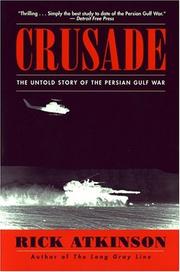
Atkinson's Pulitzer Prize–winning narrative is the single best comprehensive account of the war from start to finish. Read second, it transforms the political backdrop from Woodward into a vivid operational and human story of the coalition at war.
The Iraqi Side & Regional Context
IntermediateUnderstand why Saddam Hussein invaded Kuwait, how he miscalculated, and what the war looked like from the Arab and Iraqi perspective — correcting the one-sided coalition view of Stage 1.
▸ Study plan for this stage
Pace: 6–7 weeks, ~40–50 pages/day. Start with "Republic of Fear" (weeks 1–3, ~350 pages), then "The Gulf Conflict, 1990–1991" (weeks 4–7, ~400 pages). Build in 3–4 days for review and synthesis between books.
- Saddam Hussein's consolidation of power through Ba'athist ideology, secret police apparatus, and systematic elimination of rivals—as detailed in Makiya's structural analysis of the Iraqi state
- The economic pressures driving Iraq's invasion: debt from the Iran-Iraq War, oil price collapse, and Saddam's perception of Kuwait as a colonial theft of Iraqi territory and resources
- Saddam's strategic miscalculation: his belief that the US would not intervene, that Arab states would not unite against him, and that a quick fait accompli would be accepted
- The Arab and Iraqi narrative of the conflict: how Saddam framed the invasion as anti-imperialism and Palestinian solidarity, and why this resonated in parts of the Arab world despite his brutality
- The mechanics of the Gulf War from Iraq's perspective: the asymmetry of air power, the collapse of Iraqi military command and control, and the experience of occupation and defeat
- The distinction between Saddam's regime stability (internal repression) and his strategic vulnerability (isolation, military inferiority, economic collapse)
- How Western coalition narratives obscured Iraqi agency, grievances, and the regional context that made the invasion comprehensible if not justified
- How did Saddam Hussein use the Ba'athist state apparatus and secret police to consolidate power, and what does Makiya argue about the relationship between internal repression and external aggression?
- What were the specific economic and territorial grievances that motivated Iraq's invasion of Kuwait, and why did Saddam believe he could act with impunity?
- How did Saddam's miscalculations about US intervention, Arab support, and international response shape the strategic logic of the invasion?
- What was the Arab and Iraqi perspective on the Gulf War, and how did Saddam attempt to frame the conflict in terms of anti-imperialism and Palestinian solidarity?
- How did the asymmetry in military technology (particularly air power) and command-and-control systems determine the course and outcome of the war from Iraq's viewpoint?
- Why was Saddam's regime internally stable but strategically isolated and vulnerable, and what does this reveal about the limits of authoritarian power?
- Create a timeline of Saddam's rise to power (1968–1990) using Makiya's account, marking key moments of internal consolidation and external aggression; annotate each with the security apparatus or ideology he deployed.
- Map Iraq's economic position in 1989–1990: chart oil prices, war debt, currency reserves, and territorial claims. Write a 2–3 page memo from Saddam's perspective explaining why invasion seemed rational given these constraints.
- Compare three speeches or statements by Saddam (before, during, and after the invasion) with Western coalition rhetoric from the same period. Identify how each side constructed the narrative of aggression, legitimacy, and justice.
- Read Freedman's account of the air campaign and Iraqi command-and-control collapse; create a diagram showing how Iraqi military decision-making broke down and why Iraqi commanders could not adapt to coalition tactics.
- Write a 4–5 page analytical essay: 'Why Saddam Invaded Kuwait: Rational Actor or Regime Survival?' Use evidence from both Makiya (internal pressures) and Freedman (strategic miscalculation) to argue your position.
- Conduct a close reading of Makiya's analysis of Ba'athist ideology and compare it to Saddam's actual justifications for the invasion. Where does ideology explain behavior, and where does material interest diverge from ideological claims?
Next up: This stage establishes the Iraqi and Arab context for the war, revealing Saddam's agency, miscalculation, and the regional grievances that motivated him—setting up the next stage to examine how the international community, the UN, and individual coalition nations responded to this challenge and what the war's aftermath revealed about regional power dynamics and American hegemony.
Written under a pseudonym before the war and republished with a new preface in 1991, this landmark study of Saddam's Ba'athist state explains the internal logic of the regime that invaded Kuwait — essential for understanding Iraqi decision-making.

Freedman and Karsh's authoritative diplomatic and strategic history is the most rigorous account of how the crisis unfolded internationally, covering the UN coalition-building, Arab League divisions, and Saddam's strategic calculus in depth.
The Air War & Military Operations
IntermediateGain a deep operational understanding of how the air campaign (Instant Thunder / Desert Storm) was planned and executed, and how airpower shaped the ground war that followed.
▸ Study plan for this stage
Pace: 8–10 weeks, ~25–30 pages/day. Read "Airpower in the Gulf" (weeks 1–4, ~200 pages), then "Certain Victory" (weeks 5–10, ~400+ pages). Allocate 2–3 days per week for review, mapping, and exercises.
- Instant Thunder campaign design: strategic objectives, targeting philosophy, and the shift from attrition to paralysis doctrine
- Air superiority operations: AWACS, fighter sweeps, and suppression of enemy air defenses (SEAD) as prerequisites for sustained air operations
- Precision-guided munitions (PGMs) and their role in minimizing collateral damage while achieving surgical strikes on critical infrastructure
- The air campaign's effect on Iraqi command-and-control, logistics, and force disposition before ground operations commenced
- Synergy between air and ground operations: how air dominance enabled the ground campaign's speed and maneuver warfare tactics
- Operational planning and execution: the role of intelligence, weather, sortie generation rates, and logistics in sustaining continuous air operations
- Lessons on jointness: how air, land, and sea forces coordinated under unified command to achieve rapid victory with minimal casualties
- What were the core strategic objectives of Instant Thunder, and how did the targeting strategy differ from previous air campaigns?
- Explain the sequence of air operations: how did SEAD, fighter sweeps, and strategic bombing interact to establish air superiority?
- How did precision-guided munitions change the calculus of air warfare, and what were their limitations during the Gulf War?
- What was the state of the Iraqi military after 42 days of air campaign, and how did this condition the ground war?
- How did the air campaign's destruction of Iraqi command-and-control and logistics networks enable the ground forces' rapid maneuver and encirclement?
- What were the key operational challenges in sustaining the air campaign (sortie rates, weather, logistics), and how were they overcome?
- How did joint coordination between air, land, and sea forces contribute to the speed and decisiveness of the overall campaign?
- Create a timeline of the air campaign (January 17–February 23, 1991) with key phases: initial strikes, SEAD operations, strategic bombing, and transition to close air support. Annotate with major objectives achieved in each phase.
- Map the Iraqi air defense system (SAM sites, AAA, fighter bases) and trace how Instant Thunder systematically degraded it. Use Coyne's descriptions to identify which targets were struck first and why.
- Analyze 3–4 case studies of precision strikes from 'Airpower in the Gulf' (e.g., the Baghdad telecommunications center, Scud missile facilities). For each, identify the strategic objective, targeting rationale, and operational effect.
- Compare the pre-air-campaign and post-air-campaign states of the Iraqi military using Scales' account. Create a chart showing degradation in command-and-control, logistics, armor, and morale.
- Diagram the relationship between air superiority, SEAD, and close air support. Explain how each enabled the next and how they collectively supported the ground campaign's maneuver.
- Write a 2–3 page operational summary: 'How Instant Thunder Prepared the Battlefield for the Ground War.' Ground it in specific examples from both books.
Next up: This stage establishes the operational foundation—how airpower shaped the battlefield—preparing you to examine the ground campaign's tactical execution, the role of armor and infantry, and the human dimensions of combat in the next stage.

A clear, accessible operational account of the air campaign published by the Air Force Association, this book explains the targeting strategy, the suppression of Iraqi air defenses, and the role of stealth and precision weapons — building the vocabulary needed for deeper analysis.

The official U.S. Army account of Desert Storm, written by a senior officer-historian, provides the authoritative ground-level operational narrative — from the famous 'left hook' to the 100-hour ground war — complementing the air campaign picture.
Command, Strategy & the Coalition
ExpertAnalyze the strategic and command challenges of holding together a 34-nation coalition, Schwarzkopf's generalship, and the friction between political and military objectives.
▸ Study plan for this stage
Pace: 6–7 weeks, ~40–50 pages/day (approximately 280–350 pages/week across both memoirs)
- Schwarzkopf's command philosophy and leadership style under extreme pressure, including his approach to delegation and accountability
- The mechanics of coalition-building and maintenance: managing 34 nations with competing interests, logistics, and political constraints
- The tension between military objectives (decisive victory, force protection) and political objectives (limited war, regional stability, avoiding escalation)
- Powell's role as Chairman of the Joint Chiefs: civilian-military relations, advising presidents, and translating political directives into military strategy
- Operational planning under uncertainty: how Schwarzkopf adapted the Jedi Knight plan and managed the fog of war during Desert Storm
- The friction between theater commanders and Washington: decision-making speed, resource allocation, and strategic patience
- Lessons on crisis leadership: managing subordinates, maintaining morale across multinational forces, and decision-making under time pressure
- What were Schwarzkopf's core leadership principles, and how did he apply them to manage a multinational coalition under combat conditions?
- How did Powell navigate the relationship between civilian political leadership and military strategy, and what were his key decisions regarding force deployment and war termination?
- What specific challenges did the coalition face in terms of interoperability, shared objectives, and command authority, and how were these resolved?
- How did the gap between political and military objectives shape operational planning, and what compromises or tensions resulted?
- Describe Schwarzkopf's approach to operational planning and adaptation. How did his strategy evolve from initial planning to execution?
- What role did personal relationships and trust play in Schwarzkopf's effectiveness as a coalition commander, and how did Powell support him from Washington?
- Create a detailed organizational chart of the coalition command structure based on both memoirs, identifying key allied commanders, their nations, and their roles; annotate with specific challenges each faced
- Write a comparative leadership memo (2–3 pages) analyzing Schwarzkopf's and Powell's leadership styles, decision-making approaches, and how they complemented or conflicted with each other
- Construct a timeline of key strategic decisions (planning through war termination) and for each, identify: the political objective, the military recommendation, any tension between them, and the resolution
- Conduct a 'friction analysis': identify 5–6 major friction points between political and military objectives in both memoirs, explain their causes, and evaluate how each was managed
- Role-play exercise: simulate a coalition command meeting where you, as Schwarzkopf, must convince skeptical allied commanders to support a controversial operational decision; use specific examples from the books
- Write a strategic assessment (3–4 pages) evaluating whether the coalition's political constraints enhanced or undermined military effectiveness, with evidence from both memoirs
Next up: This stage establishes the human and organizational complexity of modern warfare, preparing you to examine how technological superiority, intelligence, and logistics were actually deployed within these political and command constraints in the next stage.

Schwarzkopf's memoir is indispensable for understanding the command perspective — his battles with Washington, his management of Arab coalition partners, and the controversial decision to end the war after 100 hours, which sets up the critical retrospectives ahead.

Powell's memoir covers his role as Chairman of the Joint Chiefs and articulates the 'Powell Doctrine' of overwhelming force and clear exit strategies — reading it alongside Schwarzkopf reveals the civil-military tensions that shaped the war's unfinished ending.
The Unfinished Ending & Long Shadow
ExpertCritically assess why the war ended without removing Saddam, what was left undone, and how the Gulf War set the conditions for the Iraq War of 2003 and the region's subsequent instability.
▸ Study plan for this stage
Pace: 4–5 weeks, ~40–50 pages/day
- The strategic disagreement between civilian leadership (Powell, Cheney) and military commanders (Schwarzkopf) over war objectives and the decision to halt operations
- The 100-hour ground war and why military victory did not translate to political resolution of Saddam's regime
- The concept of 'mission creep' and how limited war objectives constrained the military's ability to achieve regime change
- The role of coalition politics and international pressure in forcing a ceasefire before Saddam's removal
- How the unfinished military victory left power vacuums and enabled Saddam's survival and subsequent repression
- The post-war uprisings (Shiite and Kurdish) and their suppression as consequences of the incomplete victory
- The psychological and strategic legacy of an inconclusive ending: how it shaped American military doctrine and Middle Eastern perceptions
- The seeds of future conflict: how the Gulf War's unresolved issues (no-fly zones, sanctions, Saddam's defiance) directly enabled the 2003 Iraq War
- Why did the U.S. military and civilian leadership disagree on whether to continue the war beyond the 100-hour ground campaign, and what were the key arguments on each side?
- What were the stated war objectives at the start of the Gulf War, and why did stopping short of regime change align with or contradict those objectives?
- How did coalition politics and international constraints shape the decision to end the war, and what would have been required to remove Saddam?
- What happened to the Kurdish and Shiite uprisings after the ceasefire, and how did the U.S. response (or lack thereof) affect regional stability?
- How did the incomplete victory in 1991 create the conditions for the 2003 Iraq War, according to Gordon's analysis?
- What does Gordon argue about the relationship between military strategy, political objectives, and the long-term consequences of limited war?
- Timeline exercise: Create a detailed chronology of key decisions from the start of the ground war through the ceasefire, marking points where civilian and military leaders diverged on strategy
- Close reading: Analyze 2–3 key passages where Gordon describes the debate over continuing the war; annotate the competing arguments and their underlying assumptions
- Comparative analysis: Chart the stated objectives at the war's beginning versus the actual outcome; identify the gap and explain why it existed
- Primary source engagement: Read excerpts from Schwarzkopf's memoir or Powell's autobiography (if available) alongside Gordon's account to understand the generals' perspective directly
- Consequences mapping: Create a visual diagram showing how the 1991 ceasefire led to specific post-war events (uprisings, sanctions, no-fly zones, Saddam's consolidation) and trace the line to 2003
- Debate preparation: Prepare arguments for both sides of the question 'Should the U.S. have continued the war to remove Saddam in 1991?' using Gordon's evidence
Next up: This stage establishes the critical paradox of military success without political resolution, providing the essential context for understanding how the 1991 ceasefire's failures and unfinished business directly precipitated the 2003 invasion and the subsequent regional conflicts that define the modern Middle East.
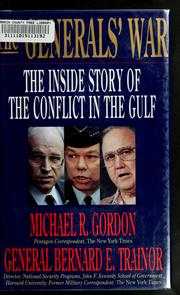
Gordon and Trainor's deeply reported critical history challenges the triumphalist narrative, arguing that flawed decisions in the final hours — halting the ground war too soon, allowing the Republican Guard to escape — left Saddam in power and the region destabilized.
Discussion
Keep reading
Paths that share books, cover the same subject, or open a related topic.