Richard Dawkins Reading Order: Where to Start
Dawkins wrote about evolution for twenty years before he wrote about religion, and the order you read him in largely decides which writer you meet. This path takes the science first — the gene's-eye view, then the argument for how design arises without a designer, then the evidence — and only afterwards the polemics, because the atheism books assume the biology and are far less interesting without it. It ends with the memoir and the essays.
The Two Foundational Books
BeginnerLearn the gene's-eye view of evolution and the argument that complexity needs no designer — the two ideas everything else rests on.
▸ Study plan for this stage
Pace: 6 weeks. The Selfish Gene is 352 pages and The Blind Watchmaker 368, and both are popular science that assumes no biology but demands sustained attention — 20 pages a day is right, and rereading a paragraph is normal rather than a failure. Three weeks each. Do not skip the endnotes in later editions
- The Selfish Gene's central move is a shift of perspective, not a new theory: evolution looks different if you take the gene rather than the organism as the unit that persists, and bodies become the temporary vehicles genes build to get copied
- The title is the book's biggest liability and Dawkins says so. Selfish describes the gene's statistical behaviour, not any motive, and it emphatically does not license selfishness in people — a misreading he has spent decades correcting
- It explains altruism, which is the real problem it solves. Kin selection and reciprocal altruism show why an organism helping relatives or trading favours is exactly what gene-level accounting predicts
- The word meme appears near the end almost as an afterthought — a unit of culture propagating by imitation — and has gone on to have a life entirely independent of the book
- The Blind Watchmaker is the direct answer to William Paley's argument that finding a watch implies a watchmaker: cumulative selection, tiny advantages retained over enormous time, produces structures nobody designed
- The key distinction it draws is between single-step chance, which cannot produce an eye, and cumulative selection, which can. Almost every argument from improbability against evolution collapses on that distinction, and this is the book that makes it clean
- It is also the pivot in his career from science writing to public argument: the science is doing work against a named opponent, and the tone changes accordingly
- Read together, these two supply the framework that every later book in this path assumes — the gene's-eye view and the mechanism by which design arises without a designer
- Explain the gene's-eye view to someone who has not read the book, in three sentences, without using the word selfish.
- How does kin selection account for an animal risking itself for relatives? Do the arithmetic Dawkins does — it is simple and it is the heart of the chapter.
- What does Dawkins mean by a replicator and a vehicle, and why does the distinction matter more than the organism?
- State the difference between single-step and cumulative selection. Then use it to answer the claim that an eye is too improbable to have evolved.
- What are the memes chapter's actual claims, and how much of it does the rest of the book depend on? Notice how easily it could be removed.
- Where does Dawkins concede ground in the endnotes that the main text does not? Those are the most interesting pages in the book.
- Work through the arithmetic of kin selection with a pen. It takes ten minutes and it converts a memorable idea into one you actually hold.
- Write down the strongest objection you can to the gene's-eye view, then look for Dawkins's answer in the endnotes. It is usually there, and the exercise is how you read a polemicist properly.
- For The Blind Watchmaker, read Paley's watchmaker passage first — it is a page and it is easy to find. The whole book is a reply and the reply is sharper with the original in mind.
- After both books, write a paragraph on what evolution by natural selection requires as a minimum. If it runs longer than four sentences, go back.
Next up: With the gene's-eye view established, the next stage takes it further than most biologists were willing to and finds out where it breaks.
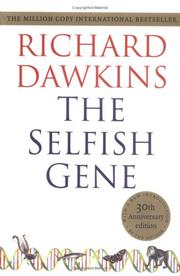
The book that reframed evolution around the gene rather than the organism, and coined the word meme almost as an afterthought. Start here — it is the most important popular science book of its generation and every later Dawkins argument assumes it.

The direct answer to Paley's argument from design: cumulative selection producing an eye. Read second — it is the clearest explanation of how the mechanism actually works, and it is the pivot from science writing into public argument.
Pressing the Theory Further
IntermediateFollow the gene's-eye view into its harder consequences, including the book Dawkins calls his best.
▸ Study plan for this stage
Pace: 7 weeks. The Extended Phenotype is 307 pages and is the hardest book in this path — it was written for professional biologists, and 15 pages a day over three weeks is honest. Climbing Mount Improbable (340 pages) is much easier and heavily illustrated; two weeks and treat it as recovery. River Out o
- The Extended Phenotype is the book Dawkins names as his own best, and it is the least read of the major ones because it is aimed at working biologists rather than general readers
- Its thesis is a genuine extension: if genes build bodies, there is no principled reason to stop at the skin. A beaver's dam, a caddis fly's case and a spider's web are all phenotypic effects of genes, expressed outside the organism
- The harder version is parasite manipulation — a parasite's genes altering a host's behaviour for the parasite's benefit — which makes the phenotype of one animal an expression of another animal's genes. This is where the idea stops being a metaphor
- The chapter arguing against the naive view of the organism as an obvious unit is the intellectual peak of Dawkins's career, and it is also where a reader most needs to slow down
- Climbing Mount Improbable answers the same objection as The Blind Watchmaker with better examples and diagrams: the mountain has a sheer cliff on one side and a long gentle slope on the other, and evolution always takes the slope
- Its fig-and-wasp chapter is the best sustained natural history he wrote, and its treatment of the eye evolving independently many times is the most concrete refutation of the improbability argument in any of these books
- River Out of Eden is the short one — DNA as a digital river of information flowing from the ancestral past — and it usefully compresses the whole science half of this path into 172 pages
- Taken together the stage shows what a theory looks like when it is pushed rather than merely explained, which is the difference between popularising and thinking
- State the extended phenotype thesis in one sentence. Then say what would count as evidence against it.
- Why is parasite manipulation the strongest case for the idea? What exactly does it show that a beaver dam does not?
- If the extended phenotype is right, what happens to the organism as a natural unit of biology? Dawkins has an answer and it is not that organisms are unreal.
- Use Mount Improbable to answer someone who says an eye could not have evolved. What are the actual intermediate stages, and how many times has an eye evolved independently?
- What does the fig-wasp relationship demonstrate about coevolution that a single-species example cannot?
- River Out of Eden calls DNA digital. What work is that word doing, and where does the analogy break down?
- Read The Extended Phenotype with a notebook and summarise each chapter in two sentences before moving on. It is the only book here where that discipline is genuinely necessary.
- List five extended phenotypes from the natural world, at least two of them not from the book. Being able to generate examples is the test of having the concept.
- Look at the eye diagrams in Climbing Mount Improbable properly rather than skimming them. This is the one book where the illustrations carry part of the argument.
- After River Out of Eden, write down the whole science case in one page. If you can, you are ready for the evidence stage; if you cannot, reread The Blind Watchmaker's central chapters.
Next up: Mechanism is not proof, and the next stage turns from how evolution could work to what actually happened and how we know it.
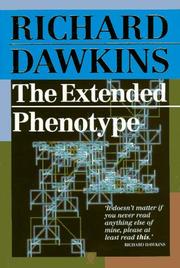
Genes expressing themselves outside the body — beaver dams, parasite-altered behaviour. His most technical book and the one he names as his favourite. Read it third, and only after The Selfish Gene; it is explicitly a sequel.
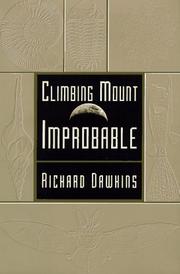
How structures that look impossible to reach by small steps — eyes, wings, fig-wasp arrangements — were reached anyway. The best-illustrated of his books and a good recovery after The Extended Phenotype.
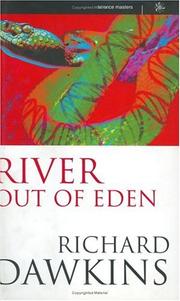
A short book on the digital river of DNA running from the ancestral past. The briefest thing he wrote and a useful compression of the whole science half.
The Evidence
IntermediateMove from mechanism to proof — what actually happened, and how we know.
▸ Study plan for this stage
Pace: 9 weeks and the longest stage here. The Ancestor's Tale is 673 pages — five weeks at 20 pages a day, and it is designed to be dipped into, since each tale is self-contained. The Greatest Show on Earth is 470 pages and takes four. Read The Ancestor's Tale first; it is the tour, and The Greatest Show
- The Ancestor's Tale is his most ambitious book: a pilgrimage BACKWARD through time from present-day humans, meeting each other lineage at the point where it shares a common ancestor with us — chimpanzees first, then gorillas, and onward to bacteria
- The structure is borrowed from Chaucer's Canterbury Tales, with each group of pilgrims telling a tale that makes a general point about evolution. It means the book teaches concepts through organisms rather than the other way round
- Running it backward is the crucial design choice: it removes the ladder-of-progress illusion entirely. There is no direction toward humans because you are travelling away from them, and every lineage is equally modern
- The rendezvous points are dated using molecular evidence, and Dawkins is careful about the uncertainty in those dates. Watching him handle contested numbers is a good lesson in how confident popular science should be
- The Greatest Show on Earth is a different book: the evidence FOR evolution, assembled for someone who doubts it — fossils, radiometric dating, molecular clocks, artificial selection, observed speciation, and the long-running bacterial evolution experiments
- The distinction it insists on is between evolution as a fact and natural selection as the theory explaining it. Confusing those two is the source of much of the public argument, and this book separates them cleanly
- Its strongest chapters are the ones on imperfect design — the recurrent laryngeal nerve taking an absurd detour in a giraffe, the vertebrate retina wired backward — which are far harder for a design account to absorb than complexity is
- It is also visibly written in irritation at creationism, which sharpens the argument and occasionally coarsens the tone. Read it knowing the opponent it has in mind
- Why does The Ancestor's Tale run backward, and what illusion does that specifically destroy?
- Pick three rendezvous points and say approximately when they occurred and what evidence dates them. The book gives you both.
- What is a molecular clock and what are its limits? Dawkins is explicit about the caveats and they matter.
- State the difference between the fact of evolution and the theory of natural selection. Why does keeping them apart make the argument stronger?
- The recurrent laryngeal nerve is his favourite example. Explain the route it takes in a giraffe and why it is evidence for descent with modification rather than design.
- What kinds of evidence would falsify evolution? Dawkins names some — be able to repeat them, because a theory that could not be wrong is not doing work.
- Draw the rendezvous points of The Ancestor's Tale as a single branching diagram as you read. Building the tree yourself is worth more than any chapter of it.
- Pick one tale and check its claims against a current source. Some of the dating has moved since publication and finding a superseded number is a useful experience.
- For The Greatest Show on Earth, make a list of the independent lines of evidence. The strength of the case is that they converge, and the convergence only appears as a list.
- Explain the backward retina or the laryngeal nerve to someone else out loud. If you cannot, you have read the chapter rather than understood it.
Next up: The science is now complete, which is precisely the condition under which the atheism books read as a conclusion rather than an assertion.

A pilgrimage backwards through time, gathering every lineage at its common ancestor with ours. His most ambitious book, structured after Chaucer, and the best single tour of the tree of life.
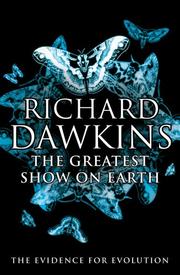
The evidence for evolution laid out for someone who doubts it — fossils, molecular clocks, observed speciation. Read it after The Ancestor's Tale; it is the case for the fact rather than the theory.
The Polemics
IntermediateRead the atheism books, which land differently once the biology above is in place.
▸ Study plan for this stage
Pace: 4 weeks. The God Delusion is 433 pages and takes three; Outgrowing God is 304 pages, considerably calmer, and takes a week. Read The God Delusion first even though the later book is the cleaner argument — the order shows you what a decade of public argument did to how he makes the case. If you find
- These books are deliberately placed fourth. Read after The Blind Watchmaker and The Greatest Show on Earth, The God Delusion reads as a conclusion drawn from an established position; read first, it reads as an assertion, and most of the public argument about it has been conducted by people who took
- Its core argument is the one continuous with the biology: the appearance of design has a known natural explanation, so the design argument for a god is not merely unproven but answered
- It also runs several arguments that are not biological — on the origins of morality, on religious upbringing, on the historical evidence for scripture — and those chapters are argued at a noticeably lower level of expertise than the science. Philosophers of religion have made that criticism at lengt
- The strongest chapters are the ones nearest his own field. The weakest are the ones furthest from it, which is a useful general test to apply to any expert writing outside their subject
- Outgrowing God rewrites the case for teenagers and is markedly calmer, better organised and less interested in scoring. Several readers find it the better book, and it is a fair way to assess the argument stripped of the tone
- Dawkins's later public statements about religion, and particularly his posts on social media, have made him a contested figure well beyond the usual disagreement over his arguments, including among people who accept the science entirely. That is a fact about the reception and is worth knowing before
- It does not settle whether the arguments are good, and this path takes the position that they should be assessed on their own terms — which is exactly what reading the biology first makes possible
- The historical context matters too: these are books of a specific moment in Anglo-American public argument, and their combativeness was shaped by the opponents they were written against
- What is the argument from improbability, and how does Dawkins turn it against the position that usually deploys it? This is the chapter closest to his biology and the strongest in the book.
- Where does the argument leave biology behind? Name the chapters, and assess whether the confidence stays constant as the expertise drops.
- What account of morality without religion does he give? Is it sufficient, and what does it not explain?
- Compare a chapter of The God Delusion with the same material in Outgrowing God. What has been removed, and does the argument get stronger or weaker without it?
- Which criticism of these books do you find most substantial? You should be able to state one that is about the reasoning rather than about the tone.
- Does the biology in stages one to three commit you to any of the conclusions here? Be precise — the honest answer is not a simple yes.
- Before reading, write down what you expect the book to argue. Its reputation and its contents differ more than most readers anticipate.
- For each chapter, note whether Dawkins is arguing from biology, from philosophy, or from history. The pattern of quality tracks that classification closely.
- Read one substantive published criticism from a philosopher of religion alongside the book. Reading a polemic without its best answer is not reading it.
- Write the strongest one-page case against the book's central argument that you can. Doing this well is the only reliable way to know whether you have understood it.
Next up: The last stage is the two books that answer the charge the polemics attract — that a scientific account of the world drains it — and the memoir that explains where the whole project began.

The bestseller that made him a public figure and the most contested book here. Deliberately placed this late: read after The Blind Watchmaker and it reads as a conclusion; read first and it reads as an assertion.
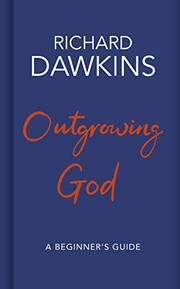
The same argument rewritten for teenagers, and considerably calmer. Short, and worth reading as the cleaner version of the case.
The Man and the Essays
IntermediateFinish with the memoir and the book about why science is not the enemy of wonder.
▸ Study plan for this stage
Pace: 5 weeks. Unweaving the Rainbow is 352 pages and takes three; it is the most digressive thing he wrote and is best taken a chapter an evening. An Appetite for Wonder is 308 pages of MEMOIR and reads quickly — two weeks. Read Unweaving the Rainbow first: it is the answer to the previous stage's reputa
- Unweaving the Rainbow takes seriously Keats's complaint that Newton destroyed the rainbow by explaining it, and answers that explanation multiplies wonder rather than consuming it. It is the most humane book Dawkins wrote
- The title comes directly from that complaint, and the book's method is to take a phenomenon — starlight, birdsong, DNA fingerprinting, the perception of colour — and show that the account of how it works is stranger than the mystery it replaced
- It also contains his most sustained attack on astrology, paranormal claims and bad statistical reasoning, which sits oddly beside the lyricism and is part of what makes the book digressive
- The chapter on the improbability of any particular person existing — the enormous number of possible people who were never born — is the most quoted passage he wrote and is genuinely moving
- It is the best answer to his own reputation, which is why it belongs here rather than earlier: read directly after the polemics, it complicates the picture those books create
- An Appetite for Wonder is the first volume of memoir, running from a colonial childhood in Kenya through English boarding school and Oxford to the writing of The Selfish Gene
- It is candid about how ordinary his early academic life was and about how much of his career turned on particular teachers and particular chances — which is a useful corrective to the idea that the ideas arrived fully formed
- Ending here closes the circle deliberately: the last book explains where the first book on this path came from, and reading it after eleven others means you can check the account against the work
- What is Keats's charge against Newton, and what is Dawkins's answer? State both fairly — the answer is not that Keats was simply wrong.
- Pick one phenomenon explained in Unweaving the Rainbow and say whether knowing the explanation increased or reduced your sense of wonder. Be honest; the book depends on the answer.
- Why is the passage about the people who were never born so effective? What is it actually about?
- Do the anti-astrology chapters belong in this book? Say what they add and what they cost it tonally.
- In the memoir, what specific circumstances made The Selfish Gene possible? Name at least three, and notice how contingent they are.
- Having read the whole path, which Dawkins do you think is the important one — the theorist of The Extended Phenotype, the explainer of The Blind Watchmaker, or the polemicist? Defend the choice from the books.
- Read the Keats passage about unweaving the rainbow before starting. It is short and the whole book is a reply to it.
- Take one thing you find beautiful and write half a page on how it works. Whether that is easy or difficult is the book's thesis tested on yourself.
- While reading the memoir, mark every point where the young Dawkins might plausibly have gone another way. The list is long and it is the most interesting thing in the book.
- Finally, reread the opening chapter of The Selfish Gene. After eleven books and a memoir, the opening pages of the one that started it read completely differently — which is the whole purpose of reading an author in order.
Next up: That is Dawkins across four decades — the theory, its hardest extension, the evidence, the polemic and the man — and it is enough to read any argument about evolution and tell at once whether the person making it has understood the mechanism or only the conclusion.

A response to the charge that explanation destroys beauty, taking Keats's complaint about Newton seriously. The most humane thing he wrote and the best answer to his own reputation.

The first volume of memoir, covering childhood in Kenya through the writing of The Selfish Gene. The right final book — it explains where the first book on this path came from.
Discussion
Keep reading
Paths that share books, cover the same subject, or open a related topic.