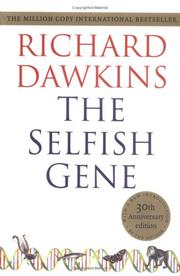
Start with The Selfish Gene, then The Blind Watchmaker. Together they supply the framework every later book assumes: the gene's-eye view, and the mechanism by which design arises without a designer. The obvious alternative is The God Delusion, which is the book most people have heard of — and reading it first is the single commonest mistake made with this writer, for a reason worth spelling out below.
The Selfish Gene is a shift of perspective rather than a new theory. Evolution looks different if you take the gene rather than the organism as the unit that persists, and bodies become temporary vehicles genes build to get copied. The title is the book's biggest liability and Dawkins says so: selfish describes a gene's statistical behaviour, not a motive, and it does not license selfishness in people. What the book actually explains is altruism — kin selection and reciprocal altruism show that helping relatives or trading favours is exactly what gene-level accounting predicts. Do not skip the endnotes in later editions; they answer thirty years of objections and are where he concedes things the main text does not.
The Blind Watchmaker is the direct reply to Paley's argument that finding a watch implies a watchmaker. Its key distinction is between single-step chance, which cannot produce an eye, and cumulative selection, which can. Almost every argument from improbability against evolution collapses on that distinction. Read Paley's watchmaker passage first — it is a page, and the reply is sharper with the original in mind.
Pressing the theory further
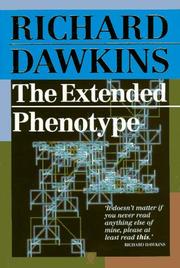
The Extended Phenotype is the book Dawkins names as his own best, and it is the least read of the major ones because it was written for working biologists. It is the hardest thing on this path; fifteen pages a day with a notebook, and do not attempt it without having finished The Selfish Gene, since it is an explicit sequel. The thesis is a genuine extension: if genes build bodies, there is no principled reason to stop at the skin, so a beaver's dam and a caddis fly's case are phenotypic effects too. Parasite manipulation is where the idea stops being a metaphor.
Climbing Mount Improbable is much easier and is the recovery book — heavily illustrated, with the best sustained natural history he wrote in its fig-and-wasp chapter, and the eye evolving independently many times as the most concrete answer to the improbability argument. River out of Eden is 172 pages and compresses the whole science case into a week's reading.
The evidence
The Ancestor's Tale is his most ambitious book: a pilgrimage backward through time from present-day humans, meeting each lineage at the point where it shares a common ancestor with us. Running it backward is the crucial design choice, because it removes the ladder-of-progress illusion entirely — there is no direction toward humans when you are travelling away from them. It is 673 pages and designed to be dipped into, each tale being self-contained.
The Greatest Show on Earth is the different job: the evidence for evolution assembled for someone who doubts it, and it insists on the distinction between evolution as a fact and natural selection as the theory explaining it. Its strongest chapters are on imperfect design — the recurrent laryngeal nerve taking an absurd detour in a giraffe, the vertebrate retina wired backward — which are far harder for a design account to absorb than complexity is. It is visibly written in irritation at creationism, which sharpens the argument and occasionally coarsens the tone.
Why the polemics come fourth
The God Delusion is placed here deliberately. Read after The Blind Watchmaker and The Greatest Show on Earth, it reads as a conclusion drawn from an established position; read first, it reads as an assertion — and most of the public argument about it has been conducted by people who took it first. Its strongest chapters are the ones nearest his own field, and philosophers of religion have argued at length that the chapters on morality, upbringing and scripture are made at a lower level of expertise than the science. That is a useful general test to apply to any expert writing outside their subject.
Outgrowing God rewrites the case for teenagers and is calmer, better organised and less interested in scoring; several readers find it the better book. Note also that Dawkins's later public statements have made him a contested figure well beyond disagreement over these arguments, including among people who accept the science entirely — that is a fact about the reception, and reading the biology first is what makes it possible to assess the arguments on their own terms.
Where to stop
Unweaving the Rainbow is the best answer to his own reputation, which is why it belongs after the polemics rather than before: it takes seriously Keats's complaint that Newton destroyed the rainbow by explaining it, and answers that explanation multiplies wonder rather than consuming it. Finish with An Appetite For Wonder The Making Of A Scientist A Memoir, which runs from a colonial childhood in Kenya to the writing of The Selfish Gene and is candid about how contingent the whole thing was. Then reread the opening chapter of The Selfish Gene; after eleven books it reads completely differently, which is the entire purpose of reading an author in order. More routes on Discover.
Follow the full ordered path here: Richard Dawkins Reading Order: Where to Start.