The single most common failure in meadow-making is treating it as an act of omission. Stop mowing a lawn and what you get, in most temperate soils, is coarse grass and a few thugs — nettle, dock, cow parsley — outcompeting everything else. Meadows are made by reducing fertility, choosing the right cutting regime, and getting the timing right, and every one of those is counterintuitive if your gardening instincts were trained on borders and lawns.
That is what makes the reading order here useful. Start with the practical craft, get the plants into your head, then widen to the landscape and ecological scale. Do it in reverse and you will be full of enthusiasm for rewilding with no idea when to cut.
The practical craft
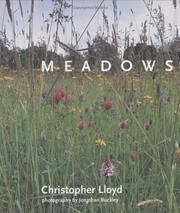
Christopher Lloyd's Meadows is the anchor. Lloyd made meadows at Great Dixter over decades, including the celebrated conversion of a formal lawn, and the book is written from that long, specific, failure-inclusive experience. It covers soil fertility, the varying cutting regimes for spring and summer meadows, bulbs in grass, yellow rattle as a grass suppressant, and how to establish a meadow both from seed and by planting into existing turf. It is also candid about the plants that disappointed him, which is rarer and more useful than it sounds.
Know what you are looking at
Marjorie Blamey's Wild Flowers of Britain and Ireland is the identification reference — a comprehensively illustrated flora that lets you tell what is already in a site before you decide what to add. This matters more than beginners expect: an existing sward often contains far more than a first glance suggests, and knowing whether you have a species-poor rye-grass ley or the remains of an old meadow changes the entire approach. It also tells you what your local plant communities look like, which is a better design brief than any seed catalogue.
Be honest about the regional limit here. This is a British and Irish flora, and much of Lloyd's advice on timing and species is calibrated to a British climate. If you are gardening elsewhere, use these books for method and principle, and get a regional flora and a native seed source for the species.
The landscape scale
Patrick Whitefield's The living landscape teaches you to read a piece of land — soil, drainage, aspect, existing vegetation, and the history that produced it — before intervening. It is the bridge between managing a patch and designing at scale, and its habit of asking what a site is already telling you is exactly the discipline meadow-making needs.
Isabella Tree's Wilding is the book at the far end: the account of the Knepp estate in Sussex being turned over to free-roaming grazing animals and allowed to become something nobody specified in advance. It is not a manual, and Knepp's approach is not directly transferable to a quarter-acre garden. What it gives you is the argument for process over outcome — that grazing, disturbance and succession produce habitat that a planting plan cannot — plus a genuinely useful corrective to the idea that a meadow is a fixed picture you maintain. It has also been contested by some conservationists over whether the approach suits sites with existing high-value habitat, and the book is reasonably open about that debate.
Two practical notes worth carrying into any of this: strip or exhaust the fertility before sowing, because rich soil favours grass; and sow yellow rattle early if your site is grass-dominated. Both are covered by Lloyd, and both are the difference between a meadow and a rough lawn.
If your site is partly wooded, the shade gardening reading covers the ground the meadow books do not. Follow the full path to work from the cutting regime outward.
Follow the full ordered path here: Best Books on Wildflower Meadows, in Reading Order.