Learn Recreational Mathematics: The Best Puzzle Books
Recreational mathematics is best learned by starting with pure delight — puzzles, paradoxes, and playful problems — before gradually uncovering the real mathematical ideas hiding underneath. This curriculum moves from Martin Gardner's classic puzzle columns through number theory, geometry, and combinatorics, building both intuition and genuine mathematical thinking across four stages.
The Joy of Puzzles
BeginnerFall in love with mathematical thinking through accessible puzzles, games, and surprising results that require no prior math background.
▸ Study plan for this stage
Pace: 8–10 weeks, ~40–50 pages/day (mix of reading and puzzle-solving)
- Mathematical puzzles and games reveal hidden patterns and logical structures in everyday situations
- Statistical thinking is essential for interpreting data claims; visual presentation and framing can distort truth
- Lateral thinking and constraint-based problem-solving unlock solutions that brute-force approaches miss
- Mathematical beauty and surprise emerge from simple rules and elegant reasoning, not complex formulas
- Recreational mathematics builds intuition about number properties, geometry, and combinatorics without formal proofs
- Critical thinking about numbers and claims requires skepticism about how data is selected, presented, and interpreted
- What are three types of mathematical puzzles or tricks from Gardner's work, and what makes them surprising or elegant?
- How can the same statistical data be presented in multiple ways to support different conclusions? Give examples from Huff's book.
- Describe the problem-solving approach used in The Moscow Puzzles: what techniques help you find solutions when direct calculation fails?
- Why is recreational mathematics valuable even if you never use advanced math in your career?
- What is one statistical fallacy or misleading visualization you've encountered in real life, and how would you critique it using Huff's framework?
- How do the puzzle-solving strategies from Gardner and Kordemskiĭ complement each other in developing mathematical intuition?
- Work through at least 20 puzzles from The Moscow Puzzles without looking at solutions first; document your reasoning and the 'aha moment' when you solve each one
- Recreate 3–4 of Gardner's mathematical tricks or games (card tricks, number tricks, geometric paradoxes) and perform them for others, explaining the mathematical principle behind each
- Find three real-world examples of misleading statistics or graphs in news articles, advertisements, or social media; reframe each one using Huff's techniques to show the honest version
- Create your own puzzle or mathematical game inspired by Gardner's style; test it on a friend and refine it based on their feedback
- Build a physical model or diagram for 2–3 geometric puzzles from The Moscow Puzzles (e.g., using string, paper, or coins) to understand the spatial reasoning
- Write a short essay (500–750 words) comparing the puzzle-solving strategies in Gardner and Kordemskiĭ: what do they teach you about mathematical thinking?
Next up: By internalizing the playful, pattern-seeking mindset of recreational mathematics and learning to question statistical claims, you're now ready to explore deeper mathematical structures and formal reasoning in the next stage.
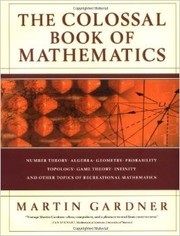
Gardner is the undisputed king of recreational mathematics, and this anthology is the perfect entry point — it collects his greatest Scientific American columns covering puzzles, paradoxes, and magic tricks in a friendly, conversational style.

A short, witty classic that sharpens critical thinking about numbers and data — it builds the habit of questioning mathematical claims, which is essential for appreciating deeper puzzles ahead.

One of the best-selling puzzle books in history, it offers hundreds of engaging logic and number puzzles that train problem-solving instincts in a playful, progressive way.
Numbers, Patterns & Surprises
BeginnerDiscover the hidden beauty in numbers — primes, infinity, sequences, and counterintuitive results — and start seeing mathematics as a landscape of wonder rather than a set of rules.
▸ Study plan for this stage
Pace: 8–10 weeks, ~40–50 pages/day (mix of reading and exploration)
- Prime numbers as fundamental building blocks and their mysterious distribution patterns
- The concept of infinity and how different infinities can be compared and ordered
- Mathematical sequences (Fibonacci, triangular numbers, etc.) and their surprising appearances in nature
- Counterintuitive mathematical results that challenge everyday intuition (paradoxes, unexpected connections)
- The personality and human side of mathematics—how mathematicians think, obsess, and discover
- Recreational mathematics as a lens for seeing patterns and structure in everyday objects and numbers
- The power of hands-on exploration and play in discovering mathematical truths
- How curiosity about individual numbers can lead to deep mathematical insights
- Why did Paul Erdős devote his life to number theory, and what does his approach teach us about mathematical curiosity?
- What makes prime numbers special, and why has their distribution remained so difficult to fully understand?
- How can you construct or visualize a four-dimensional object, and what does this reveal about the limits of human intuition?
- What is surprising or counterintuitive about the Fibonacci sequence, and where does it appear unexpectedly in nature and mathematics?
- How do infinity and different 'sizes' of infinity challenge our everyday understanding of numbers?
- What patterns or properties make certain numbers (like 6, 28, or 1729) mathematically interesting or 'curious'?
- Read 'The Man Who Loved Only Numbers' and create a timeline of Erdős's major contributions, noting which problems fascinated him most and why
- Work through at least 3 hands-on activities from 'Things to Make and Do in the Fourth Dimension' (e.g., building nets, exploring tessellations, or creating 3D models) and write reflections on what each reveals about mathematical thinking
- Pick 10 'curious numbers' from Wells's dictionary and research why each is mathematically interesting; create a personal 'number gallery' with explanations
- Investigate the Fibonacci sequence yourself: find it in a pinecone, sunflower, or spiral shell; calculate the first 15 terms and explore the ratio between consecutive terms
- Attempt to construct or visualize a 4D object (hypercube/tesseract) using string, paper, or digital tools; document your process and what you learned about dimensions
- Explore prime numbers up to 100 using the Sieve of Eratosthenes by hand; then research and write a one-page summary on one unsolved prime number conjecture (e.g., Goldbach's conjecture or the Twin Prime conjecture)
Next up: This stage establishes wonder and curiosity as the foundation for mathematical thinking, preparing you to dive deeper into specific mathematical domains (like geometry, logic, or combinatorics) with both technical rigor and genuine enthusiasm for discovery.
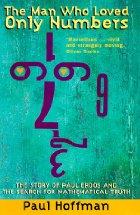
The biography of Paul Erdős doubles as a thrilling tour of number theory and combinatorics, showing how mathematicians actually think and what makes a problem beautiful.

Parker's infectious enthusiasm makes topology, higher dimensions, and number patterns feel like hands-on play — perfect for building geometric intuition before tackling harder material.
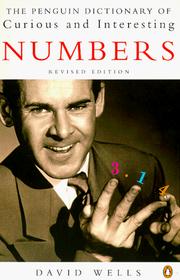
A delightful reference-style tour through remarkable numbers and their properties, reinforcing number sense and introducing concepts like perfect numbers, primes, and constants that recur throughout recreational math.
Deeper Games & Mathematical Structures
IntermediateEngage with the real mathematical structures behind recreational puzzles — combinatorics, graph theory, probability, and logic — developing the ability to reason rigorously while still having fun.
▸ Study plan for this stage
Pace: 12–14 weeks, ~40–50 pages/day (with 2–3 days per week for problem-solving and reflection)
- Combinatorial game theory: analyzing winning and losing positions, strategy stealing, and backward induction from terminal positions
- Impartial vs. partisan games and the Sprague-Grundy theorem as a framework for predicting game outcomes
- Mathematical proof as a living, evolving process: conjectures, counterexamples, and lemma incorporation (Lakatos's dialectical method)
- Graph theory fundamentals: vertices, edges, paths, cycles, and their role in modeling games and puzzles
- Probability and expectation in games: calculating odds, expected value, and decision-making under uncertainty
- Logic and formal reasoning: propositional logic, proof by contradiction, and constructive vs. non-constructive arguments
- Problem-solving heuristics: working backward, invariants, pigeonhole principle, and systematic case analysis
- Rigorous mathematical communication: writing clear definitions, stating assumptions, and building arguments from first principles
- What is the difference between a winning position and a losing position in a combinatorial game, and how do you determine which is which?
- How does the Sprague-Grundy theorem simplify the analysis of impartial games, and what is a nimber?
- According to Lakatos, why is the process of conjecture, counterexample, and proof revision essential to mathematics, and how does this differ from the 'finished' view of mathematics?
- How can graph theory be used to model and solve recreational puzzles (e.g., the Bridges of Königsberg, knight's tour problems)?
- What role does probability play in games of chance, and how do you calculate expected value to make optimal decisions?
- What are the main problem-solving heuristics presented in the Art of Problem Solving, and when should you apply each one?
- How do you construct a rigorous proof for a mathematical claim, and what makes a proof convincing versus incomplete?
- Analyze 5–10 combinatorial games from Winning Ways (e.g., Nim, Wythoff's game, Dawson's Chess) by hand: determine winning/losing positions, compute Grundy numbers, and verify the Sprague-Grundy theorem for at least two games.
- Play and annotate at least three games from Winning Ways in real time, recording your moves and reasoning; afterward, compare your intuitive strategy to the mathematical analysis in the text.
- Read a proof or conjecture from Proofs and Refutations, then write a 1–2 page reflection identifying: (a) the original conjecture, (b) counterexamples presented, (c) how the proof was revised, and (d) what this reveals about the nature of mathematical discovery.
- Solve 20–30 competition-style problems from The Art of Problem Solving, Volume 1, focusing on problems that require graph theory, combinatorics, or logic; write up clean solutions for at least 5 of them.
- Model a recreational puzzle (e.g., the Tower of Hanoi, a maze, a logic puzzle) as a graph or game tree; compute or trace through the solution using your model.
- Design your own combinatorial game (inspired by Winning Ways) with clear rules, play it with a partner, analyze winning/losing positions, and compute its Grundy numbers.
- Work through at least two multi-step problems from The Art of Problem Solving that require combining multiple heuristics (e.g., working backward + invariant, or pigeonhole + case analysis).
Next up: This stage equips you with the mathematical tools and proof-writing discipline to tackle advanced recreational mathematics and pure mathematics, preparing you to explore deeper applications of combinatorics, logic, and game theory in specialized domains.

The definitive mathematical treatment of combinatorial games, this book reveals the deep theory behind puzzles and two-player games — a landmark that bridges fun and serious mathematics.
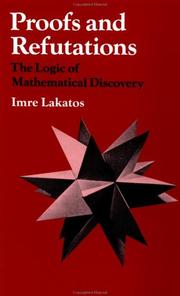
Presented as a classroom dialogue, this book shows how mathematical ideas are actually discovered and refined — it sharpens logical thinking and prepares the reader for more rigorous exploration.
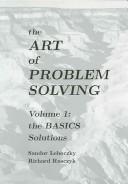
A structured but engaging problem-solving guide that formalizes the techniques hinted at in earlier puzzle books, bridging recreational play and competition-level mathematical reasoning.
The Frontier: Paradoxes, Infinity & Open Questions
ExpertConfront the deepest and most mind-bending corners of recreational mathematics — infinity, undecidability, self-reference, and unsolved problems — emerging with a genuine appreciation for mathematics as a living, open discipline.
▸ Study plan for this stage
Pace: 12–16 weeks, ~40–50 pages/day for GEB (weeks 1–8), then ~25–30 pages/day for The Book of Numbers (weeks 9–16). Allow 1–2 weeks buffer for reflection and integration exercises.
- Self-reference, recursion, and strange loops as the foundation of consciousness and meaning-making in formal systems
- Gödel's Incompleteness Theorems: no consistent formal system can prove all truths about itself
- The relationship between syntax (symbol manipulation) and semantics (meaning), and how they can diverge or align
- Infinity in multiple forms: countable vs. uncountable infinities, transfinite numbers, and the Cantor hierarchy
- Surreal numbers and Conway's construction of number systems from pure combinatorial principles
- The interplay between structure, pattern, and emergence across music, art, and mathematics (Hofstadter's core thesis)
- Undecidability and the limits of computation: what questions cannot be answered by any algorithm
- Open problems and unsolved conjectures as windows into the living frontier of mathematics
- What is a strange loop, and how does Hofstadter argue it relates to self-awareness and consciousness?
- State Gödel's First Incompleteness Theorem in your own words. Why does it matter that no formal system can prove all truths about itself?
- What is the difference between countable and uncountable infinity? Give examples of each from the books.
- How do surreal numbers extend our understanding of number systems, and what role do they play in game theory according to Conway?
- Describe the relationship between syntax and semantics. Why is this distinction crucial for understanding the limits of formal systems?
- What are some open problems or unsolved questions mentioned in the books, and why do they resist solution?
- Map a strange loop: choose a system (musical canon, visual paradox, or recursive algorithm) and trace how it refers back to itself. Write a 1–2 page analysis of how self-reference creates meaning.
- Construct a simple formal system (e.g., a toy axiom system with 3–4 rules) and attempt to prove a statement within it. Then show why Gödel's theorem implies your system cannot prove all truths about itself.
- Explore the Cantor diagonal argument by hand: construct the first few steps of the proof that the real numbers are uncountable. Visualize why it works.
- Play with surreal number arithmetic: using Conway's rules, construct surreal numbers like {0|1}, {1|2}, and compute their sums and products. Relate this to game positions.
- Create a visual or musical piece inspired by Hofstadter's ideas: compose a short canon that loops back on itself, or create a visual pattern that exhibits self-similarity and strange loops.
- Research one open problem mentioned in the books (or a related one) and write a 2–3 page summary: What is it asking? Why is it hard? What would a solution tell us?
Next up: This stage equips you with a deep understanding of mathematics as a fundamentally open, self-referential, and infinite discipline—preparing you to either specialize in a particular frontier (logic, combinatorics, number theory) or to synthesize recreational mathematics into creative and philosophical applications.
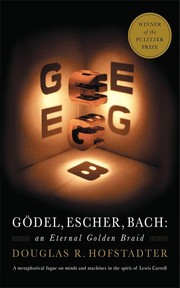
A Pulitzer Prize-winning masterpiece that weaves together self-reference, formal systems, paradox, and consciousness — it is the ultimate payoff for a recreational math journey, rewarding everything learned in earlier stages.
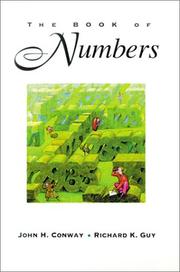
Co-authored by one of the most playful and brilliant mathematicians of the 20th century, this book explores number systems from integers to surreals with wit and depth, tying together many threads from the whole curriculum.
Discussion
Keep reading
Paths that share books, cover the same subject, or open a related topic.