Learn Medicinal Chemistry: The Best Books, in Order
This curriculum builds a rigorous, practice-oriented mastery of medicinal chemistry, starting from core principles of drug-likeness and molecular interactions, then advancing through structure-activity relationships, pharmacophore modeling, and modern computational drug design. Because the learner starts at an intermediate level, foundational organic chemistry is assumed — each stage deepens mechanistic understanding and design intuition before introducing the next layer of complexity.
Core Principles of Drug Design
IntermediateEstablish a solid working vocabulary of medicinal chemistry: drug-receptor interactions, ADMET properties, Lipinski's rules, and the logic of lead optimization.
▸ Study plan for this stage
Pace: 8–10 weeks, ~40–50 pages/day (mix of reading and concept review). Start with Patrick's chapters 1–4 (weeks 1–3), then Wermuth's chapters 1–3 (weeks 4–6), then return to Patrick's chapters 5–7 for optimization logic (weeks 7–8), and dedicate weeks 9–10 to integration exercises and case studies.
- Drug-receptor interactions: binding affinity, specificity, and the molecular basis of pharmacological action (ligand-target complementarity, hydrogen bonding, hydrophobic effects, electrostatic interactions)
- ADMET properties: absorption, distribution, metabolism, excretion, and toxicity as determinants of drug efficacy and safety in vivo
- Lipinski's Rule of Five and related physicochemical filters: molecular weight, logP, hydrogen bond donors/acceptors, and their role in predicting oral bioavailability
- Structure-activity relationships (SAR): how systematic chemical modifications correlate with changes in potency, selectivity, and ADMET profiles
- Lead optimization: iterative strategies to improve potency, selectivity, and drug-like properties starting from a validated lead compound
- Quantitative structure-activity relationships (QSAR): computational approaches to predict and rationalize biological activity from molecular descriptors
- Bioisosteric replacement and scaffold hopping: rational design tactics to improve properties while maintaining biological activity
- Drug metabolism and metabolic stability: phase I, II, and III pathways and their impact on drug half-life and clearance
- Explain the key interactions (hydrogen bonding, hydrophobic contacts, electrostatic interactions) that stabilize a drug-receptor complex, and why binding affinity alone does not guarantee clinical efficacy.
- What are the five parameters in Lipinski's Rule of Five, and why does each one matter for oral bioavailability? When and why might a drug violate these rules and still succeed?
- Describe the ADMET pipeline: how does a drug's absorption, distribution, metabolism, excretion, and toxicity profile influence its suitability as a therapeutic agent?
- What is a structure-activity relationship (SAR), and how do you use iterative SAR data to guide lead optimization toward a clinical candidate?
- Compare and contrast bioisosteric replacement and scaffold hopping as design strategies; provide one example of each from the assigned texts.
- How do phase I, II, and III metabolic pathways affect drug clearance and half-life, and what design strategies minimize unwanted metabolism?
- After reading Patrick chapters 1–2: map out the key interactions in a real drug-receptor complex (e.g., ACE inhibitor–ACE) using 2D and 3D structural diagrams; annotate hydrogen bonds, hydrophobic contacts, and electrostatic interactions.
- Complete a Lipinski's Rule of Five analysis on 5–10 marketed drugs from the Patrick and Wermuth texts: calculate MW, logP, HBD, HBA for each; identify any rule violations and research why those drugs still succeeded clinically.
- Build a simple SAR table for a drug series discussed in Wermuth (e.g., a kinase inhibitor or protease inhibitor series): list structural modifications, potency changes (IC50 or Ki values), and corresponding ADMET property shifts.
- Design a hypothetical lead optimization campaign: starting from a moderately potent lead compound (from either text), propose 3–4 chemical modifications aimed at improving selectivity, reducing logP, or enhancing metabolic stability; justify each change using SAR logic.
- Perform a metabolic stability prediction exercise: select a drug from the texts, identify likely phase I and II metabolic sites using the principles in Patrick and Wermuth, and propose structural modifications to block or redirect metabolism.
- Case study synthesis: choose one marketed drug (e.g., a kinase inhibitor, protease inhibitor, or GPCR ligand) from the assigned texts and write a 2–3 page analysis covering its drug-receptor interactions, ADMET profile, Lipinski compliance, and the SAR/optimization logic that led to its discovery.
Next up: This stage equips you with the foundational vocabulary and conceptual toolkit—drug-receptor interactions, ADMET filters, and lead optimization logic—that are essential for the next stage, which will likely deepen into specialized applications (e.g., kinase inhibitors, antibodies, or allosteric modulators) and advanced computational and experimental techniques for predicting and optimizing drug pro

The canonical entry point for intermediate learners — clearly explains drug-receptor binding, pharmacokinetics, and the drug discovery pipeline before any deeper topic is introduced.
Bridges introductory concepts to real industrial practice; covers lead discovery, bioisosterism, and prodrug strategies that are essential vocabulary for everything that follows.
Structure-Activity Relationships in Depth
IntermediateUnderstand how systematic structural modifications translate into measurable changes in biological activity, and how SAR guides iterative lead optimization.
▸ Study plan for this stage
Pace: 4–5 weeks, ~40–50 pages/day (approximately 280–350 pages total across both books)
- Quantitative Structure-Activity Relationships (QSAR): how molecular descriptors and physicochemical properties correlate with biological potency
- Bioisosteric replacement: substituting molecular fragments to maintain or improve activity while altering other properties
- Lead optimization cycles: iterative structural modifications guided by SAR data to improve potency, selectivity, and drug-like properties
- Lipophilicity (LogP) and its role in membrane permeability, protein binding, and metabolic stability
- Molecular weight, polar surface area (PSA), and hydrogen bonding patterns as predictors of bioavailability
- Metabolic soft spots and structural features that influence Phase I and Phase II metabolism
- Selectivity optimization: using SAR to enhance target selectivity while minimizing off-target binding
- Property-based design: balancing potency with drug-like properties (solubility, permeability, stability) through rational structural changes
- How do you use QSAR models and molecular descriptors to predict the effect of a structural modification on biological activity?
- What is a bioisostere, and how would you apply bioisosteric replacement to improve a lead compound's properties without losing potency?
- Describe the iterative lead optimization process: how do SAR insights from one round of synthesis guide the next round of structural modifications?
- How do lipophilicity (LogP), molecular weight, and polar surface area influence drug-like properties, and what are the typical ranges for orally bioavailable drugs?
- How can you identify metabolic soft spots in a structure, and what design strategies can you use to block or redirect metabolism?
- How do you balance potency optimization with the need to maintain favorable drug-like properties during lead optimization?
- Analyze a published SAR study (e.g., from a medicinal chemistry journal): extract the key structural modifications, their effects on potency and properties, and the rationale behind each change.
- Perform a bioisosteric replacement exercise: take a known drug or lead compound and propose 3–5 bioisosteric substitutions, predicting how each would affect potency, lipophilicity, and metabolic stability.
- Build a simple QSAR model or use online tools (e.g., ChemSpider, PubChem) to correlate molecular descriptors (MW, LogP, HBA, HBD, PSA) with reported IC50 or EC50 values for a series of related compounds.
- Design an iterative lead optimization campaign: starting with a hypothetical lead compound, propose a series of 4–6 structural modifications based on SAR principles, predicting how each change addresses specific liabilities (potency, selectivity, solubility, metabolism).
- Evaluate a drug candidate using Lipinski's Rule of Five and related property-based design criteria; identify any violations and propose structural modifications to restore drug-like properties while maintaining potency.
- Conduct a metabolic soft-spot analysis on a given structure: identify likely Phase I and Phase II metabolism sites, propose blocking groups or structural modifications to improve metabolic stability, and justify your choices.
Next up: This stage equips you with the systematic tools and reasoning to optimize any lead compound through rational SAR-guided design; the next stage will likely focus on applying these principles to specific therapeutic areas or advanced topics like allosteric modulation, protein-protein interaction inhibition, or translating optimized compounds into clinical candidates.
Provides a biochemically grounded treatment of SAR, explaining how functional groups interact with enzyme active sites and receptors at a molecular level.

Focuses specifically on the physicochemical and ADMET properties that make or break a drug candidate — a perfect complement to SAR thinking before moving to computational methods.
Pharmacophores and Molecular Recognition
IntermediateMaster the concept of the pharmacophore, understand 3D molecular recognition, and learn how pharmacophore models are built and used to discover new scaffolds.
▸ Study plan for this stage
Pace: 8–10 weeks, ~40–50 pages/day (Guner first for 4–5 weeks, then Abraham for 4–5 weeks)
- Pharmacophore definition: the ensemble of steric and electronic properties necessary for optimal interaction with a biological target
- 3D molecular recognition: how ligands fit into binding pockets through spatial alignment of key functional groups
- Pharmacophore model development: methods for identifying essential features from active compounds and crystal structures
- Feature types in pharmacophores: hydrogen bond donors/acceptors, hydrophobic regions, aromatic rings, and excluded volumes
- Scaffold hopping and lead optimization: using pharmacophore models to design novel chemical structures with improved properties
- Quantitative structure-activity relationship (QSAR) integration with pharmacophore modeling for predictive drug design
- Conformational analysis and flexibility: accounting for ligand and receptor dynamics in pharmacophore-based design
- Validation and application: testing pharmacophore models against known actives and inactives, and using them in virtual screening
- What is a pharmacophore, and how does it differ from a simple molecular structure or a chemical scaffold?
- Describe the key steps in building a pharmacophore model from a set of active compounds. What information sources (e.g., crystal structures, SAR data) are most valuable?
- How do hydrogen bond donors, acceptors, hydrophobic features, and aromatic rings contribute to molecular recognition in a binding pocket?
- What is scaffold hopping, and how can a pharmacophore model guide the discovery of novel chemical series with different scaffolds but similar biological activity?
- Explain the relationship between pharmacophore modeling and QSAR. How can both approaches be integrated to improve drug design efficiency?
- How should conformational flexibility of ligands and receptors be considered when developing and applying pharmacophore models?
- Extract pharmacophore features from 3–5 known active compounds against a target of interest (e.g., kinase inhibitors, protease inhibitors) using published crystal structures; document the spatial arrangement of key functional groups
- Build a simple pharmacophore model using freely available software (e.g., LigandScout, Pharmer, or MOE trial version) for a small set of actives and inactives; validate the model by testing it against a held-out set of compounds
- Perform a scaffold-hopping exercise: identify a lead compound, extract its pharmacophore, and design 3–5 novel chemical structures with different scaffolds that match the pharmacophore features
- Analyze a published pharmacophore model from the literature (e.g., from a medicinal chemistry paper); reproduce key findings and assess the model's predictive power on new compounds
- Conduct a conformational analysis on a flexible ligand; generate multiple conformers and identify which conformations best align with a target pharmacophore
- Integrate pharmacophore constraints with QSAR predictions: use a pharmacophore model to filter virtual screening hits, then rank them by predicted potency using a QSAR model
Next up: This stage equips you with the conceptual and practical tools to recognize and model the 3D chemical features that drive ligand–target interactions, preparing you to move into structure-based drug design methods (molecular docking, molecular dynamics) and advanced lead optimization strategies that refine compounds identified through pharmacophore-guided discovery.
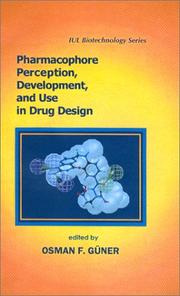
The definitive reference on pharmacophore theory and methodology — covers perception algorithms, 3D database searching, and real case studies directly relevant to the learner's stated goal.
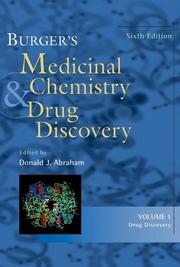
A comprehensive reference that contextualizes pharmacophores within the full drug discovery workflow, including target identification and clinical candidate selection.
Computational and Structure-Based Drug Design
ExpertApply computational tools — molecular docking, QSAR, virtual screening, and free-energy methods — to design molecules rationally from structural data.
▸ Study plan for this stage
Pace: 4–5 weeks, ~40–50 pages/day, with 2–3 days per week dedicated to computational exercises
- Molecular representation and encoding (SMILES, molecular graphs, fingerprints) as the foundation for computational analysis
- Quantitative Structure-Activity Relationship (QSAR) modeling: building predictive models linking molecular structure to biological activity
- Molecular docking principles and scoring functions for predicting ligand-protein binding modes and affinities
- Virtual screening workflows: applying computational filters and ranking methods to prioritize compounds from large libraries
- Free-energy calculation methods (FEP, TI, MM-PBSA) for accurate binding affinity prediction
- Chemoinformatics databases and tools: accessing, curating, and analyzing chemical data for drug discovery
- Descriptor calculation and feature selection for building robust QSAR and machine-learning models
- Validation and interpretation of computational models to ensure reliability in real-world drug design
- How do different molecular representations (SMILES, fingerprints, molecular graphs) affect the performance of computational drug design models?
- What are the key steps in building and validating a QSAR model, and what metrics determine model quality?
- How do molecular docking scoring functions work, and what are their limitations in predicting binding affinity?
- Describe a virtual screening workflow: how would you filter and rank a library of 100,000 compounds to identify promising drug candidates?
- What are the advantages and computational costs of free-energy methods compared to faster docking-based approaches?
- How do you select and interpret molecular descriptors for QSAR modeling to avoid overfitting and ensure transferability?
- Generate SMILES strings and molecular fingerprints for a set of 10 known drugs using RDKit or similar tools; compare different fingerprint types and their similarity metrics
- Build a simple QSAR model using a public dataset (e.g., from ChEMBL or PubChem) with 50–100 compounds: calculate descriptors, perform feature selection, train a regression model, and validate using cross-validation
- Perform molecular docking of 5–10 ligands against a target protein (e.g., using AutoDock Vina or similar); analyze binding poses, scoring functions, and compare predictions to experimental data
- Execute a virtual screening workflow on a small library (1,000–5,000 compounds): apply QSAR filters, docking, and ranking; identify top candidates and justify selections
- Calculate free-energy changes for a ligand-protein complex using MM-PBSA or similar method; compare results to docking scores and experimental binding data
- Curate and analyze a chemoinformatics dataset: clean data, handle missing values, identify outliers, and prepare it for QSAR modeling
Next up: This stage equips you with the computational and structural reasoning to design molecules systematically; the next stage will likely focus on integrating these tools into multi-objective optimization, lead optimization strategies, and translating computational predictions into experimental validation and clinical development.
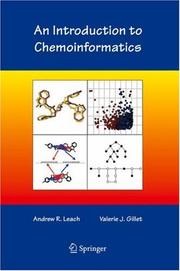
Provides the computational and data-science underpinning for modern drug design — molecular descriptors, QSAR modeling, and virtual screening — essential for advanced practice.
Advanced Topics and Modern Drug Discovery
ExpertSynthesize all prior knowledge into a holistic view of contemporary drug discovery, including multi-parameter optimization, fragment-based design, and case studies from approved drugs.
▸ Study plan for this stage
Pace: 6–8 weeks, ~40–50 pages/day (with 2–3 days per week for exercises and case study synthesis)
- Molecular descriptors as quantitative tools for predicting ADMET properties, potency, and selectivity across chemical space
- Structure–activity relationship (SAR) interpretation using descriptor-based chemoinformatics workflows and multivariate analysis
- Fragment-based drug design (FBDD) principles: growing fragments, linking, and optimization using descriptor guidance
- Multi-parameter optimization (MPO) balancing potency, selectivity, safety, and physicochemical properties in lead optimization
- Historical evolution of drug discovery paradigms: from serendipity and natural products to rational design and high-throughput screening
- Case study analysis of approved drugs: deconstruction of molecular design choices, descriptor profiles, and clinical success factors
- Chemoinformatics platforms and computational workflows for descriptor calculation, QSAR modeling, and virtual screening
- Integration of in silico prediction with experimental validation: bridging computational design and wet-lab reality
- How do molecular descriptors (e.g., lipophilicity, molecular weight, hydrogen bond donors/acceptors) quantitatively predict drug-like properties and inform lead optimization decisions?
- What is the role of fragment-based drug design in modern discovery, and how do descriptors guide the assembly and linking of fragments into potent, selective leads?
- Describe the multi-parameter optimization challenge in lead development: how do you balance potency, selectivity, metabolic stability, and solubility when descriptor space is high-dimensional?
- Trace the historical evolution of drug discovery methodology from Sneader's account: how did the transition from natural products and serendipity to rational, structure-based design reshape the field?
- Analyze a case study of an approved drug (from Sneader): deconstruct its molecular structure, predict its descriptor profile, and explain how its design choices addressed clinical needs and safety concerns.
- How do QSAR models built on molecular descriptors enable virtual screening and prioritization of candidates before synthesis, and what are their limitations?
- Descriptor calculation exercise: Select 5–10 known drugs from Sneader's case studies, calculate their molecular descriptors (MW, LogP, HBA/HBD, TPSA, rotatable bonds) using freely available tools (e.g., RDKit, Marvin), and plot them in descriptor space to visualize drug-like regions.
- QSAR modeling mini-project: Build a simple linear or non-linear QSAR model predicting a property (e.g., oral bioavailability or potency) for a small dataset of compounds using descriptors from Todeschini; interpret coefficients and validate with hold-out test set.
- Fragment-based design case study: Deconstruct a complex approved drug (e.g., a kinase inhibitor or protease inhibitor from Sneader) into its pharmacophoric fragments; propose how FBDD principles and descriptor optimization could have guided its assembly.
- Multi-parameter optimization exercise: Given a lead compound with known potency, selectivity, and ADMET data, use descriptor space to identify 3–5 analogs that improve one parameter (e.g., solubility) without sacrificing others; justify choices with descriptor logic.
- Historical timeline synthesis: Create a detailed timeline (1950s–present) mapping Sneader's account of drug discovery paradigm shifts (natural products → high-throughput screening → structure-based design → fragment-based design) and correlate each shift with advances in chemoinformatics and descriptor science.
- Hands-on virtual screening: Use a freely available chemoinformatics platform (e.g., KNIME, RDKit pipeline) to perform descriptor-based filtering and QSAR prediction on a public compound library (e.g., ChEMBL subset); rank candidates and justify selections using descriptor profiles.
Next up: This stage synthesizes quantitative molecular design principles and historical context into a comprehensive framework for understanding contemporary drug discovery, preparing you to either specialize in advanced computational chemoinformatics, lead optimization in industry, or explore emerging paradigms (e.g., artificial intelligence in drug design, personalized medicine, or polypharmacology).
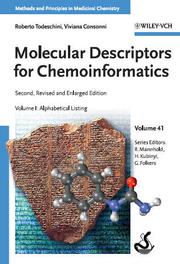
The authoritative deep-dive into molecular descriptors used in QSAR and machine-learning models — essential for anyone who wants to push beyond standard tools.
Closes the curriculum by grounding all learned techniques in historical context, showing how SAR, pharmacophores, and design principles led to real approved drugs — building lasting intuition and perspective.
Discussion
Keep reading
Paths that share books, cover the same subject, or open a related topic.