Recreational mathematics is where the subject shows its playful face: puzzles, games, curiosities, and paradoxes that turn out to hide genuine depth. It is one of the best on-ramps into real mathematics because it starts with delight and lets rigor sneak in. A thoughtful reading order moves from pure enjoyment toward books that quietly demand more, so your appetite and your ability grow together.
Order matters less strictly here than in a technical field, but there is still a natural progression from browsable collections to sustained arguments that reward patience.
Start with pure delight
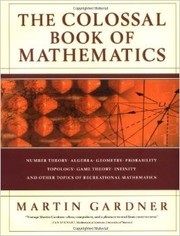
The Colossal Book of Mathematics by Martin Gardner collects the legendary columns that introduced generations to the joy of mathematics; it is the ideal first book, dippable and endlessly surprising. How to Lie with Statistics by Darrell Huff is a slim, witty classic that sharpens the skeptical eye every math lover needs. The Moscow Puzzles by Boris Kordemsky is a treasury of clever problems that reward playful thinking.
Meet the people and play the games
Mathematics is made by humans, and the stories matter. The Man Who Loved Only Numbers by Paul Hoffman is the enchanting biography of Paul Erdos and the culture of pure math. Things to make and do in the fourth dimension by Matt Parker is a modern romp that builds real intuition through hands-on play, and The Penguin dictionary of curious and interesting numbers by David Wells makes even the integers feel alive.
Reach for the deeper play
Now the books ask more. Winning Ways for Your Mathematical Plays, Volume 1 by Elwyn Berlekamp and colleagues invents the mathematics of games themselves. Proofs and refutations by Imre Lakatos dramatizes how mathematical ideas actually evolve through argument. The Art of Problem Solving: Volume 1 by Sandor Lehoczky and Richard Rusczyk trains genuine problem-solving skill.
Two capstones reward the journey: Godel, Escher, Bach by Douglas Hofstadter, a playful masterwork on self-reference and mind, and The book of numbers by John Conway and Richard Guy, a tour of the number systems by two great mathematicians.
Read in this order and play becomes fluency. Follow the full path to enjoy the whole climb.
Follow the full reading path →
Ready to learn something deeply?
Build a reading path — free