General relativity recasts gravity not as a force but as the curvature of spacetime, and learning it means acquiring a new geometric language along with the physics. It is one of the most beautiful theories in science and one of the most demanding to learn, because the mathematics and the physical ideas have to advance together. The right reading order introduces the physics gently, then supplies the geometric rigor, then applies both to real gravitating systems.
The classic mistake is reaching for the encyclopedic references first. They are magnificent but overwhelming without a physical first course to hang them on.
Start with a physical first course
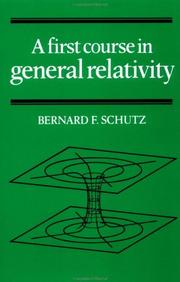
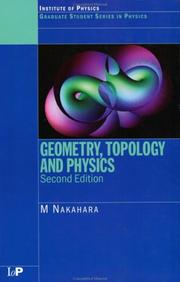
A first course in general relativity by Bernard Schutz is the gentlest complete introduction, careful to build tensor calculus and the physics side by side without assuming you already know differential geometry. Read it first. To shore up the mathematics as you go, Geometry, topology, and physics by Mikio Nakahara gives the geometric tools a physicist needs.
Choose your definitive text
Two great references define the field. Gravitation by Charles Misner, Kip Thorne, and John Wheeler is the vast, inspiring classic that covers everything with unmatched physical insight. General relativity by Robert Wald is the leaner, more mathematically precise modern standard, especially strong on global structure and rigor. Read whichever suits your taste after Schutz; many use one and consult the other.
Apply it to black holes, waves, and the cosmos
With the framework in hand, the physics gets thrilling. The large scale structure of space-time by Stephen Hawking and George Ellis develops the singularity theorems and causal structure. Black holes, white dwarfs, and neutron stars by Stuart Shapiro and Saul Teukolsky covers compact-object astrophysics. Gravitational Waves: Volume 1 by Michele Maggiore is the standard text on the ripples we now detect. Cosmology by Steven Weinberg applies relativity to the universe at large, and Quantum Fields in Curved Space by Nicholas Birrell and Paul Davies points toward where relativity meets quantum theory.
Read in this order and the geometry and the physics arrive together. Follow the full path to keep them in step.
Follow the full reading path →
Ready to learn something deeply?
Build a reading path — free