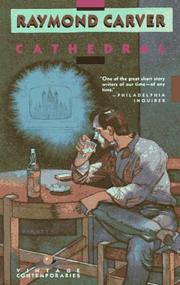
Start with Cathedral. It is the collection where Carver writes at full length, with the endings opened up rather than clamped shut, and where the title story does something none of his earlier work does — it lets a character change. If you only ever read one Carver book, this is the one that makes the case for him.
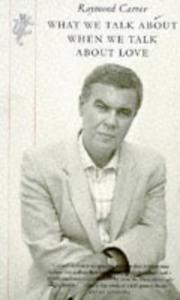
The obvious alternative is What We Talk About When We Talk About Love, which is the famous one, the collection that got minimalism named after him. Read it second. Not because it is worse, but because it is not entirely his. His editor Gordon Lish cut roughly half the manuscript, renamed stories and replaced endings, and the result is colder and more mannered than anything Carver wrote before or after. Starting there gives you a writer who does not really exist.
The collections, in order
- Will you please be quiet, please? (1976) — the first collection. Rougher, more varied, closer to Chekhov than to the minimalism label. Underrated.
- What We Talk About When We Talk About Love (1981) — the Lish-edited landmark.
- Beginners (2009) — the same manuscript, restored from the archive to what Carver submitted. Publishing this was itself contested, since Carver approved the edited version and it made his name.
- Cathedral (1983) — the turn. Warmer, longer, more generous.
- Where I'm Calling From (1988) — the selected stories, assembled by Carver at the end of his life, with seven new pieces.
The editing controversy, honestly
This is a real dispute and not a manufactured one. Read a story in What We Talk About When We Talk About Love and then the same story in Beginners and the difference is not subtle: paragraphs of interiority restored, endings that explain rather than withhold. Which is better is a genuine matter of taste. The common view is that Lish made Carver famous and Carver made himself good, and that Cathedral is what happened when he stopped being edited that way. Read Beginners as a companion rather than a replacement, and read it after you know the edited versions, or you lose the comparison entirely.
Where the other books fit
Fires collects essays, poems and a few stories, and contains On Writing, the short piece that explains his method better than any critic has. Read it once you care.
All of Us the Collected Poems is for readers who already love the stories. Carver thought of himself as a poet as much as a story writer; most readers do not agree, and the poems are plainer and more sentimental than the fiction. Try a dozen before committing.
Carver country pairs his prose with Bob Adelman's photographs of the Pacific Northwest towns the stories come from. It is a coffee-table book with real value: it shows you the actual houses.
Carol Sklenicka's biography, catalogued here simply as Raymond Carver, is thorough and unsparing about the drinking years. Save it for last. It is 600 pages and it will change how the early stories read.
Honest warnings
There is heavy overlap between the collections. Where I'm Calling From reprints a great deal of the three earlier books, so buying all four means buying the same stories twice. If you want one volume, buy that one; if you want the real trajectory, buy the three collections and skip it.
Carver in bulk is repetitive. The furniture recurs — the kitchen table, the unemployed husband, the ringing phone, the drink poured at eleven in the morning. Read four or five stories at a time, not thirty.
Where to stop
Cathedral plus Where I'm Calling From is a complete Carver education. Everything else is for readers who want to see the seams.
Follow the full ordered path here: Raymond Carver Reading Order: Where to Start.
Ready to learn something deeply?
Build a reading path — free