Raymond Carver Reading Order: Where to Start
This curriculum takes you from your first encounter with Carver's most accessible stories through the landmark debate over editorial intervention, then into his poetry and finally the biographical and critical context that ties it all together. Each stage builds on the last: you need to love the work before you can argue about its versions, and you need to know both versions before the poetry and biography fully resonate.
First Encounter: The Essential Carver
BeginnerGet a feel for Carver's voice, themes (working-class life, troubled relationships, quiet desperation), and his signature minimalist style before worrying about editorial history.
▸ Study plan for this stage
Pace: 6–8 weeks total: Weeks 1–4 for "Cathedral" (~15–20 pages/day, reading one story per sitting and pausing to reflect before moving on); Weeks 5–8 for "What We Talk About When We Talk About Love" (~10–15 pages/day, slower pace to absorb the starker prose and longer reflection time between stories).
- Minimalist prose style: Carver's use of short sentences, plain diction, and deliberate omission — what is left unsaid carries as much weight as what is said
- The iceberg principle / 'less is more': surface-level dialogue and action that conceals deep emotional undercurrents, most visible in stories like 'Cathedral' and 'What We Talk About When We Talk About Love'
- Working-class settings and characters: waitresses, mechanics, salesmen, and out-of-work laborers whose material struggles shape their emotional lives
- Troubled and strained relationships: marriages and partnerships defined by miscommunication, alcoholism, infidelity, and quiet resentment — central to nearly every story in both collections
- Epiphany and its absence: unlike classic short-story epiphanies, Carver's endings often deny resolution, leaving characters (and readers) suspended in ambiguity
- The role of alcohol: drinking in stories like 'Why Don't You Dance?' and 'What We Talk About When We Talk About Love' is both a social ritual and a symptom of deeper dysfunction
- Dialogue as subtext: characters in Carver rarely say what they mean — tracking the gap between spoken words and implied emotion is essential to reading him
- Quiet desperation and stasis: characters who sense something is wrong in their lives but lack the language or agency to change it
- After reading 'Cathedral,' what does the act of drawing together at the end reveal about the narrator's emotional limitations — and does it constitute a genuine transformation or merely a momentary crack in his isolation?
- How does Carver use physical objects and domestic spaces (a yard sale's furniture in 'Why Don't You Dance?', the cathedral drawing in 'Cathedral') to externalize his characters' inner states?
- In 'What We Talk About When We Talk About Love,' the four characters talk at length about love but never agree on a definition — what does Carver suggest about the nature of love and human communication by the story's end?
- Compare the narrative voice in 'Cathedral' to the voices in 'What We Talk About When We Talk About Love': how does the prose feel different, and what effect does that difference have on the emotional temperature of each collection?
- Carver's endings are famously unresolved. Choose two endings from across both collections and explain what emotional or thematic work the ambiguity is doing — what would be lost if Carver had 'closed' the story?
- How does alcoholism function across both collections — is it a cause of the characters' problems, a symptom, or both? Use specific stories to support your answer.
- Close-reading log: After each story, write 3–5 sentences identifying (1) what is explicitly stated, (2) what is implied but never said, and (3) the emotional state you believe the character is actually in. Do this for every story in both collections to build the habit of reading Carver's silences.
- Dialogue dissection: Pick one conversation from 'What We Talk About When We Talk About Love' (the title story works perfectly). Rewrite it so the characters say exactly what they mean. Then compare your version to Carver's — write a short paragraph on what is gained and lost in each version.
- Imitation exercise: Write a 300–500 word Carver-style scene set in a working-class domestic space. Use only plain, concrete nouns; avoid adjectives that editorialize; end without resolution. Then read it aloud and cut any sentence that feels 'literary' or explanatory.
- Thematic mapping: Create a simple two-column chart for each collection listing every story, then note the central relationship under strain and the specific form that strain takes (silence, drinking, infidelity, etc.). Look for patterns across both books.
- Ending analysis: Select three stories — at least one from each collection — and write a paragraph for each explaining what the final image or line is doing. Ask yourself: what has changed, what hasn't, and what does Carver refuse to tell us?
- Comparative reflection journal: After finishing both collections, write a one-page personal response comparing the emotional experience of reading 'Cathedral' versus 'What We Talk About When We Talk About Love.' Which felt more hopeful? More suffocating? Use specific stories as evidence.
Next up: Finishing these two collections gives you an intuitive feel for Carver's world and voice, which is the essential foundation for the next stage — where you'll be ready to investigate how much of that voice was Carver's own and how much was shaped by his editor Gordon Lish, making the editorial and biographical history of these very stories suddenly urgent and personal.
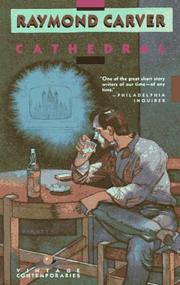
Widely considered Carver's most approachable and emotionally complete collection — the stories are slightly warmer and more expansive than his earlier work, making it the ideal entry point for a new reader.
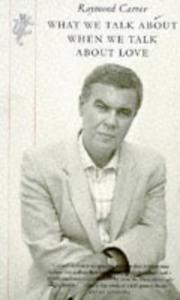
After Cathedral opens the door, this landmark collection shows Carver at his most stripped-down and austere — read second so you can already feel the contrast in compression and silence.
The Debate: Edited vs. Original
BeginnerUnderstand the central controversy of Carver's legacy — how much of his famous minimalism was Carver's own voice versus the heavy editorial hand of Gordon Lish — by reading the restored originals alongside the published versions.
▸ Study plan for this stage
Pace: 6–8 weeks total: Weeks 1–5 on "Beginners" (~20–25 pages/day, reading each story twice — once in "Beginners" and once by finding the corresponding published version from "What We Talk About When We Talk About Love" for direct comparison); Weeks 6–8 on "Fires" (~15–20 pages/day, reading the essays, po
- Minimalism vs. maximalism: understanding the spectrum between Carver's original, more expansive prose in 'Beginners' and the stripped-down versions Lish produced for publication
- Editorial intervention: recognizing how cuts to dialogue, interiority, and endings fundamentally alter tone, meaning, and character depth
- Authorial voice vs. editorial voice: distinguishing what belongs to Carver's sensibility versus what was imposed, using 'Beginners' as the primary evidence
- The title story as case study: 'Beginners' (the original 'What We Talk About When We Talk About Love') shows the most dramatic transformation and is the clearest lens for the debate
- Carver's self-articulation in 'Fires': understanding how Carver himself described his influences (Chekhov, his father, early poverty) and his philosophy of fiction in his own essays and craft pieces
- The role of endings: Lish's edits frequently truncated or replaced Carver's endings — tracking these changes reveals how meaning is constructed at the close of a story
- Emotional register: Carver's originals tend toward more explicit emotional statement; Lish's edits push toward implication and silence — neither is inherently superior, but the difference is ideologically significant
- Legacy and authenticity: grappling with the uncomfortable question of whether a collaboratively shaped text can be called one author's 'true' work
- After reading the title story of 'Beginners,' how does Carver's original ending differ in emotional tone from the Lish-edited version, and what does that difference reveal about each man's vision for the story?
- Based on the essays in 'Fires,' how does Carver describe the external pressures — financial hardship, family chaos, alcoholism — that shaped his writing life, and how do those pressures complicate the question of sole authorship?
- Which specific elements (dialogue, interiority, imagery, story length) does Lish most aggressively cut in the stories that appear in both 'Beginners' and their published counterparts, and what is the cumulative effect on the reader's relationship with the characters?
- In 'Fires,' Carver credits Chekhov as a major influence. After reading 'Beginners,' do you find Chekhov's influence more visible in Carver's originals or in Lish's edits — and why?
- How does reading 'Fires' alongside 'Beginners' change or complicate your sense of who Raymond Carver 'really' was as a writer?
- Side-by-side annotation: For at least three stories in 'Beginners,' find the corresponding Lish-edited published version and mark every cut, addition, and changed ending directly in the margins. Categorize each change (e.g., 'removed interiority,' 'shortened dialogue,' 'altered ending') and write a one-sentence note on its effect.
- Rewrite an ending: Choose one story from 'Beginners' whose ending Lish significantly changed. Write your own third version of the ending (150–250 words) that tries to split the difference — then journal about which version you find most satisfying and why.
- Craft a 'change log': Create a simple two-column table for one complete story — left column for Carver's original sentences, right column for Lish's published version. Reading across the table, write a short paragraph (200 words) arguing which version better serves the story's central theme.
- 'Fires' reflection journal: After each essay or craft piece in 'Fires,' write 3–5 sentences connecting what Carver says about his own life and influences to a specific moment in 'Beginners.' Look for places where his stated values appear more fully realized in the original manuscripts.
- Voice identification exercise: Take a paragraph from 'Beginners' and, without looking at the published version, predict what Lish would have cut and why. Then check against the actual published text. How accurate was your prediction? What does this reveal about Lish's editorial logic?
- Debate prep: Write a one-page position statement arguing either (a) the Lish-edited stories are the definitive Carver, or (b) 'Beginners' represents the authentic Carver. Use specific textual evidence from both books. Then write a one-paragraph rebuttal to your own argument.
Next up: Internalizing the tension between Carver's raw voice in "Beginners" and his self-reflective craft voice in "Fires" gives the reader a stable critical foundation for engaging with Carver's later, more independently controlled collections, where the question shifts from "whose work is this?" to "what did Carver do when fully in charge?"

This is the restored, un-Lish-edited manuscript of What We Talk About When We Talk About Love. Reading it directly after that collection lets you compare story by story and form your own judgment about what was gained or lost.
Carver's own essays here — especially 'On Writing' and 'Fires' — give you his stated aesthetic philosophy in his own words, which is essential context for evaluating the Lish debate fairly.
The Full Arc: Early Work and Masterpiece
IntermediateRead Carver's debut collection and his final, career-crowning story collection to understand his full development as a fiction writer from raw beginnings to hard-won maturity.
▸ Study plan for this stage
Pace: 8–10 weeks total: Weeks 1–4 for "Will You Please Be Quiet, Please?" (~4–5 stories per sitting, 3 sittings per week); Weeks 5–9 for "Where I'm Calling From" (~3–4 stories per sitting, 3 sittings per week, allowing extra time for re-reading key stories); Week 10 reserved for comparative reflection, jo
- Minimalist prose style: Carver's use of sparse, declarative sentences, stripped dialogue, and deliberate omission as a narrative tool — compare its rawness in 'Will You Please Be Quiet, Please?' to its refinement in 'Where I'm Calling From'
- The iceberg principle / theory of omission: what is left unsaid carries as much weight as what is on the page — track how Carver withholds motivation, backstory, and resolution across both collections
- Working-class realism: Carver's unflinching focus on blue-collar domestic life, financial precarity, and quiet desperation as the primary subject matter of literary fiction
- Alcoholism and its domestic fallout: how addiction warps communication, intimacy, and identity — present as subtext in the debut collection and more explicitly confronted in 'Where I'm Calling From'
- The failed or stalled epiphany: Carver's characters frequently approach a moment of self-recognition but stop short — contrast the more ambiguous endings in 'Will You Please Be Quiet, Please?' with the tentative but genuine breakthroughs in 'Where I'm Calling From'
- Voice and free indirect discourse: how Carver inhabits limited, often unreliable perspectives without judgment, creating dramatic irony through what characters cannot articulate about themselves
- Revision as artistic maturity: 'Where I'm Calling From' contains revised versions of earlier stories — examining these revisions reveals Carver's evolving aesthetic philosophy and his move away from the Gordon Lish-edited extreme minimalism
- Dialogue as subtext: characters in both collections rarely say what they mean — close reading of conversations reveals the emotional content buried beneath mundane exchanges
- How does Carver's prose style in the opening stories of 'Will You Please Be Quiet, Please?' differ in texture, sentence rhythm, and emotional register from the stories collected in 'Where I'm Calling From' — and what do those differences tell you about his development as a writer?
- Choose one story from each collection that features a couple in crisis. How does Carver use dialogue — and its silences — to dramatize the breakdown of communication differently across the two books?
- The title story 'Will You Please Be Quiet, Please?' ends on a deeply ambiguous note. How does Ralph's 'epiphany' compare in quality and credibility to the moments of recognition experienced by characters in 'Where I'm Calling From'? Does Carver become more or less hopeful over time?
- Alcoholism haunts both collections. How does its treatment shift between the two books — from background condition to foregrounded subject — and what does that shift suggest about Carver's own biography and artistic intentions?
- Select any story from 'Where I'm Calling From' that you know was revised from an earlier version. Based on what you can observe on the page, what kinds of changes does the mature Carver seem to make, and what aesthetic values do those changes reflect?
- What does Carver's consistent focus on working-class characters and settings argue, implicitly, about whose lives deserve serious literary attention — and how does that argument feel different in the debut collection versus the career-crowning one?
- **The Omission Map:** After finishing each story, write a one-paragraph summary of everything the story deliberately does NOT tell you — withheld backstory, unexplained behavior, unresolved conflict. Then write a sentence on how that absence shapes the emotional impact. Do this for at least six stories across both collections.
- **Dialogue Dissection:** Choose one conversation from 'Will You Please Be Quiet, Please?' and one from 'Where I'm Calling From.' Rewrite each exchange so the characters say exactly what they mean. Then compare your version to Carver's — write a short reflection on what is lost and what the subtext was doing that direct speech cannot.
- **Sentence-Level Imitation:** Select a paragraph you find particularly powerful from each collection. Copy it out by hand, then write your own paragraph imitating its sentence length, rhythm, and diction to describe a scene from your own life. This trains your eye to feel the difference between the rawer early style and the more controlled late style.
- **The Epiphany Audit:** Go through every story in both collections and classify its ending on a simple spectrum: Closed / Ambiguous / Open. Chart the results. Write a one-page reflection on whether you see a pattern shift between the two books and what it suggests about Carver's evolving view of human possibility.
- **Comparative Character Portrait:** Pick one recurring Carver 'type' — the passive husband, the drinking man, the quietly furious wife — and trace that character type across at least three stories from each collection. Write a 400-word essay on how Carver's rendering of that type deepens, softens, or complicates over the course of his career.
- **Read Aloud Sessions:** Once per week, read one story aloud in its entirety. Pay attention to where you naturally pause, where the rhythm feels off, and where the plainness of the language suddenly becomes devastating. Keep a running log of these moments — they will sharpen your understanding of how Carver's prose works as sound, not just as meaning.
Next up: Mastering Carver's full arc — from the jagged rawness of his debut to the hard-won clarity of his final collection — gives the reader the aesthetic and biographical foundation needed to engage critically with the scholarly, biographical, and craft-focused secondary literature that surrounds his work and legacy.
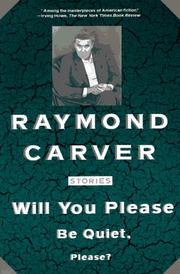
His debut collection shows the roots of his style before Lish's influence was at its peak — essential for tracing his development and seeing which instincts were always his own.
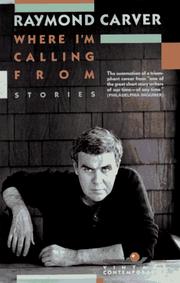
Carver's own selected stories, chosen by him near the end of his life — the definitive single-volume overview of his fiction and a powerful capstone to reading his work chronologically.
The Poet: Carver's Other Voice
IntermediateDiscover Carver as a poet — a side of his work often overlooked — and see how his plain-spoken, image-driven verse illuminates the same emotional territory as his prose.
▸ Study plan for this stage
Pace: 6–7 weeks, reading roughly 15–20 poems per sitting, 4–5 sittings per week — "All of Us: The Collected Poems" runs ~400 pages, so aim for about 55–65 pages per week. Move through the four original collections in order (Near Klamath → Winter Insomnia → At Night the Salmon Move → Where Water Comes Toge
- Plain-spoken diction as a deliberate aesthetic: Carver's poems use the same stripped, conversational language as his fiction, and understanding this choice reveals it as craft, not limitation
- The image as emotional container: Carver relies on concrete, often domestic images (a coffee cup, a fishing line, a lit window) to carry feeling that is never stated outright — the image does the work the narrator will not
- Autobiography and confession without sentimentality: the poems draw heavily on Carver's own life (alcoholism, failed marriages, financial ruin, late-life love with Tess Gallagher) yet resist self-pity through tonal restraint
- Influence of mentors and models: tracing the visible debt to William Carlos Williams, Chekhov (as a spiritual model), and especially John Gardner, whose encouragement shaped Carver's early poetic voice
- The late-career turn toward gratitude and elegy: 'A New Path to the Waterfall,' composed while Carver was dying of cancer, represents a tonal and thematic shift — from anxiety and loss to wonder and acceptance — that reframes the entire arc of his work
- Prose-poem hybridity: several pieces in the collection blur the boundary between short lyric and flash fiction, making 'All of Us' an ideal lens for understanding how Carver thought about form itself
- Repetition, anaphora, and the list as structure: Carver frequently uses cataloguing and repeated syntactic units to build emotional momentum in lieu of metaphor or rhetorical flourish
- Silence and the unspoken: just as in his stories, what a Carver poem refuses to say — the gap, the line break, the abrupt ending — is as meaningful as what it does say
- How does Carver's poetic diction compare to his prose style, and what does reading the poems reveal about the intentionality behind his famous 'minimalism'?
- Choose three concrete images from different poems in 'All of Us' — what emotion does each image carry, and how does Carver prevent that emotion from becoming explicit or sentimental?
- How does the final collection, 'A New Path to the Waterfall,' differ in tone and subject matter from the earlier collections, and what biographical context explains that shift?
- In what ways do the poems that deal with alcoholism and recovery complicate or deepen your reading of the Carver characters who drink in his fiction?
- Identify at least two poems in 'All of Us' that feel structurally closest to prose — what formal features push them toward poetry, and what keeps them from being short stories?
- How does Carver use other writers (Chekhov, Cheever, Tess Gallagher) as subjects or presences in the poems, and what does this intertextuality suggest about his sense of literary community and legacy?
- Keep a 'image log' as you read: each sitting, copy out 3–5 images that struck you, then write one sentence explaining what emotion the image carries without Carver ever naming it. At the end of the book, review the log and look for recurring motifs (water, light, hands, food) across collections.
- Write a one-page 'collection portrait' at the end of each of the six original collections — summarize the dominant mood, recurring subjects, and one formal technique you noticed. Comparing all six portraits at the end will map Carver's poetic development visually.
- Select one poem from 'All of Us' and rewrite it as a piece of Carver-style flash fiction (300–500 words), keeping the same images and emotional situation. Then write a short reflection: what did the shift in form force you to add, explain, or dramatize that the poem left open?
- Choose a poem that deals with a relationship (marriage, friendship, estrangement) and annotate every line for what is NOT said — mark the silences, elisions, and implied backstory. Write a paragraph arguing that the unspoken content is the poem's real subject.
- Read 'A New Path to the Waterfall' straight through in one or two long sittings, as close to continuously as possible, to experience its cumulative, elegiac effect. Afterward, write a journal entry in the second person ('You are reading a dying man's last poems…') responding to the emotional arc of the collection as a whole.
- Find one Carver poem that shares a subject, image, or character type with a Carver story you have read previously (or look one up). Write a 400-word comparative note: how does each form handle the same raw material differently, and which version feels more exposed or more protected?
Next up: By internalizing Carver's poetic voice — its images, silences, and emotional restraint — the reader is now equipped to approach critical and biographical perspectives on his work with a richer, more complete picture of the full Carver, ready to interrogate how scholars and memoirists have interpreted (and sometimes contested) the life and legacy behind both the prose and the poems.

The complete poetry in one volume. Reading it after his fiction reveals how the two forms fed each other — the poems are often more nakedly autobiographical and provide a direct window into the life behind the stories.
Biography and Critical Context
ExpertSituate everything you've read within Carver's life — his alcoholism, his marriages, his relationship with Lish, and his late-life redemption — and engage with serious literary criticism of his place in American fiction.
▸ Study plan for this stage
Pace: 8–10 weeks total: Weeks 1–7 for Sklenicka's biography (~560 pages, ~80 pages/week, roughly 12–15 pages/day); Weeks 8–10 for Carver Country (~150 pages, leisurely pace of ~50 pages/week, treating it as a visual and reflective companion to be cross-referenced with the biography).
- The biographical roots of Carver's minimalism: how poverty, working-class displacement, and chronic instability shaped his spare aesthetic choices
- Alcoholism as both subject and structural force: how Carver's decades-long struggle with alcohol directly distorted his productivity, relationships, and the darkness in his fiction
- The Gordon Lish editorial controversy: understanding the nature and extent of Lish's cuts and rewritings, and what Sklenicka reveals about Carver's own ambivalence toward the collaboration
- The two marriages — to Maryann Burk and Tess Gallagher — as biographical lenses for reading the domestic tension and gender dynamics in the stories
- Late-life redemption and the 'second life': Carver's sobriety after 1977, his relationship with Gallagher, and how Cathedral and the late poems reflect a consciously different artistic and moral register
- Carver's place in the American literary tradition: his debt to Chekhov and Hemingway, his role in the 1970s–80s short-story renaissance, and critical debates about 'Dirty Realism' as a label
- Carver Country as self-mythologization: how the photographs and Carver's own prose-poem captions construct a deliberate geographic and emotional autobiography
- The tension between the man and the myth: Sklenicka's corrective biographical record versus the romanticized Carver persona that critics and readers perpetuated
- According to Sklenicka, in what specific ways did Gordon Lish alter Carver's manuscripts, and how did Carver's responses to those alterations evolve over the course of their working relationship?
- How does Sklenicka trace the relationship between Carver's alcoholism and the emotional and narrative content of his early story collections — what is the biographical evidence for reading those stories as semi-autobiographical?
- What does Carver Country reveal about how Carver understood the geography of his own life, and how do the visual and textual elements together construct a mythology of the Pacific Northwest working class?
- How does Sklenicka characterize the shift in Carver's voice and thematic concerns between his pre-sobriety and post-sobriety work, and what life events does she identify as catalysts for that shift?
- What critical labels — 'Dirty Realism,' 'minimalism,' 'K-Mart fiction' — does the biographical record complicate or enrich, and what does Sklenicka suggest Carver himself thought of these categorizations?
- How do the two books together — biography and visual memoir — either reinforce or contradict each other's portrait of Carver, and where do you detect tension between Carver's self-presentation and Sklenicka's research?
- Lish Comparison Exercise: Using Sklenicka's detailed account of the editorial interventions, select one story she discusses at length (e.g., 'The Bath' vs. 'A Small, Good Thing') and write a 500-word close-reading note documenting exactly what the biographical context adds to your understanding of the two versions.
- Biographical Timeline: Build a two-column chronological timeline — one column for major life events drawn from Sklenicka, one column for the corresponding published works. Annotate at least five points where you can draw a direct or plausible line between biography and fiction.
- Carver Country Annotation: As you read Carver Country, write a marginal note (or sticky note) for every image or caption that you can now connect to a specific episode in Sklenicka's biography. At the end, review your notes and write a one-page reflection on how the book functions as myth-making.
- Critical Label Essay: Write a 600–800 word argumentative response to the question: 'Does the label Dirty Realism illuminate or obscure Carver's achievement?' Draw exclusively on evidence from Sklenicka and Carver Country — no outside sources — to force close engagement with the assigned texts.
- Voice Before/After Analysis: Choose one passage Sklenicka quotes from Carver's pre-sobriety work and one from his post-sobriety work. Write a 400-word stylistic comparison focusing on syntax, imagery, and emotional register, anchored in what Sklenicka tells you about the biographical moment of each.
- Socratic Self-Interrogation: After finishing both books, write out answers — in full sentences, without notes — to all six study questions above. Then reopen the books and fact-check your answers, marking where memory, interpretation, or bias crept in. This simulates the kind of critical accountability advanced literary study demands.
Next up: Having grounded Carver's fiction in the full weight of his biography and critical reception through Sklenicka and Carver Country, the reader is now equipped to return to the primary texts — the stories and poems — with a richer, more skeptical, and more historically situated interpretive lens, ready for advanced thematic or comparative analysis.
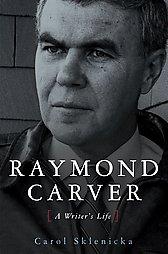
The definitive, exhaustively researched biography. Now that you know the work deeply, this book transforms your understanding by showing exactly how life, editor, and art intertwined — it is the essential final word on the Lish debate and everything else.

A photo-essay collaboration pairing Carver's prose and poetry with Bob Adelman's photographs of the Pacific Northwest landscapes that shaped his imagination — a beautiful, reflective coda to the whole curriculum.
Discussion
Keep reading
Paths that share books, cover the same subject, or open a related topic.