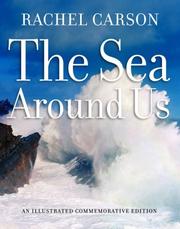
Start with The Sea Around Us. It is the book that made her a working writer, it is the best prose she produced, and it demonstrates the thing that made Silent Spring effective — a marine biologist who could write a sentence that a general reader would follow to the end without being condescended to.
The obvious entry is Silent Spring itself, and it is the wrong one. That book is a sustained argument, built to persuade a hostile audience, and it is the least characteristic thing she wrote. Read on its own it reads as polemic; read after the sea books it reads as what it actually was — a naturalist who had spent twenty years describing living systems turning to describe one being dismantled.
The sea trilogy
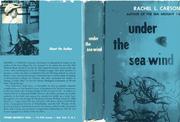
Under the sea-wind came first and sold almost nothing on publication. Carson considered it her own favourite of her books. It has no human characters at all: the narrative follows a sanderling, a mackerel and an eel, and it is closer to what we would now call nature writing than to popular science.
The Sea Around Us is the oceanography book and the one that changed her circumstances. The Edge of the Sea completes the sequence at the shoreline, and it is the most practical of the three — it is organised around what you can actually find on rock, sand and coral coasts.
Read in that order the three form a single descending movement from open ocean inward, which is not how they were written but is how they read best.
Silent Spring
Silent Spring is the fourth, and it should be read knowing the sea books exist. Two things are worth stating plainly. First, Carson did not call for a ban on DDT — she argued against indiscriminate aerial spraying and for restraint, and the distinction has been misrepresented by people on both sides of the argument since. Second, the book is more than sixty years old, and some of its specific claims, particularly the projections about human cancer rates, have not held up as she framed them. Neither point undoes the central argument about persistence, bioaccumulation and regulatory capture, which is now standard. The wider dispute about the consequences of post-Carson pesticide policy is live and genuinely contested; anyone who tells you it is simple is selling something.
The posthumous collections
The sense of wonder is a short essay, published as a book after her death, about taking a child outdoors. It is the most quoted and the slightest. Lost woods gathers uncollected pieces, letters and speeches, and is where you go if you want to see how her position developed.
The books about her
Rachel Carson by Linda J. Lear is the standard biography — published under the fuller title Rachel Carson: Witness for Nature — and it is the one to read if you want a single account of the life and the fight. On a farther shore by William Souder is shorter, more recent and better on the writing itself.
Merchants of Doubt, by Naomi Oreskes and Erik Conway, is not about Carson but is the essential companion: it traces the manufactured-doubt playbook that was first run at scale against Silent Spring and has been reused on tobacco, acid rain and climate ever since. Silent Spring Revolution by Douglas Brinkley places her in the broader political history of American environmental legislation, and is the most partisan of the four.
Where to stop
Four books is the whole lifetime output, and all four are worth reading. Most readers should do the trilogy and Silent Spring, then pick one of the biographies. The full sequence, with the companion volumes in position, is on the path below.
Follow the full ordered path here: Rachel Carson Reading Order: The Sea Books Before Silent Spring.