Race and Medicine: The Best Books on Racism in Healthcare, in Order
This is a subject where the historical record and the present-day argument sit at very different evidentiary levels, and reading it well means holding that difference in mind. The history is documented to the point of being uncontested: the Tuskegee syphilis study ran for forty years and its records survive, J. Marion Sims operated on enslaved women without anaesthesia and wrote about it himself, and Henrietta Lacks's cells were taken and commercialised without her knowledge or her family's. The present-day claims — about implicit bias, about what should replace race-adjusted kidney and lung function equations, about how much of the Black-white maternal mortality gap is explained by care rather than by other factors — are live scholarly arguments where good researchers disagree. This path puts the documented history first precisely so that the contested chapters can be read as arguments with evidence behind them rather than as assertions. Every book here is attributed to its author's case; where a claim is contested, the stage goal says so.
Where to Start
BeginnerGet the shape of the subject from three books that are accessible, narrative and heavily sourced. By the end you should be able to say what happened at Tuskegee and to Henrietta Lacks in specific terms — dates, institutions, what consent did and did not exist — and understand why medical mistrust in Black American communities has a documentary history rather than being a matter of belief. These three are the least technical books on the path; nothing here requires medical background.
▸ Study plan for this stage
Pace: Six to eight weeks for 1,181 pages, and the three read at very different speeds despite all being written for a general reader. Skloot's The Immortal Life of Henrietta Lacks is 381 pages of reported narrative and moves fastest - 40-50 pages an evening, done in a fortnight. Washington's Medical Apart
- What consent did and did not exist in the HeLa case: what was taken, from whom, when the family learned of it, and what the law of the time did and did not require
- The distinction between the documented historical record and the interpretations built on it - the organising principle of this whole path
- Medical mistrust as something with a documentary history rather than a matter of belief, which is the specific claim Washington's sourcing establishes
- The scale of the pattern Washington assembles, and why a single case, however vivid, cannot establish it
- The difference between a reported narrative (Skloot), a documented survey (Washington) and a first-person account (Tweedy), and what each can and cannot prove
- Tweedy's own care about the limits of his evidence - what he witnessed versus where he is generalising - as the reading posture the later contested stages require
- State in specific terms what happened to Henrietta Lacks: what tissue was taken, under what circumstances, what was done with it, and when her family found out.
- Washington covers many episodes and Skloot covers one. What does each format establish that the other cannot?
- Why does Washington's sourcing matter so much to her argument? What would the same book without endnotes be worth?
- Tweedy writes as a participant rather than a historian. Identify a passage where he flags the limit of his own evidence, and say what he does instead of over-claiming.
- On the evidence in these three books alone, what is established as historical fact and what is still only suggested?
- Pick three episodes from Medical Apartheid and follow each one into Washington's endnotes to the primary source she cites. The exercise is not to doubt her but to see the shape of the record - published surgical papers, institutional files, contemporaneous reporting - because that shape is what makes stage two's history uncontested.
- Write a one-page factual chronology of the HeLa case from Skloot, with only what the book documents and no interpretation. Then write a second page listing the questions Skloot leaves genuinely open. Keeping the two lists apart is the skill the rest of the path runs on.
- Read Tweedy's account of a clinical encounter alongside a comparable episode in Washington, and write down what each format gives you: an individual's experience against an assembled record. Note which one you found more persuasive and why - that instinct will be tested in stage four.
- Take the term 'medical mistrust' and, using only these three books, assemble the evidence you would offer someone who called it unfounded. Restrict yourself to what is documented.
Next up: These three establish the shape of the subject through one case in depth and one broad survey; the next stage replaces the survey with four specialist monographs and shows what the archival evidence in each episode does - and does not - support.
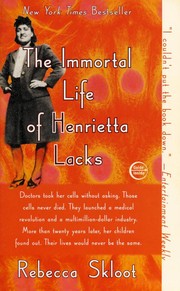
The best entry point because it is a reported narrative rather than an argument: the story of the HeLa cell line, the woman it was taken from in 1951, and a family who learned about it two decades later. It raises consent, ownership and the researcher-subject relationship without asking you to take a position first.
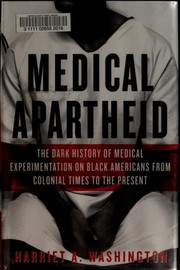
The single most comprehensive account of medical experimentation on Black Americans, from the antebellum period to the late twentieth century, and the reference work the rest of this path leans on. Read it second: Skloot gives you one case in depth, Washington shows you that the case sits in a pattern with a long documented record.

A physician's memoir of training and practising as a Black doctor, and the book that turns the historical material into something present-tense. Tweedy is careful about the limits of his own evidence — he writes about what he witnessed and flags where he is generalising — which makes him a good model for reading the contested chapters later on.
The History, Case by Case
BeginnerWork through the four episodes that anchor the historical record, each in a monograph by a specialist historian. By the end you should be able to state what the archival evidence actually shows in each case and, just as importantly, where the popular version overstates it — Reverby's book exists largely to correct the widely repeated claim that Tuskegee's subjects were deliberately infected, which they were not. This stage is documented history, not contested interpretation; treat it as the fact
▸ Study plan for this stage
Pace: Ten to twelve weeks for 1,142 pages across four monographs, and the page counts are misleading about difficulty. Cooper Owens's Medical Bondage is the shortest at 182 pages and the densest - academic history working from surgeons' own published records, so 15-20 pages a sitting with the notes is rig
- The origins of American gynaecological surgery in operations on enslaved women, established from the surgeons' own published accounts, and the recovery of Anarcha, Betsey and Lucy as people rather than case numbers
- What the Public Health Service files show the Tuskegee study actually did: what was withheld, from whom, for how long, and under what institutional authority
- The specific correction Reverby makes - the men were not deliberately infected - and why narrowing a claim can strengthen rather than weaken a case
- The gap between the archival record and the popular version of an episode, as a recurring feature of this subject rather than a one-off
- Downs's demonstration that the pattern predates the twentieth-century experiments: mass illness and mortality among freed people, and the inadequacy of the medical response
- Why a monograph by a specialist historian carries different evidentiary weight from a survey, and what you gain by reading four of them on four episodes
- The institutional actors that recur across all four books - teaching hospitals, government health services, medical journals - as the level at which this history operated
- What does Cooper Owens establish from the surgeons' own writings, and why does using their published records rather than later testimony make the chapter unarguable?
- Set out what the Tuskegee study did, precisely, using Jones. Then state what Reverby corrects, and explain why she considers the correction important rather than pedantic.
- Reverby and Jones work from the same archive. What did the passage of a scholarly generation let her see that he could not?
- How does Downs's account change the frame set by the other three books? What does it imply about whether the later experiments were an aberration?
- Pick one episode from this stage and state the strongest claim the evidence actually supports - not the strongest claim you have heard made about it.
- Read Jones and Reverby back to back and keep a two-column list: claims Jones makes that Reverby sustains, and claims that have grown up around the study which she shows the archive does not support. The second column is the more valuable one and it is the whole reason both books are on this path.
- For each of the four episodes, write a paragraph stating only what the documentary evidence shows, with the source type named - published surgical papers for Cooper Owens, Public Health Service files for Jones and Reverby, and the records Downs works from. Four paragraphs is the factual floor referred to in the stage goal; write it out and keep it.
- Trace one of the named women in Cooper Owens - Anarcha is the most documented - through everything the book can establish about her. Then note what cannot be recovered. The limits of the archive are part of what the book is about.
- Take a widely repeated claim about Tuskegee that you held before starting, and test it against Jones and Reverby. Write down whether it survives, and if not, where the distortion entered.
- Place Downs's chronology alongside Washington's from stage one and mark where they cover the same ground. Downs's period sits before most of Washington's cases, which is exactly the claim he is making about the pattern.
Next up: This is the seam in the path: everything so far is documented history that specialists do not dispute, and the next stage moves to books that argue a thesis about how race entered clinical measurement - arguments with evidence behind them, but arguments.

The scholarly account of American gynaecology's origins in surgery performed on enslaved women, including J. Marion Sims's fistula operations. Cooper Owens works from the surgeons' own published records, which is what makes the chapter unarguable, and she recovers the women — Anarcha, Betsey, Lucy — as people rather than case numbers.
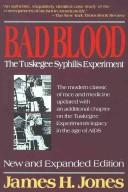
The definitive history of the Tuskegee syphilis study, first published in 1981 and built from the Public Health Service's own files. Note that the display title is shared with an unrelated recent bestseller about Theranos; this is Jones's Tuskegee book and the standard scholarly source on it.
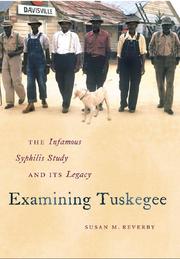
Read directly after Jones. Reverby returns to the same archive a generation later and does two things at once: she establishes the legacy and its effect on trust, and she corrects the mythology that has grown around the study. A rare example of a book that strengthens a case by narrowing it.

The least-known book here and the one that most changes the frame: the health catastrophe among freed people during and after the Civil War, and the failure of the medical response to it. It shows that the pattern precedes the twentieth-century experiments the earlier books cover.
How Race Got Into the Instruments
IntermediateUnderstand the specific technical mechanism by which a social category ended up inside clinical measurement — the race coefficient built into spirometers and into kidney function equations, and the older scientific ideas that put it there. These books argue a thesis, and the thesis has critics: the current dispute over whether removing race adjustment from eGFR helps or harms Black patients is unsettled and turns on empirical questions about the replacement equations. Read this stage for the mec
▸ Study plan for this stage
Pace: Eight to ten weeks for 1,002 pages, and the change of register from stage two is the thing to notice. Braun's Breathing Race into the Machine is 304 pages and is closest to the previous stage in method - a documented history of one instrument, the spirometer, and of a correction factor built into it
- The difference between a racial assumption held in a clinician's head and one built into a device or an equation - Braun's central demonstration and the most concrete thing in the stage
- How a nineteenth-century correction factor survives into modern practice by being embedded in an instrument's calibration rather than in a stated belief
- Roberts's thesis that biological race is being reconstituted through genomics, race-specific pharmaceuticals and ancestry testing - stated as her case, with the disagreement noted
- Where a documented mechanism ends and a contested extrapolation begins, which is exactly the line between Braun and parts of Roberts
- The persistence of clinical folklore about pain tolerance, skin, fertility and drug response without evidential support, which is Hoberman's subject
- What race adjustment in a clinical equation is technically doing, and why the current argument about removing it is empirical rather than merely political
- Reading an author's disciplinary standpoint - historian of science, legal scholar, cultural critic - as information about what kind of evidence the book will offer
- Describe the spirometer's race correction as Braun documents it: what it does to a measurement, how it got there, and by what route it persisted.
- Which of Roberts's claims rest on documented practice, and which are extrapolations from it? Name one of each and say how you told them apart.
- Roberts argues that race is being reconstituted as biology through genomics. What is the strongest objection a population geneticist could make to that, and does Roberts answer it?
- Hoberman is the most polemical of the three. Where does his evidence carry the argument, and where is he relying on accumulation of examples rather than proof?
- The dispute over race-adjusted kidney function equations turns on how the replacement performs. What kind of evidence would settle it, and do any of these three books supply that kind of evidence?
- State the difference between stage two's books and this stage's in terms of what they are asking you to accept.
- Take three claims from Fatal Invention and classify each as documented mechanism, reasonable inference, or contested extrapolation - then find the place in Roberts's own text where she signals which she thinks it is. She is more careful about this than her critics allow, and finding the signals is the exercise.
- Follow Braun's spirometer correction from its origin to its persistence in modern equipment and write the chain out as a sequence of steps. Then attempt the same exercise for one claim in Hoberman and note where the chain has a gap. The contrast is the point of reading the two together.
- Write down, for each of the three books, one sentence naming the author's discipline and one sentence saying what kind of evidence that discipline treats as decisive. Keep the note; it is the most useful thing to carry into stage four.
- Look up the current professional guidance on race adjustment in one clinical equation - kidney function is the most documented - and read it against Braun's and Roberts's accounts. Note specifically where the guidance rests on empirical performance rather than on the historical argument, because that is the part these books cannot settle.
- Collect the instances of clinical folklore Hoberman documents into one list, then check which ones Washington's Medical Apartheid from stage one also records. Overlap between a polemical book and a heavily sourced one is a useful proxy for which of Hoberman's examples are solid.
Next up: Having seen how race entered the instruments themselves, the final stage moves to the measured outcome gaps of the present day and to the competing explanations for them, where the disagreement is sharpest and most consequential.

A history of one instrument, the spirometer, and of how a correction factor for Black lung function was built into it in the nineteenth century and survived into modern practice. The most concrete demonstration on this path that a racial assumption can be embedded in a device rather than held in a doctor's head.

The broad argument that biological race is being reconstituted through genomics, race-specific drugs and ancestry testing. Roberts is a legal scholar making a case, and she is explicit that it is a case; population geneticists disagree with parts of it. Read her alongside Braun to see the difference between a documented mechanism and a contested extrapolation.

An account of racial folklore inside medicine itself — beliefs about pain tolerance, skin, fertility and drug response that persisted among clinicians without evidential support. Placed last in this stage because it is the most polemical book of the three and reads better once you know the documentary record it draws on.
Outcomes Now, and the Arguments About Why
IntermediateReach the contemporary evidence on disparities in outcomes and the competing explanations for them, and be able to distinguish the measured gap from the proposed cause. The gaps in maternal mortality and infant mortality are well-established statistics; the causal weight to assign to clinician bias, to chronic stress, to insurance and access, or to other factors is exactly what is under argument. Each book here is one position in that argument, and the stage is built so you read more than one.
▸ Study plan for this stage
Pace: Ten to twelve weeks for 1,213 pages, and the stage is designed so that you read more than one position rather than settling on the first. Villarosa's Under the Skin is 289 pages of reported survey and is the right opening - it lays out the outcome data and the weathering hypothesis, that the cumulat
- The distinction that organises the whole stage: the measured gap is not in dispute, the explanation for it is
- The weathering hypothesis as Villarosa presents it - cumulative physiological cost - and what evidence would strengthen or weaken it
- Why the outcome gaps persist across income and education levels, and what that fact rules out as a sole explanation
- Ethnography as evidence: what Davis's method can establish about mechanism that a statistical study cannot, and what it cannot establish about prevalence
- The long history of reproductive control that Roberts documents, and how it bears on present-day encounters without determining them
- Matthew's reform case: what anti-discrimination law could do about implicit bias in clinical care, offered as a proposal rather than a finding
- The contested standing of the implicit-bias literature itself, whose predictive validity has been challenged - which is why Matthew's reading of it is one position rather than a settled premise
- How to hold a strong claim and its strongest objection at once, which is the skill the whole path has been building toward
- Which facts in this stage are measured statistics and which are proposed causes? List three of each from Villarosa alone.
- The gaps persist among high-income and highly educated Black women. What explanations does that observation weaken, and what does it leave standing?
- Villarosa gives numbers and Davis gives encounters. What exactly does Davis's ethnography establish that the statistics cannot, and where does its evidentiary reach stop?
- Roberts's historical account comes after the contemporary books rather than before. What does that ordering let you see that the reverse order would obscure?
- Matthew's argument depends on a reading of the implicit-bias literature that has itself been challenged. Does that sink the legal proposal, or is the proposal separable from that premise?
- Take the maternal mortality gap and set out the competing explanations offered across these four books, with the evidence for each. Where does the disagreement actually lie?
- Build one table with a row for each explanation of the outcome gaps proposed anywhere in this stage - clinician bias, chronic stress and weathering, insurance and access, care-setting quality, historical and policy legacy - and columns for the book that argues it, the evidence offered, and the strongest objection you can state. The table is the deliverable of the whole path.
- Take one statistic Villarosa cites and follow it to her source. Check what population it was measured in and what it actually controls for; a striking number is often narrower than the sentence quoting it. Do this three times, on different numbers.
- Read Davis's account of one neonatal-care encounter and write down what it would take to establish that the pattern she observes is general rather than local. Then say whether the book claims it is general. Distinguishing the two is the exercise.
- Place Roberts's Killing the Black Body against Davis and mark the specific points where the historical material makes a present-day encounter legible - and the points where you think the connection is asserted rather than shown.
- Write Matthew's legal argument out as a numbered chain from premise to remedy, then mark which link the challenge to implicit-bias research actually attacks. Deciding whether the chain survives that attack is the closing judgement this path exists to let you make on your own evidence.
- Return to your stage-two factual chronology and read it against everything in this stage. Write one paragraph on what the documented history does establish about the present, and one on what it does not - the seam between the two halves of the path, stated in your own terms.
Next up: This closes the path: the documented history is behind you as a factual floor, the contested present is laid out as a set of positions with their evidence, and further reading now means going to the studies these authors cite rather than to another survey.

The best current survey of the outcome data and the weathering hypothesis — the argument that the cumulative physiological cost of racism, rather than genetics or class alone, drives the Black-white health gap. Villarosa reports the evidence for it fairly and does not oversell what is still a hypothesis under test.

An ethnography of Black women's experiences of prematurity and neonatal care, and the closest look on this path at how a disparity is produced encounter by encounter. Read after Villarosa: she gives you the numbers, Davis gives you the mechanism she believes explains them.

Roberts's earlier and more historically grounded book, on the control of Black women's reproduction from slavery through sterilisation campaigns to welfare policy. It supplies the long history behind the reproductive-health chapters above, which is why it comes after them rather than before.

The closing argument, and a deliberately different kind of book: a legal scholar's proposal for what anti-discrimination law could actually do about implicit bias in clinical care. Matthew's reading of the implicit-bias literature is contestable — that literature's predictive validity has itself been challenged — but she is the clearest statement of the reform case, and a path that ends without one is incomplete.
Discussion
Keep reading
Paths that share books, cover the same subject, or open a related topic.