Science writing: the best books to learn the craft
This curriculum takes you from the core principles of clear, precise writing all the way to the narrative and storytelling craft that defines the best popular science today. Each stage builds on the last: you first internalize the fundamentals of good prose, then study how science writers explain complex ideas, then master narrative structure and character, and finally analyze the modern masters of the genre to develop your own voice.
Foundations of Clear Writing
BeginnerInternalize the core principles of clear, concise, and precise prose — the non-negotiable bedrock of all good science writing.
▸ Study plan for this stage
Pace: 4–5 weeks, ~25–30 pages/day. Start with "On Writing Well" (chapters 1–6, ~2.5 weeks), then "The Elements of Style" (~1.5–2 weeks for close reading and reference work).
- Clarity as the primary virtue: writing should be transparent so the reader understands the author's meaning without effort
- Simplicity and economy of language: eliminate unnecessary words, jargon, and clutter to strengthen prose
- Precision in word choice: select the exact word that conveys your intended meaning, not an approximation
- Active voice and strong verbs: prefer active constructions and concrete action verbs over passive voice and weak modifiers
- Knowing your subject and your reader: understand what you're writing about and write with a specific audience in mind
- The importance of rewriting and revision: first drafts are rarely final; disciplined editing is essential to clear writing
- Grammar and mechanics as tools, not rules: master the fundamentals of grammar, punctuation, and style to serve clarity, not to follow arbitrary conventions
- Tone and personality in prose: good writing has a human voice; avoid false formality and write naturally while remaining precise
- What does Zinsser mean by 'clutter' and why is it the enemy of clear writing? Give three examples from the text and identify what makes them cluttered.
- Explain the difference between passive and active voice, and why Zinsser and Strunk advocate for active voice in most writing. Provide an example of each and explain the effect.
- According to 'The Elements of Style,' what are the principal rules of composition, and how do they support clarity?
- How does knowing your subject and your reader influence the way you approach a piece of writing? Use examples from 'On Writing Well' to illustrate.
- What is the role of revision in producing clear, precise prose? How does Zinsser's approach to rewriting differ from simply proofreading?
- Identify and explain at least three specific techniques from either book that you can apply immediately to improve the clarity of your own writing.
- Clutter audit: Take a piece of your own writing (300–500 words) and identify every unnecessary word, phrase, or clause. Rewrite it, cutting at least 20% of the original word count without losing meaning. Compare the two versions and reflect on what was gained.
- Active voice conversion: Find 10 sentences in passive voice from published writing or your own work. Rewrite each in active voice and evaluate which version is clearer and more direct.
- Precision in word choice: Select 5 sentences from your writing that use vague or weak verbs (e.g., 'is,' 'seems,' 'very'). Replace each with a single, precise, stronger verb and explain why the revision is more effective.
- Imitation exercise: Choose a passage (2–3 paragraphs) from 'On Writing Well' that exemplifies Zinsser's principles. Analyze its structure, sentence variety, and word choice. Then write an original passage on a science topic using the same techniques.
- Grammar and style application: Using 'The Elements of Style' as a reference, take a technical or jargon-heavy paragraph and rewrite it for a general audience, applying Strunk's rules of composition and Zinsser's principles of clarity.
- Revision cycle: Write a short piece (500–750 words) explaining a scientific concept to a non-expert audience. Revise it at least three times, focusing on: (1) eliminating clutter, (2) strengthening verbs and active voice, (3) ensuring precision and tone. Document what you changed and why.
Next up: Mastering these foundational principles of clarity, simplicity, and precision equips you with the essential tools to tackle the specialized demands of science writing—where accuracy, accessibility, and reader comprehension are paramount.

The single best starting point for any non-fiction writer: Zinsser teaches you to strip clutter, write with clarity, and respect the reader — habits essential before tackling science topics.
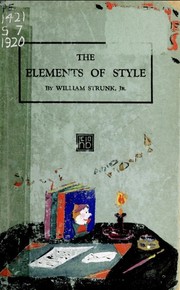
A compact, canonical rulebook for English prose. Reading it after Zinsser lets you absorb its rules with the context of why clarity matters, not just what the rules are.
Explaining Complex Ideas Clearly
BeginnerLearn how to translate difficult scientific concepts into language a general audience can understand, using analogy, structure, and precision.
▸ Study plan for this stage
Pace: 6–8 weeks, ~40–50 pages/day. Read Bryson first (4 weeks), then Sagan (3–4 weeks), with overlap for comparative analysis in the final week.
- Analogy and metaphor as bridges between the unfamiliar and the familiar (Bryson's 'atoms are like tiny billiard balls'; Sagan's 'cosmos is like a vast library')
- Narrative structure and storytelling to make abstract concepts concrete and memorable
- Precision in language: choosing exact words to avoid oversimplification without sacrificing clarity
- Scaffolding: building understanding step-by-step from simple to complex (how Bryson introduces geological time; how Sagan layers scientific reasoning)
- Tone and voice: balancing authority with accessibility, humor with rigor (Bryson's conversational wit vs. Sagan's philosophical gravitas)
- Anticipating and addressing reader confusion: explaining why something matters before diving into details
- Avoiding jargon while maintaining scientific accuracy—knowing when to define, when to simplify, when to trust the reader
- How does Bryson use everyday analogies (e.g., comparing geological processes to human timescales) to make deep time comprehensible, and why is this more effective than simply stating numbers?
- What narrative techniques does Sagan employ in 'The Demon-Haunted World' to explain the scientific method, and how do his examples make abstract epistemology tangible?
- Identify three moments in Bryson where he could have used technical jargon but chose simpler language instead. What would be lost or gained by each choice?
- How does Sagan balance skepticism and wonder when explaining scientific concepts? How does this tone help him communicate to a general audience?
- Compare how Bryson and Sagan each structure explanations of complex ideas. What structural patterns do they share, and where do their approaches differ?
- Choose one scientific concept from each book (e.g., plate tectonics from Bryson, the Drake Equation from Sagan). How would you explain it to a 12-year-old using their techniques?
- Annotation exercise: As you read Bryson, mark every analogy or metaphor he uses to explain a scientific concept. Note what makes each one work (or fail). Do the same for Sagan's examples.
- Rewrite a passage: Take a paragraph from either book where the author explains something complex. Rewrite it using only words a 10-year-old would know, then compare your version to the original. What did you lose? What did the author gain by their word choices?
- Analogy creation: Pick three scientific concepts from the books (e.g., entropy, natural selection, radioactive decay). For each, invent your own analogy and test it on a non-scientist friend. Revise based on their confusion.
- Tone analysis: Select a passage from Bryson and rewrite it in Sagan's tone, then vice versa. How does tone shift the reader's relationship to the material?
- Explain-to-a-friend practice: Choose a complex idea from each book (one from Bryson, one from Sagan). Explain it aloud to a friend without the book, recording yourself. Listen back and identify where you used jargon, where you lost clarity, and where you succeeded.
- Structure mapping: Outline how Bryson structures his explanation of one major topic (e.g., the formation of the Earth). Then outline how Sagan structures an explanation of a scientific principle (e.g., the burden of proof). Create a hybrid structure that combines their strengths.
Next up: By mastering how Bryson and Sagan translate complexity into clarity, you'll be ready to move beyond explanation into argumentation—learning how to not just clarify scientific ideas, but persuade readers to accept evidence-based conclusions and engage critically with scientific claims.

A masterclass in making vast, intimidating science feel accessible and delightful — read it first as a reader, then re-read passages asking 'how did he do that?'
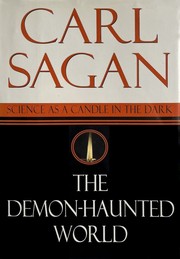
Sagan models how to explain science with both rigor and warmth, and how to write for a skeptical general public without condescension — a foundational tone to study.
Narrative Structure and Storytelling
IntermediateUnderstand how to build a story arc, develop characters, create tension, and use scene-setting to make science writing read like compelling narrative non-fiction.
▸ Study plan for this stage
Pace: 8–10 weeks, ~40–50 pages/day (with reflection time between books). Allocate 2–3 weeks per book, with 1-week buffer for exercises and synthesis.
- Story arc construction: how to establish a compelling problem, raise stakes, and resolve tension across a narrative—as modeled in Skloot's parallel timelines and Kidder's project-driven structure
- Character development through action and dialogue: bringing scientists and subjects to life by showing their motivations, conflicts, and growth rather than simply describing them
- Scene-setting and sensory detail: using concrete moments, dialogue, and physical description to immerse readers in the world of science, as Skloot does with Henrietta's family and Kidder with the computer lab
- Tension and pacing: managing reader curiosity through strategic revelation of information, withholding answers, and building momentum toward climactic moments
- Narrative voice and perspective: choosing whose story to tell and how to balance multiple viewpoints (Skloot's interweaving of Henrietta, her family, and medical history; Kidder's focus on the team and individual engineers)
- The science-as-character principle: treating scientific discovery, ethical dilemmas, or technological challenges as active forces that drive the narrative forward
- Dialogue as exposition: embedding factual information and historical context naturally into conversations rather than relying on author intrusion
- Structural patterns: recognizing how non-fiction narratives use flashback, parallel stories, and chapter architecture to sustain engagement
- How does Rebecca Skloot use parallel narrative timelines (Henrietta's story, the Lacks family's present, and the history of medical ethics) to create and sustain tension? What would be lost if these threads were presented sequentially instead?
- In *The Soul of a New Machine*, how does Kidder make the technical process of building a computer feel like a dramatic quest? Identify 3–4 specific scenes where engineering challenges function as plot points.
- What role do secondary characters (like Henrietta's children, Deborah Lacks, or individual engineers like Tom West) play in driving the narrative forward? How does their development affect reader investment?
- How does Schimel's *Writing Science* explain the narrative principles you observed in Skloot and Kidder? Can you map his advice about story structure onto specific passages from the first two books?
- Choose one chapter from either Skloot or Kidder and analyze how the author uses scene-setting, dialogue, and sensory detail to make a scientific or medical moment feel immediate and human rather than abstract.
- What ethical or emotional tensions does each author create, and how do they use narrative structure to prevent easy resolution? How does ambiguity or moral complexity enhance rather than undermine the story?
- Read *The Immortal Life of Henrietta Lacks* and create a timeline map showing how Skloot interweaves three narrative threads (Henrietta's medical history, the Lacks family's present-day story, and the broader history of medical ethics). Annotate which scenes create tension and why.
- Identify 5 key scenes in *The Soul of a New Machine* where a technical problem becomes a dramatic turning point. For each, write a 1-paragraph analysis of how Kidder uses dialogue, character reaction, and pacing to make engineering feel like narrative conflict.
- Select one chapter from Skloot or Kidder and rewrite a 2–3 page section removing all sensory detail, dialogue, and scene-setting—reducing it to pure exposition. Then compare it to the original. Write a reflection on what narrative power is lost.
- Using Schimel's framework from *Writing Science*, outline a science story of your own (real or imagined) in 3–5 pages. Identify the central tension, the characters driving it, and how you would structure the narrative arc. Include at least one scene outline with dialogue.
- Conduct a close reading of one emotionally charged scene from *The Immortal Life of Henrietta Lacks* (e.g., Deborah's reaction to learning about the HeLa cells, or a moment of family conflict). Annotate how Skloot uses dialogue, body language, and reflection to convey character emotion without telling the reader how to feel.
- Write a 4–5 page narrative scene from your own science writing project (or a real scientific event you research). Apply at least three specific techniques from Skloot or Kidder: parallel structure, dialogue-driven exposition, or strategic withholding of information. Peer review or self-critique using the principles from Schimel.
Next up: Mastering narrative structure and character-driven storytelling in this stage equips you to move into the next level—likely focused on voice, style, and argumentation—where you'll learn to layer in your own authorial perspective, rhetorical strategy, and persuasive intent while maintaining the narrative engagement you've now internalized.

A landmark example of science writing as human story — study how Skloot weaves biography, ethics, and cell biology into a page-turning narrative with real characters.
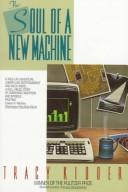
A Pulitzer-winning model of narrative non-fiction about technology and people; teaches you how to build suspense and character around a technical subject.

Explicitly teaches story structure as applied to science writing — how to frame a question, build tension, and deliver a satisfying resolution, whether in a journal article or a book.
The Craft of Popular Science
ExpertStudy the modern masters of popular science writing to understand voice, depth, originality, and how to handle big ideas with literary ambition.
▸ Study plan for this stage
Pace: 8–10 weeks, ~40–50 pages/day (approximately 3–4 hours of close reading daily)
- Narrative architecture in science writing: how Kolbert and Mukherjee structure complex scientific arguments through storytelling, anecdotes, and historical progression
- Voice and authorial presence: the balance between scientific authority and personal perspective, and how the author's personality shapes reader engagement
- Handling scale and abstraction: techniques for making vast timescales (extinction, genetic history) visceral and comprehensible to general readers
- Synthesis across disciplines: how to weave together multiple scientific fields, historical context, and philosophical implications into a coherent whole
- Originality in framing: finding fresh angles on well-known scientific topics (evolution, genetics) and avoiding cliché while maintaining accessibility
- Literary ambition in nonfiction: the use of metaphor, rhythm, sensory detail, and structural sophistication to elevate science writing beyond mere explanation
- Credibility and depth: how rigorous research and expert interviews support bold claims without overwhelming the general reader
- How does Kolbert use specific case studies (species, locations, scientists) to anchor abstract concepts about extinction, and what makes this approach more effective than purely statistical argument?
- Analyze Mukherjee's narrative strategy in *The Gene*: how does he move between historical biography, scientific explanation, and ethical reflection, and how do these layers reinforce each other?
- What is distinctive about Kolbert's voice compared to Mukherjee's? How do their different authorial personalities shape the reader's relationship to the material?
- Both authors tackle ideas that could be presented as dry scientific fact. What specific literary techniques (metaphor, pacing, structure, sensory language) do they employ to make these ideas compelling?
- How do Kolbert and Mukherjee handle uncertainty, disagreement, and the limits of scientific knowledge? What rhetorical strategies do they use to maintain credibility while acknowledging complexity?
- What original or unexpected angles do these authors bring to their subjects? How do they avoid presenting extinction and genetics as settled, familiar topics?
- Close-read one chapter from each book (e.g., Kolbert's chapter on coral reefs, Mukherjee's chapter on Watson and Crick), annotating for narrative structure, voice markers, metaphors, and transitions between explanation and storytelling.
- Write a 500-word analysis comparing how Kolbert and Mukherjee each introduce a complex scientific concept. Identify the specific rhetorical moves they make to build understanding.
- Select a passage from each book where the author makes a bold or original claim. Trace how they support it: what evidence, expert voices, and narrative framing do they use?
- Rewrite a 2–3 page section from one of the books in a different voice (e.g., more academic, more journalistic, more personal). Reflect on what is gained and lost in each version.
- Identify three metaphors or analogies from each book that explain a scientific concept. Evaluate their effectiveness: do they clarify or oversimplify? Could they mislead?
- Create a detailed outline of one chapter from each book, mapping how the author moves between narrative, explanation, evidence, and reflection. What is the underlying logic of the chapter's architecture?
Next up: This stage develops your ability to recognize and internalize the craft moves of master popular science writers, preparing you to apply these techniques—narrative structure, distinctive voice, literary sophistication, and credible depth—to your own science writing projects in the next stage.

A model of authoritative, reported science writing with a strong authorial voice — study how Kolbert structures chapters, uses field reporting, and builds a cumulative argument.
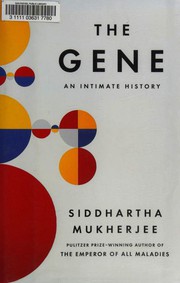
Demonstrates how to write a sweeping, ambitious science narrative that blends history, biography, and cutting-edge research into a unified, literary whole.
Discussion
Keep reading
Paths that share books, cover the same subject, or open a related topic.