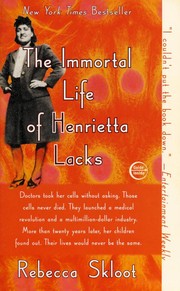
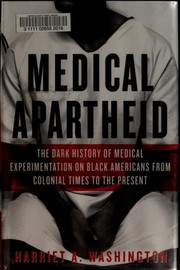
Start with Rebecca Skloot's The Immortal Life of Henrietta Lacks, because it is reported narrative rather than argument: the HeLa cell line, the woman whose cells were taken in 1951, and a family who found out two decades later. It raises consent, ownership and the researcher-subject relationship without asking you to take a position first. Then Harriet Washington's Medical apartheid, the most comprehensive account of medical experimentation on Black Americans from the antebellum period onward and the reference work the rest of this list leans on.
The reason for that order — and for the shape of the whole path — is that this subject has two evidentiary levels and they are routinely mixed together. The history is documented to the point of being uncontested. The present-day claims, about implicit bias, about what should replace race-adjusted kidney and lung function equations, about how much of the Black-white maternal mortality gap is explained by clinical care, are live scholarly arguments where good researchers disagree. Reading the history first lets you read the arguments as arguments with evidence behind them. One plain note before any of it: these are historical and structural books, not clinical advice, and nothing here substitutes for a doctor.
Damon Tweedy's Black man in a white coat closes the opening stage: a physician's memoir of training and practising as a Black doctor, careful about the limits of his own evidence and a good model for how to read what follows.
The documented history, case by case
Four monographs by specialist historians, each anchored in an archive. Deirdre Cooper Owens's Medical Bondage establishes American gynaecology's origins in surgery performed on enslaved women, including J. Marion Sims's fistula operations, working from the surgeons' own published records — and recovering Anarcha, Betsey and Lucy as people rather than case numbers. James Jones's Bad blood is the definitive history of the Tuskegee syphilis study, built from the Public Health Service's own files; note that its display title is shared with an unrelated recent bestseller about Theranos.
Read Susan Reverby's Examining Tuskegee directly after Jones, because it does something unusual: it establishes the study's legacy and effect on trust while correcting the mythology that has grown around it. The widely repeated claim that Tuskegee's subjects were deliberately infected with syphilis is false — they were not — and Reverby's book exists in part to say so. A book that strengthens a case by narrowing it is worth more than one that inflates it. Jim Downs's Sick from freedom is the least-known book here and the one that most changes the frame: the health catastrophe among freed people during and after the Civil War, which shows the pattern predates the twentieth-century experiments.
How race got into the instruments
Lundy Braun's Breathing Race into the Machine is a history of one device, the spirometer, and of how a correction factor for Black lung function was built into it in the nineteenth century and survived into modern practice. It is the most concrete demonstration on this list that a racial assumption can live in an instrument rather than in a clinician's head. Dorothy Roberts's Fatal invention makes the broader argument that biological race is being reconstituted through genomics, race-specific drugs and ancestry testing; Roberts is a legal scholar making a case, she says so, and population geneticists dispute parts of it. John Hoberman's Black and Blue is the most polemical of the three, on racial folklore inside the profession itself.
That the race coefficient existed is documented. What should replace it is not settled: the current dispute over removing race adjustment from kidney function equations turns on empirical questions about how the replacement equations perform, and it is unresolved.
Outcomes now, and the competing explanations
Linda Villarosa's Under the Skin is the best current survey of the outcome data and of the weathering hypothesis — the argument that cumulative physiological stress from racism, rather than genetics or class alone, drives the health gap. She reports the evidence fairly and does not oversell what remains a hypothesis under test. Dana-Ain Davis's Reproductive Injustice is an ethnography of Black women's experience of prematurity and neonatal care, and Roberts's earlier Killing the black body supplies the long history of reproductive control behind it. Dayna Bowen Matthew's Just medicine closes with a legal scholar's proposal for what anti-discrimination law could do about implicit bias in care; her reading of the implicit-bias literature is contestable, since that literature's predictive validity has itself been challenged, but it is the clearest statement of the reform case.
The gaps in maternal and infant mortality are established statistics. The causal weight to assign to bias, stress, insurance or access is exactly what is under argument, and this list is built so you read more than one position on it. The full ordered path is at /paths/pt_ai_race-and-racism-in-medicine.
Ready to learn something deeply?
Build a reading path — free