Contraception: The Best Books on the Pill and the History of Birth Control, in Order
The oral contraceptive was developed by a small, unlikely group in the 1950s, tested in ways no ethics board would now approve, and legalised piecemeal over two decades of litigation. This path starts with that story, then goes backwards to the long history of contraception before it, then to the politics and the movement that produced it, and finally to the science, the law, and the women whose reproductive choices the movement did not defend. It is a history, not medical guidance.
The Story of the Pill
BeginnerKnow who made oral contraception, how it was funded and tested, and what changed in the decade after it reached the market.
▸ Study plan for this stage
Pace: About four weeks for roughly 1,050 pages. Eig's The Birth of the Pill (400 pp) first, ten days - it is narrative history and moves quickly. May's America and the Pill (223 pp) next, five or six days, as the corrective. Asbell's The Pill (1995) closes the stage in a week; it is an earlier journalisti
- The four people at the centre of Eig's account - Margaret Sanger, Katharine McCormick, Gregory Pincus and John Rock - and the specific role each played: agitator, funder, scientist, clinical and Catholic legitimator
- Private philanthropy as the funding mechanism, because no pharmaceutical company or public body would touch the project at the outset
- The Puerto Rico and Haiti trials: why they were run there, what the dosing was, and what the informed-consent standard of the 1950s actually required
- The regulatory route: Enovid approved first for menstrual disorders, then for contraception in 1960, and what that sequencing reveals about the legal and commercial obstacles
- May's corrective: the pill's role in the sexual revolution is routinely overstated, and much of the behavioural change it is credited with was already under way
- What the pill did change measurably - timing of first birth, women's educational and professional trajectories, and the separation of contraception from a partner's cooperation
- The difference between a narrative history built on personalities (Eig) and a social history built on aggregate change (May)
- Who funded the development of oral contraception and why did that funding have to be private?
- What happened in the Puerto Rico trials, on what dosing, and what was and was not disclosed to the participants?
- Why was Enovid approved for one indication before the other, and what does that sequence show about the regulatory environment?
- What does May argue the pill did not cause, and what evidence does she use?
- Asbell wrote in 1995 with access to living participants. What is in his account that Eig, writing in 2014, could only reconstruct from documents?
- Build a timeline from 1950 to 1965 with four parallel tracks - science, funding, regulation, law - using Eig's own dates. The tracks do not advance together, and seeing where each waited on another is the argument of the book.
- Look up the original Enovid dosage and compare it against the hormone content of a modern combined pill. The order-of-magnitude difference is the concrete form of the safety story that runs through the rest of this path.
- Take three claims about the pill's social effect from Eig and check each against May's evidence. Where she qualifies him, note what kind of evidence does the qualifying - survey data, birth timing statistics, or something else.
- Read Asbell's treatment of one participant Eig also covers, and list the details that come from a direct interview. Those details are what a later historian cannot recover, and identifying them teaches you what an earlier book is for.
Next up: The pill is usually told as a beginning, so the next stage goes backwards and shows that contraception had a long, commercial and often dangerous history before 1960.
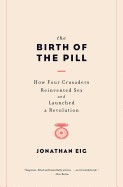
The best narrative account, built around four people — Margaret Sanger, Katharine McCormick, Gregory Pincus and John Rock. Start here, and note that Eig does not soften the Puerto Rico trials, where the drug was tested at doses far higher than necessary on women who were not adequately told they were subjects.

A social historian on the fifty years after approval: what the pill was expected to do, what it actually did, and the persistent overstatement of its role in the sexual revolution. Read it second as the corrective to any triumphal account.
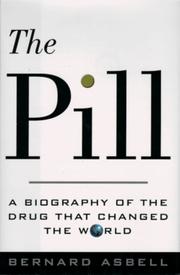
An earlier journalistic history, written close enough to the events to include interviews with participants who are now dead. The catalogue stores a truncated marketplace string as its title; the book is Asbell's 1995 history.
Before the Pill
BeginnerUnderstand that contraception has a two-thousand-year history, and that the twentieth-century black market was large, dangerous and commercially organised.
▸ Study plan for this stage
Pace: About four weeks for roughly 1,000 pages. Tone's Devices and Desires (366 pp) first, ten days - it is the book that demolishes the idea that contraception began in 1960. Riddle's Eve's Herbs (347 pp) next, ten days, and read it as a strong argument rather than a settled one: Riddle is a historian of
- The Comstock laws and how a commercial contraceptive trade operated inside a prohibition regime by euphemism - the douche sold as feminine hygiene, the condom sold for disease prevention
- Contraception as a manufacturing and retail industry decades before it was legal, with brands, advertising and price competition
- The diaphragm smuggling operation and the specific role Sanger's network played in it
- Riddle's claim about herbal contraception in the ancient and medieval world, the pharmacological evidence he offers, and the specific grounds on which other historians contest it
- The loss-of-knowledge argument and why it is difficult to evidence either way
- Jütte's comparative frame: contraceptive practice across Europe and across two millennia, which shows how anglophone the other two books are
- The consequence of an unregulated market - products that did not work, products that were dangerous, and no mechanism for telling them apart
- How did the American contraceptive industry operate legally under the Comstock regime, and what were the standard euphemisms?
- What were the actual harms of the pre-1960 market, and who bore them?
- State Riddle's thesis and the two strongest objections to it. What evidence would settle the question?
- What does Jütte's European scope reveal that a purely American account misses?
- Given all three books, what changed in 1960 - and what did not, that a triumphal account would claim did?
- Find advertisements for feminine hygiene products from American magazines of the 1920s and 1930s - many are reproduced in Tone and more are available in digitised archives - and translate each into what it was actually selling. The euphemistic code is learnable in an afternoon.
- Take one plant Riddle discusses as a contraceptive or abortifacient and trace what he cites for it: classical text, medieval recipe, modern pharmacological study. Then check whether the modern study says what he says it says. Doing this once for one plant tells you how to read the whole book.
- List the contraceptive methods available in America in 1930 from Tone, with what each cost and how well it worked, then set that list against the 1960 pill. The comparison is what makes the pill's significance concrete rather than rhetorical.
- Using Jütte, pick one century and compare contraceptive practice in two European countries. The divergence shows that these histories are national and legal, not simply technological.
Next up: The commercial history explains supply; the next stage takes up the political movement that made contraception legal, and the alliances it made to do so.

The commercial history of American contraception under the Comstock laws — the condom trade, the douche marketed as feminine hygiene, the diaphragm smugglers. Read it first here; it demolishes the idea that contraception began in 1960.
A historian of medicine on herbal contraceptives and abortifacients in the ancient and medieval world, and on how that knowledge was lost. Contested by other historians on how effective the preparations actually were — read it as a strong argument rather than a settled finding.
The broadest survey, from antiquity to the present and across Europe rather than only the Anglophone world. The catalogue files it under the bare title. Read it third as the frame around the two more specialised books.
The Politics and the Movement
IntermediateFollow the American birth control movement from Sanger to Planned Parenthood, and be able to explain the eugenic entanglements honestly rather than either dismissing or exaggerating them.
▸ Study plan for this stage
Pace: About four weeks for roughly 855 pages. Gordon's The Moral Property of Women (464 pp) first, two weeks. One bibliographic point before buying: this is the revised and retitled edition of Gordon's 1976 Woman's Body, Woman's Right, and catalogues hold both records separately - they are substantially t
- Gordon's political history: birth control as a demand that changed class basis - from a radical working-class movement to a professionalised, medically controlled one - and what was traded to achieve legality
- The eugenic alliance stated precisely: what Sanger and the movement actually said and endorsed, which arguments were tactical and which were held, and why both dismissing and exaggerating it produce a false account
- The shift from voluntary motherhood arguments to birth control to family planning, and what each renaming conceded
- Kennedy on Sanger as an organiser: what she built, whom she recruited, and what she gave up in exchange for medical and philanthropic respectability
- The doctors-only strategy and its long consequence - contraception delivered through a clinical gatekeeper rather than as a consumer good
- Bagge's annotated method: a graphic biography that footnotes its sources, which is unusual, and which lets a reader check an admiring account against the record
- How to hold admiration and criticism of the same historical figure in one frame without collapsing into either
- What is Gordon's argument about the class basis of the birth control movement, and what changed it?
- Set out the movement's eugenic entanglements as specifically as the sources allow. What did Sanger endorse, in what years, and in what forums?
- What did the doctors-only strategy achieve legally, and what did it cost in access?
- Kennedy places Sanger at the centre; Gordon places her inside a structure. Which produces the better explanation of the movement's outcomes, and why?
- Bagge is admiring and annotated at once. Where do his endnotes complicate his own panels?
- Take three of Sanger's statements on eugenics as quoted by Gordon, find the original context for each, and write down what the fuller passage does to the quotation. This is the exercise that lets you discuss the subject accurately rather than through slogans.
- Chart the movement's institutional history from Gordon - leagues, clinics, the American Birth Control League, Planned Parenthood - with the year of each renaming and what changed alongside the name.
- Read Bagge's endnotes straight through without the panels, then read the panels. Note every place where the note is more critical than the drawing. That gap is the book's method.
- Compare Kennedy's account of one episode in Sanger's career with Gordon's account of the same episode. One is a biography and the other a structural history; write a paragraph on what each has to leave out to be what it is.
Next up: The movement's history raises the question of who its gains were for, which is exactly what the final stage takes up alongside the pharmacology and the law.

The standard political history of birth control in America, and unsparing about the movement's alliance with eugenics in the 1920s and 1930s. This is the revised and retitled edition of Gordon's 1976 Woman's Body, Woman's Right, which the catalogue also holds separately — buy one, not both.
Kennedy's biography-as-history of Margaret Sanger, and still the reference account of how she built the movement and what she traded away to do it. Read it after Gordon so you meet Sanger inside a structural argument rather than as a lone protagonist. The catalogue's year on this record is wrong; the book is from 1970.
A short graphic biography of Sanger by an underground cartoonist, extensively annotated with sources. It is not a substitute for Kennedy, but it is unusually good at holding admiration and criticism in the same frame, and the endnotes show its working.
Science, Law, and Who Was Left Out
IntermediateGet the pharmacology and regulatory history, the legal fights that made contraception lawful, and the coercive side of reproductive policy that the mainstream movement did not oppose.
▸ Study plan for this stage
Pace: About six weeks for roughly 1,715 pages. Marks's Sexual Chemistry (372 pp) first, ten days - it is the most technical book on the path and covers the endocrinology and the international regulatory history. Watkins's On the Pill (208 pp) next, five days. Reagan's When Abortion Was a Crime (400 pp) ta
- The endocrinology: progestins, the synthesis route from plant steroids, and the Mexican steroid industry that supplied the raw material - which is why the pill's history is partly a history of Mexican botany and chemistry
- International divergence in approval and regulation, which Marks documents country by country and which shows that the pill's meaning was not the same everywhere
- The 1970 Nelson hearings and the fight over patient package inserts - the origin of the patient information leaflet that now accompanies every prescription drug
- The legal sequence: Griswold in 1965, Eisenstadt in 1972, and how contraception's legalisation ran through privacy doctrine rather than through legislation
- Reagan's finding that illegal abortion was widespread, medically supervised in many cases, and periodically tolerated - so the legal position and the practice diverged systematically
- Roberts's argument that reproductive control of Black women in America has a continuous history from slavery through the sterilisation campaigns to the Norplant orders, and that the mainstream birth control movement did not oppose it
- The reproductive justice framework as Ross and Solinger set it out: the right to have children, the right not to, and the right to parent in safe conditions - an explicit answer to the limits of a choice framing
- Why the technical, legal and racial histories cannot be separated: the same policies that expanded access for some women constrained it for others
- Where did the raw material for the first oral contraceptives come from, and why does that supply chain matter to the history?
- What did the Nelson hearings change, and why is the patient package insert a landmark rather than a footnote?
- How did contraception become legal in the United States, and why did it happen through the courts rather than through legislation?
- What does Reagan's evidence show about the gap between abortion law and abortion practice before 1973?
- State Roberts's argument and the specific policies she documents. Which of them were supported, opposed or ignored by the organisations covered in the previous stage?
- How does the reproductive justice framework differ from a choice framework, and what does it make visible that the earlier books could not?
- Trace the synthesis route Marks describes from plant material to progestin, and identify each step's location. Drawing the supply chain on a map makes the point that a history of the pill is not only an American history.
- Find a current patient information leaflet for any oral contraceptive and compare its structure against what Watkins says the 1970 hearings demanded. The leaflet in your hand is a direct artefact of that fight.
- Read the Griswold and Eisenstadt decisions - both are short - and identify the reasoning each rests on. Then note what a right constructed that way is vulnerable to.
- Take one decade from Reagan and one from Roberts and place their events on a single timeline alongside the movement chronology you built in the previous stage. The overlaps are the argument: the same years look entirely different depending on whose access is being tracked.
- Using Ross and Solinger's three-part framework, go back through the whole path and classify each book by which of the three rights it is actually about. Several will turn out to address only one, and that distribution is the honest summary of the literature.
- Write a final page on what the birth control movement's eugenic alliances cost, drawing on Gordon, Roberts and Ross together rather than on any one of them.
Next up: This closes the path, with the technology, the law and the politics assembled and the question of who was served by each of them answered from the evidence.
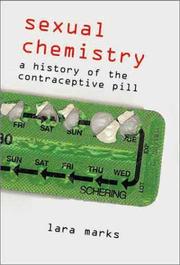
The scientific and international history — the endocrinology, the Mexican steroid industry that supplied the raw material, and how approval differed country by country. Read it first here; it is the most technical book on the path.
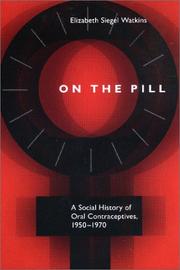
A social history of the medical profession's relationship with oral contraception, including the 1970 Nelson hearings and the fight over patient package inserts — the origin of the drug information leaflet. The best account of how safety concerns were handled.
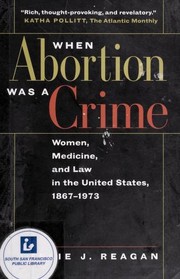
The legal and medical history of illegal abortion in the United States from 1867 to 1973, based on coroners' inquests and hospital records. Included because contraception's legal history is inseparable from it.

Sterilisation abuse, the Norplant orders, and the long history of coerced reproductive control of Black women in America. Read it directly after the movement history — it is the strongest statement of what the birth control movement's eugenic alliances actually cost.

Ross and Solinger's introduction to the framework Black feminists built in response to exactly the history Roberts documents: the right to have children as well as not to. Read it last, as the analytical frame that the rest of the path has been building toward.
Discussion
Keep reading
Paths that share books, cover the same subject, or open a related topic.