Write your true story: memoir & creative nonfiction
This curriculum moves from the fundamental craft of storytelling and scene-building, through the structural and ethical challenges unique to true stories, and finally into the work of master memoirists whose books are best appreciated once you have the vocabulary to read them as a writer. Each stage builds on the last: you learn the tools, then how to wield them on real material, then you watch the best practitioners use them at full power.
Foundations: Craft & the Writer's Eye
BeginnerUnderstand the core elements of compelling nonfiction prose — scene, voice, detail, structure, and the writer's relationship to truth — and begin generating raw material from your own life.
▸ Study plan for this stage
Pace: 10–12 weeks total, reading roughly 20–25 pages per day, 5 days a week. Week 1–3: "Bird by Bird" (read in full, ~240 pages); Week 4–7: "The Art of the Personal Essay" (focus on Lopate's introduction + 8–10 selected essays, ~180 pages of curated reading); Week 8–12: "Writing Creative Nonfiction" by Ch
- Short assignments & the 'bird by bird' method: breaking overwhelming writing projects into small, manageable scenes to defeat perfectionism and build daily momentum (Lamott)
- Shitty first drafts as a necessary creative tool: separating the generative draft from the critical/editorial mind to unlock raw material (Lamott)
- Voice and the essayistic 'I': Lopate's concept of the personal essay as a thinking-on-the-page form where the narrator's self-awareness, doubt, and digression are features, not flaws
- The spectrum of the personal essay — from Montaigne's self-examination to contemporary lyric essays — and how form follows the writer's inquiry (Lopate's Introduction)
- Scene vs. summary: knowing when to slow down into dramatized, sensory scene and when to compress time through summary narration (Cheney)
- The role of specific, concrete detail: Cheney's emphasis on precise, observed detail as the engine of credibility and emotional resonance in nonfiction
- Structure and movement: how nonfiction pieces can be organized by logic, association, chronology, or image rather than plot alone (Cheney & Lopate)
- The writer's relationship to truth: the ethical and aesthetic tension between factual accuracy, memory's subjectivity, and narrative shaping — a thread running through all three books
- After reading Lamott, can you explain in your own words why she insists on shitty first drafts, and how does that philosophy connect to her 'one-inch picture frame' technique for short assignments?
- Based on Lopate's introduction to 'The Art of the Personal Essay,' what distinguishes the personal essay from other nonfiction forms, and why does he argue that the essayist's self must be both subject and instrument?
- Having read at least three essays from Lopate's anthology, can you identify one moment in each where the essayist uses digression or contradiction deliberately — and explain what it achieves?
- Using Cheney's framework, what is the functional difference between a scene and a summary, and can you point to a passage in one of Lopate's selected essays that exemplifies each technique?
- How do all three authors address the problem of memory and truth in nonfiction? Where do they agree, and where do their emphases differ?
- Can you describe at least two structural strategies for organizing a personal essay or memoir chapter — drawn from Cheney or Lopate — and explain which type of material each strategy suits best?
- 'Bird by Bird' daily pages: For three consecutive weeks (mirroring your Lamott reading), write one shitty first draft per day of exactly one small scene from your life — no more than one page. The scene must fit inside a single room or a single hour. Do not edit. Label each draft 'SFD #X' and file it away to revisit later.
- One-inch frame inventory: Make a list of 20 specific, small moments from your life (not themes or periods — moments: 'the smell of my grandmother's kitchen on Thanksgiving 1998'). Choose three and write a 200-word scene for each, using only concrete sensory detail. This is your raw-material bank, drawn directly from Lamott's short-assignment method.
- Lopate essay autopsy: Choose any two essays from Lopate's anthology. For each, draw a simple map of its structure — mark where the essayist introduces the 'I,' where they digress, where they shift tone, and where they land. Write a one-paragraph analysis of how the essay moves and what holds it together.
- Scene vs. summary conversion: Take one page of summary writing from your own drafts (or write a new one-page summary of a life event). Then rewrite the same content as a fully dramatized scene with dialogue, sensory detail, and interiority. Compare the two versions using Cheney's criteria for effective scene-building.
- Truth & memory reflection: Write a 400–600 word personal essay about a memory you know is imperfect or disputed. Somewhere in the essay, name the uncertainty explicitly — as Lopate's essayists often do — and make that uncertainty part of the meaning. This directly engages the ethical thread all three books raise.
- Voice imitation exercise: Select one paragraph from an essay in Lopate's anthology whose voice you admire. Write an imitation paragraph about a moment from your own life, mimicking the sentence rhythm, level of diction, and degree of self-disclosure. Then write a second paragraph in your own natural voice on the same topic. Compare: what did you borrow, and what is distinctly yours?
Next up: Mastering these foundational tools — raw-material generation, scene-building, voice, and the honest essayistic 'I' — gives you a working creative practice and a personal archive of drafts that the next stage can build on by introducing more advanced structural forms, narrative arc, and the demands of longer, book-length nonfiction projects.
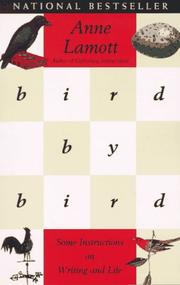
The perfect first book: warm, funny, and deeply practical. Lamott demystifies the writing process, normalizes the 'shitty first draft,' and makes the act of writing from personal experience feel both possible and urgent.
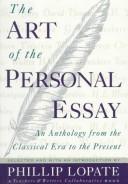
Lopate's landmark anthology and his long introductory essay define what the personal essay and memoir tradition actually are. Reading it early gives you a historical map of the form before you dive deeper into craft.

A clear, accessible primer on the specific techniques — scene-building, dialogue, point of view, pacing — that separate creative nonfiction from plain reporting. Builds the technical vocabulary you'll need for every later stage.
Shaping True Stories: Structure & Memory
IntermediateLearn how to take raw lived experience and shape it into a narrative with momentum, structure, and emotional honesty — including how to handle memory, compression, and the ethical responsibilities of writing about real people.
▸ Study plan for this stage
Pace: 8–10 weeks total, reading roughly 20–30 pages per day. Week 1–2: "The Memoir Project" (read in full; it's short and punchy — treat it as a craft manifesto). Week 3–5: "Inventing the Truth" (read one essayist's chapter per sitting, pausing to journal between each). Week 6–9: "The Situation and the St
- Memoir is argument, not confession — Marion Roach Smith's insistence that every memoir must be ABOUT something beyond its events, functioning as a thesis-driven narrative rather than a chronological life dump.
- The 'about-ness' principle: identifying the single controlling idea or obsession that gives a memoir its spine, as Smith demands the writer answer 'What is this about?' before writing a word.
- Memory as construction, not recording — 'Inventing the Truth' demonstrates through multiple memoirists (Russell Baker, Annie Dillard, Toni Morrison, et al.) that memory is selective, partial, and shaped by the present self looking back.
- Compression and scene selection: how to collapse time, skip years, and choose only the scenes that serve the controlling idea — a skill modeled across the essays in 'Inventing the Truth'.
- The distinction between Situation and Story (Gornick): the 'situation' is the literal circumstance of the memoir (the illness, the journey, the relationship), while the 'story' is the internal emotional drama — the narrator's evolving understanding — and the two must work in dynamic tension.
- The narrator as a developed character: Gornick's argument that the memoirist must construct a reliable, self-aware narrative persona on the page — distinct from the biographical self — who is capable of honest self-scrutiny.
- Ethical responsibilities when writing about real people: consent, composite characters, changed details, and the moral weight of rendering others' lives on the page, addressed across all three books.
- Emotional honesty vs. emotional performance: the difference between a narrator who genuinely reckons with experience and one who performs feeling for the reader's sympathy — a central tension Gornick names explicitly.
- According to Marion Roach Smith, why is 'this happened, then this happened' an insufficient structure for memoir — and what must replace it?
- How do the memoirists in 'Inventing the Truth' (e.g., Russell Baker, Annie Dillard) reconcile the unreliability of memory with the obligation to tell the truth? What strategies do they describe or model?
- In Vivian Gornick's framework, what is the difference between the 'situation' and the 'story' — and can you identify both in at least one of the memoirs discussed or referenced in the books?
- Gornick argues that the narrator must be a 'reliable' presence on the page. What does reliability mean in this context, and how does it differ from factual accuracy?
- What ethical questions arise when writing about family members or people who have not consented to being portrayed, and how do the authors in this stage approach those tensions differently?
- How does the concept of 'compression' function in memoir structure — what gets left out, and how do you decide?
- The 'About-ness' Drill (from Smith): Write a one-sentence answer to 'What is my memoir about?' — not what happens in it, but what it is ABOUT thematically. Then write a second sentence: 'It is not about ___.' Repeat this for three different memoir projects or personal stories until the controlling idea snaps into focus.
- Memory Archaeology (inspired by 'Inventing the Truth'): Choose one vivid memory. Write it out in full (1–2 pages). Then interview a family member or friend who was present and note every discrepancy. Write a short reflection (1 page) on what the gaps and differences reveal about how you have shaped the memory — and what that shaping means for your narrative.
- Situation vs. Story Mapping (Gornick): Take a personal essay or memoir draft you already have (or write a 2-page scene from scratch). Draw two columns: label one 'Situation' (external facts, events, circumstances) and the other 'Story' (the narrator's internal emotional and intellectual journey). Map every sentence or paragraph into one column. Diagnose: Is your 'story' actually present on the pag
- Narrator Construction Exercise (Gornick): Write the same scene twice — once from the perspective of the 'then-self' (the person living through the event) and once from the perspective of the 'now-self' (the narrator reflecting on it). Then write a third version that weaves both voices together, making the tension between them visible and meaningful.
- Compression Workshop (inspired by 'Inventing the Truth'): Take a timeline of events spanning at least five years of your life. Write it out as a chronological list. Now ruthlessly cut it to only the five scenes that serve your 'about-ness' statement from Exercise 1. Write a one-paragraph justification for each scene you kept and each significant event you cut.
- Ethics on the Page: Identify a real person you would need to write about in a memoir project. Write two versions of a scene involving them: one that is maximally honest and potentially exposing, and one that protects their privacy through compression, composite, or changed detail. Then write a one-page reflection on what was lost and gained in each version, and where your ethical line falls.
Next up: By mastering structure, the narrator's role, and the situation/story dynamic, the reader is now equipped to move into the craft of the sentence itself — voice, style, and the line-by-line language choices that make a true story feel inevitable and alive on the page.

Smith's slim, focused guide cuts straight to the central problem of memoir: it is not about your life, it is about a single idea illustrated by your life. This reframe is transformative and prevents the most common beginner mistake.

A collection of essays by working memoirists (Russell Baker, Annie Dillard, Toni Morrison, and others) reflecting on how they shaped their own true stories. Bridges craft theory and real practice at an intermediate level.
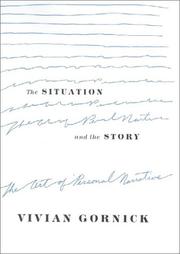
Gornick's essential distinction between the 'situation' (what happened) and the 'story' (the narrator's inner journey) is the single most clarifying concept in memoir craft. Read this before attempting a full draft.
The Masters: Reading Like a Writer
ExpertRead landmark memoirs and creative nonfiction as a trained writer — analyzing how masters of the form deploy voice, structure, scene, and meaning — and internalize models you can draw on in your own work.
▸ Study plan for this stage
Pace: 10–12 weeks total, roughly divided as follows: "The Liars' Club" — 3 weeks (~20–25 pages/day, with dedicated annotation days); "The Immortal Life of Henrietta Lacks" — 4 weeks (~20 pages/day, slower pace to study the braided structure); "When Breath Becomes Air" — 3 weeks (~15 pages/day, with extend
- Voice as architecture: How Mary Karr's razor-sharp, vernacular Texas voice in 'The Liars' Club' is not decoration but the primary structural force — every sentence enacts the child-narrator's perception while the adult narrator's irony operates simultaneously.
- The double narrator: Distinguishing the experiencing 'I' (the child/patient/subject in the moment) from the reflecting 'I' (the adult writer looking back) and how all three books manage that tension differently — Karr's split is dramatic, Kalanithi's is philosophical, Skloot's is investigative.
- Braided structure and multi-strand narrative: How Skloot in 'The Immortal Life of Henrietta Lacks' weaves three timelines (Henrietta's life, the Lacks family's present, and the history of medical ethics) so that each strand recontextualizes the others — a masterclass in non-linear architecture.
- Scene vs. summary: The deliberate choice of when to render a moment in full cinematic scene (Karr's childhood confrontations, Kalanithi's OR scenes) versus when to compress time in summary — and how that ratio controls pacing and emotional weight.
- Research as narrative: Skloot's technique of making her own reporting process a visible, character-driven thread — turning the journalist's notebook into a plot device — and what this teaches about integrating research without killing momentum.
- The body as subject and symbol: How Kalanithi in 'When Breath Becomes Air' uses the literal body (his own dying one, his patients' bodies) as both concrete subject matter and a sustained metaphor for meaning, time, and identity.
- Ethical stakes in creative nonfiction: The moral responsibilities each author navigates — Karr writing about living family members, Skloot writing about a family that was wronged, Kalanithi writing about patients — and how those stakes shape formal choices.
- Earned endings and the question of meaning: How each book closes — Karr's refusal of easy resolution, Skloot's epilogue that hands voice to the Lacks family, Kalanithi's posthumous epilogue by his wife — and what 'earned' means when the writer cannot tie a bow on real life.
- In 'The Liars' Club,' how does Mary Karr use the child's limited point of view to generate dramatic irony, and can you identify three specific passages where the adult narrator's presence becomes palpable without breaking the child's perspective?
- Skloot structures 'The Immortal Life of Henrietta Lacks' across at least three distinct timelines. Map those strands: where does each begin, how do they intersect, and what is the effect when Skloot places them in juxtaposition at a chapter boundary you found particularly powerful?
- Paul Kalanithi opens 'When Breath Becomes Air' as a doctor and closes it as a dying patient. How does this reversal of roles function structurally, and how does his literary training (he was an English major before medical school) manifest in his prose style?
- All three books deal with trauma, injustice, or mortality. Compare how Karr, Skloot, and Kalanithi each handle the risk of sentimentality — what specific craft moves do they use to keep emotion honest rather than manipulative?
- Skloot inserts herself as a character in 'The Immortal Life of Henrietta Lacks.' What does her visible presence accomplish that an invisible, omniscient narrator could not? What are the risks of this choice, and how does she manage them?
- After reading all three books, how would you define 'voice' at the advanced level — not just as word choice or tone, but as a complete set of decisions about what to include, what to omit, what to trust the reader with, and how to position the narrator in relation to the material?
- Karr Voice Dissection: Choose any two-page scene from 'The Liars' Club' and retype it by hand (yes, physically type it). Then write a one-page analysis of every craft decision you noticed only because you had to slow down to type it — diction, syntax length, sensory detail, what is withheld.
- Double-Narrator Rewrite: Take a memory of your own and write it twice: once entirely in the experiencing 'I' (present tense, no adult wisdom), and once entirely in the reflecting 'I' (past tense, full hindsight). Then write a third version that braids both voices the way Karr does — and annotate where you made the switch and why.
- Strand Mapping for Skloot: Create a visual timeline or color-coded outline of 'The Immortal Life of Henrietta Lacks' — assign each narrative strand a color and chart every chapter. Then write a 300-word memo answering: what would be lost if Skloot had told this story chronologically, in a single strand?
- Research Integration Draft: Identify a true story from your own life or community that requires outside research (historical, scientific, or journalistic). Write a 500-word scene in which you, as narrator-reporter, are visibly present doing the research — modeled on Skloot's technique — so the act of discovery becomes part of the narrative.
- Kalanithi's Closing Argument: 'When Breath Becomes Air' is, at its core, an argument about what makes a life meaningful. Write a 400-word personal essay that makes a similarly high-stakes argument about meaning — but ground every abstract claim in a single concrete, physical scene, the way Kalanithi grounds his philosophy in the body.
- Cross-Book Synthesis Essay: After finishing all three books, write a 600–800 word craft essay (not a book report) arguing which of the three authors makes the most sophisticated structural choice and why. Use specific page-level evidence from at least two of the three books. This essay becomes a reference document for your own writing going forward.
Next up: Having internalized how master writers deploy voice, structure, scene, and ethical positioning by reading at the sentence and chapter level, the reader is now equipped to move from analysis into sustained original production — applying these models as conscious, citable touchstones in drafting and revising their own memoir or creative nonfiction project.
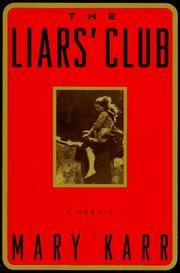
Widely considered the gold standard of modern memoir. Study Karr's cinematic scene-building, her razor-sharp child's-eye voice, and how she earns emotional catharsis through specific, concrete detail rather than sentimentality.

A masterclass in narrative nonfiction that weaves reported fact, personal investigation, and intimate human story into a seamless whole — essential reading for writers who want to move beyond purely personal memoir.
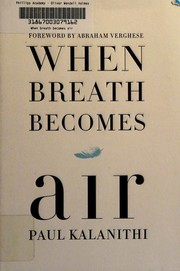
Demonstrates how a memoir can be simultaneously a philosophical inquiry and a deeply personal story. Study how Kalanithi controls tone, manages time, and gives a short life enormous literary weight.
Discussion
Keep reading
Paths that share books, cover the same subject, or open a related topic.