Edith Wharton Reading Order: Where to Start
This curriculum moves from Wharton's most accessible and beloved novel through her major New York society fiction, and finally into her eerie, atmospheric ghost stories. Each stage builds familiarity with her prose style, social themes, and moral vision, so that by the end the reader can appreciate both her realist masterworks and her darker, supernatural imagination.
The Perfect Entry Point
BeginnerGet hooked on Wharton's voice, her irony, and her portrait of a woman trapped by social convention — without being overwhelmed by length or complexity.
▸ Study plan for this stage
Pace: 5–6 weeks, ~20–25 pages/day — read slowly and savouringly; Wharton rewards re-reading a paragraph more than racing ahead
- Wharton's irony: how she says one thing on the surface while meaning the opposite underneath, often exposing the cruelty of polite society
- The 'gilded cage' — Lily Bart as a woman whose beauty and charm are her only social currency, yet the very system that prizes them also punishes her for using them
- Social convention as a trap: the unwritten rules of Gilded Age New York high society (the 'set'), and how they function as invisible walls around Lily's choices
- The marriage market: how women of Lily's class were expected to trade youth and appearance for financial security through a 'good' marriage, and the consequences of failing to do so
- Wharton's narrative voice: close third-person narration that grants us intimate access to Lily's consciousness while maintaining an ironic, almost anthropological distance from the society she depicts
- Moral ambiguity: Lily is neither a pure victim nor a straightforward heroine — tracking her complicity in, and resistance to, her own entrapment is central to the novel
- Decline as structure: the novel is deliberately plotted as a downward spiral, each book (I and II) marking a rung lower on the social ladder, mirroring Lily's loss of options
- Money and aesthetics: Wharton's contrast between those who merely have money (the Trenors, the Van Osburghs) and those with taste (Selden, Lily herself), and why taste alone cannot save you
- How does Wharton use the opening scene — Selden encountering Lily at Grand Central — to immediately establish Lily's precarious social position and her self-awareness of it?
- What does Lawrence Selden's concept of the 'republic of the spirit' offer Lily, and why is it ultimately insufficient as an escape route from her circumstances?
- Trace three specific moments where Lily has a clear opportunity to secure her future (financially or socially) and chooses not to — what do these refusals reveal about her character and values?
- How does Wharton use minor characters (Bertha Dorset, Gerty Farish, Carry Fisher) as foils or mirrors to illuminate different possible fates for a woman in Lily's world?
- In what ways is Lily herself complicit in the social system that destroys her, and in what ways is she a genuine victim of forces beyond her control?
- How does the novel's two-book structure (Book I: the ascent and plateau; Book II: the descent) shape your emotional experience as a reader — and what does Wharton gain by making the fall feel inevitable rather than sudden?
- **The Irony Logbook:** Keep a dedicated notebook while reading. Each time you sense Wharton is being ironic — a character praised in a way that is actually damning, a social ritual described with barely concealed absurdity — write down the passage, what it says literally, and what Wharton actually means. Aim for at least 15 entries by the end.
- **Lily's Decision Map:** Draw a simple flowchart or timeline of every major decision point Lily faces (marry Percy Gryce? confront Bertha? accept Rosedale's proposal?). For each node, note what she chooses, what she could have chosen, and what the likely outcome of the alternative would have been. This makes the 'trap' structure viscerally visible.
- **Character Foil Comparison:** Write a one-page (300–400 word) informal comparison between Lily Bart and one other female character of your choice (Gerty Farish, Bertha Dorset, or Carry Fisher). What does Wharton want us to understand about Lily's situation by placing these women beside her?
- **Voice Imitation Exercise:** Choose any social scene from the novel (a dinner party, a weekend at Bellomont, a chance encounter). Write a 150–200 word paragraph describing a modern equivalent social situation (a work happy hour, a wedding, a networking event) in Wharton's ironic, close-third-person style. This forces you to internalize her narrative voice.
- **The Tableau Vivant Close-Read:** Re-read the famous tableau vivant scene (Book I, Chapter 12) slowly, at least twice. Write a short response (half a page) answering: What does Lily reveal about herself in this moment? Why does it both elevate and endanger her? How does Wharton's language shift in this scene compared to her usual ironic register?
- **End-of-Book Reflection Letter:** After finishing the novel, write a one-page letter from your own perspective to Lily Bart. Tell her what you understood about her situation that she could not see herself — and where you think she was wrong. This exercise consolidates your reading and forces you to take a moral and interpretive stance.
Next up: Mastering Wharton's ironic voice and her portrait of social entrapment in a single, contained tragedy prepares you to recognize the same tools deployed across a wider canvas — longer novels, different social milieus, and more complex moral architectures — as you move deeper into her major works.
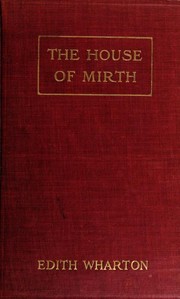
The ideal entry novel: compulsively readable, emotionally devastating, and the clearest introduction to Wharton's New York — its glittering surface and brutal undercurrents. Lily Bart's story immediately establishes Wharton's central obsession with women, money, and social entrapment.
The Major New York Books
IntermediateExperience the full range of Wharton's New York fiction — from Gilded Age tragedy to satirical comedy to her Pulitzer Prize-winning masterpiece — and understand how her vision of society deepened over time.
▸ Study plan for this stage
Pace: 8–10 weeks total. Week 1–3: "The Custom of the Country" (~30 pages/day; it is the longest of the three). Week 4–5: "Ethan Frome" (~20 pages/day; it is a short novella, so use the extra time for close re-reading and annotation). Week 6–9: "The Age of Innocence" (~25 pages/day). Week 10: Review, compa
- Social entrapment and the 'custom' of conformity: how New York society in all three books functions as an invisible cage that punishes those who deviate from its unwritten rules
- The predator vs. the prey: Undine Spragg in 'The Custom of the Country' as Wharton's most ruthless social climber, inverting the victimized-woman archetype she uses elsewhere
- Desire, repression, and silence: how Ethan Frome and Mattie Silver in 'Ethan Frome' and Newland Archer and Ellen Olenska in 'The Age of Innocence' are destroyed not by action but by inaction and suppressed longing
- The unreliable or limited narrator: the frame narrator in 'Ethan Frome' and the close-third-person perspective on Newland in 'The Age of Innocence' as deliberate filters that shape reader sympathy
- Satire vs. tragedy as modes: 'The Custom of the Country' deploys biting comedy and irony; 'Ethan Frome' is stark naturalist tragedy; 'The Age of Innocence' blends elegy with subtle satire — tracing Wharton's tonal range
- Old New York vs. the new America: the tension between inherited aristocratic codes (the van der Luydens, the Wellands) and the aggressive new-money individualism embodied by Undine Spragg
- Setting as psychological landscape: the Starkfield winter in 'Ethan Frome' and the suffocating drawing rooms of 'The Age of Innocence' as extensions of characters' inner states
- The Pulitzer Prize context and literary reputation: understanding why 'The Age of Innocence' (1921) was considered Wharton's crowning achievement and what it synthesizes from her earlier New York fiction
- How does Undine Spragg in 'The Custom of the Country' both challenge and reinforce Wharton's critique of New York society — is she a villain, a product of her culture, or both?
- In 'Ethan Frome,' what narrative purpose does the frame narrator serve, and how does the 'smash-up' ending reframe everything the reader has witnessed about desire and escape?
- Compare the role of the 'outsider woman' in all three books: Undine Spragg, Mattie Silver, and Ellen Olenska each threaten the social order in different ways — what does each woman's fate reveal about Wharton's evolving view of female agency?
- How does Wharton use irony differently in 'The Custom of the Country' (satirical) versus 'The Age of Innocence' (elegiac) — and what does that tonal shift suggest about her relationship to the world she is depicting?
- Newland Archer in 'The Age of Innocence' chooses conformity repeatedly, yet the novel treats him with sympathy. How does Wharton make a passive, complicit protagonist compelling, and do you find her judgment of him ultimately harsh or compassionate?
- Across all three books, what does Wharton identify as the true 'cost' of belonging to New York society — and who pays the highest price?
- Character motivation map: For each of the three books, draw a simple diagram placing the protagonist at the center and mapping the social forces (family, money, reputation, desire) pulling them in different directions. Use direct quotations from the text as labels. Compare the three diagrams side by side — what patterns emerge?
- Tone close-reading exercise: Select one scene of social gathering or public ritual from each book (e.g., a dinner party in 'The Custom of the Country,' the community scenes in 'Ethan Frome,' the opera or ball scenes in 'The Age of Innocence'). Write a one-page analysis of each, focusing specifically on Wharton's word choices, sentence rhythm, and narrative distance. Then write a short paragraph co
- Rewrite a pivotal moment: Choose the scene in 'The Age of Innocence' where Newland decides NOT to act (e.g., his final decision not to go up to Ellen's apartment in Paris). Rewrite it so he does act. Then write a reflection: how does this change alter the novel's meaning, and what does Wharton lose or gain by keeping him passive?
- Undine Spragg character journal: As you read 'The Custom of the Country,' keep a running log of every social rule Undine breaks or manipulates. At the end, write a one-page verdict: is Wharton's satire directed at Undine, at the society that produced her, or at the men who enable her — and what evidence supports your reading?
- Comparative essay (500–700 words): Argue which of the three books presents the most damning critique of New York society, using specific scenes and quotations from all three to support your claim. Force yourself to steelman the case for each book before choosing.
- Research and context note: Look up the original reviews of 'The Age of Innocence' from 1920–1921 and the announcement of its Pulitzer Prize. Write a half-page reflection on how contemporary readers received it versus how you experienced it — and whether knowing it won the Pulitzer shaped your reading.
Next up: Mastering Wharton's New York fiction — her satirical, tragic, and elegiac modes — equips the reader to appreciate how she applied the same social X-ray vision to European settings and later American life, which is precisely what the next stage of the curriculum explores.

A sharp tonal shift from The House of Mirth: here Wharton gives us a ruthless social climber rather than a victim, making it a perfect companion piece. Reading it second reveals the full spectrum of how ambition and society interact in her world.
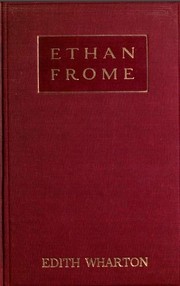
A short, stark novella set in rural New England rather than Manhattan — a crucial detour that shows Wharton's range and her ability to strip social comedy down to pure, icy tragedy. Its brevity makes it an ideal palate-cleanser before the longer novels.

Wharton's Pulitzer Prize winner and her most refined achievement: a nostalgic, bittersweet portrait of Old New York seen from a distance. Having read the earlier novels, the reader will now feel the full weight of what Newland Archer surrenders to convention.
The Ghost Stories
ExpertDiscover Wharton's supernatural fiction and see how her themes of guilt, repression, and the past refusing to die translate into genuinely unsettling horror — cementing her as a master of the ghost story form.
▸ Study plan for this stage
Pace: 4–5 weeks, ~20–25 pages/day; read one or two stories per sitting to allow each tale's atmosphere to fully settle before moving on — resist binge-reading, as the cumulative dread depends on pacing
- The ghost as psychological symptom: Wharton's apparitions are rarely random — they externalize guilt, repression, obsession, or unfinished moral business, making the supernatural inseparable from the psychological
- The 'knowing' vs. 'unknowing' haunted: Wharton's narrators and protagonists often resist acknowledging the ghost, and that denial is itself a form of horror — explore how dramatic irony creates dread
- Social propriety as a haunted space: Wharton transplants her signature critique of Gilded Age manners into the gothic mode — the house, the marriage, and the drawing room become sites of supernatural menace
- The past refusing to die — temporal haunting: ghosts in these stories represent history that has not been properly mourned, confessed, or paid for; time collapses rather than progresses
- Atmosphere and restraint as craft: Wharton's horror is built through accumulation of unease — cold rooms, half-seen figures, inexplicable compulsions — rather than explicit shock; study her technique of the withheld revelation
- Female vulnerability and agency in the supernatural: several stories position women as both victims of haunting and as the ghosts themselves; examine what this reveals about gender, power, and voicelessness in Wharton's world
- The unreliable or limited narrator: Wharton frequently filters the supernatural through narrators who are socially constrained, emotionally repressed, or simply mistaken — ambiguity is a deliberate artistic choice
- Intertextual dialogue with the ghost story tradition: Wharton was a conscious craftsperson who wrote an essay on the form; her stories respond to Henry James, M.R. James, and the broader Anglo-American tradition of literary horror
- In stories such as 'Afterward' and 'The Lady's Maid's Bell,' how does Wharton use the delayed or unrecognized ghost to implicate the protagonist in the very guilt or harm the ghost represents — and what does that implication reveal about moral complicity?
- Wharton argued in her preface that a ghost story must make the reader's 'hair stand on end.' Across the collection, which specific narrative and stylistic techniques does she deploy most consistently to achieve that visceral effect, and where does she depart from her own prescription?
- How do the domestic spaces in these stories — the country house, the library, the bedroom — function as active agents of haunting rather than mere settings? Choose at least two stories to support your answer.
- Several of Wharton's ghosts are women who were silenced, wronged, or erased during their lifetimes. How does the supernatural give these figures a form of agency or voice they were denied in life, and what does Wharton seem to be saying about the cost of that silencing?
- Wharton is celebrated for social realism in her novels. How does the ghost story form allow her to do something her realist fiction cannot — and what thematic or emotional territory does the supernatural uniquely open up for her?
- Identify a story in the collection where the horror is ultimately ambiguous — where a rational explanation remains possible. How does Wharton construct and sustain that ambiguity, and why might she prefer it to a definitive supernatural resolution?
- Close-reading annotation sprint: Select one story (recommended: 'Afterward' or 'Pomegranate Seed') and annotate every passage where dread is built through indirection — a temperature change, an evasive answer, an object out of place. Map how Wharton escalates unease without ever stating it directly.
- Craft a 'ghost biography': For one of Wharton's ghosts, reconstruct the full backstory implied but never stated in the text — who they were, what wrong was done, why they cannot rest. Then write a one-page reflection on how much Wharton leaves to inference and why that restraint is more powerful than exposition.
- Comparative atmosphere analysis: Choose one story from the collection and rewrite its central uncanny scene in the style of explicit, modern horror (describing the ghost directly, adding visceral detail). Then write a paragraph analyzing what is lost and what, if anything, is gained — this will sharpen your understanding of Wharton's technique of restraint.
- Thematic cross-story matrix: Create a simple table with the stories as rows and the following columns: 'Nature of the ghost,' 'Protagonist's guilt or complicity,' 'Domestic space involved,' 'Resolution or ambiguity.' Filling it in will reveal Wharton's recurring patterns and outliers at a glance.
- Read Wharton's own preface to the collection carefully and treat it as a critical text: write a one-page response arguing either that her stories live up to the theory she articulates, or that the most successful stories in the collection actually violate her stated principles.
- Influence mapping: After finishing the collection, research one of Wharton's acknowledged influences or contemporaries in the ghost story form (e.g., Henry James's 'The Turn of the Screw' or M.R. James). Write a brief comparison (300–400 words) identifying one technique Wharton borrows, one she rejects, and one that is distinctly her own invention.
Next up: Mastering Wharton's ghost stories reveals the dark emotional undercurrent — guilt, entrapment, the weight of the past — that runs beneath the polished surface of all her work, equipping the reader to return to her major novels and novellas with a newly sharpened eye for the gothic pressures that haunt even her most realistic social fiction.

The canonical collected edition of her supernatural tales, including masterpieces like 'Afterward,' 'Pomegranate Seed,' and 'The Lady's Maid's Bell.' Reading her realist novels first makes the ghost stories resonate far more deeply — the hauntings are always social and psychological as much as supernatural.
Discussion
Keep reading
Paths that share books, cover the same subject, or open a related topic.