Donna Tartt Reading Order: Where to Start
Donna Tartt has published three novels in thirty years, roughly one a decade, and they are best read in an order that is not quite chronological. Begin with The Secret History, the book that made her name and the easiest to fall into; then The Goldfinch, the long Dickensian one; then The Little Friend, the strangest and most divisive; and finish with the older novels that plainly stand behind her own, which is the best way to understand what she is actually doing.
Start With The Secret History
BeginnerUnderstand the Tartt formula — a closed elite world, a moral catastrophe, and a narrator who tells you the ending first.
▸ Study plan for this stage
Pace: 3–4 weeks. 608 pages, but it reads like a much shorter book — 30 pages a day is comfortable and most readers overshoot. Read the prologue twice before going on, and take Book One in as few sittings as you can manage; the second half changes register completely and can be paced more slowly.
- The inverted detective story: the prologue tells you who died and who killed him, so the suspense is entirely about consequence rather than mystery
- Richard Papen as a narrator whose defining trait — 'a morbid longing for the picturesque at all costs' — is confessed on the first page and then governs everything he fails to notice
- The closed elite world (six students, one tutor, one language) as the machine that makes the moral catastrophe possible
- Julian Morrow as a teacher who supplies an aesthetic justification for atrocity and then declines all responsibility for it
- Tartt's atmospheric method: weather, seasons, snow and drink used to hold a plot together across hundreds of pages of very little event
- Class as the hidden engine — Richard's lie about his background is the original crime, and Bunny's poverty is the reason he can be managed
- The long anticlimactic final third, which is deliberate: the book is about living afterwards, not about the killing
- How thoroughly this novel invented a subgenre, and why so many imitators keep the sweaters and miss the moral argument
- What does Richard's 'morbid longing for the picturesque' cause him to omit from his own account?
- Given the prologue, where does the tension in the first four hundred pages actually come from?
- How much responsibility does the novel assign to Julian, and how does it avoid saying so directly?
- Bunny is made insufferable before he is killed. What is Tartt doing to the reader by arranging it that way?
- Why does the novel keep going for two hundred pages after the murder is solved, and what would be lost if it stopped?
- Reread the prologue after finishing. Almost every element of the ending is present in it, and you will have read past most of them.
- List what Richard tells the others about himself and what is true. The novel's moral scheme runs on that gap.
- Mark the passage where you first stopped sympathizing with the group, and identify the sentence that did it.
- Write a paragraph describing Henry Winter using only details Richard reports without understanding them.
Next up: You now know the Tartt formula — closed world, confessed catastrophe, narrator implicated by his own aesthetics; The Goldfinch stretches all three across a whole life.

Classics students at a Vermont college kill one of their own, and you are told so on page one. Her debut and the ideal entry point: propulsive, atmospheric, and the source of an entire subgenre.
The Goldfinch
BeginnerSee Tartt at full length, and how she stretches the same obsessions across a whole life rather than a single semester.
▸ Study plan for this stage
Pace: 5–6 weeks. At 862 pages this is the longest book in the path; 25–30 pages a day gets you through in about a month. Read the New York and Las Vegas sections at that steady pace, then let the Amsterdam sequence go faster — it is designed to accelerate. The closing essayistic chapter deserves a slow, s
- The picaresque life-shape: one childhood catastrophe followed by decades of consequence, in place of The Secret History's single semester
- The painting as the book's controlling object — a real Fabritius survival of an explosion, standing in for everything Theo cannot keep
- Theo Decker as another narrator confessing from a distance, and the Amsterdam hotel room as the vantage point the whole book is told from
- Boris as the novel's engine of chaos and its only genuinely free character, and the way he supplies the plot Theo will not initiate
- Objects, restoration and forgery in Hobie's workshop as an argument about authenticity that the plot then tests literally
- Tartt's willingness to write long — set pieces that other novelists would compress, kept at full length because duration is the effect she wants
- The explicitly stated moral in the final chapter, and the reasonable objection that a novel this long should not need to argue its own case
- Addiction and grief as the same mechanism: things taken to make an absence bearable, described without judgement
- What does the painting mean to Theo at each stage — the museum, Las Vegas, the storage unit, Amsterdam — and does the meaning ever settle?
- Boris drives most of the plot. What does that say about Theo as a protagonist, and is he passive by design?
- The Las Vegas section is often called the best part of the novel. What does it do that the New York sections cannot?
- In the final chapter Theo states the book's theme outright. Does the novel earn that, or is it insurance against being misread?
- Compare Theo's confession with Richard Papen's: what has Tartt changed about the guilty-narrator device over twenty years?
- Look up Fabritius's The Goldfinch and read a paragraph about the 1654 Delft explosion before you begin. The novel assumes the picture and its history.
- Keep a note of every scene involving repair, restoration or fakery. Hobie's trade is the book's thesis in miniature.
- Mark the point where Theo stops being a boy things happen to and starts choosing. It is later than you expect, and the lateness is the argument.
- Write down the theme as the last chapter states it, then judge each of the preceding eight hundred pages against it.
Next up: Two novels in, the pattern looks fixed — a guilty narrator explaining himself; The Little Friend breaks it, which is why it is placed third rather than second.
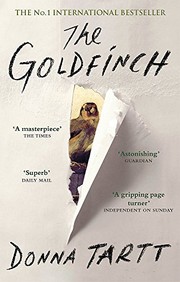
A boy survives a museum bombing, steals a painting, and spends decades paying for it. Her Pulitzer winner — read it second, because its 800 pages are much easier once you already trust her narrators.
The Difficult One
IntermediateTake on the novel most readers skip, and see the Southern Gothic side of Tartt that the other two only hint at.
▸ Study plan for this stage
Pace: 4 weeks, ~25 pages a day for 616 pages. Read the opening chapter about Robin's death carefully and then expect the pace to slacken deliberately — the Mississippi summer is meant to feel long. Do not read the last fifty pages hoping for a solution; read them for what Harriet has become instead.
- Third person, not first: the only one of the three novels without a confessing narrator, which is the source of most readers' disorientation
- Harriet Cleve Dufresnes as a twelve-year-old with the will of a Tartt adult and none of the self-justification, so nobody is available to explain her
- Southern Gothic machinery — decaying family, absent mother, mythologized dead brother, snakes, a water tower — handled with real regional specificity rather than as costume
- The unsolved murder as a deliberate structural refusal: the book withholds the answer that both other novels supply on page one
- Class and the Ratliffs, where Tartt writes poverty with more attention and less contempt than anywhere else in her work
- Childhood adventure fiction as a template being deliberately failed — Harriet plays out Treasure Island logic in a world that will not cooperate
- The Cleve family's storytelling habit, which is the novel's account of how a family survives by mythologizing its worst day
- Where the Southern Gothic register connects to the other novels: the same interest in a small closed society and a death nobody has processed
- Why does Tartt abandon the first person here, and what becomes impossible as a result?
- What is Harriet actually trying to accomplish, and at what point does the reader see it will not work?
- How does the novel treat the Ratliffs — as antagonists, as victims of the same town, or as both?
- The murder is never solved. Is that a failure of nerve, a thematic necessity, or a trick? Argue from the last chapter.
- Which elements here are recognisably the same writer as The Secret History, and which are new?
- After finishing, list the questions the novel leaves open and mark which ones it has quietly answered by implication.
- Compare Harriet with Richard Papen: two people who construct a story about a death and act on it. Write a paragraph on how the outcomes differ.
- Note the passages of pure description of heat, water and vegetation. This is the most sensory of the three novels, and the atmosphere is doing structural work.
- Write the case for and against the ending in one page each, then decide. Almost every disagreement about Tartt runs through this book.
Next up: That is the whole of her fiction — three novels in thirty years; the last stage steps outside it to the older books she is openly working from.
A twelve-year-old in 1970s Mississippi sets out to solve her brother's murder. Deliberately unresolved and much darker in texture — best read last of the three, when you can appreciate the refusal rather than resent it.
The Books Behind the Books
IntermediateRead the novels Tartt is openly writing in conversation with, so her borrowings read as design rather than coincidence.
▸ Study plan for this stage
Pace: 8–9 weeks, ~25 pages a day. These four novels are by other authors, not by Tartt — read them as sources and comparisons. Great Expectations (482 pages, Charles Dickens) first, over three weeks. Then Brideshead Revisited (336 pages, Evelyn Waugh) and The Talented Mr. Ripley (288 pages, Patricia Highs
- Dickens's Great Expectations is the acknowledged model for The Goldfinch: an orphan, a secret benefactor, stolen property, and a whole life bent by one childhood encounter. Reading it makes the shape of Tartt's plot legible as design rather than sprawl
- Pip's retrospective narration — an older man judging his younger self's snobbery — is the device Tartt hands to Theo Decker, and Dickens's two endings show how differently the same material can be resolved
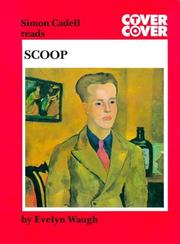
- Waugh's Brideshead Revisited supplies the golden-friends-at-university novel that The Secret History rewrites with a corpse in it: Charles Ryder's besotted narration of a charmed circle he does not belong to is Richard Papen's posture exactly
- What Tartt changes in the Waugh: Catholicism as the force that finally judges Waugh's characters becomes, in her hands, an aesthetic education with nothing behind it — Julian is Sebastian's world without grace
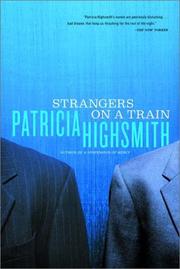
- Highsmith's The Talented Mr. Ripley is the template for the charming killer who makes the reader complicit; her tight third person keeps you inside Tom's practical problems until you are hoping he escapes
- Set Ripley against The Secret History and it becomes clear which of Tartt's effects are inherited — the murder treated as a logistics problem, the reader's sympathy engineered before the crime rather than after
- Portis's True Grit, which Tartt has championed in print and recorded as an audiobook, gives the deadpan voice of a fierce young girl avenging a family death — the closest available key to what The Little Friend was reaching for
- Mattie Ross is what Harriet Dufresnes would be in a book that let her succeed; the comparison shows that Tartt's refusal of resolution was a choice made against a model she loved
- Which specific elements of Great Expectations does The Goldfinch keep, and which does it deliberately refuse? Magwitch and Boris are the place to start.
- Charles Ryder and Richard Papen are both outsiders narrating a glamorous group. What does Waugh believe about that group that Tartt does not?
- Highsmith keeps you inside Tom Ripley's head while he kills. Where does The Secret History use the same manoeuvre, and where does it lose its nerve?
- Mattie Ross gets her revenge and Harriet does not. What does each book gain from its ending, and which do you find more honest?
- Having read all four sources: which of Tartt's strengths are her own, and which are borrowed and improved?
- Do these older novels make Tartt look derivative or deliberate? Argue it with reference to at least two specific borrowings.
- Read the opening chapter of Great Expectations and the opening chapter of The Goldfinch back to back and list the structural parallels — the inciting encounter is doing identical work in both.
- Track Dickens's two endings for Great Expectations (both are usually printed) and decide which one The Goldfinch's final chapter more closely resembles.
- Write a paragraph in Charles Ryder's voice about Henry Winter. If it comes easily, you have located the debt Brideshead Revisited is owed.
- Note the exact page in The Talented Mr. Ripley where you started wanting Tom to get away with it, then find the equivalent page in The Secret History.
- Read the first three pages of True Grit aloud, then the first three of The Little Friend. The difference is entirely one of voice, and it explains why one book is beloved and the other divides people.
- Make a one-page inheritance map: four source novels, three Tartt novels, and an arrow for each specific borrowing you can name.
Next up: With the sources in view, Tartt's three novels stop looking like isolated events every decade and start reading as one continuous argument with the books she loves — which is the best possible position from which to reread The Secret History.
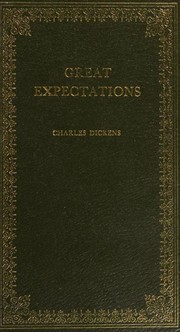
The explicit model for The Goldfinch: an orphan, a mysterious benefactor, and a life bent by one childhood event. Read it first here — it makes the shape of Tartt's plot legible.
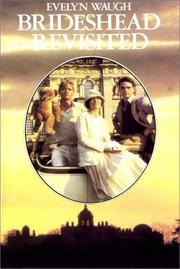
The seductive-golden-friends-at-university novel that The Secret History reworks with a corpse in it. The debt is unmistakable once you have both books in your head.
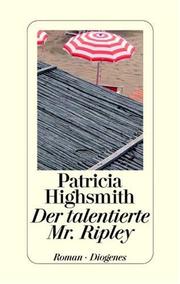
The template for a charming narrator who makes you complicit in murder. Reading it after The Secret History shows exactly which of Tartt's tricks are inherited.
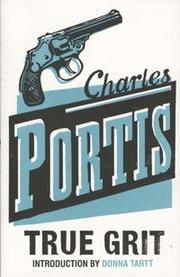
The novel Tartt has championed and recorded as an audiobook — a fierce young girl avenging a family death in the American South and West. It is the clearest key to what The Little Friend was aiming at.
Discussion
Keep reading
Paths that share books, cover the same subject, or open a related topic.