Analytical chemistry answers a deceptively simple question: how much of what is in this sample, and how sure are you? The trouble is that the honest answer depends on error, calibration, and separation science long before it depends on any one machine. Read the instrument manuals first and you will run a spectrometer without knowing whether its output means anything.
So the reading order matters. Start with the logic of quantitative measurement and equilibrium, build up to how modern instruments generate signal, then specialize into the separation and data-analysis techniques that dominate real labs. Each layer makes the next one honest rather than magical.
Fundamentals of measurement
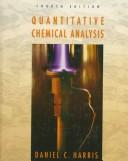
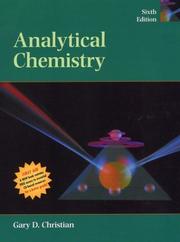
Begin with Quantitative chemical analysis, the book that teaches you to treat every number as an estimate with an uncertainty attached, covering titrations, equilibria, and statistics before any hardware. Pair it with Analytical chemistry, which broadens the conceptual map and connects wet-chemical methods to the questions labs actually ask. Together they give you the vocabulary of accuracy, precision, and calibration you will lean on forever.
Instruments and spectra
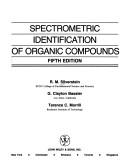
Next, learn how molecules reveal themselves. Spectrometric identification of organic compounds is the classic training ground for reading IR, NMR, and mass spectra as a coherent story about structure. Then step up to Principles of instrumental analysis, the standard survey of how spectroscopic, electrochemical, and separation instruments actually work under the hood, so the later specialist texts feel like deep dives rather than first encounters.
Separations, electrochemistry, and data
Separation science is where analytical chemistry earns its living. Introduction to modern liquid chromatography is the definitive HPLC text, walking through columns, gradients, and method development, while Chromatographic methods gives a broader tour across chromatographic families. For the electrode-based side of the field, Electrochemical methods is the reference on potentials, kinetics, and voltammetry. Finally, modern analysis is drowning in data: Chemometrics teaches the multivariate statistics that turn spectra and chromatograms into decisions, and Trace Analysis: A Structured Approach to Obtaining Reliable Results closes the loop by focusing on contamination, detection limits, and defensible results at the low end.
Work these in sequence and you build the instinct every good analyst has: to distrust a number until its provenance is clear. Follow the full path to move from principles to instruments to reliable results in a deliberate order.
Follow the full reading path →
Ready to learn something deeply?
Build a reading path — free