The usual mistake with this field is starting from the theory. Courses often open with Said or Spivak, and students end up with a vocabulary — othering, hybridity, subalternity — floating free of anything it describes. The theory was written in response to a literature that already existed, so the fiction should come first.
The second thing to hold onto is that "postcolonial" covers wildly different situations. A Nigerian novel about Igbo society meeting British administrators, an Indian novel about Partition, and a Caribbean novel rewriting a Victorian classic are not variations on one experience. The shared question is narrower than the label suggests: who gets to narrate, and in whose language.
The novels that set the terms
Start with Things Fall Apart. Achebe's 1958 novel gives Umuofia a full internal life — its proverbs, its justice, its cruelties — before the missionaries arrive, so that the collapse in the final third registers as the loss of a real society rather than the arrival of history. It was written explicitly against the European novels that made Africa a backdrop, and it is the founding text for good reason.
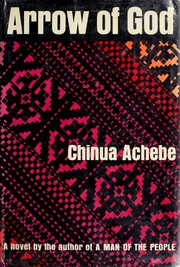
Then Arrow of God, the later and more difficult Achebe novel, which follows a chief priest caught between his own community and the colonial administration. It is a subtler book about how indirect rule corrodes authority from inside, and it rewards the reader who has already done Things Fall Apart.
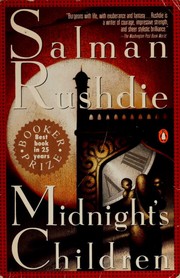
Midnight's Children moves the scene to India. Rushdie's narrator is born at the exact moment of independence and his life allegorizes the nation's, told in a maximalist, digressive, comic voice that broke English open for a generation of Indian writers. It is long and demanding; give it a hundred pages.
Then The God of Small Things by Arundhati Roy, which works at the opposite scale — one Kerala family, two children, a set of caste and love laws broken — and which achieves in miniature what Rushdie does in panorama.
The theory, in increasing difficulty
Now the argument. Orientalism by Edward Said is the field's founding work: the claim that Western scholarship on the East was not neutral description but a system of representation entangled with power, producing an Orient that justified governing it. Historians have disputed his handling of specific sources and his relative neglect of German scholarship, and those criticisms are worth reading — but the frame reshaped several disciplines.
The location of culture by Homi Bhabha is harder going, and its key ideas are worth the effort: hybridity, mimicry, and the third space, where the colonized subject's imitation of the colonizer becomes destabilizing rather than submissive. The prose is notoriously dense; read it slowly or read a good summary first.
Can the Subaltern Speak? by Gayatri Spivak is an essay rather than a book and the sharpest challenge in the field: her argument is that intellectuals who claim to represent the voiceless often overwrite them, and that the subaltern woman in particular is spoken for from every direction. It is uncomfortable in a productive way, including for the field itself.
Answering back
Return to fiction. Wide Sargasso Sea by Jean Rhys is the classic act of writing back — it gives the madwoman in the attic from Jane Eyre a Caribbean childhood, a name, and a case, and it makes the earlier novel unreadable in the old way afterwards.
Half of a Yellow Sun by Chimamanda Ngozi Adichie brings the tradition forward to the Biafran war, told through class and love and hunger rather than through statecraft, and it is the most immediately gripping novel on this list.
Finish with The Satanic Verses, which is on the path both as a novel about migration and doubled identity and as the center of a controversy that is still unresolved — the fatwa, the translators attacked, and a long argument about blasphemy, free expression, and who a book belongs to. Different readers weigh those claims very differently, and the novel itself is stranger and funnier than its reputation.
The Polish literature path covers another literature written under domination, from a different angle. Follow the full reading path to take these in order.
Follow the full ordered path here: Best Postcolonial Literature to Read, in Order.